 Hello, and welcome to the first Equity on the Move newsletter!
Our goal is to use this newsletter to share updates about TriMet's ongoing equity and inclusion efforts, new initiatives, partnerships and upcoming community engagement opportunities.
Whether we're working with community partners to help our riders access reduced fares, supporting forums for gathering community feedback on our efforts through our Transit Equity Advisory Committee, or ensuring service and fare decisions are made as equitably as possible through one of the most comprehensive Civil Rights Title VI programs in the nation, TriMet is committed to diversity, equity and inclusion.
We look forward to sharing our efforts and highlighting progress, and opportunities to connect, in the year ahead!
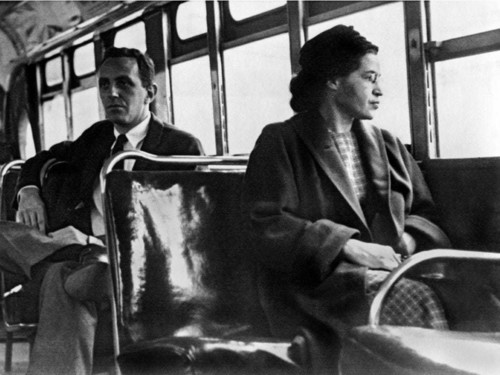 Today, we celebrate our first Rosa Parks Transit Equity Day. If you’re riding TriMet, C-TRAN or Portland Streetcar, you won’t need to tap your Hop card or buy a ticket at the station–just come on board. Transfers are free, too.
Last week, the TriMet Board of Directors passed an ordinance that TriMet will commemorate Rosa Parks’ birthday for years to come. From this year forward, we won't collect fares on our buses, trains and LIFT.
TriMet Board of Directors member Keith Edwards and many community partners helped champion Rosa Parks Transit Equity Day.
"What I want the community to take away is a knowledge of our history, a knowledge of who Rosa Parks was, why she is being recognized, what she has done not only for Montgomery, Alabama but for what she’s done for the nation, and to also make sure our kids are educated as to our history," said Director Edwards.
Rosa Parks (often called “the mother of the civil rights movement”) played a major role in the historic Montgomery Bus Boycott, when African-American bus riders boycotted city buses in Montgomery, Alabama. The protest was a major cultural movement that brought significant attention to the issues of race and segregation.
The civil rights movement of the 1950s and ’60s upended discrimination on public transit and in other public spaces. One of the most important breakthroughs in equal-rights legislation was the Civil Rights Act of 1964. The Act is composed of eleven titles that created new statutory rights, designed distinct methods of enforcing these rights and established federal entities responsible for the enforcement or facilitation of these protections.
Title VI, which prohibits discrimination on the basis of race, color and national origin in programs and activities receiving federal financial assistance, was enacted as part of the landmark Civil Rights Act. TriMet proudly embraces the growing diversity of our region. Our nationally-recognized Civil Rights Title VI Program is one way we ensure that we deliver equitable services to our riders and community.
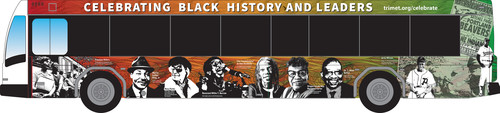 Be on the lookout for a special bus on Portland streets beginning mid-February!
We're celebrating Black History Month 2021 and beyond by wrapping one of our buses with a design featuring well-known Black Americans, past and present, from various walks of life. They include Martin Luther King, Jr., Oregon’s first Black woman legislator, Margaret Carter, and Jo Ann Hardesty, the first woman of color to ever serve of the Portland City Council.
 Since hearing from our riders and system stakeholders, and working directly with community partners, TriMet has developed 25 actions that will make our transit system safer and more welcoming for all. After reallocating $1.8 million from police contracts and other sources, and reducing existing police contracts by six positions in July 2020, we conducted an extensive community engagement effort we called ‘reimagining public safety on transit.’
A Transit Public Safety Advisory Committee, made up of regional thought leaders, community representatives and national transit experts, analyzed the community feedback and security challenges facing the region. The committee developed recommendations based on more than 12,500 responses to our online survey and feedback from 42 community organizations.
We thank Portland United Against Hate and the Coalition of Communities of Color for leading conversations with many of those organizations to expand the reach of the engagement effort.
The Committee’s three key recommendations are:
- Conduct agency-wide training on anti-racism, cultural competency, mental health and de-escalation techniques for TriMet employees that is based on real-world situations, and offered on a continuous basis, leveraging community expertise.
- Increase the presence of TriMet personnel on the system and explore community ambassador rider support models. The additional presence should be diverse and focused on making the system safer and more welcoming.
- Develop a Crisis Intervention Team model that is focused on supporting transit riders experiencing a mental health crisis or other behavioral health issues.
We will share additional updates as we work with community partners and stakeholders to implement these recommendations.
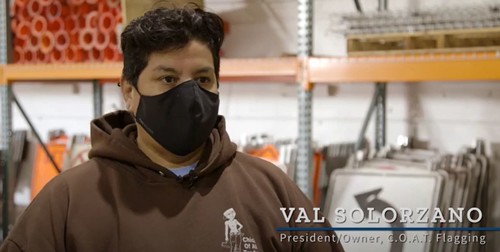
If you've traveled on SE Division between Portland and Gresham over the last year, you've probably seen C.O.A.T. Flagging crews directing traffic around Division Transit Project construction work areas.
C.O.A.T. Flagging is woman-owned business and a certified Disadvantaged Business Enterprise, also known as a DBE. TriMet's DBE program supports women and minority-owned businesses. It gives them preference on projects receiving federal funds, to improve their opportunity to grow, helping to ensure a level playing field.
Val Solorzano started C.O.A.T. (which stands for Chicks of All Trades) 15 years ago and has grown the businesses to employ up to 80 people. She builds her workforce to reflect and support the community.
"We have everything from working mothers, single mothers, to ex-cons, depending on what their background is," said Val. "They need us as much as we need them."
Learn more about C.O.A.T. and TriMet's DBE program in this video.
 We want to give a big thank you to The Clean Water Institute™, nonprofit partner of Clean Water Services, who recently donated nearly 100,000 KN95 and N95 for riders in Washington County (where they’re based) and for other riders across the region.
Clean Water Services is the water resources management utility for the Tualatin River Watershed encompassing Washington County and parts of Multnomah and Clackamas counties. We recently partnered with The Clean Water Institute to distribute the masks to keep riders safe on transit. TriMet continues to require face coverings on board. Learn what we’re doing to keep riders safe on transit during the pandemic.
A special thanks to the organizations who partnered with us to distribute the masks to their communities: Muslim Educational Trust, Urban League of Portland, Central City Concern, Sickle Cell Anemia Foundation of Oregon and 60 other community serving agencies.
If you're a Washington County service provider and still need access to masks, please contact Roberto Gutierrez.
TriMet’s Transit Equity Advisory Committee (TEAC) continues to hold virtual meetings the first Tuesday of each month. Get details here.
Provide feedback on TriMet’s Title VI service equity analysis. Comments are due by February 12. Click here to review the proposed service changes for fiscal year 2022.
The Committee on Accessible Transportation (CAT) meets virtually the third Wednesday of each month from 9-10:30 a.m. CAT is currently recruiting for members. Applications are due by February 28 and can be found online.
You can learn more about TriMet’s equity programs, including our income-based fare and high school transit pass programs, climate justice efforts, and more, online.
Thanks for letting us share the latest news on TriMet’s equity efforts. If you have questions or want more information, please email Roberto A. Gutierrez, Sr. Coordinator of Community Engagement Programs.
|