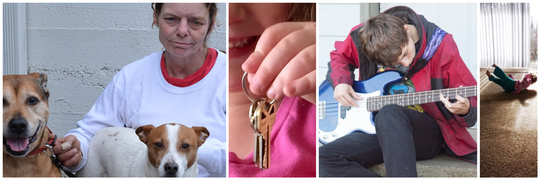
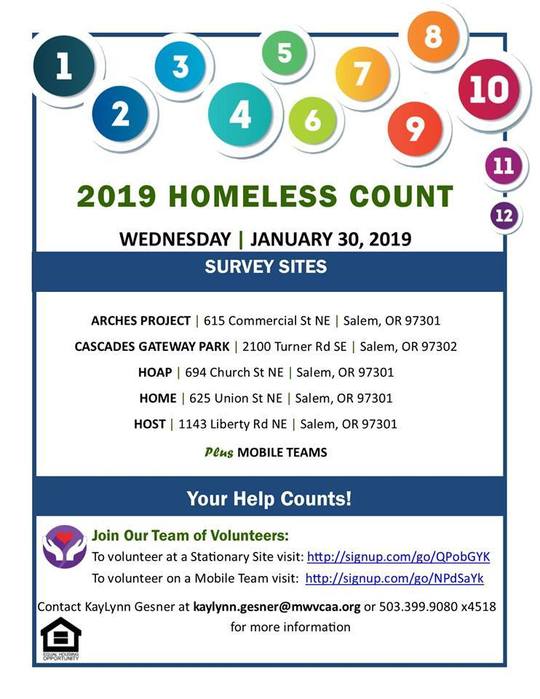
On January 30, scores of volunteers will scour the area to conduct the annual Point-in-Time Count. Coordinated by the Mid-Willamette Valley Community Action Agency, this count plays a crucial role in federal, state, and local support for homeless services in our area. It also gives the community a better understanding of resources needed to assist homeless individuals and families.
Volunteers conduct surveys and outreach to homeless individuals, families, and military veterans living on the streets and in area emergency and transitional shelters. Mobile volunteers engage and survey homeless persons on the streets, in parks, parking lots, homeless camps, and other places where people congregate. Stationary site volunteers help with a variety of tasks at designated sites. Full-day and half-day shifts are available.
A mandatory volunteer orientation will be held on Monday, January 28, 5:30 pm, at First Church of the Nazarene, 1550 Market Street NE, in Salem.
To sign up, go to:
http://signup.com/go/QPobGYK (stationary sites) or
http://signup.com/go/NPdSaYk (mobile sites)
If you are experiencing homelessness, visit one of the survey sites on January 30. The information you provide will help our communities design better services and resources to address your needs. All sites will also have items for those participating in the survey.
Survey Sites (open from 8 am-4 pm):
ARCHES Project, 615 Commercial Street NE, Salem
Cascade Gateway Park, 2100 Turner Road SE, Salem
HOAP, 694 Church Street, Salem
HOME, 625 Union Street NE, Salem
HOST, 1143 Liberty Road NE, Salem
Aumsville Food Pantry, 10153 Mill Creek Road, Aumsville
New Life Foursquare Church, 1090 N 1st Street, Stayton
Canyon Crisis Center, 825 NW Santiam Boulevard, Mill City
Old School Community & Youth Center, 22057 Emma St. SE, Lyons
Idanha/Detroit Community Food Pantry, 397 Church Street, Idanha
For additional information, contact KayLynn Gesner at 503-399-9080 or kaylynn.gesner@mwvcaa.org.
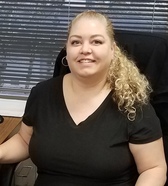
Valerie Lang is excited to join the Mid-Willamette Homeless Initiative as an intern. She is completing a bachelor’s degree in Public Health at Oregon State University, majoring in Health Promotion and Health Behavior, with a minor in Environmental and Occupational Health. Valerie said she chose public health because it's a good way to help communities and the environment and to improve one’s quality of life. She has a background in senior services and sees the homeless initiative internship as a good way to learn about how governments and nonprofits work together to serve people in need.
Valerie will complete several projects on the Mid-Willamette Homeless Initiative strategic plan, focused on financial literacy, youth homelessness, and service coordination. She will also attend community meetings to observe how partnerships serve homeless individuals and families.
You can reach Valerie at intern@mwvcog.org.
|
When the Mid-Willamette Homeless Initiative Task Force began meeting in 2016, a priority that quickly rose to the top was a “system map” of services for homeless individuals and families in the Marion-Polk region. The task fell to Ali Treichel, who served as the Homeless Initiative Program Coordinator at Mid-Willamette Valley Council of Governments until November 2018.
The inventory is a snapshot of 550 resources, detailing services by population, eligibility, location, and capacity. Click here to view the inventory, supporting memorandum, and slide presentation.
The completed inventory will assist local governments and nonprofit organizations in better coordinating services, while also identifying critical service gaps.
Some key inventory findings include:
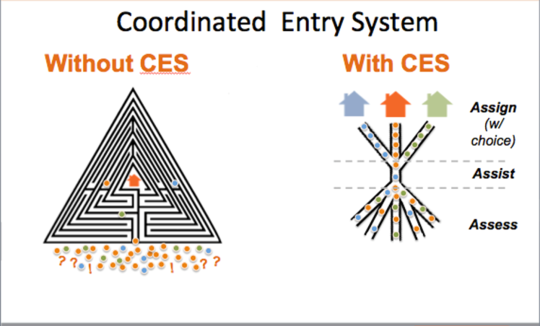
- The Marion-Polk county region lacks a coordinated response. If a wider array of local homeless service providers participated in the “coordinated entry” assessment and referral process, resources would be better targeted to people in greatest need.
- Sheltering services and warming centers do not accommodate current need, especially in rural areas. Emergency shelter focused on certain populations (men, women, families) sometimes results in families making difficult choices when they cannot stay together. Examples include parents with adult children, families with boys over age 12, and couples without children.
- Lack of housing options is major gap, with the area experiencing high rents, low vacancies, and slow development of affordable housing.
|