PCPCH spotlight: Oasis Center of the Rogue Valley
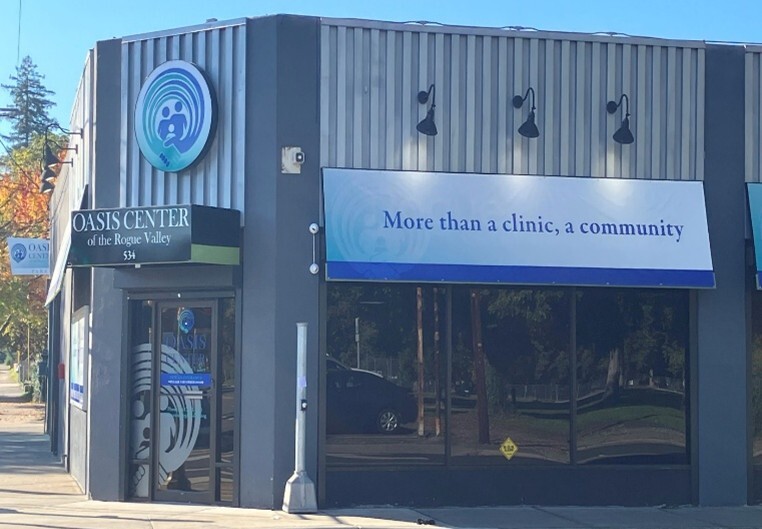 PCPCH staff recently visited a practice that blew us away with their approach to comprehensive, whole-person care. Oasis Center of the Rogue Valley in Medford, Oregon began with the goal of being more than a clinic. They wanted to be a community for patients whose health needs often fall outside the scope of traditional health care services.
After years of planning, the family-centered medical clinic was opened in 2019 featuring a new model of care which provides extra support to families experiencing substance use disorders— including those with young children, teens, and patients who are pregnant or postpartum. The model is centered around breaking intergenerational cycles, integrating community partners for cross-system collaboration, and supporting parents in improving health outcomes for their children.
To best serve their patient population—over 95% of whom are on Medicaid—Oasis Center has a multi-disciplinary staff team that includes primary care providers, Licensed Clinical Social Workers, Peer Support Providers, Doulas, Child Watch specialists, child and family service providers, and Community Health Workers who have lived experience with recovery. They’ve also embedded a Self Sufficiency Family Coach who works with pregnant clients receiving SNAP benefits and develops individualized plans of care for families during pregnancy and beyond (meeting with them regularly to assess progress). In addition to the full range of primary care medical services, the clinic offers Medication-Assisted Treatment, Pediatric Care, Women’s Health, telehealth, and self-management groups led by various specialists.
Oasis’s approach to health care extends beyond the medical world to include partnerships with organizations and government systems including ODHS Child Welfare, ODHS Self-Sufficiency, and Community Justice entities. In addition to collaborating with child services, clinic staff partner with Pathfinders to ensure that patients leaving the criminal justice system are integrated back into medical and social services. Lawyers also visit the practice twice a month to provide patients with legal advice, as part of their Medical-Legal Partnership.
Finally, Oasis Center works hard to provide health-related services directly. These include employment support, clothing, diapers, and referrals to other basic resources. There is an onsite food station with fridge and pantry. The clinic also has its own emergency housing available to patients who are waiting to begin treatment.
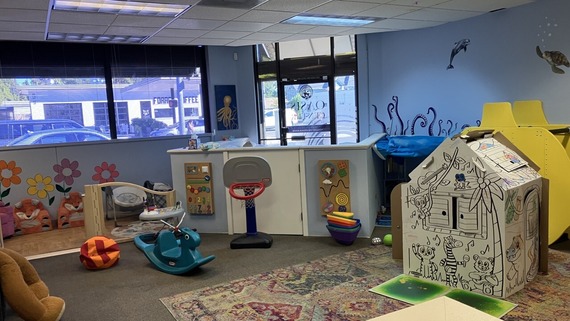
Inside lobby of Oasis Center
The value of the model has not gone unnoticed by patients, who often comment on the positive environment fostered by the staff and the difference that the Oasis Center team has made in their lives:
“They have helped me in so many ways: substance use recovery during my pregnancy, helping me with my special needs son, and keeping me on track. I know they have my back in any situation because they have seen me at my worst, and now they are helping me to be my best.” – Patient testimonial
“Thank you for all your unconditional love and support. I wouldn’t have been this far in life and recovery if it wasn’t for you and the team!” – Patient testimonial
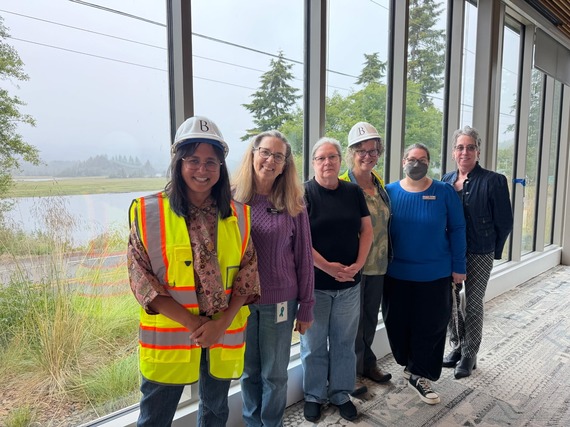
Loralee Trocio (left) and Meg Bown (third from right) with staff from Nehalem Bay Pharmacy and Health Center
For PCPCH program staff, site visits are the best part of work. They allow us to observe how clinics are implementing the model at the ground level, offer one-on-one technical assistance, and best of all learn from the innovative (and sometimes ingenious) approaches that clinics across Oregon use to provide high-quality primary care to their patients.
Our site visitors are dedicated to meeting clinics where they are during these visits, even if that means sporting some hard hats! Case in point, when Nehalem Bay Pharmacy and Health Center received their site visit this summer, they were in the midst of dealing with flooding along the entire first floor of their brand-new building. They didn't skip a beat to accommodate their patients anyway, organizing a temporary space and equipment upstairs. Verification Specialist Meg Bowen and Improvement Specialist Loralee Trocio were happy to match that energy and don safety gear while touring the typical first-floor workflow. Both clinic staff and PCPCH staff turned the less-than-ideal timing into a fun day of learning, and Nehalem Bay Pharmacy and Health Center completed their site visit with flying colors!
Clinics are always welcome to notify our team of construction issues or other complications ahead of a site visit, and we are happy to schedule virtual visits in qualifying circumstances. But if your clinic is ready for an in-person visit, then so are we!
Registration is now open for Oregon ECHO Network’s (OEN) fall continuing education programs! ECHO is a free, interactive educational and community-building experience that allows healthcare professionals throughout the state of Oregon to create a case-based learning environment through the convenience of video connection.
This Fall, OEN will offer over a dozen programs back by popular demand such as Adult Mental Health, Foundations of Substance Use Disorder Care, and Suicide Prevention, plus two brand new courses:
-
Behavioral Health for Adults with Intellectual and Developmental Disabilities (IDD) will build the capacity and confidence of community mental health providers and their team members to provide care for adults with complex combinations of IDD, mental health conditions, and substance use disorders. (12 sessions)
-
Digital Health Navigator is designed to provide community-based organizations with training and practical tools to start or strengthen digital literacy and digital health navigation. (8 sessions)
OEN ECHO programs are always free, and most offer continuing education credits, including CME and MOC part II. Cohorts fill quickly so register today! Get more information and sign up at www.OregonECHONetwork.org
Third Thursdays, 12-1pm (September - May)
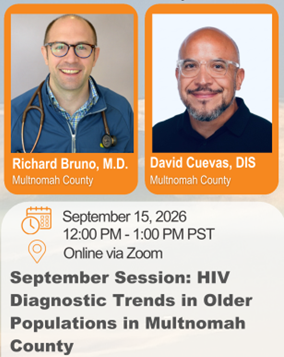
The Oregon Primary Care Association and Oregon AIDs Education and Training Center have partnered to host a Community of Practice to improve the integration and implementation of HIV care into primary practice settings. This HIV in Primary Practice (HiPP) series will take place virtually on the third Tuesday of each month from September 2026 until May 2027. They welcome any providers, support staff, or health care administrators working in primary care settings currently providing or planning to provide HIV services.
 |
|
The first two sessions (September 15th and October 20th, 12-1pm) will focus on HIV Diagnostic Trends in Older Populations in Multnomah County and Clinic-to-Home Testing Models Expanding HIV and Syphilis Screening Opportunities. Click here to register for the September session. Additional questions can be emailed to Anna Summer at asummer@orpca.org. |
The Oregon Rural Practice-based Research Network is recruiting health care professionals, patients, and caregivers for a wide range of research and technical assistance projects. Some opportunities come with free technical assistance, coaching, or stipends. Upcoming research projects include:
- Improving the capacity for primary care practices to support adult patients with diabetes through clinical education and coaching
- Improving colorectal cancer screening through technical assistance and clinical and community partnerships
- Improving breast and cervical cancer screening through technical assistance and clinical and community partnerships
- Improving blood pressure through pharmacist partnerships with primary care
- Developing and/or improving social needs screening and referral workflows
Visit the ORPRN Projects Page to explore these and other opportunities.
The OHPB Primary Care Strategy Committee is leading a coordinated effort to stabilize, strengthen, and align Oregon's primary care system with the goal of strengthening access to equitable, affordable, high-quality patient care. The Committee will promote innovative solutions for a strong primary care system focusing on payment and affordability, workforce, and the delivery system.
The committee had its first meeting in April and is meeting monthly. All meetings are virtual and open to public. Primary care providers, staff, patients, and other partners are encouraged to share feedback on the topics discussed! The next meeting is scheduled for Thursday, August 20 from 12-2pm. You can find this meeting's agenda topics, participation details, and more information on the PCSC webpage.
Questions?
We are here to help! Contact us at PCPCH@oha.oregon.gov
About the Patient-Centered Primary Care Home Program
Patient-Centered Primary Care Homes (PCPCHs) are health care practices that have been recognized by the Oregon Health Authority (OHA) for their commitment to providing high quality, patient-centered care. The PCPCH Program administers the application, recognition, and verification process for practices applying to become Patient-Centered Primary Care Homes. The program is also working with partners across Oregon to support adoption of the primary care home model. For more information visit www.PrimaryCareHome.oregon.gov.
The mission of the PCPCH Program is to be a trusted partner in primary care, collaborating with community members to set the standard for transformative, whole-person, and evidence-based care.
|