|
The Patient-Centered Primary Care Home (PCPCH) Program is excited to announce that Santiam Mobile Medicine is the first practice in Oregon to be awarded the Health Equity Designation! This special designation is awarded to practices that are meeting at least 15 out of the 20 equity-focused measures in the 2025 PCPCH model.
Santiam Mobile Medicine is a two-provider practice located in Stayton, Oregon. They opened in 2018 as a mobile medicine service traveling across the Santiam Valley. In 2020, they opened their first clinic location in Salem and relocated to Stayton in 2023. They have been recognized as a PCPCH since 2021. |
|
 |
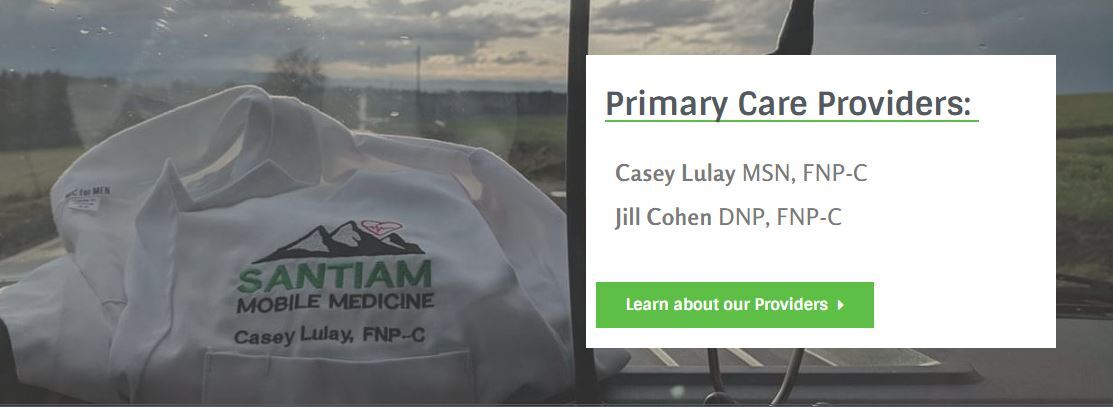
A few weeks ago, Santiam Mobile Medicine was selected for a routine site visit from PCPCH program staff to verify that they are meeting the PCPCH standards attested to on their most recent application. During the site visit, program staff were able to confirm that they were not only meeting all the measures they had attested to, but also enough equity-focused measures to receive the Health Equity Designation. Owner and provider Casey Lulay, MSN, FNP-C was thrilled to learn that they had received the designation saying, “We enjoyed the [site] visit and are proud to hold this Designation as it has been a dream of mine to be a Tier 5 with Health Equity Designation!”
Santiam Mobile Medicine’s commitment to equity has not gone unnoticed by its patients who have spoken to the providers’ willingness to go the extra mile to coordinate their care and advocate for the needs of diverse patients. In the words of one patient, “I support people with disabilities and you would be surprised how they are treated sometimes. Casey is always very respectful, is never rude, and truly listens to us as caregivers who know his patients (for example if they’re unable to express that they’re in pain, but we know that they are). Casey is the best and that is why so many of the adults I work with see him.”
The practice has also become a trusted source of care for trans individuals. “We’re serving quite a large transgender population for a rural area. Word travels fast in small communities. People feel comfortable coming here. We’ve heard from our transgender patients about how happy they were because they felt like a normal person here. We work hard at being knowledgeable by doing things like talking to trusted counselors and therapists who will be a good fit for these patients, as well as being accepting.” – Jill Cohen, DNP, FNP-C.
 Thirty-six other PCPCH practices have also applied for the Health Equity Designation and are in review. The PCPCH program looks forward to awarding more designations very soon!
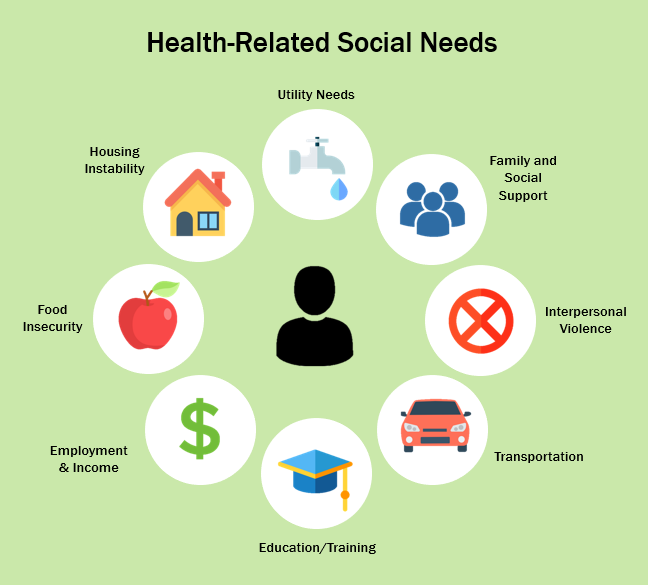
PCPCH Standard 3.D encourages primary care practices to assess and, when possible, intervene in patients' Health-related Social Needs (HRSNs) such as housing instability, transportation, food insecurity, exposure to interpersonal violence, etc. as part of routine wellness care. The free webinars below may be helpful for clinics integrating HRSNs into their practice:
Documenting and Sharing Social Needs Information in Pediatric Care Settings
Tuesday June 10th, 3-4 pm
There are unique considerations when building a social needs screening and referral system for the pediatric population. Questions have surfaced from CCOs and providers throughout Oregon about appropriate screening approaches for adolescent patients, best practices for social needs screening workflows in pediatric clinical settings, and reducing over-screening of caregivers through good documentation practices. In this webinar, Dr. Aditi Vasan with the Children’s Hospital of Philadelphia will present findings and recommendations from the 2025 paper Considerations for Documenting and Sharing Health-related Social Needs Information in Pediatric Care Settings to help listeners understand the unique needs of screening pediatric populations for social needs and introduce some practice-based approaches to address these challenges. Click here to register.
Aligning Systems for Social Needs Screening and Referral in Oregon
Tuesday June 17th, 1-2 pm
As momentum picks up around screening for social needs in both clinical and community settings, clinical and community providers are asked to meet multiple requirements from various governing bodies and payment plans. This webinar focuses on the various social needs screening and referral initiatives impacting clinics and community-based organizations (CBOs) in Oregon. The Oregon Rural Practice-based Research Network will present a systems map and highlight intersections that Community Care Organizations can use to streamline the experience for their patients, clinics and CBO partners. Click here to register.
June dates still available
All PCPCHs are required to offer or coordinate immunizations as part of Standard 3.B, and can be rewarded in Standard 3.A for increasing or meeting a benchmark on the number of recommended age- and sex-specific preventive services (such as vaccinations) provided to its patient population. OHA's Transformation Center in partnership with Boost Oregon is hosting motivational interviewing trainings to support vaccine conversations. Virtual trainings are available May through June at no cost to health care providers and immunizers. The trainings include an introduction to motivational interviewing and skills for sharing vaccine information to encourage dialogue in a culturally sensitive way. There is also a longer training workshop to deepen motivational interviewing skills. Click here for full training schedule and registration details.
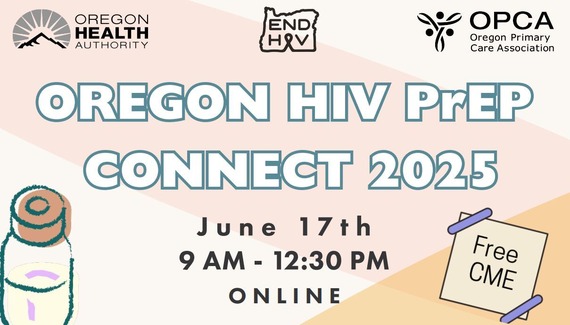
Oregon HIV PrEP Connect 2025
Tuesday June 17, 9am - 12:30pm
Join the HIV/STI Program at the Oregon Primary Care Association as they reconvene stakeholders to learn about important HIV Pre-Exposure Prophylaxis (PrEP) clinical updates and identify evolving opportunities for innovation and collaboration to improve access. Click here for more details.
National Syphilis Series Webinar Recordings
The National Network of STD Clinical Prevention Training Centers are offering free webinar recordings on syphilis topics including stages & presentation, treatment & serologic response, case-based approaches, congenital syphilis, and syphilis in pregnancy. Click here to view recordings.
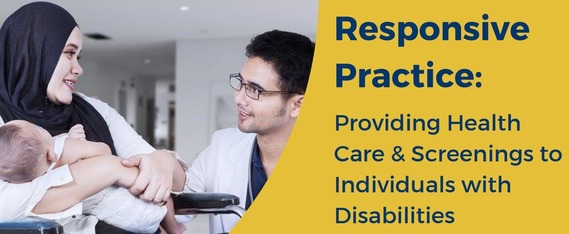 Beginning in 2025, all PCPCHs are required to assure that their staff is trained in delivering culturally and linguistically appropriate, trauma-informed, or trust-building care as part of the new Standard 6.E - Cultural Responsiveness of Workforce. The Oregon Office on Disability and Health is offering two free virtual trainings designed for anyone working in healthcare with interest in building skills to provide care to individuals with mobility, developmental, and intellectual disabilities. This training opportunity features self-guided modules, free professional development credits, and only takes 35 minutes to complete! Click here for guidance on how to complete the trainings.
OHA’s recently updated VBP Toolkit has been released to help clinicians, provider entities and their payer partners prepare for new value-based payment (VBP) arrangements, implement these arrangements, and overcome specific challenges to operating successfully within increasingly advanced VBP models. The toolkit also includes resources to support implementation of VBP models for specific care delivery areas including primary care, behavioral health care, children's health care, oral health care, hospital care, and maternity care.
Questions?
We are here to help! Contact us at PCPCH@oha.oregon.gov
About the Patient-Centered Primary Care Home Program
Patient-Centered Primary Care Homes (PCPCHs) are health care practices that have been recognized by the Oregon Health Authority (OHA) for their commitment to providing high quality, patient-centered care.The PCPCH Program administers the application, recognition, and verification process for practices applying to become Patient-Centered Primary Care Homes.The program is also working with partners across Oregon to support adoption of the primary care home model. For more information visit www.PrimaryCareHome.oregon.gov.
The mission of the PCPCH Program is to be a trusted partner in primary care, collaborating with stakeholders to set the standard for transformative, whole-person, and evidence-based care.
|