 Welcome to the Urban Mobility Office newsletter
We are working on getting the Portland metropolitan region out of a jam, so people and goods can get where they need to go.
Hours of traffic delays are coming at a high cost to individuals, businesses, and communities. Portland ranks No. 11 in the United States for the worst traffic congestion, and it's only projected to get worse.
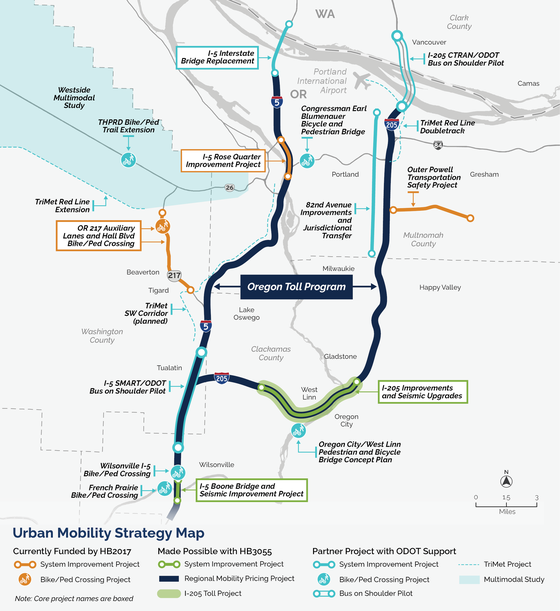
The Urban Mobility Strategy's once-in-a-generation projects – I-5 Rose Quarter Improvement, I-205 Improvements, Tolling, OR-217 Auxiliary Lanes, the Interstate Bridge Replacement Program and I-5 Boone Bridge – along with our partnerships and investments in transit, pedestrian and rolling paths, will work together to reduce congestion in the Portland region.
These projects ensure our infrastructure is seismically resilient and create sustainable revenue to modernize and maintain the transportation system for decades to come.
This monthly newsletter will share updates on the Urban Mobility Strategy core projects and how ODOT's cohesive approach is making everyday travel safer, easier, and more efficient in the Portland metropolitan area.
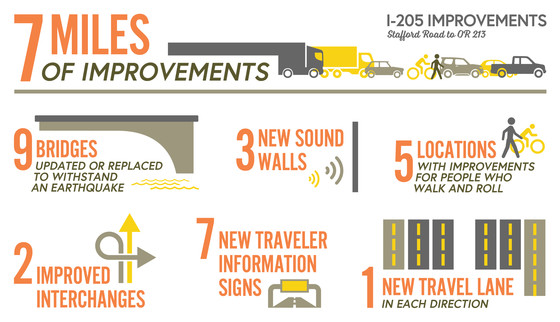 The I-205 Improvements Project aims to reduce congestion and crashes making travel times shorter and more predictable. Seismic updates will make the Abernethy Bridge and I-205 passable and the only critical lifeline interstate route across the Willamette River after a major earthquake in the Portland region.
Construction on the first phase of this project begins soon.
Learn more about these improvements.

The Oregon Toll Program spoke with Travis Brouwer, ODOT's Assistant Director for Revenue, Finance, and Compliance, to learn how the federal Infrastructure Investment and Jobs Act will change the landscape of transportation in Oregon.
The legislation represents the most significant investment in our nation's infrastructure in several decades. ODOT will use this investment to help transportation systems in cities and counties across Oregon to achieve our Strategic Action Plan.
Read more here.
|
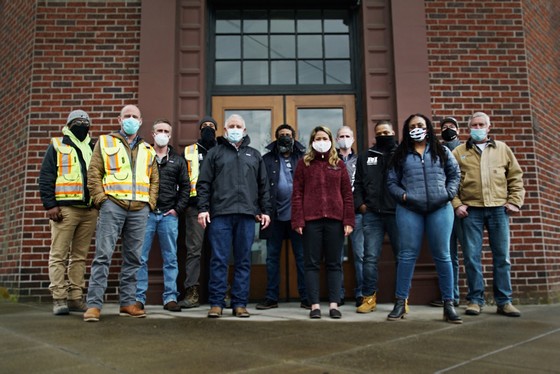 Rose Quarter Construction Manager and General Contractor team discuss job and workforce opportunities for Disadvantage Business Enterprises during the design phase.
The I-5 Rose Quarter Project is expected to generate over $200 million in opportunities for minority-owned and Disadvantaged Business Enterprises. This direct investment over the lifetime of the project will boost businesses and create good-paying jobs.
Early work packages will be announced in February 2022; learn more about future Disadvantaged Business Enterprise opportunities and events.
|