|
October 26, 2017
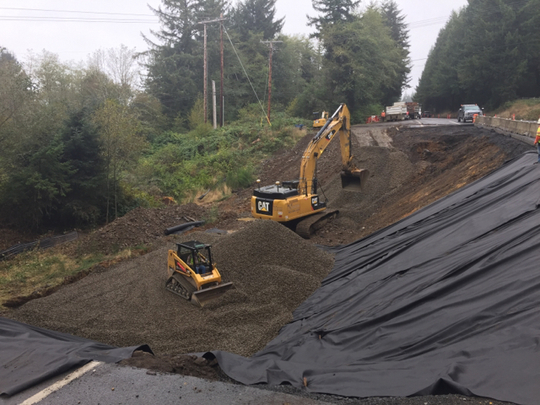 
Slide Repair Milepost 2.25
Construction to repair
the slide on U.S. 20 at milepost 2.25 began several weeks ago and will continue
until December 16. Traffic will be flagged 24 hours a day at the site until the
project is complete for the protection of work crews and travelers through the
construction area.
Background
Slides are
known to have occurred around milepost 2.25 since the 1950s. In the 1960s a
culvert was placed under the roadway to move water away and the slope became
relatively stable with small repairs needed occasionally. In winter 2015 a
bigger slide occurred. This closed one lane at the site until repairs were made
in fall 2016. These repairs were made based on what was known about the site at
the time and the maintenance funds available. Unfortunately the fix did not
hold. Record rainfall began immediately after the repairs were complete and a
larger slide occurred in late November.
A deeper investigation
into the site found a large historic slide that continues to the bay below. It
also found that the culvert had failed, pooling water under the roadway.
The Fix
To actually fix the
roadway, we’re working to move water and take some weight off of the slide area.
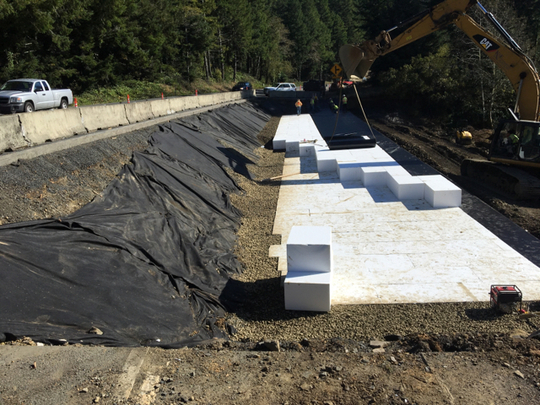
You may have seen these large white blocks alongside the road. They looked like
styrofoam and they basically are. They are a lightweight material that weighs
about 2 pounds per cubic foot that will replace soil and rock that weighs 120
to 140 pounds per cubic foot, which will effectively unload weight from the
landslide. They have been put in place a few feet below the road surface over
the last week. They will be covered with
rock and the road will be repaved.
We’re also
installing a new culvert and a deep drain that will lower the groundwater and move
the water away from the slope, which should help keep the road in good shape.
Last year’s
repair cost about $100,000. This project is expected to cost about $1 million.
Travel
U.S. 20 is a
well-travelled route with many people commuting daily between Newport and
Corvallis for work, school, and appointments.
During periods when traffic is very heavy in both directions, 100 vehicles
are released in each direction at a time, which behaved much like a traffic
signal. At times when traffic is heavy
in only one direction, 100 vehicles are released from the heavy direction and
then the light direction is cleared, which typically doesn’t take as much time
and the vehicle count is less than 100.
Once the light direction is cleared, 100 vehicles are immediately
release from the heavy direction.
Different scenarios have been tried at this location, and the current
plan has worked the best. Unfortunately,
the roadway is too narrow to perform the necessary construction and keep more
than one lane open.
Other U.S. 20 projects
Pioneer
Mountain – Eddyville: The entire new road is now open. The west end curve was
completed and opened on schedule earlier this fall. Final work continues in a
few areas, but little traffic impact is expected.
Clem Road –
Philomath Paving: Paving is done, but the finish work of placing signs and
delineators continues. Work is being done both day and night. Flagging and
pilot cars may be necessary.
Next year…..
We are going
to give travelers a year off to enjoy the recent improvements.
In 2019,
there will be a culvert replacement and repair project just east of the eastern
Toledo exit on U.S. 20. The project will
replace failing culverts in another location plagued by landslides in an effort
to redirect the water away from a landslide.
Plan details are still being worked out.
A project funded
in the recent transportation bill that will repave U.S. 20 through Philomath as
a joint effort between ODOT and the City of Philomath. Although the project isn’t designed yet and
schedules are still being worked out, the current plan is to put the project
out for bid in 2019.
 For updates
Construction information and related travel impacts are
available on TripCheck.com. Access for pedestrians, including those with disabilities, is available and identified through or around work zones.
|
| 



