We’re Back! (Re)Introducing the Marine Reserves Quarterly Newsletter
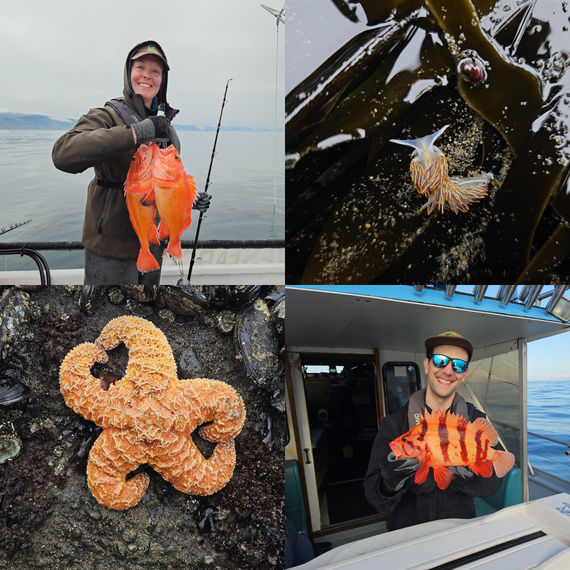 Photo: Some finds from field work in 2025, including yelloweye rockfish, an opalescent nudibranch, orange ochre sea star, and tiger rockfish.
nearly two-year hiatus, we are pleased to reintroduce the Marine Reserves quarterly newsletter, along with a new program structure and new team members! Earlier this year, the Nearshore Ecology Program was created to house both the Marine Reserves team and Marine Habitat team. Combining these teams into a new interdisciplinary and collaborative program expands ODFW’s capacity to address marine conservation and nearshore habitat research within the marine reserves and along Oregon’s coast more broadly. In early 2026, the Nearshore Ecology Program will release its first annual newsletter and host a meeting to share 2025 program highlights from team members, academic collaborators, and community partners. Stay tuned for more details! In the meantime, check out the rest of the newsletter below to learn about our ecological and human dimensions research highlights, communications and outreach updates, and meet the newest members of the Marine Reserves team.
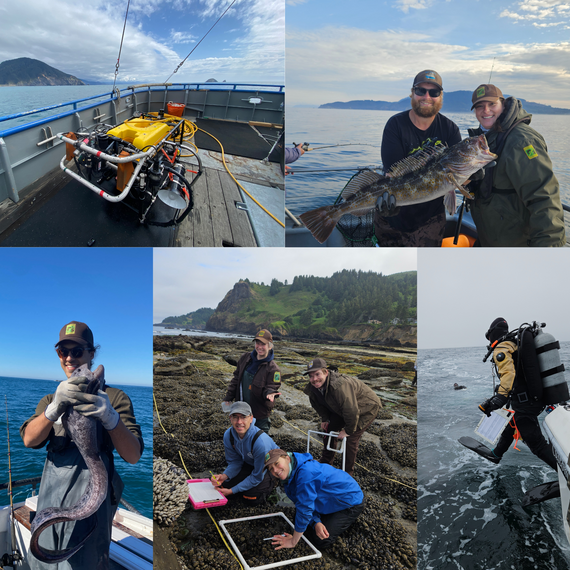 Photo: Snapshots from 2025 ecological field work.
Updates From the Field
October 15th marked the end of another successful year of field work, complete with hook-and-line, longline, SCUBA, Remotely Operated Vehicle (ROV), intertidal, oceanographic, and juvenile fish surveys. We appreciate our collaborators and volunteers who helped accomplish this work! Click the link below to learn more about our 2025 field season highlights.
 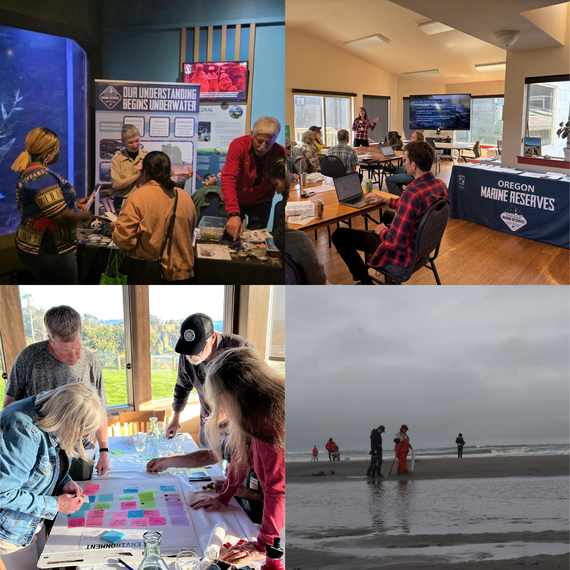 Photo: Snapshots from Human Dimensions projects in 2025.
Over the last year, the Human Dimensions team has worked closely with several collaborators to better understand how people use, value, and relate to the marine reserves through several lenses, including knowledge and perception, economics, and awareness of ocean issues. Projects spanned community meetings to inform our long-term social science research plan, economic analysis that revealed an economic impact of approximately $982,000 from the Redfish Rocks Marine Reserve, an augmented reality deep dive into the Otter Rock Marine Reserve, understanding the ocean conservation values of Spanish-speaking Oregonians, and more. Visit the link below to learn more about this exciting work.

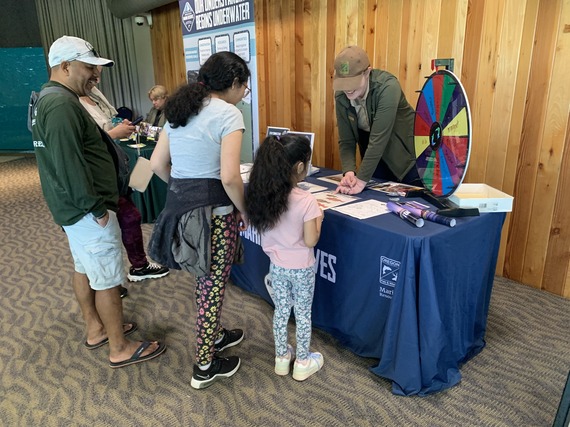 Photo: Communications & Engagement Specialist Katie Darr tabling at the Oregon Coast Aquarium for World Ocean Day.
Communications, Outreach, & Events Updates
From the coast to the valley, the Marine Reserves team has been busy with tabling events, presentations, community meetings, and more in 2025. Since January of this year, the team has participated in 26 outreach events and activities, reaching over 1,800 people! Check out our new calendar to stay up to date on future events from the ODFW Marine Reserves team and community partners including:
-
High Tech at Low Tide: An Argument for Simulating Ocean Experiences - Hatfield Marine Science Center Lecture
When: Thursday, October 30 from 3:30 - 4:30 pm
Where: 2030 SE Marine Science Dr, Newport & Zoom
What: Learn more about the Otter Rock Augmented Reality Pilot Project and how technological nature, or the use of emergent media to simulate or extend our experience with the natural world, can help us achieve human-nature bonds. More information here.
-
State of the Coast Conference
When: Saturday, November 15
Where: Coos Bay, OR at South Western Oregon Community College
What: The ODFW Nearshore Ecology Program will be leading a breakout session about collaborative efforts to (1) better understand Oregon’s marine reserves and nearshore environment and (2) engage Oregonians in marine conservation and stewardship. More information here. Talks include:
- Scott Marion, A Birdseye View of Kelp Distribution along the Oregon Coast
- Will White, Understanding kelp-urchin interactions in a warming ocean – and how to manage them – using population models
- Danny Pimentel, Deep Dive into Otter Rock Marine Reserve Augmented Reality (AR) Experience
- Sarah Klain, Shell Yeah! Redfish Rocks Marine Reserve Economic Contributions
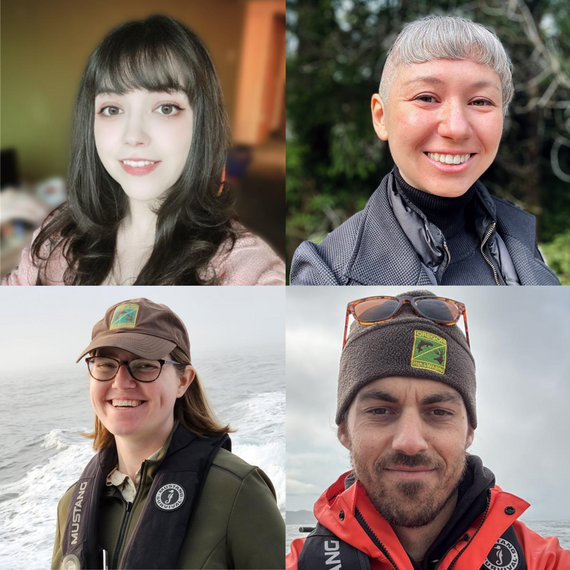 Photo: Welcome Amanda Gannon (top left), Dr. Maria Zapetis (top right), Katie Darr (bottom left), and Dr. Dylan Gomes (bottom right) to the team!
New Staff Updates
We have several new faces to introduce on the Marine Reserves team! You can learn more about their backgrounds and interests on our website at oregonmarinereserves.com/team/.
Amanda Gannon (pictured top left) joined us last November as a Sea Grant Natural Resource Policy Fellow and serves as the Adaptive Management Coordinator for the Marine Reserves team.
Dr. Maria Zapetis (pictured top right) started in February as the Nearshore Ecology Program Leader. She oversees the interdisciplinary work of the Marine Reserves and Marine Habitat teams.
Katie Darr (pictured bottom left) joined the team in March as the Communications and Engagement Specialist. She leads strategic communications and outreach efforts and serves as a community liaison in this role.
We welcomed Dr. Dylan Gomes (pictured bottom right) as the new Quantitative Marine Ecologist in June. He leads statistical analyses and modeling for the Marine Reserves team.
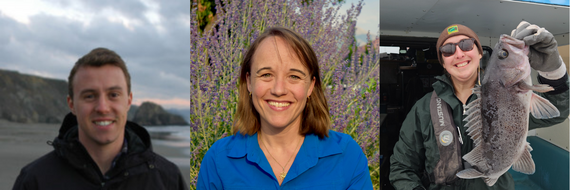 Photo: Sam Cheplick (left), Dr. Sarah Klain (center), and Sarah Sampson (right)
This year, our program said goodbye to Sam Cheplick, Dr. Sarah Klain, and Sarah Sampson.
Sam Cheplick was our Sea Grant Natural Resources Policy Fellow from November 2023 through March 2024. He expanded our economic research capacity with his work on the economic contributions of the Redfish Rocks Marine Reserve.
Dr. Sarah Klain served as the Human Dimensions Project Leader from January 2024 through August 2025. She developed new collaborations and advanced our understanding of the impacts of marine reserves on coastal communities and ocean users. We are continuing to collaborate with her in her new role at the University of Oregon!
Sarah Sampson was our research assistant for the past six-months supporting our hook-and-line, longline, intertidal, and juvenile fish (SMURF) surveys. She contributed her skillset beyond the marine reserves and also assisted with the ODFW Marine Fishery Research Project’s Black Rockfish survey.
We will miss their perspectives, enthusiasm, and skills, but we wish them the best on their new adventures!
Explore More Marine Reserves News

|