|
Welcome to the SIEC's Newsletter

In this inaugural SIEC Newsletter, I want to express my appreciation for the members, partners, and stakeholders who contribute to the important work of achieving the SIEC’s vision of “Seamless, interoperable, and resilient emergency communications” throughout Oregon. Back in the day, interoperability referred primarily to land-mobile radio (LMR) systems. Ensuring end-users could talk on each other’s networks was paramount. Now, the term interoperability refers to a number of different technologies encompassing:
- land-mobile radio (LMR)
- public safety broadband
- alerts and warning systems
- 911 and dispatch systems
With the increased scope and expanded definitions of interoperability, nearly everyone can engage in the work the SIEC is conducting. Opportunities to serve within the SIEC include participating on one of the SIEC’s various committees and workgroups. Whether it’s the Broadband, Partnership, Strategic Planning, or Technical committees, the NG 911 Working Group, or as part of our Communications Unit Working Group, there is ample opportunity to offer different perspectives and utilize your unique talents and skill sets as we seek to employ a multi-disciplinary approach to interoperability. We hope you’ll join us in our work!
Bob Cozzie, Chair, State Interoperability Executive Council
|
|
|
What is Interoperability? And why should it be important to me...

This newsletter comes to you from Oregon’s State Interoperability Executive Council (the SIEC). Your first questions may be… what is “interoperability” and why is the SIEC important to me and my community?
The SIEC’s focus is on our emergency responders’ ability to talk to each other when the need arises. Whether it’s a fire threatening a nearby town, a chemical leak from a derailed train, a multi-vehicle crash on a highway, or any unexpected crisis, effective communication among first responders can save lives and minimize the situation’s impact on people living nearby.
That communication is what “Interoperability” is all about.
Many of us are not very tech-savvy, but we all want our devices to function without worrying about the technical details. This is why the word "interoperability" can be intimidating: it just sounds so “technical.”
When we encounter the unknown, we tend to ignore it and hope it goes away. However, it's essential to realize that interoperability keeps communication running smoothly and safely. Essentially, it's the seamless exchange of information and communication among different agencies, organizations, and systems, both public and private. It ensures that different communication systems, technologies, and networks used by entities like law enforcement, fire departments, emergency medical services, public health agencies, and other critical services can share information and respond to incidents in a coordinated manner.
If you find the concept of interoperability daunting, you're not alone. Even the Department of Homeland Security (DHS) acknowledges the complexity of the term, which is why every state and territory in the United States has a Statewide Interoperability Coordinator (SWIC). These individuals work actively with response organizations at both the state and local levels to identify opportunities for better collaboration and to quickly adapt to evolving technologies in emergency communications. To learn more about our program here in Oregon visit our website.
Ryan Mikesh, Statewide Interoperability
|
|
|
Ensuring Priority Telecommunications During Emergencies
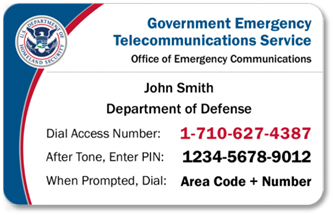
Bad weather, cyberattacks, emergency situations, or simple human errors can cause network congestion and degradation, disrupting reliable communications when critical infrastructure, emergency responders, and public officials need it most.
|
Essential personnel and organizations must be able to communicate seamlessly during emergencies. This will improve response times, enable critical information sharing, and save lives.
As the nation’s risk advisor, the Cybersecurity and Infrastructure Security Agency (CISA) offers a suite of priority services to all levels of government (federal, state, local, tribal, and territorial), Non-Government Organizations (NGOs) and organizations within the 16 U.S. critical infrastructure sectors that support resilient and interoperable communications in times of network congestion or disruption.
The Priority Telecommunications Services (PTS) program covers:
GETS and WPS are FREE SERVICES offered through CISA to essential personel (elected officials, executive leadership, managers, and field personnel).
Together, these services:
- Facilitate collaboration and interoperability.
- Leverage existing technology.
- Require no additional equipment.
CISA recommends that organizations and personnel within the 16 critical infrastructure sectors whose role or function is essential to continued operations enroll in one or all of the PTS programs.
Essential organizations exist at all levels of government, in the private sector, and in non-governmental organizations. Essential personnel are the people who ensure an organization’s continuity of operations. These personnel span all organizational levels, from executive leadership to those making things happen on the ground. Apply today!
CISA strives to support organizations in building and improving emergency communications through trusted relationships, collaboration, technical assistance, and knowledge sharing. For more information on CISA’s Priority Telecommunications Services, please visit Priority Telecommunications Services website or email at ecd@cisa.dhs.gov.
Bruce Richter, Cybersecurity and Infrastructure Security Agency
|
|
Are you signed up for OR-Alert in your county?
OR-Alert is a statewide system that enables state, county, city, and tribal governments to issue alerts, warnings, and notifications (AWNs) using a suite of tools to reach a specific audience, depending on the scope and scale of the emergency. OR-Alert is capable of sending messages through SMS text, voice calls, social media, radio, television, and other methods.
|
What are Public Alerts, Warnings, and Notifications (AWNs)?
- A public alert is intended to alert the public and direct their attention to an immediate, occurring risk or hazard. An America's Missing: Broadcast Emergency Response (AMBER) Alert looking for help to locate an abducted child would be an example of an alert.
- A public warning is intended to notify the public of an imminent event and to persuade them to take one or more protective actions to reduce losses or harm. An example of a warning would be for excessive heat.
- A public notification instructs protective actions and provides ongoing communications relevant to an event. The purpose of a notification is to instruct immediate protective actions and provide ongoing communications relevant to the event. An example of a notification is a boil water advisory.
The top public alerts include police activity, weather, fire evacuations, and missing persons. Within OR-Alert, more than 30 statewide AWNs templates have been professionally translated, reviewed for cultural competency and accessibility, and distributed to alert orginators across the state; with another 9 developed for regional events. These templates make it easier for emergency managers to send alerts with clear and consistent messaging when time is of the essence.
The mission of OR-Alert is: “To ensure access to timely and informative alerts, warnings, and notifications (AWNs) through implementation of a statewide system that enables state, county, city and tribal governments to issue AWNs—providing people in Oregon with meaningful opportunities to make life-saving decisions in the face of emergencies”
If you have not signed up, head to OR-Alert https://oralert.gov/ to do so. Enter your county, city, or zip code to find your local alerting system. Provide your contact information and get signed up to receive life-saving information.
|
|
Oregon and Next Generation 911 (NG 911)

Next Generation 911 (NG 911) refers to the anticipated update to the country’s 911 system, a change that will improve public emergency communications in a growing wireless mobile society. NG 911 will let the public send text messages, images, video, and data to 911 centers or Public Safety Answering Points (PSAP).
With NG 911, the public will be able to make voice, text, or video calls from any communications device. The PSAP of the future will also be able to receive data from personal safety devices such as Advanced Automatic Collision Notification systems, medical alert systems, and sensors of various types.
The new infrastructure envisioned by the NG 911 project will support a national networking of 911 services, as well as the transfer of emergency calls to other PSAPs—including accompanying data. In addition, a PSAP will be able to issue emergency alerts to wireless devices and to highway alert systems.
Various features of NG 911, including text-messaging and video-messaging, provide accessible features for those who cannot use a regular telephone.
The National Emergency Number Association (NENA) first identified the need for NG 911 in 2000, and several states have implemented versions of NG 911.
Oregon's 911 program is managed by the Oregon Department of Emergency Management (ODEM) with assistance from Oregon’s State Interoperability Executive Council (SIEC), and Enterprise Information Services. The SIEC created the NG 911 Working Group in 2020 to participate in the implementation of NG 911 in Oregon. The Oregon Next Generation 911 Strategic Plan was adopted in May of 2023.
ODEM is developing a "live" information hub (NG 911 Info Hub) that anyone can go to at any time to see the latest status updates on the NG 911 project.
This is a complex project involving multiple state departments, local jurisdictions, service providers, vendors, and federal agencies. Budgets are being developed and finalized; and federal, state, and local funding is being determined.
Modern technologies in use today, and those yet to be developed, will allow PSAPs to play a bigger role in emergency response. The promise of NG 911 will be achieved as core public safety principles like interoperability, security, and innovation are shared among all participants.
NG911 has the potential to bring emergency services in line with public expectations by connecting the tools that the public uses to communicate daily, with those used by emergency telecommunicators and first responders to facilitate a response to an incident. Sharing texts, photos, videos, and all types of data (including location information), directly with PSAPs will allow them to receive any type of request for emergency assistance regardless of the type of device or service provider.
The most critical part of call-management begins with the PSAP receiving emergency messages without delay.
John Hartsock, Chair, SIEC Strategic Planning Committee
|
|
|
Council Member Highlight

Chief Roger Johnson has worked as an emergency responder for 35 years in both Southern and Central Oregon. He has also served as the Fire Chief for the Sisters-Camp Sherman Fire District since 2012. Responsibilities include management and oversight of a full service fire and EMS organization in portions of Deschutes and Jefferson Counties, coordinating with local, federal and state wildland firefighting agencies in a high risk wildland urban interface setting. Roger represents the Special Districts Association of Oregon on the State Interoperability Executive Council.
|
|
|
Calendar of Events

January
10th - OR-Alert Governance Committee Meeting
2:00 PM to 3:30 PM
11th - SIEC Partnership Committee Meeting 1:30 PM to 2:30 PM
16th - SIEC Technical Committee Meeting 1:00 PM to 2:30 PM
18th - COMU Working Group Meeting 2:00 PM to 4:00 PM
25th - SIEC Strategic Planning Committee Meeting 1:30 PM to 2:30 PM
Feburary
6th - WORJIC Meeting 10:00 AM to 11:30 AM
8th - Partnership Committee Meeting 1:30 PM to 2:30 PM
13th - Washington SIEC Meeting 10:00 AM to 12:00PM
Oregon SIEC Quarterly Meeting 1:30 to 4:00 PM
March
4th to 6th - Oregon APCO NENA Meeting Hood River, Oregon
6th - OEMA Quarterly Meeting 9:00 AM to 12:00 PM
13th - OR-Alert Governance Committee Meeting 2:00 PM to 3:30 PM
|
|
|
|
|
|