Turn around, don’t drown
Avoid getting on the road if local officials warn there may be flooding.
Don’t drive through flood waters
If you approach a flooded roadway, or if the road ahead is barricaded, DO NOT drive or walk through the closure. Local responders use barriers to safely direct traffic out of flooded areas. The water may be deeper than it appears. As little as six inches of flooding can cause you to lose control of your vehicle. Flood waters can also contain chemicals, bacteria, or debris – including electricity if power lines are down – so it’s important not to make contact.
Avoid bridges over fast-moving water
Stay off bridges over fast-moving water. Fast-moving water can wash bridges away without warning.
Stay in your car if it gets swept away
If your car is trapped in rapidly moving water, stay inside your vehicle. Get on the roof if water is rising inside the car.
Stay safe at home
Evacuate when local officials tell you to do so. If you’re unable to evacuate, here are some safety tips:
- Get to the highest level if trapped in a building.
- Only get on the roof if necessary, and once there, signal for help.
- Do not climb into a closed attic where you may be trapped by rising floodwater.
Water safety
Flood water may be contaminated. Do not drink flood water or use it to wash dishes, brush teeth, or wash and prepare food. Only use water from sources deemed safe by your local officials.
Listen for advisories to boil water. Your local officials will let you know when the water is safe for use.
When in doubt, throw it out. Throw away any food and bottled water that may have come into contact with floodwater.
Keep warm as temperatures fall
Stay indoors, when possible, to avoid exposure to cold and damp conditions. Wear layers of warm clothing if needed. If you need to stay in a shelter, visit Emergency Shelter | disasterassistance.gov to find the one closest to you.
If you are using a generator for power to heat your home, ensure that it is at least 20 feet away from any point of entry, such as a window, door, or ventilation point.
Call your insurance agent
Recovering from a flood often includes dealing with property damage. Contacting your insurance agent or carrier can help jumpstart your recovery, including understanding the claims process.
Document your damage by taking pictures of your home and any items that were destroyed for your insurance claim. Keep all receipts for expenses related to repairs, temporary housing, or clean-up efforts – they may be reimbursable.
If you are a policyholder and have flood damage, but are not in a declared county, file a claim with the National Flood Insurance Program.
Cleaning up after a flood
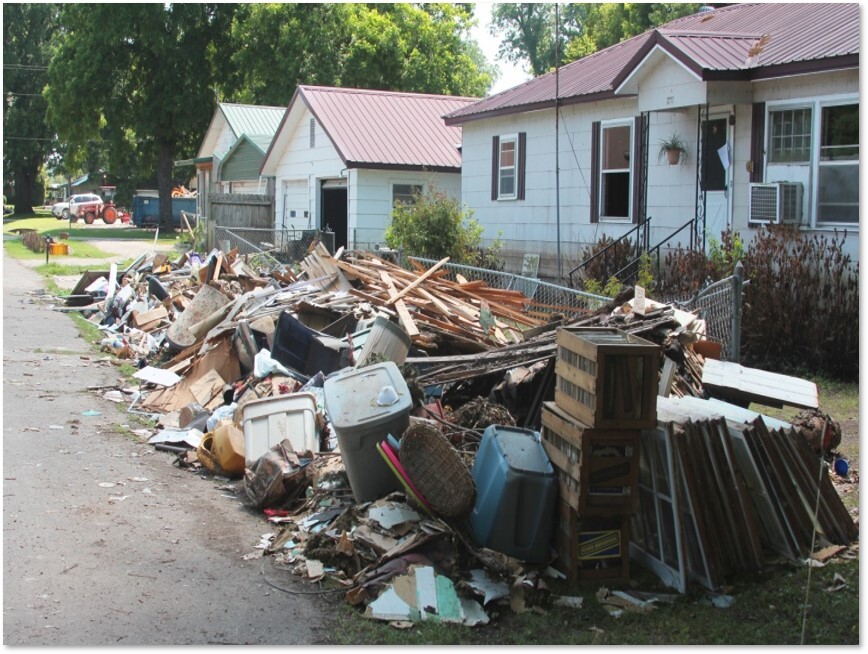 Above is a photo of debris piled on the side the street from the inside of a home that flooded.
Cleaning up after a flood can be dangerous if the proper precautions are not taken. After you’ve started your claim and ensured it’s safe to enter your home, begin documenting damage and taking steps to stop the spread of mold.
According to the CDC, floodwater may contain dangerous bacteria, including human or animal waste, carcinogens, and containments from industrial waste. Protect yourself from these substances by wearing personal protective equipment like gloves, boots, eye protection, and an N95 mask if cleaning mold or other debris. Wash work clothes that are possibly contaminated in hot water and detergent before reusing them. Throw out items that cannot be cleaned, such as pillows, mattresses, carpeting, or stuffed toys.
For insurance claims, save samples of carpeting, wallpaper, furniture upholstery, and other items that may impact your claim.
Experiencing a flood can be overwhelming, but taking the above steps can lessen the impacts and make recovery more manageable.
Save your family treasures
Floods can leave behind a trail of destruction. Sometimes, this includes items in your home that hold great sentimental, historic, or monetary value to you or a family member.
While it may not be possible to completely restore these items, it is often possible to save them. If you have water-damaged items, visit Save Your Family Treasures | FEMA.gov.
|