January 2021
 We encourage you to check out some of the documents below!
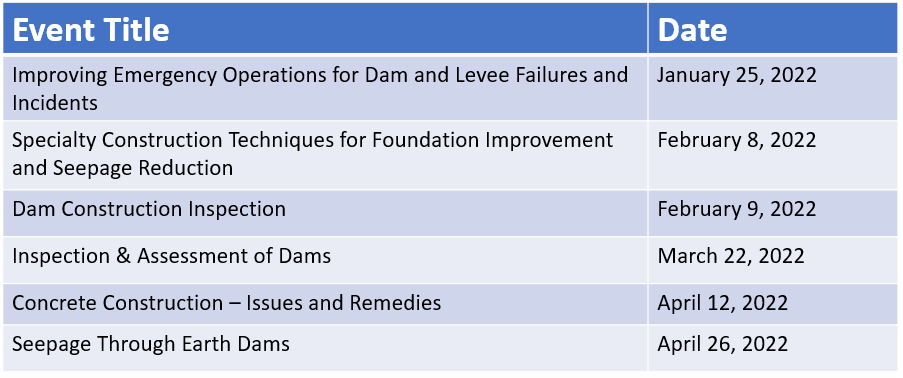
Keep an eye out for more information about OWRB's upcoming spring inspection training or register for any of the following ASDSO trainings.
 Hazard mitigation planning reduces loss of life and property by minimizing the impact of disasters. It begins with state, tribal and local governments identifying natural disaster risks and vulnerabilities that are common in their area. After identifying these risks, they develop long-term strategies for protecting people and property from similar events. Mitigation plans are key to breaking the cycle of disaster damage and reconstruction.
Federal funding for dam rehabilitation projects require local communities to have an updated FEMA approved hazard mitigation plan in place. Use FEMA's interactive hazard mitigation plan status map to determine the status of your dams community hazard mitigation plan.

 The establishment and control of proper vegetation is an important part of dam maintenance. Properly maintained vegetation can help prevent erosion of embankment and earth channel surfaces and aid in the control of burrowing animals. The uncontrolled growth of vegetation can damage embankments and concrete structures, making close inspection difficult. Thick brush and weed growth can obscure seepage problems, which can get progressively worse if left unnoticed.
Also, please be aware that in accordance with Oklahoma Administrative Code 785:25-3-10,” Trees and heavy vegetation shall be removed from the slopes and crest of earthen embankments and emergency spillway area. Trees and heavy vegetation shall also be removed from an area a minimum distance from the toe of the embankment of 30 feet.”
For more information on controlling and removing woody vegetation on dams please review OWRB Control of Woody Vegetation fact sheet, or contact a Professional Engineer or the OWRB Dam Safety Program.
Earthen dam with overgrown woody vegetation on the upstream and downstream slopes
|