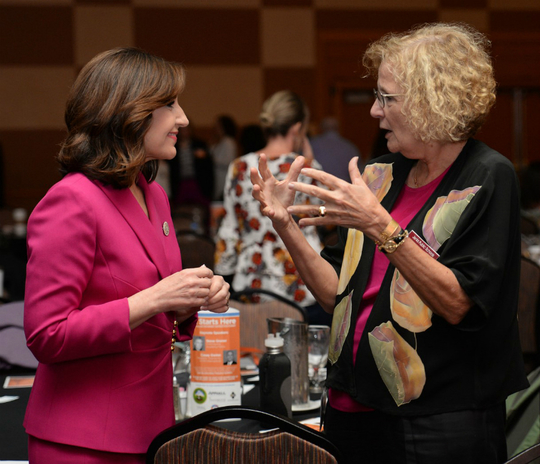
State Superintendent of Public Instruction Joy Hofmeister visits with Shan Glandon from Jenks Public Schools at the statewide Trauma Summit on Oct. 2 in Oklahoma City. To see more photos from the summit, click here.
Dear Teachers,
You see the effects of trauma
in your classroom every day. Many of your students are facing incredible
hardships while their bodies and brains are in critical stages of neurological
and physical development. Tragically, trauma can negatively impact health for a
lifetime.
Studies show nearly half of
Oklahoma students have experienced three or more adverse childhood experiences,
or ACEs. Our state claims a shameful statistic – the highest percentage of
youth experiencing four or more ACEs in the country. ACEs
include:
- physical, sexual
or emotional abuse or neglect
- exposure to
domestic violence, substance abuse or mental illness
- parents who
separated, divorced or have been incarcerated
For insight into the latest neuroscience
findings and strategies on how teachers can be the difference-maker in
taking students from trauma to hope, more than 800 educators and stakeholders
attended our statewide summit It Starts
Here: Trauma-Informed Instruction on Oct. 2 at the Cox Convention Center in
Oklahoma City.
Alliance for HOPE
International’s Casey Gwinn shared how to reverse the impact of ACEs with the
science of hope, and Steve Graner, a ChildTrauma Academy fellow, taught
attendees to “connect before you connect” when managing classroom behavior.
Oklahoma will continue to
tackle the real-world needs of our students by providing training resources for
teachers. Last week, OSDE received three new federal grants totaling $12.5 million to support districts in
meeting the mental health needs of their students.
If you could not join us Oct.
2, I encourage you to watch the recordings from It Starts Here. Some of the information is as heavy as the burdens
your students bear every day. But for so many, you will be the
architect building a bridge toward hope. Click here to see the summit and for
additional resources on trauma-informed instruction.
With respect and gratitude,
Joy Hofmeister, State Superintendent of Public Instruction
 |
|
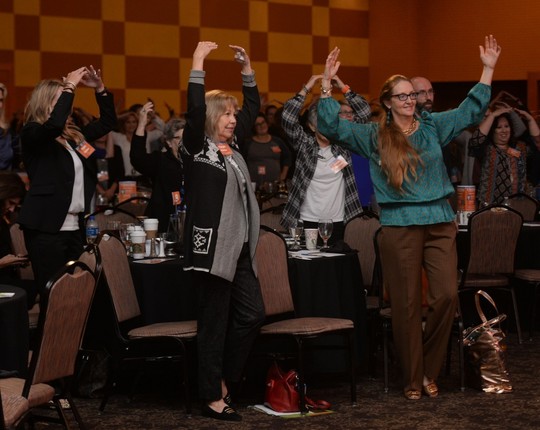
Educators and stakeholders learn from trauma experts at It Starts Here: Trauma-Informed Instruction. |
 Of
the 100 studies requested by Legislators, nearly 40 could impact education in
some way. Both the House and Senate Education committees have recently
completed their interim studies, and a focus on students who have experienced
childhood trauma that may be affecting their behavior at school has emerged. In
each of the following study topics, one solution in particular was mentioned –
the increased need for school counselors and mental health services in schools.
- bullying
- Adverse
Childhood Experiences
- improving
student discipline
- alternatives
to suspension
- safety
and security
Several
other studies focused on the funding and performance of charter schools, and
more specifically virtual charter schools, in comparison to traditional public
schools. There seems to be a general consensus that as the number of students
in charter schools has grown – now approximately 3 percent of public school
students – statutes may need to be reexamined to ensure equity not only for
charter schools but also traditional public schools.
To read the OSDE’s full memo on legislative interim education studies, click here.
|

The Oklahoma State Department of Education (OSDE) is excited to share the Oklahoma Family Guides for English language arts, mathematics, science and social studies for Pre-K through second grade. Additional grade levels are coming soon!
The OSDE Family Guides are resources aligned with the Oklahoma Academic Standards and developed specifically for Oklahoma families to complement classroom learning. They illustrate what is expected of students at each grade level in the different content areas along with practice activities that families can do at home to continue a child’s learning experience.
Schools and families have important roles to play in helping a child grow socially, emotionally and academically. When schools and families work together as partners, it helps children achieve academic excellence! The guides are a great tool to share during your parent-teacher conferences.
To download the Family Guides, click here.
 The Smithsonian offers an excellent guide, Native Knowledge 360°, that features a number of tribal nations in digital lessons, including respectful approaches to Thanksgiving. The digital lessons can be filtered by subject, tribal nation, grade level, language and region. To see the lessons, click here.
By
Julian Guerrero, OSDE Executive Director of American Indian Education
November
is a popular time to teach students about Native peoples and brings a critical
opportunity to ensure history is honestly portrayed and accurately balanced.
Four thoughtful ways to teach respect for Native American Heritage Month are
to:
- Support organizations advocating for Native American communities.
- Support
the needs of your local tribes.
- Take time to learn the indigenous history
of where you live.
- Follow the do’s and don’ts below.
DO
- Do
present Native peoples as appropriate role models with whom a Native student
can identify.
- Do make
sure you know the history of Native peoples, past and present, before you
attempt to teach it.
- Do
present Native peoples as separate from each other, with unique cultures,
languages, spiritual beliefs and dress.
- Do use
materials that show the continuity of Native societies, with traditional
values and spiritual beliefs connected to the present.
- Do teach
Native history as a regular part of American history and not just for
Thanksgiving.
DON’T
- Don’t do
activities that trivialize Native dress, dance or ceremony.
- Don’t
assume that you don’t have Native students in your class.
- Don’t do
or say anything that would embarrass a Native student.
- Don’t
have students dress up as “Indians,” with papier-mâché “costumes” or paper-feather “headdresses” or “war whoops.”
- Don’t
use books that show Native people as savages, primitive craftspeople or simple
tribal people, now extinct.
- Don’t
refer to Native spirituality as superstition, make up Indian legends or
encourage students to do “Indian” dances.
FREE PD: OSDE’s Office of Curriculum
and Instruction is excited to announce free professional development workshops aligned to the Oklahoma Academic Standards across the state. These
workshops are perfect for educators looking to identify a new Professional
Learning (PL) Focus or deepen expertise in an existing PL Focus. To register and for more information, click here. OSDE will offer additional workshops in
January and February.
 ACADEMIC ALL-STATE: The Oklahoma
Foundation for Excellence is seeking nominations for its 2019 Academic
All-State Awards honoring outstanding high school seniors and Oklahoma Medal
for Excellence Awards recognizing innovative educators in Oklahoma’s public
schools. For more information, click here.
|
WESTERN ART CONTEST: The Western Governors’ Association is proud to announce its fourth annual “Celebrate the West” regional art competition that challenges high school students to create works
inspired by their state. The entry deadline is April 28. For more information, click here.
CURIOSITY FEST: Oklahoma Humanities is offering a
limited number of free tickets to high school
teachers and their students to attend Curiosity Fest on Oct. 20. University faculty will present in learning formats that are fun, interactive and engaging. For more information, click here. To request tickets, click here. To request free classroom sets of Oklahoma Humanities Magazine, email Carla Walker.
By Jan Foreman, OSDE School Support Specialist
What are the latest and best instructional strategies?
Robert Marzano, John Hattie and Doug Lemov, three
prestigious educational researchers, published findings regarding the impact of
instructional practices and ranked them by effectiveness. Instructional
practices scored at 0.4 have a medium effect, while 0.8 are considered high. Any
strategies ranked at 1.0 or above greatly impact learning.
-
Identifying
Similarities and Differences (1.61)
-
Summarizing – 1.00
-
Note-taking – 1.00
-
Reinforcing
Effort – 0.80 (Google this term to see some reinforcing effort
rubrics.)
-
Providing
Recognition – 0.80
-
Homework – 0.77
(assigning independent practice appropriately)
-
Practice – 0.77
– (providing both massed practice, presented repeatedly in a short
period of time, and spaced practice, presented several times over a
longer time span, appropriately)
-
Using
Non-Linguistic Representations – 0.75 (using graphic
organizers, physical models, generation of mental models, drawing of pictures
and pictographs and kinesthetic activity to enhance student learning)
-
Cooperative
Learning – 0.73
-
Setting
Objectives – 0.61
-
Providing
Feedback – 0.61
-
Generating
and Testing Hypotheses – 0.61
-
Questions
–
0.59 – (asking questions that focus on what is important, that are higher
level, and that occur before, during and after learning; using appropriate
wait-time)
-
Cues – 0.59
– (teacher strategies that prepare students for learning, that relate new
learning to prior knowledge)
-
Advance
Organizers – 0.59 – (a bridge from prior learning to new
learning that provides a context)
No single strategy is perfect. Incorporate a combination of
these high-yield strategies into your teaching toolkit. Research is a
continuous process; thus, there may be new findings regarding effect size. For
more information regarding student engagement and impactful teaching
strategies, consider the following books:
-
Visible
Learning for Teachers by John Hattie
-
The
Art and Science of Teaching by Robert J. Marzano
-
Highly
Engaged Classroom by Robert J. Marzano and Debra J. Pickering
-
Teach
Like a Champion by Doug Lemov
Jan has 40 years of experience in Oklahoma as a teacher, coach,
administrator and associate state director of AdvancED. With a southern
Oklahoma farming and ranching background and as a rural school graduate, Jan is
a strong advocate for rural schools.
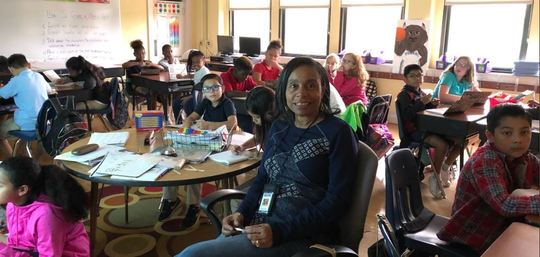 Putnam Heights Elementary in Oklahoma City Public Schools, which utilizes differentiated instruction in its lessons, was one of the stops on Oklahoma Teacher of the Year Donna Gradel’s “Year of the Teacher” tour.
By Donna Gradel, 2018 Oklahoma Teacher of the Year
Oklahoma’s
eight-year strategic vision for education, Oklahoma
Edge, and the groundbreaking statewide summit, It Starts Here: Trauma-Informed Instruction, both rolled out by the
Oklahoma State Department of Education, bring hope for the health of our
students and their future academic success. The raise in our paychecks brings
hope for competitive salaries. Increased teacher involvement in the political
arena brings hope for future pro-education laws. However, I believe the
greatest hope for the students of Oklahoma lies with our teachers.
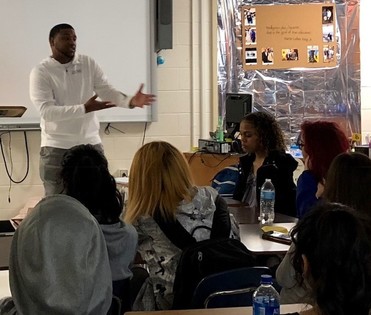 Young teachers are an integral part of the pipeline to success. Take Rodney Cox, for example. He began his teaching career in the science department at Putnam City West High School last January. He is creating expectations of excellence for his students and has open communication in hopes of inspiring them to make good decisions that lead to successful lives. I asked the class why Mr. Cox resonated with them. They said the following: “He inspires us.” “He cares for us.” “He gets us.” “He’s a role model.” “He understands.”
Our young teachers are doing an excellent job – so excellent that neighboring states and the private sector will be knocking on their doors. We must properly fund our education system and provide the adequate tools, acceptable class sizes and support services our students need. If we do, we have a far better chance of keeping our talented younger teachers in Oklahoma where their passions lie.
To read more of Donna’s blog, click here.
|
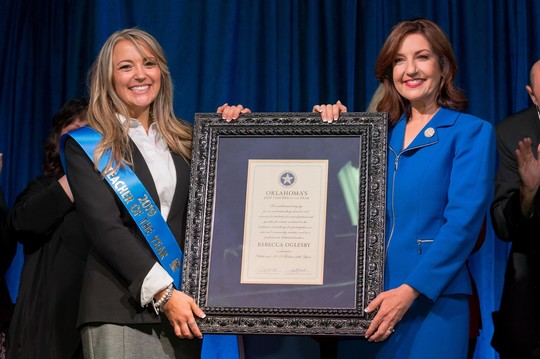 Becky Oglesby, representing Yukon Public Schools, was named the 2019 Oklahoma Teacher of the Year last month. To see more photos from the Teacher of the Year ceremony, click here.
A Yukon elementary school art educator whose abundance of comic-book memorabilia in her classroom earned her the nickname the “Batman Teacher” is Oklahoma’s 2019 Teacher of the Year. Becky Oglesby teaches Pre-K through third grade at Ranchwood Elementary School in Yukon Public Schools.
State Superintendent of Public Instruction Joy Hofmeister said Oglesby’s creative teaching style, along with her optimism and passion for education, is a model of excellence for Oklahoma.
“Becky is a teacher who does not falter, no matter the circumstances. She demonstrates compassion and courage, and treasures her students, never failing to celebrate the individuality of each one,” Hofmeister said. “Often, our teachers are literal heroes. Becky Oglesby is proof of that.”
Oglesby was a second-year teacher at Plaza Towers Elementary in 2013 when a deadly EF-5 tornado tore through the Moore school and claimed the lives of seven students. At the height of the storm, she used her body to shield her first-graders as the twister destroyed the school.

All first- through fifth-grade classrooms may now apply to participate in the Governor’s Christmas Tree Lighting Ceremony. The event will take place from approximately 1 p.m. to 6 p.m. on Dec. 4 at the Oklahoma State Capitol. We invite you to apply to be one of the 24 schools participating in this exciting event!
Applications are due Oct. 22. For an application and more information, click here.
 Do you know a classroom teacher or
principal who demonstrates exceptional educational talent and whose exemplary accomplishments beyond the classroom provide models of excellence
for the profession? We are looking for early- to mid-career individuals whose
contributions are largely unheralded yet worthy of the spotlight for our State
Educator Talent Pool.
From our talent pool, we pull engaging and inspiring educators to serve
on special task forces and advisory groups and sometimes for special recognition.
Deadline for recommendations is Dec. 15. This is a confidential process. For a
recommendation form, click here.
|

NATIVE YOUTH GRANT: OSDE has been awarded a nearly $4 million federal Native Youth Community Project grant aimed at improving college and career readiness for 1,400 American Indian high school students. To read the story, click here.
SCHOOL SAFETY GRANT: OSDE will receive almost $400,000 in grant funding to bolster school security, educate and train students and faculty, and support law enforcement officers and first responders. To read the story, click here.
|
 |
|
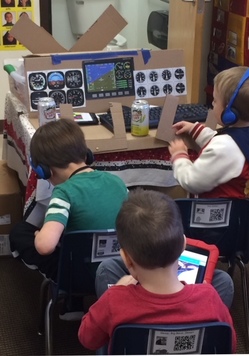
GAINING ALTITUDE: Students as young as Pre-K have been bitten by the flight bug, thanks to an aviation STEM program at Ada Public Schools that ultimately could result in juniors piloting a plane about the same time they are getting their driver’s licenses. To read the story, click here.
SCIENCE-FAIR DYNASTY: To get her students interested in STEM, one Byng teacher showed them how science projects can improve their community. To read the story, click here.
|

|