|
FOR IMMEDIATE RELEASE
April 25, 2017
Editor’s
note: This is one of a regular series of monthly columns titled “Oklahoma
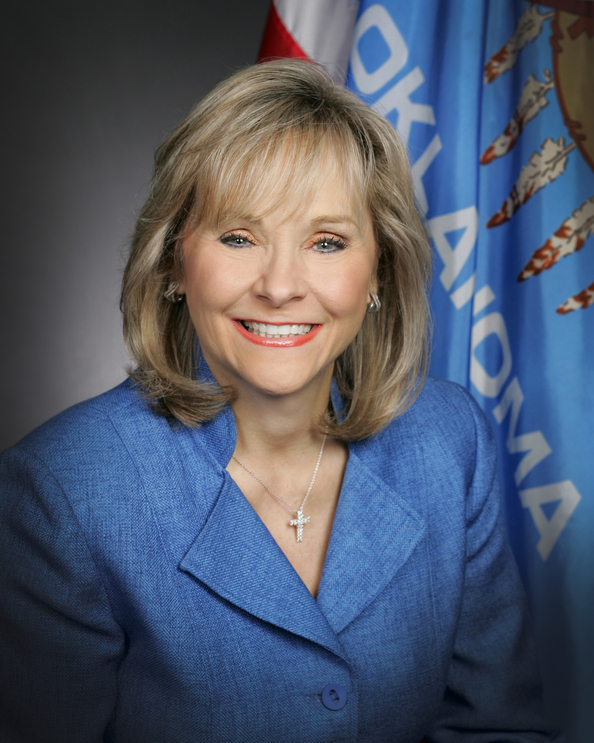
Now” by Governor Mary Fallin.
Governor Mary Fallin’s “Oklahoma
Now” Column
Headline: Computer
Science, Coding Skills in High Demand by Businesses across Our State
By Governor Mary Fallin
April
is science and technology month in Oklahoma. What a great time to highlight the
emerging computer science scene that is shaping our economy and driving our
future.
In
Oklahoma, our emerging software community has taken on a life of its own. These are coding professionals who know
programming languages with names like C++, Perl, Ruby, Elixir, Python or
Javascript.
Colleges,
universities and technology centers across the state offer classes and
postsecondary degree programs in computer science; software development is part
of the curriculum. Students who graduate
with computer science postsecondary degrees and credentials are ready to join
the workforce and shape our future with innovative software. Degrees in programming,
coding and computer science skills are in high demand by Oklahoma’s businesses.
Numerous high-paying jobs are available throughout the state.
In
addition to formal software education, there are flourishing grassroots efforts
to grow the coding community across Oklahoma.
One of the most impactful is the vibrant community of coders nurtured by
an Oklahoma City and Tulsa not-for-profit foundation known as Techlahoma.
Founded
by the husband-and-wife team of Jesse and Amanda Harlin along with Ryan Hoegg, Techlahoma
says its goal is to help Oklahomans become workforce ready by creating free
training each week. It provides meeting space for user groups and boasts an
online community of more than 500.
With
accommodations provided by StarSpace46 in Oklahoma City and 36° North in Tulsa,
Techlahoma is home to at least two dozen coding user groups that regularly meet
in its space. Groups hosted by Techlahoma include Code for OKC, Code for Tulsa,
Nerdy Girls OKC Code Club, OKC Python and OKC.js, one of several java-focused
groups that meet there.
Both
StarSpace46 and 36° North are community-focused co-working and collaboration
spaces that serve as startup incubators.
Facebook
Chief Operating Officer Sheryl Sandberg recently invited two other governors and me to take part in the Girls Who Code 2017 Female Governors’ Summit at
Facebook’s headquarters in Menlo Park, Calif.
I was able to speak to our state’s thriving initiatives to connect
Oklahoma children in the K-12 age group with computer science education and all
things STEM (science, technology, engineering and mathematics).
For
instance, the Tulsa Regional STEM Alliance is part of a drive to promote STEM
and computer science to young people through activities, such as coding camps
and professional education for teachers in conjunction with the Oklahoma
Engineering Foundation.
Project
Lead the Way, a national not-for-profit entity, has developed a comprehensive
computer science educational program targeting students at all grade levels
through high school. It offers a “Launch” module for K-5, two new courses
embedded in its middle school Gateway curriculum, and a high school course for
App developers as well as one for “innovators and makers.”
“We
have a pretty comprehensive opportunity for K through 12 students,” said Robin
Schott, Project Lead the Way’s Oklahoma-based vice president for the west-central
region. “Our curriculum is problem-solving based, so students are solving real-world problems through our content, and it is very engaging to them.”
Why
is all this important?
Consider
the type of employees that Oklahoma’s tech-focused companies are seeking. They
are all hiring computer-coding professionals. And that includes our
long-established oil and gas community.
“Technology
is intertwined with the future of our economy,” said Dustin Curzon, executive
director of Tulsa’s 36° North. “For our economy to thrive, we need to invest in
the current and future generations to create more tech careers -- not just
coders but knowledge workers who can integrate technology into their
professions.”
I
am committed to ensure this growth continues across the state. Through Oklahoma
Works, resources are being committed to make sure our students are prepared to
meet the demands of the new economy. My support for Oklahoma’s entrepreneurial
community stands as a testament to Oklahoma’s dedication to growing and
diversifying our economy. The future of computer science, in its many forms, is
bright, and Oklahoma will likely remain an emerging center for growth in this
industry.
###
|