|
|
Welcome to the quarterly newsletter for the Public Water Supply (PWS) Water Quality Division (WQD). This newsletter will keep you up to date on the latest in the world of water and will also help you ensure your systems are running smoothly by providing information and links to upcoming trainings, events, and funding opportunities. So dive in! The water’s fine.
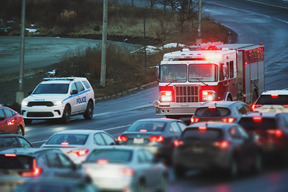
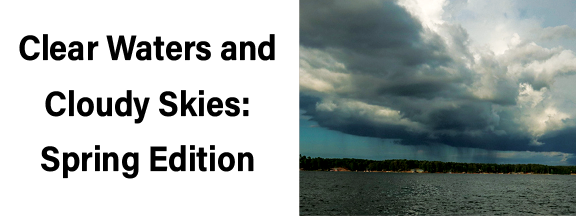 As we approach storm season, increased flood and tornado risk looms. Be sure you’re ready!
-
Review and update Emergency Response Plans using EPA’s Flood and Tornado checklists
- Coordinate with local partners and communicate with customers
- Prepare facilities, service areas, and employees for emergencies
 |
|
Find your PWS sampling schedules here.
Find your PWS district compliance coordinator here.
|
 |
|
Find your PWS district engineer here. |
|
IN THIS ISSUE:
• Spring Topics
• Effective Communication
• CCR Update
• Lead and Copper Update
• Do I Need A Permit?
• PFAS Initial Sampling
• PFAS Sampling SOP
• State Environmental Lab
UPCOMING TRAINING
AND EVENTS
DEQ Operator Renewal Training 2026
• Apr 14 - Hugo
• May 5 - Woodward
• July 21 - Muskogee
• Aug 11 - Burns Flat
More Dates TBA
More info here.
ORWA Technical Conference
April 22-24
Norman
More info here.
APWAOK/OWEA Joint Technical Conference Trade Show
May 4-6
Tulsa
More info here.
EFO Regulatory Newsreel
June 18
Edmond
More info here.
Funding Agency Coordinating
Team Conference
June 18
OKC
Contact Kristi Roy
kristi.roy@deq.ok.gov
ORWA Equipment Expo
June 25
Stillwater
More info here.
|
|
 Permits are typically needed for major construction or modifications that impact a water systems treatment processes, distribution system, or source. Some common cases where permits are needed are below.
*Any significant changes to treatment, such as adding a new chemical or treatment unit. Adding a new chemical injection point may require a permit as well if it was not previously permitted.
*Waterline extensions and interconnections with other systems.
*Construction of a new well or surface water intake.
New waterlines may receive an exception for requiring a permit for municipal PWS systems, rural water districts, and non-community systems when the waterline falls within certain diameter and length constraints under OAC 252:626 chapter 3. Permits are not needed for general repairs or maintenance such as replacing broken pumps.
|
Funding & Assistance Corner
There are a number of funding resources available. Follow these links for more information and reach out to us with any questions.
Oklahoma Water Resources Board (OWRB)
|
|
 In this era of instant social media rumors and anxiety, by communicating effectively and proactively, we can build a “trust bank” that is needed when things actually go wrong.
-
Translate the Technical - Your customers don’t need to know the molecular chemistry of water treatment, explain in simple terms what is going on.
-
Own the Narrative - Don't wait for a public notice requirement to be your first interaction with the public. Share behind the scenes photos of fixing a line break or explain why hydrants are being flushed.
In the eyes of the public, the quality of your communications is often just as important as the quality of water.
 For Emerging Contaminant issues, 100% Drinking Water StateRevolving Fund (DWSRF) loan forgiveness subsidy may be available for all eligible projects. Funds are for projects which will remove contaminants listed on any EPA contaminant candidate list, which currently includes PFAS and Manganese.
|
Approved Projects
The following projects were approved since the last quarterly newsletter to receive funding from DWSRF in conjunction with OWRB. Learn more about funding categories here.
System Name: Sequoyah Co. RWD #7
Loan Amount: $1,000,000
Amount Received: $800,000 BIL GS (2024) & $200,000 Base Disadvantage (2025)
Project Description: New water storage tank and storage tank rehab
System Name: Ringling MA
Loan Amount: $531,050
Amount Received: $531,050 BIL GS (2024)
Project Description: Water storage tank rehab.
System Name: Mayes Co. RWD #8
Loan Amount: $166,690.50
Amount Received: $166,690.50 BIL GS (2024)
Project Description: AMR water meters.
|
|
 If your water system has not completed initial PFAS monitoring yet, there is still time to start. Start sampling by April 2026 to stay in compliance with the PFAS rule. Initial monitoring must be complete by April 26, 2027.
Watch this video to learn how to collect PFAs samples.
 As part of the LCRI all CWSs must conduct lead (Pb) sampling
and public education at schools and childcare facilities they
serve at least once. CWSs must first submit a list of eligible
schools and childcare facilities by November 1, 2027 and
update the list every 5 years. DEQ recommends to begin
investigating now and start creating a list of all known schools
and childcare facilities that your CWS serves. Include the full
name of the school, location and type (middle school, daycare,
k-12 etc.). If you have any questions regarding this
requirement reach out to DWLC@deq.ok.gov or are interested
in DEQ's Lead Testing in Schools Program please reach out to
LWSC@deq.ok.gov
|
|
System Name: Buffalo PWA
Loan Amount: $12,961.54
Amount Received: $12,961.54 BIL GS (2022)
Project: Generator
System Name: Breckinridge PWA
Loan Amount: $297,410.38
Amount Received: $297,410.38 BIL GS (2024)
Project: Waterlines
System Name: Hobart
Loan Amount: $1,031,665
Amount Received: $800,000 BIL GS (2024) & $108,043.38 Disadvantaged (2025)
Project: AMI meters
System Name: Minco MA
Loan Amount: $800,000
Amount Received: $265,278.88 BIL GS
(2024 & $534,721.12 BIL GS (2025)
Project: Waterlines
|
|
Timeline for the PFAS, CCR,
and LCRI Rules
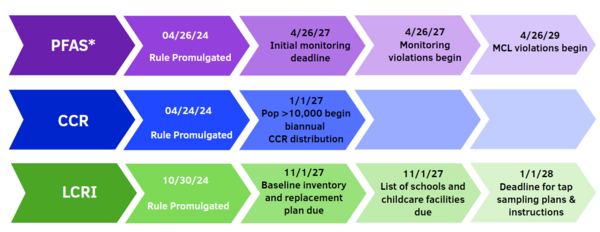 *On May 14, 2025, an EPA Press Release announced the intention to rescind and reconsider the regulatory determination for four PFAS and develop a two-year federal exemption framework for PFOA and PFOS.
|
|

As community water systems are aware, the Consumer Confidence Report (CCR) Rule is a federal rule that requires all community water systems to distribute a brief annual water quality report which summarizes information about each system that is collected throughout the calendar year. In 2024, EPA finalized revisions to the CCR Rule which will take effect in 2027. These revisions aim to improve readability and understandability of CCRs, the accuracy of the information presented, improve risk communication in CCRs, incorporate electronic delivery options, provide supplemental information regarding lead levels and control efforts, and require systems who serve 10,000 or more persons to provide CCRs to customers biannually (twice per year).
The Department of Environmentally Quality (DEQ) will continue to draft rule-compliant CCRs for each individual community water system in the state of Oklahoma. Systems may distribute the CCR provided by DEQ or have the option to draft their own CCR. If you choose to develop your own version of the CCR, it will need to be reviewed and approved by DEQ, before dispersal, to ensure all required information and health effects language is included.
DEQ will keep community water systems informed of relevant information related to the CCR Rule Revisions as strategies are finalized approaching the 2027 implementation deadline.
|
Is your system a seasonal system that does not operate year-round?
Follow the start-up procedures here.

Oklahoma State University Industrial Training and Assessment Center (ITAC) is offering their energy efficiency assessment services at no-cost to water, and wastewater systems that produce or treat between 3 to 10 million gallons per day. Get your comprehensive energy assessment, along with implementation support by clicking this link
|
|
Funding Update
In recent years the Drinking Water State Revolving Fund (DWSRF) program, along with many other funding programs, has been able to provide substantial funding, including subsidy or principal forgiveness, to communities and water systems across the state of Oklahoma. This is due to the significant federal funding which has been made available from the Infrastructure Investment and Jobs Act (IIJA) and American Rescue Plan Act (ARPA). As many of us know, ARPA funds must be disbursed by the end of 2026, or sooner in many cases. DWSRF does not provide ARPA funding, but have utilized IIJA to fund many projects through the DWSRF program for the last four years. DWSRF will apply for the fifth and final year of IIJA funds this summer, which will include funding for lead service line investigatory and replacement projects, emerging contaminant projects (such as PFAS or Manganese), and additional funding for any other DWSRF project.
With this in mind, each year DWSRF evaluates the available federal funding and the health of the program to determine the subsidy structure and intended use plan for the next fiscal year. At this time, DWSRF has started this evaluation and planning process, but has not yet selected or finalized the subsidy structure for the next fiscal year. DWSRF will hold a public meeting to present the draft subsidy structure and intended use plan and to hear any comments from the public prior to finalization. Please keep an eye on the DWSRF webpage for updates on the public meeting.
|
|
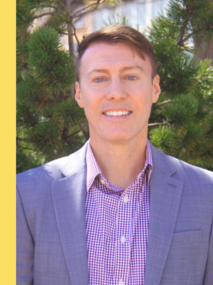
Before stepping into this role, Dustin was the Assistant Director of the State Environmental Laboratory. Prior to working in the State Environmental Laboratory, Dustin managed the Land Protection Division's Restoration and Revitalization Group, overseeing the Superfund, Brownfields, Tar Creek, and Site Cleanup Assistance Programs. During this time, he managed complex environmental site investigations and cleanup projects.
Dustin earned his bachelor's degree in biology and chemistry from East Central University. Before joining DEQ, Dustin spent 3 years working in a clinical laboratory and he is excited to be back working in a laboratory again. When he is not working, Dustin enjoys gardening, traveling, and home renovation projects.
|

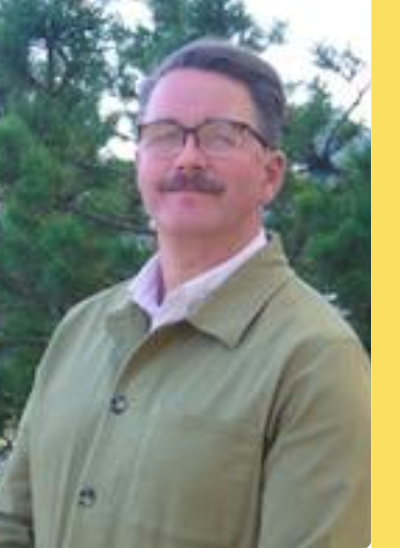
Jayme Jones is an Oklahoman to his core. Previously, he managed the Field and Laboratory Customer Assistance section here at the State Environmental Laboratory. He has spent his entire career, more than 33 years, in support of the agency’s mission and has made it his passion to serve the people
of Oklahoma.
Jayme earned his bachelor’s degree in biology from the University of Central Oklahoma. In addition to his servant heart, he is a proud father of 4 girls, enjoying carpentry and woodworking as time allows, and family time in the great outdoors
|
|
Mission
The mission of the State Environmental Laboratory Services (SELS) Division is to effectively meet the roles and responsibilities required of the Oklahoma Principal State Laboratory. Generate analytical data of known and documented quality to protect public and environmental health in the State of Oklahoma. Serve as a technical resource for ODEQ programs and staff, state, federal and tribal agencies, municipalities, students, and Oklahoma citizens through laboratory services, education, outreach, development of consensus standards and continued advancement of the environmental laboratory sector.
Tours
Interested in touring our laboratory? SELS gives tours to the public. We want you to get the most out of the tour so contact us and we can arrange a tour based on your interests and age level. From college students to elementary students, we have done an array of tours. Please fill out the Lab Tour Form and we can better assist you. We would love to see you!
|
|
|
Subscribe to the newsletter here.
Contact: DEQ PWS WQD
405-702-8100
Website
|
|
|
|
|