|
|
Welcome to the quarterly newsletter for the Public Water Supply (PWS) Water Quality Division (WQD). This newsletter will keep you up to date on the latest in the world of water and will also help you ensure your systems are running smoothly by providing information and links to upcoming trainings, events, and funding opportunities. So dive in! The water’s fine.
|
IN THIS ISSUE:
- Winter topics
- Lead service line money
- Lead in schools money
- Seasonal start-up
- PFAs initial sampling
- New lead and copper unit
- System spotlight
- WQD director change.
|
|
|
Lower temperatures cause the ground to shift and contract, putting stress on pipes. This means line breaks are much more common during the winter. Planning ahead can help restore service to affected areas quickly and prevent major loss of water and pressure during line breaks.
Keep updated maps of the locations of valves needed to isolate portions of the system and ensure they are exercised regularly as part of a valve exercise program.
Monitor water usage and pressure across distribution to locate breaks. Unusual drops in pressure or high usage can indicate a leak or break is present.

|
|
DEQ Operator Renewal Training
Jan 6 - Shawnee
Feb 10 - Lawton
Mar 3 - Afton
Apr 14 - Hugo
May 5 - Woodward
More info here.
AWWA Membrane
Technology Conference
Feb 2-5
Myrtle Beach, SC
More info here.
AWWA/WEF The Utility Management Conference
Mar 24-27
Charlotte, NC
More info here
ORWA Annual Conference
April 22-24
Norman OK
More info here.
|
|
Oklahoma Rural Water Association offers a free leak detection and mapping program. A successful leak detection event can only happen with accurate maps and exercised valves.To request leak detection technical assistance,click here. DEQ has a free Operations and Maintenance Plan template for systems to utilize. Section 6.3.iii covers valve exercising.Get a copy here. |
|
 Winter weather brings a host of challenges for water systems. Among those, treatment impacts may be of interest. While colder weather generally won't lead to treatment failure by itself, it can reduce the effectiveness of water treatment and the quality of water. Some tips to reduce the impact of cold weather on treatment are:
- Insulate any exposed pipes and ensure chemical feed lines are as short as possible and protected from the cold. Freezing chemical lines can cause treatment disruption or failure.
- Verify disinfection is adequate at lower temperatures by checking Concentration-Time (CT) calculations. Lower temperatures may require higher doses of disinfectant to be used to make sure the water is properly disinfected.
- Monitor settled water turbidity and perform jar testing to ensure coagulant dosing is correct. Lower temperatures can reduce effectiveness of coagulation.
|
Funding & Assistance Corner
There are a number of funding resources available. Follow these links for more information and reach out to us with any questions.
Oklahoma Water Resources Board (OWRB)
|
|
 This is the fourth year of a special five-year program intended to fund Lead Service Line Inventory (LSLI) and replacement. Funding is available, and projects should be submitted and approved to begin before October 1, 2027. Disadvantaged systems serving less than 10,000 people are eligible for 100% loan forgiveness, while disadvantaged systems serving more than 10,000 people are eligible for 50% of the project amount as loan forgiveness. Non-disadvantaged systems whose project helps areas of low-income may qualify for some type of loan forgiveness. Small systems under 3,300 people are eligible to receive free technical assistance to complete the initial report.
These funds are available only to those systems that have submitted an approvable LSLI. The Initial Lead Service Line Inventory was due October 16, 2024. If you have not submitted an approved inventory, please do so. We are still reviewing and accepting inventories. To submit the inventory, send a copy to DWLC@deq.ok.gov for review. EPA will be sending out violations to any system that does not submit an inventory.

|
Approved Projects
The following projects were approved since the last quarterly newsletter to receive funding from DWSRF in conjunction with OWRB. Learn more about funding categories here.
System Name: Roland Utility Authority
Loan Amount: $2,276,000
Amount Received: $800,000 BIL GS (2024)
Project Description: Construction of new clearwell.
System Name: Anadarko PWA
Loan Amount: $1,454,850
Amount Received: $800,000 BIL GS (2024)
Project Description: Construction of a new elevated storage tank.
|
|
|
If your water system has not completed initial PFAS monitoring yet, there is still time to start. Start sampling by April 2026 to stay in compliance with the PFAS rule. Initial monitoring must be complete by April 26, 2027. See the SOP Protocols for PFAS Sampling here. Find an accredited lab here.
EPA Releases New Resources to
Help Protect Water Systems, Strengthen Cyber Resilience
On October 23, 2025, EPA released new and updated planning tools that water systems across the country can use to help prevent and respond to cybersecurity incidents.
To better address potential vulnerabilities and ensure all water systems have the best information and emergency safeguards available to maintain protections for drinking water and wastewater treatment operations, EPA has developed the following resources:
-
Emergency Response Plan (ERP) Guide for Wastewater Utilities: This updated plan describes strategies, resources, plans, and procedures utilities can use to prepare for and respond to an incident, natural or man-made, that threatens life, property, or the environment.
-
Template for Developing an Incident Response Plan: This new template assists drinking water and wastewater systems with developing a Cybersecurity Incident Response Plan (CIRP).
-
Incident Action Checklists: EPA is publishing two new checklists, as requested by the water sector, to help drinking water utilities prepare for, respond to, and recover from specific emergencies such as wildfires, power outages, floods, and cybersecurity incidents.
-
Cybersecurity Procurement Checklist: This checklist will help water and wastewater utilities incorporate cybersecurity into the procurement process. It will help utilities generally assess the cybersecurity practices of suppliers, including vendors and manufacturers, and their products during procurement.
|
|
System Name: Elk City
Loan Amount: $3,494,544.13
Amount Received: 25% of closing amount - $873,636.03 BIL GS (2024)
Project Description: Water line replacement.
System Name: Clarita - Olney RWD
Loan Amount: $315,970
Amount Received: $315,970 BIL GS (2024)
Project Description: Replacing water meters to AMR technology.
System Name: Drumright UT
Loan Amount: $438,130.52
Amount Received: $438,130.52 BIL GS (2024)
Project Description: Water line replacement.
Contact:
DEQ PWS WQD
405-702-8100
Website
|
|
 Since it will soon be time for seasonal water systems across the state to come back online, here’s a refresher on seasonal start-up procedures. Seasonal water systems are systems that do not operate year-round but rather have a seasonal operating period. All seasonal systems should have received a letter with guidance on preparing your well and proper sampling to be performed before serving water to customers. Before a seasonal system comes back online for the season:
• Inspect and make necessary repairs.
• Clean and flush the lines.
• Disinfect the well.
• Collect 2 total coliform and E. coli samples and submit to a DEQ certified lab.
• Submit the signed certificate stating you completed all necessary steps, along with a copy of your sample results
to DrinkingWater@deq.ok.gov.
• Contact your local DEQ office to schedule a site visit.
• Use this start up form and start up guidance from DEQ.
|
NEW LEAD AND COPPER UNIT
We have a new Lead and Copper Unit at DEQ! Due to new requirements of the Lead and Copper Rule Revisions and the Lead and Copper Rule Improvements, a new unit was created to help implement the new regulations. They will be dealing with all things related to Lead and Copper, including LSLIs, exceedances and sample sites and schedules. If you have any questions they can be contacted at DWLC@deq.ok.gov .
|
|
 The DEQ Lead Testing in Schools program (LWSC) is a free and voluntary lead sampling program for public schools and licensed childcare facilities in Oklahoma. Qualifying facilities are able to receive monetary assistance to cover major costs associated with addressing lead issues identified through the LWSC program, including fixture and water cooler replacements, filter additions,
or even plumbing repairs.
Visit DEQ’s Lead Testing in Schools and Child Care Facilities Website to learn more about the program.
|
 Oklahoma State University Industrial Training and Assessment Center (ITAC) is offering their energy efficiency assessment services at no-cost to water, and wastewater systems that produce or treat between 3 to 10 million gallons per day. Get your comprehensive energy assessment, along with implementation support by clicking this link.
|
|
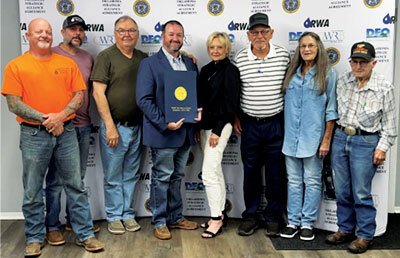
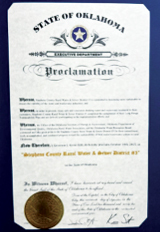
 Stephens Co RWD #3 District Manager Justin Harkins recently received a Letter of Proclamation from the State of Oklahoma recognizing the successful completion of the Long-Range Sustainability Program (LRSP).
The LRSP is a rigorous program consisting of 21 key components that ensure a water district is planning for the next 100 years of sustainable water service.
The proclamation was presented by the Oklahoma Rural Water Association (ORWA), Oklahoma Department of Environmental Quality (ODEQ), Oklahoma Secretary of Energy, Oklahoma Water Resources Board (OWRB), and the National Rural Water Association (NRWA).
Justin began the process in May 2023 with the help of ORWA and successfully completed it in September 2025. He extends a special thanks to our Board of Directors for their forward-thinking leadership and commitment to the district’s long-term goals.
We also want to recognize Chandler Peterson and Thomas Sedgwick of ORWA for their invaluable assistance in completing the LRSP.
|
Out of over 1,300 water districts in Oklahoma, 90 have applied for the LRSP — but only 18 have completed it. Our district is proud to be #18 in the state and to have earned the highest Capacity Development Score (Cap Dev Score) in Oklahoma with a 97% rating!
A heartfelt thank you to all the state and federal organizations that continue to support our mission and help our district remain strong for generations to come.
|
|
 Effective December 1, 2025, George Russell became
the director of the Water Quality Division succeeding
Shellie Chard.
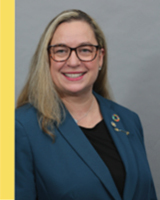
After obtaining a bachelor’s degree in chemical engineering and biotechnology from the University of Oklahoma in 1992 Shellie Chard began her state career at the Oklahoma Water Resources Board. In 1993, when the DEQ was formed she moved to the new agency. After working in permitting, enforcement and data management, she spent time as the assistant director and later director of the Administrative Servies Division. In 2010, she came back to the Water Quality Division (WQD) as the Division Director.
|
During her tenure as the WQD Division Director, she held numerous state and national leadership positions including serving as President of the Association of State Drinking Water Administrators (ASDWA), Association of Clean Water Administrators, and Oklahoma Water Environment Association, Treasurer of the Ground Water Protection Council, and a Board Trustee of the Water Environment Association. Additionally, she has served two terms on the National Drinking Water Advisory Council and the University of Oklahoma Gallogly College of Engineering Board of Advisors.
DEQ wishes Shellie well in the next chapter of her career and welcomes George Russell to lead the WQD into the future.
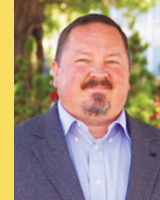
Before stepping into this role, George was the Director of the State Environmental Laboratory and managed the Public Water Supply Group, overseeing drinking water compliance, enforcement, and funding programs. Earlier in his DEQ career, he worked as an Environmental Programs Specialist in the Environmental Complaints and Local Services Division, serving several counties from the Stillwater and Oklahoma City offices. He later became the Stormwater and Minor Water Program Manager.
|
George earned his bachelor’s degree in Zoology and his master’s degree in Administrative Leadership, both from the University of Oklahoma. Before joining DEQ, he served as an air traffic controller in the United States Army. Originally from Little Axe, Oklahoma, George comes from a big family with one brother and four sisters. He and his wife, Julie, have been married for 17 years and have a 15-year-old daughter, Lila. When he’s not working, George enjoys gardening, reading, and hiking.
|
|
|
|
|