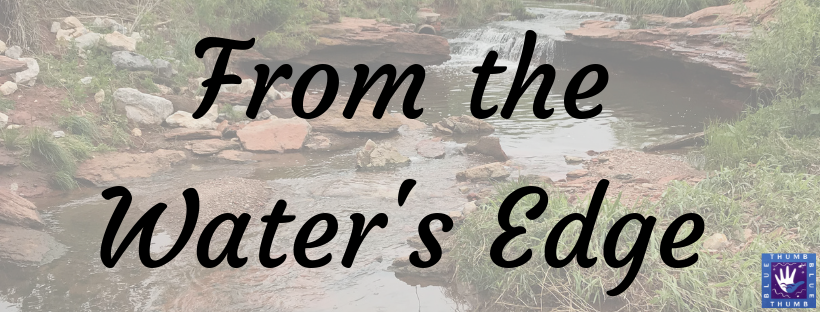
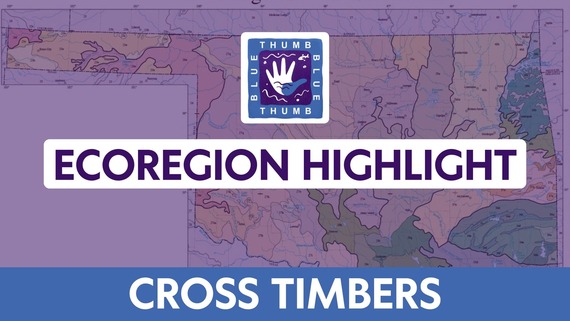
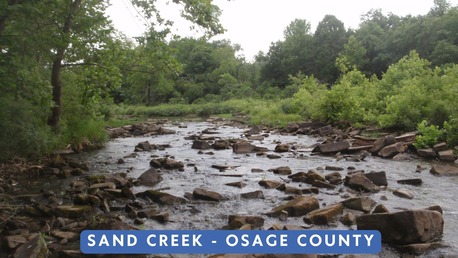
 The Cross Timbers (CT) Ecoregion, also known as the Central Oklahoma/Texas Plains Ecoregion, stretches from southern Kansas, through central Oklahoma, and into central Texas. This ecoregion is a transitional zone between the forests of the east and the plains of the west. The western edge of this ecoregion coincides with the western limit of several species of mammals and insects that are more common in the east. Habitats in this ecoregion include the bottomland forests of post oaks and blackjack oaks in the east, and willows and cottonwoods in the west, tallgrass prairie, pockets of shortgrass prairie, and oak savannas. Two types of streams occur in the CT Ecoregion: wide, shallow, sand-choked streams and higher gradient streams that have gravel or cobble substrates. Sand Creek (pictured below) is an example of a CT stream with a gravel or cobble substrate. Sandy streams include the Cimarron River, the North Canadian River, and the Washita River.
 |
Plastic pollution is bad for the whole environment...including wildlife and people!
Instead of decomposing, plastics break down into smaller and smaller pieces that are in the air, water, and soil, and even us.
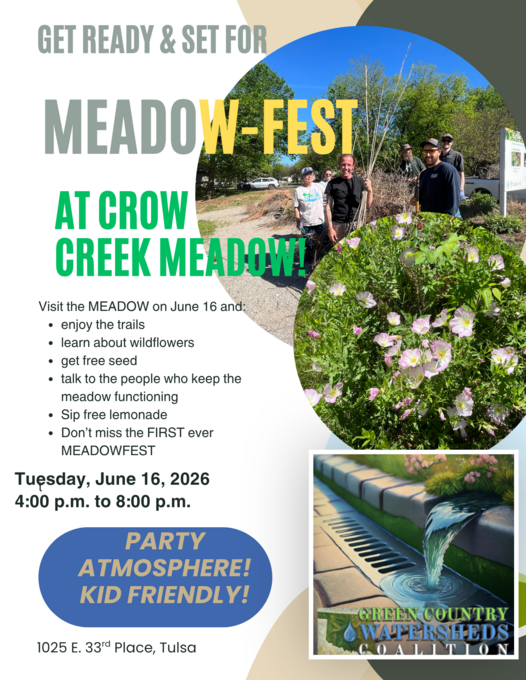
The Green Country Watersheds Coalition (in which Blue Thumb is a primary partner) is fighting plastic pollution through education and the distribution of reusable bags. If you take home your groceries and other household goods in plastic bags, you will help the environment by switching to reusable bags. Nearly half of all plastic pollution comes from what is called “single use plastics,” like bags, soda cups, disposable eating utensils, etc.
Tell friends and neighbors! Give reusable bags as gifts! Are you interested in starting a reusable bag initiative in YOUR watershed? Send an email to Cheryl.
My Environmental Footprint
It has been at least a decade since I have taken one of the “environmental footprint” quizzes that provides a score on how you are doing with taking care of our earth. There is a link to take the quiz below this article. I am not happy with my results.
The test does the calculations in the metric system, so it was not as clear to me as it could have been. I think that subconsciously I chose this particular test so the results would be somewhat buffered to my understanding.
Where I did well:
- I have a small house
- I grow some of my own food
- I try to be seasonal in my selection of foods
- I rarely fly
- I do not buy too much new stuff
Where I did not-so-well:
- I drive a medium size car that uses fossil fuel
- I eat beef too often
- I heat my home with natural gas
- I run my AC too many hours
What is astonishing to me is that I know I am better than many of the people around me at living more lightly on our planet. Still, I am not living lightly enough. Also, I was surprised at how many sources I reviewed that encouraged less consumerism as a primary path toward a healthier earth. Blue Thumb had an entire calendar devoted to reducing our impact in 2020.
SO…now that I have reviewed my impact, I am looking at ways I can do better. I will start with thinking more about my meals. I will eat less meat, more vegetables, and will dine out less often. I will plant more vegetables in my garden.
I do not plan to change vehicles any time soon, but I will contemplate my routes and errands so that my trips are more efficient.
When I am out in the world and making purchases, I will be more intentional and less subject to temptation.
I will renew my commitment to reducing my “stuff.” I recently took clothes from my closet and donated them to a thrift store, and I will continue on this journey. What I no longer need can be helpful to others. I have a pact with myself that I will buy no new shoes unless a pair (or two or three) are rehomed or perhaps disposed of.
I encourage you to learn a little more about your personal consumption, review the results and then see how you can make adjustments that help us to have a healthier earth. Talk to family, friends, and neighbors about your efforts. Start something good.
Cheryl Cheadle
Blue Thumb Volunteer Coordinator
|