|
A Note From the Editor,
Even as temperatures drop, conservation is still growing strong! This month, we’re sharing the story of an Oklahoma flower farmer who’s extending her growing season—and protecting soil and water quality—with the help of a high tunnel. Enjoy!
- Justine
|
|
UPCOMING EVENTS
Beginner's Composting Class
-
Vermicomposting - Dr. Douglas Hamilton, Waste Management Extension Specialist
-
Icebox Test & Japanese "Under Sink" Composter - Dr. Douglas Hamilton, Waste Management Extension Specialist
November 5, 2025 | Stillwater, OK
Register & Learn More
|
|
|
Blue Thumb Training | Tulsa
Nov. 8-9 | Tulsa
Learn More
|
|
Stay Ahead of the Herd: Emerging Disease Threats in Livestock Health | Okmulgee
Nov. 10 | Okmulgee
Learn More
|
|
Ripple Effects: STEM and Sustainability Educator Workshop | Chandler Park
Nov. 15 | Tulsa
Learn More
|
|
Cool Things in Conservation
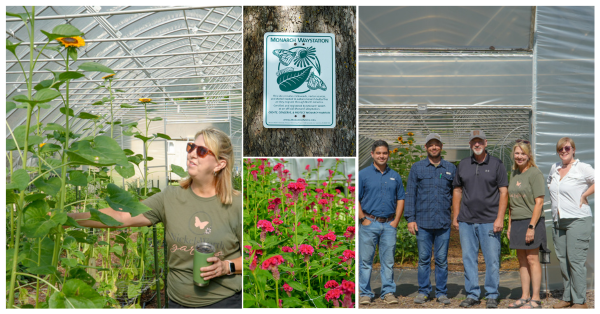
In a vibrant yard in Broken Arrow, Oklahoma, one determined flower farmer has taken a step into the future, installing a high tunnel system that promises to transform both crop growth and the nature of her flourishing business.
Meet Brenda Nickels, a retired paralegal-turned-floral-wholesaler, who has a long history of caring for the earth. Past her "Monarch Waystation" sign, you'll find lush spaces filled with enticing flowers that excite the senses. Brenda is in her fourth year of running her operation and is more confident than ever, thanks to her newly installed high tunnel. With the help of USDA's Natural Resource Conservation Service (NRCS), through the Environmental Quality Incentives Program (EQIP), and the hard-working hands of her husband, Casey, Brenda was able to install a 30ft x 96ft high tunnel on her 5-acre plot of land.
A high tunnel, also known as a hoop house, is a large structure that uses the sun's energy to warm crops, extending an average growing season and protecting crops from harsh weather. EQIP provides financial and technical assistance to farmers and landowners to promote conservation practices on working lands.
Click here to continue reading to learn more about Brenda's journey.
|
|
 OCC In the News
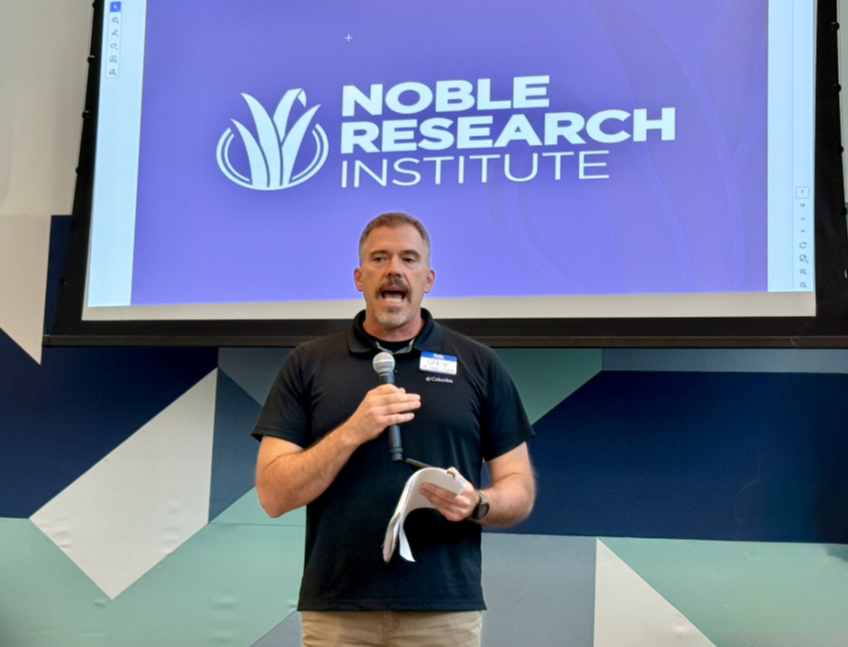
Oklahoma Conservation Commission's Greg Kloxin Connects Soil Health and Water Quality
From director KC Sheperd spoke with Greg Kloxin, Soil Health Program Director with the Oklahoma Conservation Commission, who shared his journey form a long career in water quality to leading the state's soil health initiatives. "I come from a 25-year background and multiple degrees in water quality," he said. "That has been my focus career-wise up until about three or four years ago, when I had an opportunity to assume directorship of our soil health program."
Kloxin described a key turning point in his perspective on natural resource management. He explained that after a conversation with soil scientist Greg Scott, he realized, "The water around the soil particle is the same water that outlets a watershed." That insight led to what he called "a paradigm shift for me to realize that our natural resources management is a management of systems and not components."
Continue reading the full story from Oklahoma Farm Report here.
|
|
PROGRAM UPDATES
OCC is excited to announce a cost-share program for the removal of invasive woody species.
The program is only available in select counties, and applications will be ranked.
If you're losing the battle against:
- Eastern Red Cedar
- Saltcedar
- And/or Mesquite
You might qualify for cost-share for implementing qualified practices in accordance with an approved conservation plan!
Apply and Learn More
|
|
DISTRICT INFO
District 11 - Area 3 - Creek County
Email: creekccd@conservation.ok.gov
Phone: 918-256-5647 Ext. 101
235 W. Hope Ave.
Vinita, OK 74301
|
|
NOVEMBER CONSERVATION MYTH VS FACT
Myth: Water quality isn't a concern during the colder months.
Fact: Runoff from fall fertilizer applications or livestock areas can still impact streams and ponds year-round. Implementing buffer strips and managing manure in fall helps protect water quality even during the off-season.
|
|
|
|