 What inspired you to get involved with Blue Thumb?
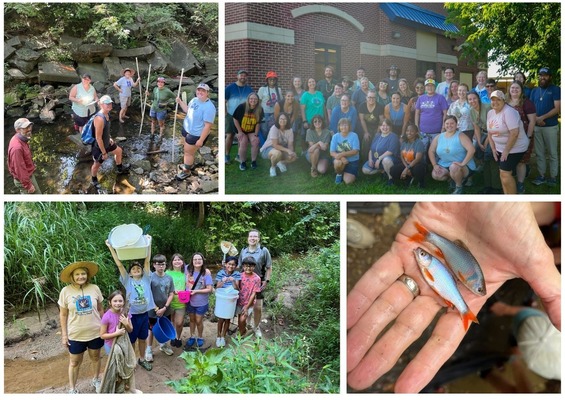
I taught high school Biology at Pawnee High School, Pawnee, Oklahoma for 30 years. In the fall of 2017, I attended the Blue Thumb Volunteer training in Stillwater, Oklahoma with the intention of involving as many of my students as possible. This opportunity helped students better understand water quality, water testing lab techniques and made it very relevant as it was their creek - "The Bear" - as it is affectionately referred to in our small community. Students were involved in creek monitoring, water quality lab tests, site trash pickup and picking out the macroinvertebrates collected at the site. The site I monitor is Black Bear Creek in the north part of town.
What do you enjoy most about volunteering with Blue Thumb?
In May of 2021 I retired and I still enjoy monitoring The Bear alone or with my husband. It is so interesting to see the changes that occur over time, whether natural or man-made. I always see wildlife, evidence of wildlife and their interactions with the creek. I also enjoy when Candice brings the macroinvertebrates we have collected to Pawnee schools and we involve the students in the bug-picking! In the future I hope to involve the new science teachers more in all things Blue Thumb.
How long have you been with the program?
A little over 7 years. The first time I monitored was March 2018.
Is there a memorable moment or lesson from your time with Blue Thumb that stands out?
The most memorable moment(s) was the monitoring that occurred during the school year of 2018-2019. Due to a very strange and unique schedule, I ended up with a biology class of only 4 students. We loaded up once a month to monitor the creek during our class time. The students loved it!
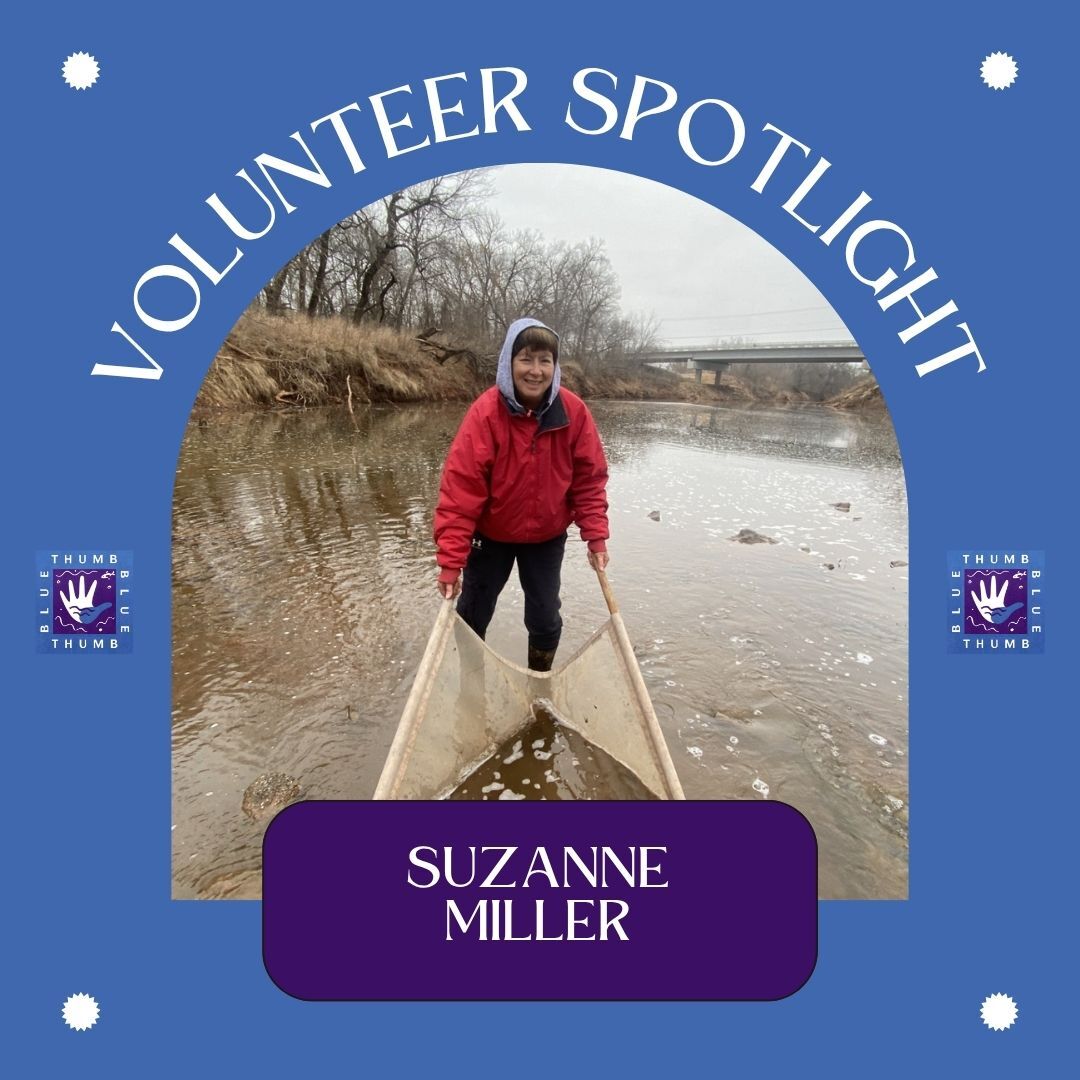
Suzanne Miller
Blue Thumb Volunteer
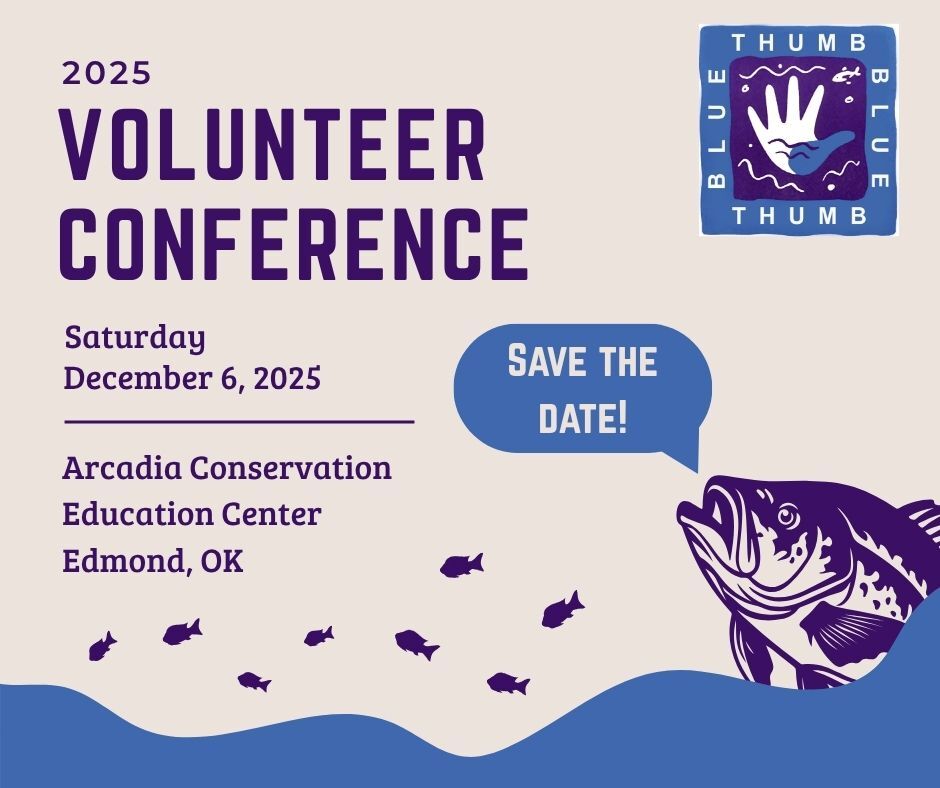
We’re excited to announce the 2025 Blue Thumb Volunteer Conference, a day dedicated to connecting, learning, and celebrating our amazing volunteers! Join us for an inspiring event filled with engaging presentations, interactive activities, and opportunities to connect with fellow conservation enthusiasts.
The conference kicks off on Friday evening, December 5, with an optional social gathering in downtown Oklahoma City. This relaxed event offers the perfect opportunity to connect with fellow volunteers, make new friends, and enjoy informal conversations before the main conference. The exact location will be shared once registration opens.
Saturday, December 6, is the main event, held at the Arcadia Conservation Education Building in Edmond. Attendees will enjoy a variety of presentations from expert speakers, including Steven Patterson on “Once & Future Oklahoma Waters – Dugouts, Eels, and Ecological Abundance,” Wes Shockley on “30 Years of Stream Work,” Sam Miess on “Freshwater Sponges of Oklahoma,” George Fulk on his book "The Cherokee County Bird Book", and Edie Marsh on “Fishes of Oklahoma” and her upcoming book with her husband and fellow biologist, Bill Matthews.
In addition to the speakers, the day will feature interactive activities, exhibits, and a silent auction. Lunch will be provided, offering attendees a chance to network and share ideas.
Keep an eye on From the Water's Edge for registration details and more information. Save the date, December 6, 2025, and join us for a weekend of inspiration, learning, and fun!
Hunter Hodson
Blue Thumb Field Education Coordinator
Looking for a way to dive into outdoor learning with your local school or youth group? The newly released 2025 edition of the WILD School Sites Guide is now available—and it's teeming with ideas to turn any schoolyard into a thriving habitat for learning and conservation. Whether you're working upstream or downstream in environmental education, this guide is your go-to for inspiring young minds to explore, restore, and steward the wild spaces around them—right on school grounds.
This fin-tastic resource helps educators, students, and volunteers wade into school site improvement projects with confidence and purpose. The guide includes step-by-step tools for habitat enhancement, community engagement, and long-term project planning: all designed to connect students with real-world conservation work. From rain gardens to bird sanctuaries, pollinator plots to outdoor classrooms, it’s overflowing with ways to make learning WILD and watersmart.
As Oklahoma’s Project WILD Coordinator, my personal favorite section is Appendix D, which brilliantly crosswalks Project WILD and Aquatic WILD activities with the five stages of schoolyard site improvement. This makes it easy to plug high-quality, hands-on lessons into each phase of a habitat project—helping educators build deep connections between their instruction, environmental literacy, and conservation action. This resource is a great compliment to our partner program, Yard by Yard, as it provides the curriculum connections that educators need to integrate projects into their academic day.
The 2025 revised edition was made possible by support from the Office of Environmental Education at the U.S. Environmental Protection Agency, through ee360+, the Environmental Education and Training Program led by the North American Association for Environmental Education (NAAEE). Their investment is helping states like ours scale up meaningful outdoor learning experiences.
Ready to take flight with hands-on habitat learning? Burrow into the full guide and start building your own WILD School Site sanctuary! Download it for free from Project WILD today.
Thank you for all you do to keep Oklahoma's children rooted in place, splashing through science, and WILDly inspired!
Jack Hilgert
Blue Thumb Environmental Education Coordinator
Your Stream is Part of a System Part II
In the July From the Water’s Edge, I applauded volunteers for taking the leap to become a monitor and adopting a stream. Newly adopted streams give us the chance to learn about an entirely new watershed. The reactivation of a stream that was previously monitored gives us a chance to see how the stream is doing over time.
What does it mean to be more involved in education about your stream? There are many ways to get your stream and your watershed into important conversations. Admittedly, I am comfortable in front of a group, so some of the things offered here might not be the direction you would go. Just review these and see where you might find a way to get your stream (and how to protect it) in the spotlight.
Begin by asking your Blue Thumb contact to review stream data with you. Let us help you get an idea of what your data are saying. If you are new to monitoring, you will need to wait until you have some data gathered. You can still offer pointers about stream protection, such as by using an EnviroScape watershed model.
- Attend a monthly meeting of your local conservation district and let them know that you are a local Blue Thumb stream monitor and tell them about your stream. I can help get you on the agenda for one of their meetings.
- Local libraries (public, high school, college) are often happy to allow space for an exhibit. Create a small exhibit that can be displayed. Blue Thumb staff will help you.
- Use social media to tell about your monitoring experiences. Some volunteers actually have Facebook pages set up for their streams. This is a great way to get water quality into the conversation.
- Wear your Blue Thumb t-shirt not only for monitoring but to the grocery store, out to play pickleball, to Grandmother’s house for Thanksgiving. Let your t-shirt be a conversation starter!
- Invite municipal staff members to come out and get to know your stream with you. Ask them to participate in monthly monitoring, a bug collection, or a fish collection. If they show up, then they get a great experience, and if they do not show up maybe you can make a follow-up contact to let them know how things are going. Maybe you could include your local city council representative in these invitations.
It is important to keep environmental topics in front of people. Your voice matters. Do not hesitate to talk with any Blue Thumb staff member and it is great if you email me to also help you go public!
Ready, Set, Litter Pick-up!
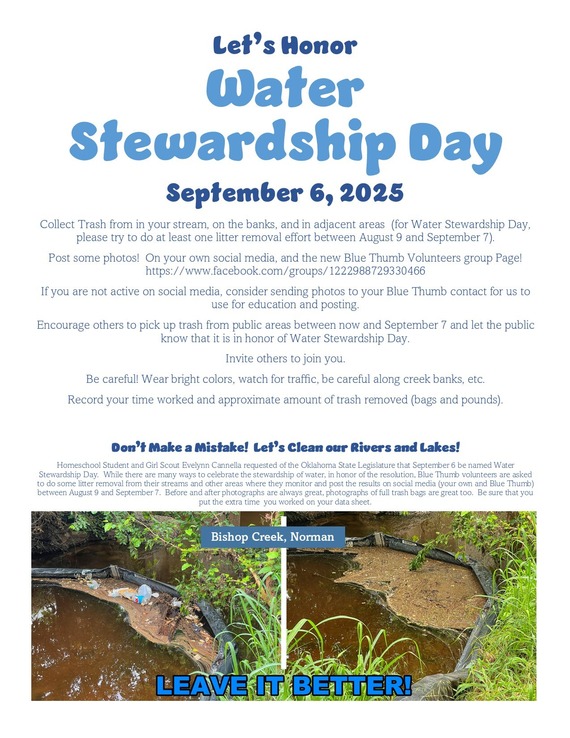
Homeschool Student and Girl Scout Evelynn Cannella requested the Oklahoma State Legislature designate September 6 as Water Stewardship Day. While there are many ways to celebrate the stewardship of water, in honor of the resolution, Blue Thumb volunteers are asked to do some litter removal from their streams and other areas where they monitor and post the results on social media (your own and Blue Thumb) between August 9 and September 7. Before and after photographs are always great, photographs of full trash bags are great too. Be sure that you turn in the extra time that you work for trash removal to your Blue Thumb contact or email it to bluethumb@conservation.ok.gov.
 Cheryl Cheadle
Blue Thumb Volunteer Coordinator
|