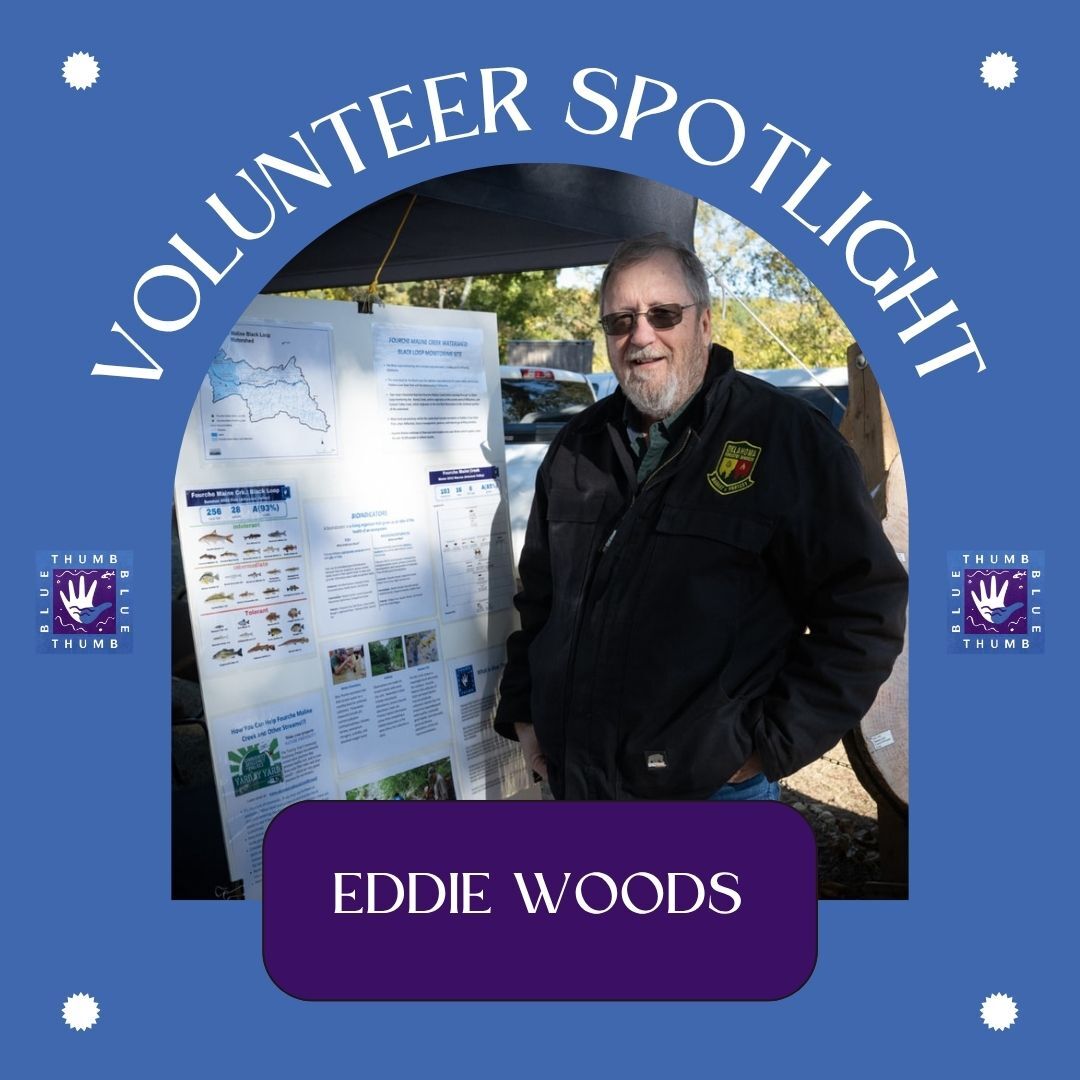
 What inspired you to get involved with Blue Thumb?
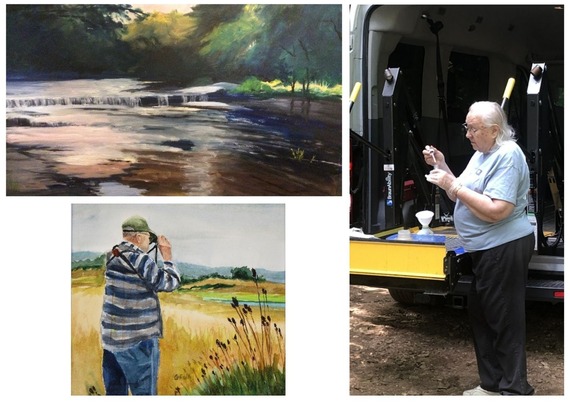
I actually inherited an Environmental Science Class from predecessor when he retired. Part of the curriculum was participation in the Blue Thumb Program. I had watched him through the years and, also being in natural resources management, was interested in the program. Upon taking over the class it was a no-brainer to continue in the program as a supplement to the curriculum.
What do you enjoy most about volunteering with Blue Thumb?
Of course, I enjoy being outside and viewing the stream through the different seasons of the year. I enjoy introducing students to stream ecology and the importance of protecting our streams and rivers. Even though I’ve been around a while, I still continue to learn new things.
How long have you been with the program?
I’m not sure on the exact number of years, but somewhere around 20 give or take a few.
Is there a memorable moment or lesson from your time with Blue Thumb that stands out?
Not one particular moment stands out. Every site visit is unique and the anticipation of what I might see each time is still exciting. I do appreciate the opportunity that I’ve had to work with the different Blue Thumb staff members through the years and the working relationships that we’ve built. I’m in awe of each one of their commitment to the Blue Thumb Program and to the health and integrity of Oklahoma’s streams and rivers.
Eddie Woods
Blue Thumb Volunteer
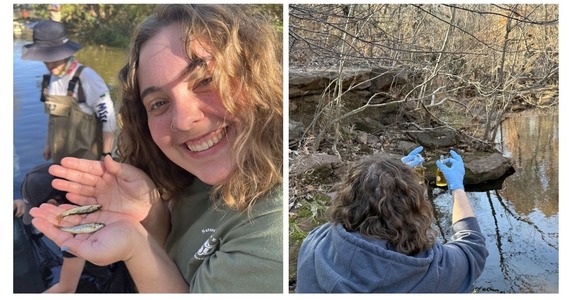
Hello everyone! My name is Haley Amicarelli, and I’m super excited to be Blue Thumb’s new summer intern! I’m a student at Oklahoma State University studying Fisheries and Aquatic Ecology. After I graduate, I’d love to work in water conservation or as a fisheries biologist.
I first heard about Blue Thumb at the 2024 Earth Fest in OKC where I was immediately drawn to their mission. It felt like the perfect opportunity to gain hands-on experience in the field I’m passionate about. I have been monitoring my creek since November. It has been such a cool experience, and I have learned a lot!
I’ve always loved being outside whether it’s hiking, kayaking, bird walks, or fishing. I’ve been part of several environmental science clubs over the years, and in high school, I even joined my FFA’s Entomology CDE team because of my fascination with insects.
I’m really looking forward to getting to know everyone and helping out with the fish collections this summer. I can’t wait to learn more about Oklahoma’s aquatic life, spend time in the field, and be part of this amazing team!
Haley Amicarelli
Blue Thumb Summer Intern
Communicating Science
Recently, I listened to a round table discussion by several journalists who cover science; their topic was “communicating science.” I also watched a video about environmental literacy from the North American Association for Environmental Education (NAAEE). The journalists who participated in the roundtable and the NAAEE video both emphasized communicating science in everyday language, focusing on a few key points, and using storytelling to connect with your audience.
Blue Thumb volunteers monitor streams and submit data. They also educate the public about stream protection. Not all volunteers do both, but all volunteers contribute to a better world. I am motivated by learning about making our world better, so here is a quick summary of what I heard…
- Frame your topic rather broadly – move into the finer details if and when your audience is following and you have a good discussion going.
- Acknowledge that you have some biases and watch out for those.
-
Include your personal investment and experiences. People tend to love stories. If you are sharing something that happened to you or something you have observed, chances are good you will be communicating in a fun and enthusiastic way. Include scenarios you have observed! If possible, make it local…such as:
…at my creek the other day
…when I went fishing with my cousin
…I talked to our Park Department
…guess how many bags of trash were collected
…I can give you some milkweed plants from my yard
Make the idea of science* accessible. Science isn’t something that is way out there, science is everyday experiences! Science begins as we simply make observations. When we record those observations, we begin collecting data. I like the idea that everyday conversations teach me something, and I especially like the idea that Blue Thumb volunteers all over the state have experiences to share with other folks. Finally, remember to be encouraging. Few people are motivated by doom and gloom. Although many environmental trends are discouraging, there is so much each of us can do to make things better!
*Science is a systematic discipline that builds and organizes knowledge in the form of testable hypotheses and predictions about the universe.
A Closer Look at Escherichia coli
As the warmer weather arrives, I have some thoughts about Escherichia coli. Bacteria in streams are not always easy to understand. There are many strains of E. coli. Some can cause serious illness; most are relatively harmless. They fall in the “fecal coliform” category of bacteria. One thing is certain – if E. coli is found in streams and rivers, this indicates contamination from sewage, malfunctioning septic systems, runoff from intense agricultural areas, or other situations in which contamination from warm-blooded animals has occurred. Waste from wildlife is usually a natural source of E. coli, though even this isn’t clear-cut because we do things that affect concentrations of wildlife (feeding deer and geese, for example).
Water with high E. coli indicates there could be some strains of harmful bacteria in the water. A high level of E. coli is a wakeup call to be watchful and can help you decide whether to swim or play in the water. High flow situations are likely to cause E. coli levels to rise because stormwater picks up pollutants as it flows toward the nearest storm drain or creek.
Streams and rivers are not the chosen habitat of E. coli; the guts of warm-blooded animals are their happiest home. A colony of E. coli will typically not continue reproducing in the stream – it is washing in from another source or is being added directly by warm-blooded animals.
Every stream has bacteria. It is not unusual to have fecal coliform bacteria. Getting consistently high readings of E. coli bacteria, however, means an investigation is warranted.
For a local scenario about bacteria, I turn to a creek that runs through a small town in the Oklahoma. At one time, the town’s stormwater manager was also a volunteer with Blue Thumb. A specific reach of this creek flowed right through the heart of town and was showing consistently high E. coli readings. The stormwater manager began monitoring for bacteria through Blue Thumb and then expanded E. coli monitoring with a team of volunteers through the city.
This dedicated monitoring effort and the manager’s commitment to identifying the source of contamination eventually led to the discovery of a facility on the edge of town—still within city limits—using outdated and failing septic systems. Community partners came together to fund the installation of a new septic system, and follow-up monitoring showed significantly lower E. coli levels.
The creek, which is a popular stream enjoyed by locals and visitors alike, remains a favorite spot for summer recreation. Thanks to careful monitoring and investigation, it has become a cleaner—and perhaps even safer—place to cool off.
Cheryl Cheadle
Blue Thumb Volunteer Coordinator
|