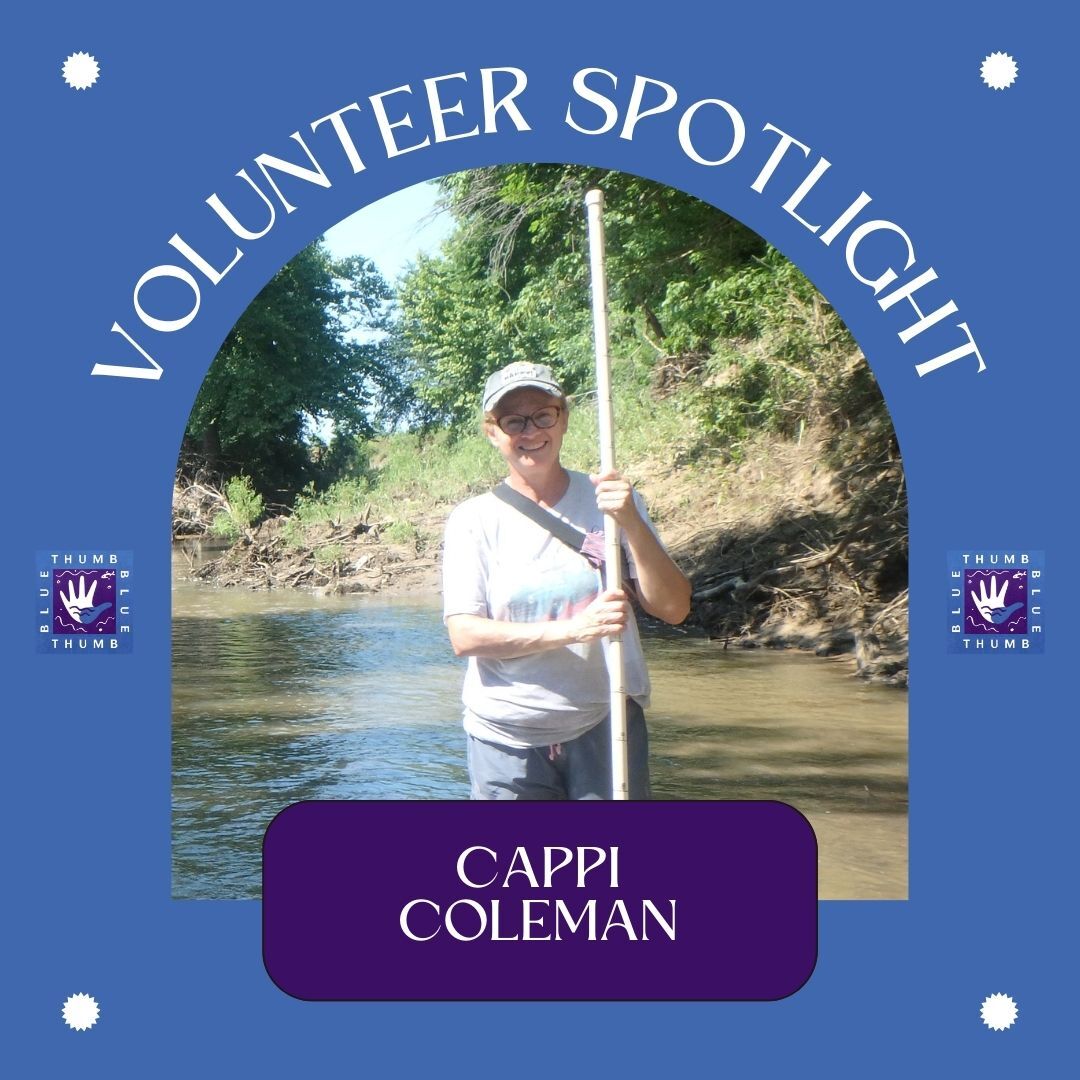
 What inspired you to get involved with Blue Thumb?
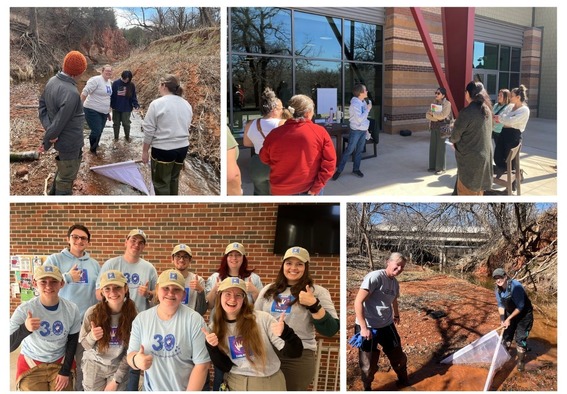
I wanted my students to engage in real, hands-on science and see firsthand how they can make a difference. I wanted them to be part of something bigger than themselves—an opportunity to positively impact the environment. Many of my students come from small schools and rural areas, where they haven’t had many chances to contribute to meaningful change. Blue Thumb allows them to see that their actions matter and that they can play a role in protecting the world around them.
What do you enjoy most about volunteering with Blue Thumb?
I love taking students to the creek, especially knowing that for some, it’s the most time they’ve ever spent in a truly natural setting. Watching them develop a deep appreciation for the experience—no matter the weather—is incredibly rewarding. I enjoy seeing their curiosity grow as they learn the monitoring steps and procedures, ask questions about water quality and aquatic life, and expand their understanding of the environment. One of the most fulfilling parts is witnessing their confidence build with each testing session and the sense of ownership they develop over the health of "their" creek.
One of the things I enjoy most about volunteering with Blue Thumb is the incredible support we receive from Kim Shaw and the entire team. We always look forward to Kim’s visits for macroinvertebrate collections and evaluations. She has a great way of engaging with students, answering their questions, and patiently guiding them through the learning process. Her enthusiasm makes the experience even more meaningful for everyone involved.
How long have you been with the program?
I've been monitoring for 12–15 years, starting with Coal Creek while working at Moss Public School in Hughes County. My involvement became more consistent when I began teaching Biotechnology at Wes Watkins Technology Center, where we now monitor Little Wewoka Creek, just a mile from the school. Blue Thumb is an integral part of our curriculum, providing real-world experience and career exploration—key aspects of career tech programs. My students always look forward to our Blue Thumb monitoring days, excited for the hands-on learning and the chance to make a difference.
Is there a memorable moment or lesson from your time with Blue Thumb that stands out?
It’s hard to choose just one memorable moment because so many stand out. It’s the look of appreciation on my students’ faces as they immerse themselves in the experience, the insightful questions they ask Kim Shaw during collections, and the confidence they build with each trip to the creek. Watching them grow, both in knowledge and self-assurance, is incredibly rewarding. By the time they leave my program, they are richer for having been part of the Blue Thumb monitoring experience.
Cappi Coleman
Blue Thumb Volunteer
How is Blue Thumb Funded?
In the late 1980’s, the Oklahoma Conservation Commission (OCC) began receiving federal dollars to battle pollution in Oklahoma’s waterways. The federal money is matched with state money, work effort, and volunteer hours to create a “whole” program. The federal dollars move from the Region 6 EPA office in Dallas to the Oklahoma Office of the Secretary of Energy and the Environment. OCC is not the only recipient of Clean Water Act (CWA) money, but the amount that we receive powers Blue Thumb, our Rotating Basin Project, and many other people and efforts that thrive within OCC. In particular, the money comes from Section 319, which deals with nonpoint source pollution.
What happens within the Blue Thumb Program is driven by a plan, and every employee has duties that contribute to the plan. At the end of each year Rebecca documents all of the work that has taken place to ensure that the federal money we received was used in the agreed upon manner. Actually, progress is checked each and every month, and mid-way through the year a semi-annual report is completed so that we can stay on top of all the work that is expected to be done.
Volunteers are always encouraged to record the hours that you spend monitoring, or working at an education event, or completing a quality assurance session, etc. Most years Blue Thumb volunteers as a whole contribute over 7,000 hours, with each hour having a value appraised at more than $30.00 an hour. This is a mighty contribution towards “matching” federal funds with goods and services.
Just like completing an enewsletter and sending it to volunteers each month helps us to meet a measure of success, your stream monitoring and submission of data is a goal accomplished and reported to the EPA. Thank you for helping make Blue Thumb a success!
Cheryl Cheadle
Blue Thumb Volunteer Coordinator
|