|
OhioRISE Together | Issue 05 | April 29, 2024 |
|
|
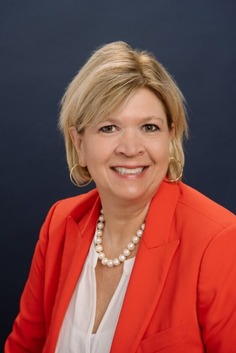
Marti Taylor, Aetna OhioRISE CEO
As CEO of Aetna OhioRISE, I am privileged to have the opportunity to continue guiding the advancement of behavioral healthcare, this time for the youth.
I am humbled and excited to lead this life-changing and lifesaving program. I look forward to working with and learning from clinicians, care coordinators, agencies, families, caregivers, and youth around Ohio. I welcome partnership opportunities with those who are dedicated to serving these young people.
I joined OhioRISE from OneFifteen, where I was founder, president, and CEO, leading a cross-disciplinary team focused on modernizing care to treat substance use disorders. I also served as CEO of University Hospital and the Ross Heart Hospital at the Ohio State University Wexner Medical Center, and president of the Saint Joseph's Cardiovascular Program and Research Institute in Atlanta. Before that, I worked at Duke University Health System starting as a bedside nurse and advancing to lead all cardiovascular care across the Duke Health System and network.
I am an Ohio native, and I hold a bachelor’s degree in nursing from Capital University and a master’s degree in nursing from Duke University. I serve as the Capital University Board of Trustees chair member of the Dayton Development Coalition Board, and a founding member of the Ohio Institute for Substance Use Disorder Excellence.
I have many goals for OhioRISE, starting with spreading the word about the program so that any person —a medical provider, teacher, probation officer, parent, or caregiver — can steer a youth in need our way. I want all of Ohio to know about the good work we’re doing in each community statewide to help children and young people with complex behavioral health needs. We are here to help you understand and take advantage of the unique set of services we offer.
Please feel free to reach out to Marti at Taylorm3@aetna.com.
|
|
|
With children at the heart of its mission, the Ohio Department of Children and Youth (DCY) is helping our state’s 2.5 million children and their families reach their full potential. DCY provides families with resources and supports before a crisis occurs, offers continuity of care for children and youth of all ages, and strives to help more children reach their first birthday.
Governor DeWine created DCY as a new, cabinet-level agency to promote positive outcomes for Ohio’s youth through early intervention, quality education, and family support programs. DCY and its partners, including OhioRISE, focus on efficient and effective delivery of services to our youngest citizens when and where they need them. For example, DCY is collaborating with Ohio Department of Medicaid (ODM) and OhioRISE on addressing the state’s child placement crisis by sharing data and working alongside state and local child serving agencies on safe transitions for youth residing in congregate care.
DCY collaborates with six other statewide agencies, including Ohio Departments of Medicaid, Job and Family Services, Health, Developmental Disabilities, Education and Workforce, and Mental Health and Addiction Services. This collaboration offers a more cohesive approach to supporting Ohio’s children and families by streamlining programs, sharing data, promoting where to go to seek assistance, and highlighting the variety of programs and services available. Families can look forward to a more integrated delivery of services tailored to meet their children’s individual needs.
DCY promotes positive, lifelong outcomes for Ohio youth through early intervention, quality education, and family support programs. Although DCY aims to bridge state programs, it will still depend on a strong network of local providers and partners, such as the OhioRISE program. This approach ensures ongoing assistance and communications with families and youth. DCY uses data to measure its impact and outcomes, this promotes commitment to their transparency and accountability at all levels.
Check out the DCY webpage and follow them on their Facebook, Instagram, and X accounts.
|
|
|
Cincinnati Children’s HealthVine is proud to be a care management entity (CME) for the OhioRISE program. HealthVine provides care coordination for youth in Eastern Hamilton, Clermont, Brown, Adams, Scioto, and Lawrence counties.
Our collaborators are our strength
Cincinnati Children’s HealthVine organization is committed to growing strong partnerships in the community to make sure our members are receiving the best support possible. For example, after their team noticed an opportunity to better partner with a local county family and children serving organization, HealthVine increased engagement and developed a collaborative approach to make sure HealthVine could step in and provide care coordination resources. Today, the HealthVine OhioRISE team provides moderate and intensive care coordination, and the family and children serving organization enhances this with additional services and supports outside of primary care coordination services.
This collaborative approach allows their teams to serve the county youth in a seamless, comprehensive manner, which has led to several accomplishments. For example, they have increased communication with their partners around shared members and regularly share stakeholder reports with county-specific data. HealthVine looks forward to their continued work with county agencies to increase awareness about OhioRISE and its benefits.
Quality improvement
As a CME, HealthVine recognizes the importance of continuous improvement to elevate the quality of OhioRISE care coordination services. They recently completed a quality improvement project, with the goal of creating an earlier connection between OhioRISE and inpatient hospital social workers. This project resulted in improving the patient-family experience for current HealthVine OhioRISE members who are hospitalized by creating a timely and smooth handoff from the inpatient team to the CME.
After several rounds of testing improvements, including surveys, dashboard reporting, standardization of documents, and email outreach templates, the team adopted several new processes into their daily workflow. Due to these changes, they decreased the time of CME contact following hospitalization from 2.6 days to 0.86 days – a 67% total reduction. With the new processes in place, HealthVine care coordinators can promptly start collaborating with families, youth, and the inpatient team on discharge planning, helping kids get back to their caregivers and communities in a timelier manner.
Learn more about Cincinnati Children’s HealthVine services and OhioRISE by visiting the Cincinnati Children’s Healthvine Youth and Family Services webpage.
|
|
|
By Latasha D. Brown
Anti-Human Trafficking Administrator, OhioRISE
Ohio struggles with the harsh realities of human trafficking, which is defined as the control and exploitation of a person for money. Traffickers use force, fraud, or coercion to get a person to engage in commercial sex acts or labor. The OhioRISE program recognizes the heightened vulnerability that youth in Ohio are facing as potential targets for human trafficking.
According to the National Human Trafficking Hotline, Ohio ranked fourth in the nation for reported cases of human trafficking in 2020. According to the 2022 Attorney General Human Trafficking Annual Report, 167 potential human trafficking victims were identified, with 55 under the age of 20. These statistics likely represent a small percentage of those actually trafficked due to underreporting and the secret nature of the crime.
One reason Ohio is vulnerable to human trafficking is because of its location, with major national highways crossing the state. Populations who are at risk of trafficking include a youth who has run away, immigrants, and individuals facing economic hardships are at risk.
In recent years, there has been a growing need to address the issue of human trafficking. Ohio, like many other states, has put strategies in place to prevent this crime and support survivors. OhioRISE has an Anti-Human Trafficking Administrator who works closely with the juvenile justice system and the Attorney General’s office to help youth and young adults who have been trafficked and work with statewide agencies and programs. OhioRISE can help individuals who have been trafficked by helping to coordinate care across systems.
To learn more about human trafficking and how to protect Ohio’s children and youth, visit https://www.aetnabetterhealth.com/ohiorise/resources-services.html.
More Resources
State of Ohio Governor’s Human Trafficking Task Force Website: https://www.Humantrafficking.ohio.gov
U.S. Department of Homeland Security Blue Campaign Human Trafficking Website: https://www.dhs.gov/blue-campaign
There are many ways to detect that a child or youth is at risk for human trafficking. The following behaviors are physical and social signs to keep in mind to protect Ohio’s youth.
Physical signs include:
- Signs of physical abuse and/or evidence of lack of appropriate medical care.
- Poor dental hygiene/lack of dental care.
- Malnourished.
- Exhausted.
- Wounds, lesions, bruises.
- Intoxicated or evidence of drug/alcohol abuse.
- Over-sexualized behavior.
- Branding/tattoos.
Social signs include:
- Violence, drug abuse, alcoholism in home.
- Prior history of sexual or physical abuse.
- Guardianship by unrelated person.
- Older, controlling significant other.
- Runaway and/or homeless.
- No form of ID/documentation.
- Unsure of address or inconsistencies in describing where he or she lives/goes to school.
- Not speaking for one’s self and/or signs of being controlled.
- Evidence of being unable to move and/or unable to leave job.
- Items found on person: Multiple cell phones, list of names (likely buyers).
|
|
|
ODM, the Ohio Department of Mental Health and Addition Services (OhioMHAS), and Ohio’s other child serving agencies have worked closely with the OhioRISE plan to establish the Psychiatric Residential Treatment Facility (PRTF) service. PRTF is a special Medicaid benefit available only to children and youth who qualify for OhioRISE. It provides the highest level of care for kids with the most complex behavioral health needs.
In February 2024, Ohio’s second PRTF began providing services in Youngstown, Ohio. In partnership with the state, Aetna OhioRISE selected providers to extend Ohio’s continuum of care for youth with the most intensive behavioral health needs. Over the course of the next three years, we anticipate:
- More than 10 PRTFs strategically placed throughout Ohio.
- Capacity to serve about 100 children and youth, after the selected PRTF providers complete licensing and contracting activities.
- Providers will be working with the OhioRISE Plan, ODM, OhioMHAS, and clinicians to refine the needed clinical and program capacities and may have major or minor capital revisions for their facilities.
Ohio will continue to assess capacity needs, with a priority on the expansion of PRTFs for specialty populations.
Child and Family Team members that are interested in connecting a youth with PRTF services can request the services through an OhioRISE care coordinator. Youth will be evaluated for medical necessity by the OhioRISE plan using PRTF clinical criteria. Aetna will refer youth to clinically appropriate PRTFs when PRTF services are deemed medically necessary.
For any questions about PRTFs and PRTF services, contact OhioRISE Member Services at 833-711-0773 (TTY: 711). Representatives are available Monday through Friday from 7 a.m. to 8 p.m. For available PRTF resources, visit the Aetna OhioRISE PRTF Resources webpage.
|
|
✔ Medicaid Eligibility and Enrollment
To enroll in OhioRISE, a child or youth must be determined eligible for and enrolled in Medicaid. This document explains how to submit a Medicaid application to determine Medicaid eligibility.
✔ OhioRISE Eligibility: Child and Adolescent Needs and Strengths (CANS) Assessment
Children and youth who may be eligible for OhioRISE must meet each of the following criteria:
- Are eligible for Ohio Medicaid (either managed care or fee-for-service).
- Are age 0-20.
- Require significant behavioral health treatment needs, measured using the CANS assessment.
Children and youth may also be eligible for OhioRISE due to certain urgent conditions. For example, if they are inpatient in a hospital for behavioral health reasons.
A CANS assessment is a tool used to understand a young person’s needs and strengths. It is used to determine eligibility for OhioRISE and to recommend options for treatments and supports that may help the child/youth. The CANS assessment is updated regularly to aid with ongoing care planning. To ask for a CANS assessment, you can contact any of the following:
- A local care management entity.
- A child or youth’s managed care organization.
- Aetna Better Health of Ohio.
- The Medicaid Consumer Hotline.
- Behavioral health providers or Family and Children First Councils, which may have a CANS assessor onsite or be able to link to one.
To find contact information for a CME to schedule a CANS assessment, click here.
Click here for more information about how to schedule a CANS assessment from a managed care organization, CANS Assessor in the community, or Aetna, the OhioRISE plan.
|
|
|
Are you interested in taking a community or provider training? Intensive and moderate care coordination training is available monthly! Click here to register.
Child and Adolescent Needs and Strengths (CANS) training is also available on an ongoing basis. Click here to register.
Visit the OhioRISE Community and Provider Training webpage to learn more about OhioRISE trainings.
|
|
|
This month we recommend, “Embracing Another Normal: Resilience Stories and Strategies for Raising Children with Disabilities” by Kris Burbank and Linda L. Hoopes. This book shares intimate examples of how to thrive, not just survive, the special needs parenting journey.
You can check out a copy at your local public library. Find the closest Ohio library near you here.
We also encourage you to check out the Ohio Department of Developmental Disabilities (DODD) Wellness Project page. This page highlights wellness books, articles, papers, podcast episodes, guided meditation, and more! If you’re interested in creating a self-care routine, click on this short introduction video.
The goal for this section is to promote self-help and research-focused mental health books and resources to support your journey in prioritizing a healthy mind.
|
|
 |
|
If you or your family member is experiencing a mental health, behavioral health, or addiction crisis, know that the following resources are available to help. |
|
|
|
If you or someone close to you is experiencing a mental health or behavioral health crisis, call 1-888-418-MRSS (6777).
Families, youth, and young adults up to age 21 who are experiencing difficulties or distress can receive assistance within 60 minutes after contacting MRSS. You may also receive up to 42 days of intensive, in-home services and linkage to on-going supports. If MRSS is not available in your area, you will still be connected to crisis services.
|
|
|
If you are experiencing a crisis, text “4hope” to 741741 from anywhere in Ohio, anytime.
Crisis Text Line is here for any crisis. A live, trained crisis counselor receives the text and responds, all from a secure online platform. The volunteer crisis counselor will help you move from a hot moment to a cool moment.
|
|
|
If you or someone close to you is experiencing a mental health or addiction crisis, call, text, or chat 988.
By contacting the Suicide & Crisis Lifeline, you will reach a trained call specialist who can offer help and support in your time of need.
|
|
|
|
|