From the State Vet's Office

Dr. Dennis Summers, State Veterinarian
Extra-label drug use (ELDU) in animals is regulated under FDA authority, part of the Animal Medicinal Drug Use Clarification Act of 1994 (AMDUCA). Here are some important items to remember when veterinarians are prescribing medication in an extra-label manner in animals, particularly when it comes to fair and exhibition animals.
ELDU includes deviations from FDA-approved labeling such as using the drug:
- In a species not listed on the label
- For an indication not listed on the label
- At a different dose or frequency than listed on the label
- Via a different route of administration than listed on the label
Before prescribing or dispensing an approved animal drug for extra-label use in food-producing animals, veterinarians must:
- Make a careful diagnosis and evaluation of the conditions for which the drug is to be used.
-
Establish a substantially extended withdrawal period, supported by appropriate scientific information, prior to marketing of milk, meat, eggs, or other edible products. The Food Animal Residue Avoidance Databank (FARAD) is a vital resource to help you accomplish this essential step.
- Institute procedures to assure that the identity of the treated animal or animals is carefully maintained.
- Take appropriate measures to assure that assigned timeframes for withdrawal are met and no illegal drug residues occur in any food-producing animal receiving extra-label treatment.
For more information visit: Animal Medicinal Drug Use Clarification Act (AMDUCA) | American Veterinary Medical Association or Animal Medicinal Drug Use Clarification Act of 1994 (AMDUCA) | FDA
|
Dr. Helen Jones, Veterinary Epidemiologist
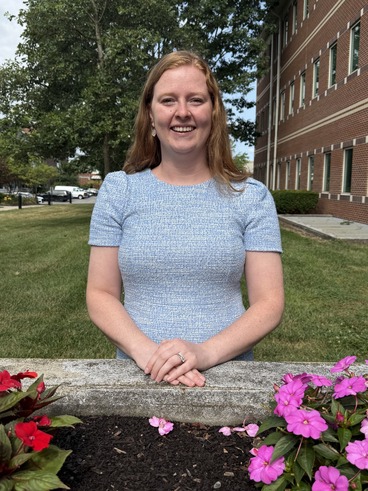
Dr. Helen Jones, originally from Marietta, GA, earned her Doctor of Veterinary Medicine degree from the University of Georgia – College of Veterinary Medicine in 2023. She subsequently completed a Veterinary Public Health residency at The Ohio State University – College of Veterinary Medicine finishing in May 2026. She also successfully became a Diplomate of the American College of Veterinary Preventive Medicine in June 2026. During her residency, Dr. Jones worked closely with the Ohio Department of Agriculture contributing to critical animal health emergency management efforts with a focus on Foot and Mouth Disease (FMD) preparedness and response across Ohio. Among her notable accomplishments, she developed Ohio’s first comprehensive FMD response plan, designed and implemented a veterinarian-focused tabletop exercise to train professionals across the state in Ohio’s FMD response strategy, and supported permitting efforts during the ongoing Highly Pathogenic Avian Influenza (HPAI) outbreak.
Dr. Jones now joins the Ohio Department of Agriculture as a Veterinary Epidemiologist. She looks forward to serving Ohio’s agriculture community and working with partners across the state to address animal health challenges and support the continued strength and resilience of Ohio’s animal industries.
ODA ADDL Fee Increase
On July 1, 2026, the Ohio Animal Disease Diagnostic Laboratory (ADDL) updated diagnostic service fees. Due to rising operational costs and inflation, the ADDL cannot sustain the fees offered consistently for the past six years. Cost adjustments differ depending on the specific test, as fees are based on a careful analysis of laboratory expenses. ADDL remains dedicated to delivering the diagnostic and regulatory testing services that customers anticipate.
Accession fees will remain $8 per accession.
ADDL is committed to providing high-quality, affordable, efficient diagnostic services to veterinarians, the livestock and poultry industries, regulatory officials, and researchers throughout Ohio and beyond. Thank you for continuing to choose the Ohio Animal Disease Diagnostic Laboratory for your testing needs. Your partnership means a lot to us, and we truly appreciate your support.
Intern Spotlights
Abbey Mohan, 3rd-year veterinary student at The Ohio State University College of Veterinary Medicine
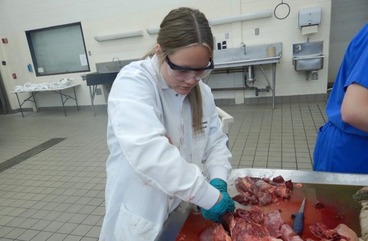
Abbey Mohan is our current Dr. Tony Forshey Summer Internship Program (TFSIP) intern at ODA. She will soon be entering her third year of veterinary school at OSU and is from Chillicothe. During her 10 weeks with the Ohio Department of Agriculture she is spending time in the Division of Animal Health as well as the Division of Meat Inspection, and the Animal Disease Diagnostic Laboratory. Abbey has seen several interesting cases so far including: a necropsy of a calf with interstitial pneumonia, a cow with symptoms of congestive heart failure and a congenital heart defect found at harvest, and assisting with foreign animal disease surveillance testing on swine with vesicles. Abbey said “learning new facets of ODA and the work we do in collaboration with the USDA has opened my eyes to endless career opportunities in regulatory veterinary medicine.” We are fortunate to have Abbey with us this summer, and if you see her out and about with our staff or at the Ohio State Fair please say hello!
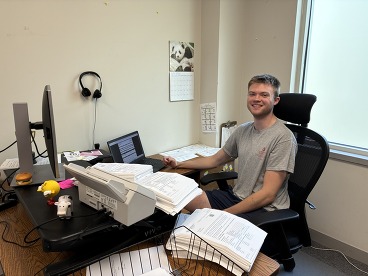
Bradley Gotto, Senior at The Ohio State University, College of Food, Agricultural, and Enviornmental Sciences
Bradley Gotto is an incoming senior at The Ohio State University with goals to become a future large animal veterinarian. This summer he has been working on a project updating the Premise Identification information for thousands of farms across the state of Ohio. His favorite part of the internship has been learning about all the legwork that goes into regulatory vet work, and how that impacts producers and practicing veterinarians.
"The public health and disease response side of animal agriculture is really something that is not gone into much detail at school, I know this foundation of knowledge will help me greatly as I go into my career."
Bradley has been a huge asset to our Division and we appreciate all of his assistance this summer!
Animal Health Rules Review
In accordance with the five-year rule review requirement, the Division of Animal Health has undertaken a thorough evaluation of its existing regulations. Below, you’ll find a summary of the current progress on these reviews, highlighting the chapters under consideration and their status within the ongoing process.
- Chapter 901:1-17, Importation and Health of Animals, is currently under Joint Committee on Agency Rule Review (JCARR) jurisdiction with a Public Hearing scheduled for August 4, 2026 at the ODA.
- Chapter 901:1-13, Scrapie Rules, has completed the Common Sense Initiative (CSI) Office comment period and is being prepared for submission to JCARR.
- Chapter 901:1-1, Chronic Wasting Disease, has been submitted to the CSI Office and the comment period expires on August 7, 2026.
Over the next few weeks, the Division will complete its evaluation of several more rule chapters, such as Livestock Marketing, Pseudorabies, and Dangerously Contagious or Infectious and Reportable Diseases. As each rule package enters the comment period, the CSI Office offers timely eNotifications to keep stakeholders informed. Meanwhile, JCARR updates are conveniently distributed through RuleWatch Ohio. Anyone interested in staying up-to-date on the progress of the Animal Health rule review process is encouraged to sign up for both notification services, ensuring important announcements or opportunities to provide input are not missed.
Fair Season!
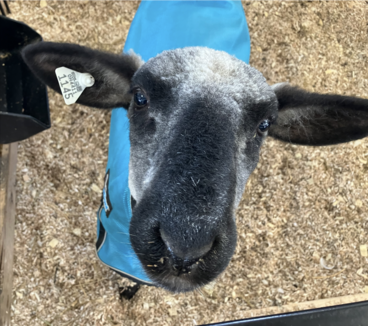
Summer is fair season in Ohio, and you may have already seen some of our Animal Health Inspectors and Veterinarians at your local county fairs. Animal Health staff will also be present daily at the Ohio State Fair to ensure exhibition animals enter and remain healthy during their time on the fairgrounds. The Division remains excited to support and protect our fairs, exhibitors, and their animals!
New World Screwworm
On June 3, 2026, New World Screwworm (NWS) was detected on a 3-week-old calf in Zavala County, Texas. Since then, there have been more detections in Texas as well as New Mexico. For the most up to date information on NWS - visit screwworm.gov.
The USDA website has a map that shows all the current active cases in the US. The Texas Animal Health Commission Infested Zone Map is also linked on the USDA website and shows the current active infested zones in Texas.
The USDA is actively working through response activities to help combat New World Screwworm in the United States. This includes sterile fly dispersal, a robust surveillance plan, and communication between a variety of agencies (USDA APHIS Veterinary Services, State Departments of Agriculture, Wildlife agencies, and state health agencies). Refer to the USDA APHIS website for the most up to date information.
Unless NWS is detected in the state, Ohio will participate in passive surveillance for NWS. This will be through reporting of suspicious cases (heavy myiasis) in animals to the USDA APHIS VS AVIC or ODA State Veterinarian. These cases will be evaluated to determine if they meet suspicious case definitions, followed by a Foreign Animal Disease Investigation if warranted. Not all cases of suspicious maggot infestation or larvae detections will qualify for sampling, so judicious screening will be implemented. The target focus for suspicious cases would be on larvae detection and identification. If you see suspicious lesions or suspect cases, please call the ODA Animal Health State Vet office at 614-728-6220.
|
|