From the State Vet's Office
The Ohio Department of Agriculture (ODA) Division of Animal Health is starting a twice a year (Summer and Winter) newsletter for Ohio Accredited Veterinarians. This will contain relevant information for veterinarians for all regulatory topics from animal disease traceability to county fairs to disease updates.
Animal Health also does a quarterly newsletter to all agriculture stakeholders. Older Editions of the newsletters can be found here.
Questions for the Animal Health team?
Contact us at 614-728-6220 or animal@agri.ohio.gov
HPAI Update
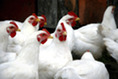
Highly Pathogenic Avian Influenza (HPAI) continues to occur in the United States as we enter the fourth year of this outbreak. Ohio's poultry industry was hit hard over the past couple of months in the western area of the state, particularly in Darke and Mercer counties. The ODA website is kept up to date with information on these detections, how to submit samples to the lab, ODA and USDA's response during this outbreak, and biosecurity resources. On the web page, there is both a map of current active control areas (under the 'Take Action on HPAI' tab) and a list of all detections that have occurred in Ohio (under the 'Tracking HPAI Across Ohio' tab).
Currently, there are no active control areas in Ohio.
After a case is detected, ODA and USDA staff work closely with the Ohio Poultry Association (OPA) and poultry producers on the response which includes depopulation, disposal, biosecurity audits, and environmental sampling of the premises.
If you see poultry that you suspect have HPAI or you want to test to rule it out, you can contact ADDL/Division of Animal Health at 614-728-6220. If you have questions on submission of samples, please ask for Central Receiving staff. If you have questions on if you should sample for HPAI, you can ask for the sick bird coordinator and the receptionist will reroute your call.
Please see the ODA website for two great biosecurity resources for poultry producers at county fairs- Biosecurity at Home and Show and Sick Exhibition Birds
If you or your clients have questions about sick wild birds, please call the Ohio Department of Natural Resources (ODNR) at 1-800-WILDLIFE.
|
Official Fair Veterinarian training for County Fairs
ODA will be hosting 4 training sessions for fair veterinarians this year. Questions and concerns about exhibition regulations and a review of Ohio's Livestock Animal Health and Tampering Exhibition Rules will be discussed.
If you or one of the associates at your practice are a fair veterinarian, we strongly encourage you to attend one of these sessions. You can also attend if you are not the official veterinarian, but treat fair animals prior to exhibitions. Please RSVP to Cindy Bodie (614-581-9107) or cindy.bodie@agri.ohio.gov. See below for more details:
Monday, May 19, 2025 6:00 pm
Buckeye Agricultural Museum
(across from Wayne County Fairgrounds)
877 West Old Lincoln Way
Wooster, OH 44691
RSVP by May 15
Wednesday, May 21, 2025 at 6:00 pm
Hancock County Fairgrounds
Old Mill Stream Centre Conference Room
1017 E. Sandusky Street
Findlay, OH 45840
RSVP by May 19
Thursday, May 29, 2025 at 6:00 pm
Ross County Fairgrounds
Fair Office
344 Fairgrounds Road
Chillicothe, OH 45601
RSVP by May 27
Thursday, June 5, 2025 at 10:00 am
Ohio Dept of Agriculture
Animal Health Conference Room
8995 E. Main Street
Reynoldsburg, OH 43068
RSVP by June 3
Continuing Education credits will be requested for these trainings.
County Fairs and Exhibitions
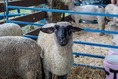
ODA is tasked with determining the regulatory framework for exhibitions of livestock to ensure the food safety of market livestock, health and welfare of the livestock, and provide consistent regulations for the competition. ODA distributes testing supplies to official fair veterinarians who collect the urine samples for select market livestock exhibited at county, independent, and state fairs. The testing is critical to ensuring the market livestock tested are safe for consumption. Also, your role as an official fair veterinarian is crucial for maintaining animal health and to assist in regulatory compliance at the fairs.
Updates to Chapters 901:1-18 and 901-19 became effective on May 23, 2024. Specifically, chapter 901:1-18 pertains to the importation requirements for exhibition livestock and chapter 901-19 pertains to the practices in preparation to and at the exhibition. To read the regulations in their entirety, please click the links below. There are multiple resources on ODA's website to provide additional information on these including:
ODA Resources:
FAQ Document
Fairs and Exhibitions Newsletter
Fairs and Exhibitions Newsletter- Second Edition
Chapter 901:1-18
Chapter 901-19
|
ODA Animal Disease Diagnostic Laboratory (ADDL)
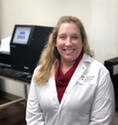
Melanie Prarat, Associate Laboratory Director
 |
|
The ODA’s Animal Disease Diagnostic Laboratory is Ohio’s only veterinary diagnostic laboratory accredited by the American Association of Veterinary Laboratory Diagnosticians (AAVLD). |
What’s this mean to you? Accreditation is a voluntary, third-party-reviewed process by a certifying body providing formal recognition of laboratory competence and quality. As part of accreditation, a laboratory's quality management system is thoroughly evaluated on a regular basis to ensure continued management and technical competence and compliance with appropriate laboratory quality management system standards. The desired outcomes of this process are assurance of credible laboratory results for clients, and the expectation of continual improvement of the accredited laboratory’s processes. ADDL has been AAVLD-accredited since 1999 and is due for its next AAVLD assessment in 2026.
The ADDL performed more than 500,000 tests in 2024, in specialized disciplines including bacteriology, molecular diagnostics & sequencing, pathology, serology, and virology. In addition to providing regulatory testing, the ADDL offers a large portfolio of diagnostic services and tests – these are viewable on our lab’s website. We have three board-certified anatomic pathologists available to consult with you on cases that require a necropsy and ancillary testing. Our lab is made up of roughly 35 dedicated lab technicians, veterinarians, and scientists that are here to support Ohio’s veterinary clinicians and animal agriculture. If you’d like to learn more about how ADDL can be of service to you, please contact Melanie Prarat, Associate Laboratory Director: melanie.prarat@agri.ohio.gov or 614-400-3832.
Dairy Herd Status Program (DHSP)
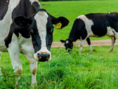
The Dairy Herd Status Program is a voluntary program that offers dairy producers the option to monitor their herds via weekly bulk milk samples before moving them across state lines, without having to test each individual animal. This helps support ongoing HPAI testing to better understand the virus, reduce the risk of further spread, and meet movement restrictions.
|
Dairy producers who choose to enroll their herds agree to weekly herd testing. After 3 consecutive weeks of negative test results for HPAI at a National Animal Health Laboratory Network (NAHLN) laboratory, the herd receives a Monitored Unaffected herd status. Continued weekly bulk tank sample testing with negative results and participation in the Dairy Herd Status Program allows the herd to maintain the Monitored Unaffected herd status and move animals interstate without additional individual animal premovement testing currently required under the April 2024 Federal Order.
Herds not enrolled in the program continue to follow the interstate testing and movement requirements published in the Federal Order.
More information can be found on the USDA DHSP website. Also, here is a factsheet with more information.
For information on HPAI in cattle visit the ODA or USDA websites.
Animal Disease Traceability Corner
Official Identification (RFID) Tag Transfer Forms
If you or your veterinary clinic distribute RFID tags to animals or producers, those tags need to be documented and be accounted for. Appropriate records must be kept and a tag transfer form should be filled out and submitted to ODA. The Tag Transfer Form must be completed by a veterinarian within 7 days of distributing official identification to their clients. Each form should only include new information.
Please note: A federal Premises Identification Number (PIN) is required before completing this form for both the veterinary clinic and producer.
You can find the links for both the Premises Registration (to obtain a federal PIN) and the Tag Transfer Form on the ODA website.
Free Official RFID tags available for cattle
ODA Animal Health stopped offering and distributing Cattle NUES tags (silver metal or orange vaccination) on January 1, 2024. Note: swine/ small NUES tags are still available for swine, camelids, captive cervids, etc. We currently do have free 840 RFID tags (which will constitute as official ID) available for cattle. If you are interested in obtaining free RFID tags for cattle please contact us at 614-728-6220 or click here. We have white RFID button tags as well as orange RFID button tags for calfhood vaccinates.
Note: these tags are also available directly to cattle producers at no cost. Veterinarians may return any unused cattle NUES tags to ODA for proper disposal.
Reminder that any accredited veterinarian who distributes official identification devices must maintain for 5 years a record of the names and addresses of anyone to whom the devices were distributed. The producer who is receiving the official identification devices must have a PIN (premises identification number). Records of official identification devices applied must be recorded in a readily accessible record system and be of sufficient accuracy, quality, and completeness. These records must be made available to state or federal animal health authorities within 48 hours of request.
RFID Reader Loan Program
ODA has several RFID readers available for loan to Ohio veterinarians (as well as livestock markets, exhibitions, and producers). We have a variety of readers that are different models and manufacturers including the Allflex 300 and RS420 and the TruTest (Datamars) XRS2i. The readers are available for loan free of charge. Each of our readers has laminated instructions included in their cases as well as additional resources available upon request. Depending on the purpose and utilization of the readers you may need to download an (free) app in order better utilize the data gathered. RFID readers can be used to quickly and efficiently collect IDs for animals and be added to CVIs or TB test charts.
ODA does have a limited supply of RFID readers and they are available on a first come, first served basis. To help ensure a reader is available please contact us early to get in your reservation. You can start the reservation process by submitting a request through our website: RFID | Ohio Department of Agriculture
Additional questions can be directed to our office at 614-728-6220.
USDA Veterinary Accreditation is a requirement for many regulatory activities. Following the Initial Accreditation Training (IAT), veterinarians must also attend an Orientation Program. In Ohio the Orientation Program is offered to practitioners alongside Ohio State University College of Veterinary Medicine students and is also offered to practitioners virtually four times per year. To be accredited and authorized in Ohio you must have had the IAT as well as the Ohio Orientation Program. Please contact Craig.A.Ashlaw@usda.gov for more information.
We have also created a resource for Accredited Veterinarians which can be found here: Ohio Accredited Veterinarian Manual
Ohio Veterinary Diagnostic Laboratory (OVDL)

Construction on the Dr. Tony Forshey Animal Health Building, which will house the OVDL, is underway! (Note - this a name change from ADDL, but it is still the same laboratory!) Set Completion date is 2026. Take a look at the progress the next time you are down on campus!
|