Staff Updates
In December 2021, Dr. Leeza Bercaw joined the Ohio Department of Agriculture as a CWD Epidemiologist. This was a temporary position created through a USDA grant to improve the Herd Certification Program in Ohio. After Dr. Carey’s retirement in April of 2022, Dr. Bercaw switched rolls and is now the field veterinarian in Southwest Ohio. Prior to joining ODA, she was a veterinarian in private practice and with the USDA Food Safety and Inspection Service. Dr. Bercaw has a B.S. in Chemical Engineering and graduated from The Ohio State University College of Veterinary Medicine in 2014. She was raised on a farm in Clark County. Dr. Bercaw and her husband have one daughter. We are excited to continue to have Dr. Bercaw as a part of our team!
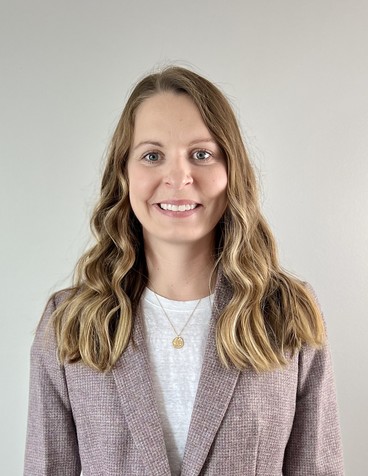 Dr. Leeza Bercaw
 |
|
Dr. Kristy Shaw,
Assistant State Veterinarian
|
EIA is blood-borne infectious viral disease in equines that produces a persistent infection and may potentially be fatal. The frequency of EIA cases in the U.S. is low. In May 2022, Ohio had its first known positive case since 2016. For more information on the prevalence of EIA in the United States, please visit the USDA APHIS EIA website USDA APHIS | Equine Infectious Anemia (EIA)
Horses 12 months of age and older are required to be tested for EIA in some cases, such as change of ownership or interstate movement. For more information on rules and requirements for testing horses, please visit Chapter 901:1-19 - Ohio Administrative Code | Ohio Laws and Rule 901:1-17-07 - Ohio Administrative Code | Ohio Laws
EIA is a lifelong infection with no approved treatments. There is no vaccine approved for use in the U.S. EIA can be transmitted by biting flies and blood transmission through needles. Reducing exposure to biting flies through management practices may reduce the spread of infection. To prevent iatrogenic spread, never reuse needles, syringes or IV sets. Use only new, clean needles with injectable medicines.
Ohio Confirms Case of Equine Infectious Anemia (EIA) in Northeast Ohio | Ohio Department of Agriculture
Dan Goeglein, Agricultural Inspections Manager
Attention Designated Market Veterinarians –
It has come to ODA’s attention that not all equine consigned to licensed auction markets are being sampled and tested for Equine Infectious Anemia (EIA). As a reminder all equine offered for sale are required to be tested even if considered a “no sale”. In addition, all EIA samples collected must only be submitted to Ohio’s Animal Disease Diagnostic Laboratory (ADDL). Please direct any questions concerning these requirements to ODA-Division of Animal Health, Dan Goeglein, Agricultural Manager, at 614-728-6220.
Rule 901:1-19-08 - Ohio Administrative Code | Ohio Laws

Melanie Prarat,
Laboratory Operations Manager
We are very excited to announce that ODA Animal Health will be getting a new diagnostic lab! The two-year $3.5 billion Capital Budget (HB 687) that was recently signed into law includes $71,730,000 to build a new Animal Disease Diagnostic Laboratory (ADDL). The laboratory currently occupies an antiquated building and functions without updated technology or automated equipment. The ADDL is critical for outbreak response and serves to protect animal industries and public health across Ohio and the nation, supporting an $8.5B industry in the state and is the only full service, all species veterinary diagnostic laboratory in the state inclusive of livestock (poultry, dairy, beef, sheep, swine) industries, equine, companion animals and wildlife, zoo animals, and fisheries. The ADDL serves these industries by offering specialized services in pathology, microbiology, molecular diagnostics, virology, serology, and genomic sequencing. The laboratory currently offers over 360 different diagnostic tests for food animals, equine, companion animals, fish, and exotic species, completing 460,000 tests in 2021. The ADDL is accredited by the American Association of Veterinary Laboratory Diagnosticians (AAVLD) and is part of several national networks including the USDA National Animal Health Laboratory Network, FDA GenomeTrakr, and FDA Vet-LIRN.
|
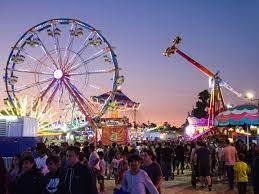
It's Fair Time!
Dr. David Frew,
Field Veterinary Medical Officer
Fair season in Ohio has arrived, and it is a busy season for all of us involved in agriculture! In preparation for fair season, ODA Animal Health officials have been working to help ensure that inspection, exhibition, and testing activities run as smoothly as possible at county and independent fairs. ODA has provided fair veterinarian training opportunities for both new and experienced fair veterinarians to help familiarize them with the responsibilities of being an approved fair veterinarian. ODA Animal Health personnel are in the process of contacting and meeting with fair representatives and fair veterinarians prior to the opening of these exhibitions to review Exhibition and Tampering rules, address public health concerns, verify how identification requirements will be documented, and answer any questions that would arise. We encourage fairs to have hand wash or sanitizer stations located at convenient locations near barns and animal displays as well as appropriate signage concerning no food or drink in barns, advising against strollers being pushed through barns, and not directly touching animals unless hands are washed afterwards.
State and federal field veterinarians and animal health inspectors are planning to visit county and independent fairs throughout Ohio. During these visits, they will contact fair officials upon arrival and inspect the animals and facilities. Sheep and goat scrapie identification compliance will be addressed, and some (but not all) animals may be spot checked for identification compliance. They will also be inspecting for the general health and care of the animals present and be on the lookout for any disease concerns, especially zoonotic diseases. They will work closely with the fair veterinarian and fair officials to address any health or welfare concerns or issues that might arise. The presence of appropriate signage and hand wash/sanitizer stations will be verified.
We all want to have a safe, healthy, and enjoyable fair season, and we at ODA Animal Health want to do all we can to ensure that this happens!
2022 Ohio County Fair Schedule
|
What's Up Doc!?
Dr. Leeza Bercaw, Field Veterinary Medical Officer
 Pig snout with a vesicle
Swine with vesicular lesions are suspects of foreign animal diseases (FADs) and are reported to State and Federal animal health officials. Vesicular lesions in swine are caused by several viral pathogens including FADs such as Foot and Mouth Disease. When ODA Division of Animal Health and USDA Veterinary Services receives a report of a vesicular lesion in a pig, a Foreign Animal Disease Investigation (FADI) is initiated. One of the many steps of a FADI involves sample collection to diagnose the disease, as vesicular diseases are clinically indistinguishable. Diagnostic testing is performed or confirmed at USDA-APHIS National Veterinary Services Laboratories. Approved National Animal Health Laboratory Network Laboratories such as ODA ADDL may be authorized to perform testing.
Senecavirus A, also known as Seneca Valley Virus (SVV), is a non-enveloped picornavirus circulating in pigs in parts of the U.S. SVV is associated with vesicles or erosions on the pig’s snout, mouth and coronary band. The photo above shows a large vesicular lesion on a snout of a pig with Seneca Valley Virus in a slaughterhouse in Ohio. The vesicle was sampled during an FADI and the ADDL performed testing to diagnose SVV and to rule out Foot and Mouth Disease. Reporting and rapid detection is essential to protect the health of our livestock and to keep FADs out of the U.S.
|