|
A SPECIAL MESSAGE FROM COUNCILMEMBER PRISCILLA TYSON
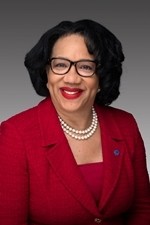
As Chair of the Health and Human Services Committee, I am pleased that City Council passed legislation at the Monday, April 5 meeting to provide over $10 million to fund operating and capital expenses for human service organizations.
Recognizing the instability that the pandemic has caused for residents and the programs that offer vital services to our community, I was in favor of extending grant funding for a year beyond the initial two-year grant cycle of 2019-2020. Ordinance 0388-2021, included a series of grants, to provide up to $4,464,907 in human service funding to 44 Central Ohio programs. Click here for a listing of grant awardees.
Renewing grant funding for an additional year eases the strain on programs that have already had to make significant adjustments, We also want people to have the opportunity to utilize the food pantries, workforce programming and other services with which they are familiar. If we were to shift funding this year, people may be without resources or have to look for other programming.
As Council continues to support operating cost, we know that capital funding is necessary for agencies to have the appropriate space to serve residents. Through separate ordinances, funding included in the 2020 Capital Improvement Budget was ordained for:
-
$1,400,000.00, Directions for Youth and Families supporting the construction of the new Crittenton Community Center.
-
$1,000,000.00, Boys & Girls Clubs of Central Ohio supporting their Investing in Great Futures Comprehensive Campaign ("Project") - a $13.5 million effort to redevelop its oldest Club in Milo-Grogan. This includes $9 million in redevelopment and $4.5 million for operation and programs.
-
$200,000.00, IMPACT Community Action to support the IMPACT 2020 campaign supporting improvements to its new headquarters at 711 Southwood Avenue on the City's Southside.
-
$3,000,000.00, with the Alcohol, Drug and Mental Health Board of Franklin County (ADAMH) to advance the planning, design and construction of the Franklin County Mental Health and Addiction Crisis Center (Crisis Center).
The significance of these capital investments to our growing community are a testament to our commitment to providing resources to residents; and our efforts to Reimagine Public Safety.
The funding that is being provided allows us to address the immediate community need to continue services while also planning for life after the pandemic and expanding service delivery as people will need to rely on community resources as they cope with the collateral damage of the COVID-19 crisis to their quality of life.
Yours in Service,
Priscilla Tyson
Councilmember
|

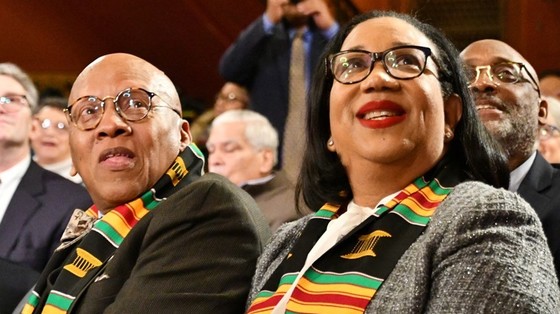
Councilmembers Pricilla Tyson and Mitchell J. Brown announced their retirements effective at the conclusion of their terms, December 31, 2021. Neither will seek re-election in November.
"As a lifelong resident of Columbus, I was honored to join Columbus City Council in January of 2007," said Tyson. When joining the body, my goals were to expand my commitment to public service, continue to be a role model for girls and young women, and increase the access and opportunities for every citizen to live their best lives. I believed then, as I do now, that public service is a calling rooted in service to one another. Read More
On March 26, 2021, Councilmember Tyson announced her plans to retire, followed by Brown, who announced his retirement on April 2, 2021.
"It has been an incredible journey," said Brown. "My 20 years of service to the City of Columbus, at both City Council and the Department of Public Safety, have been humbling, challenging and rewarding. I am a 13-year cancer survivor and have devoted my life to being a public servant. Now, I want to take the time to enjoy my family." Read More
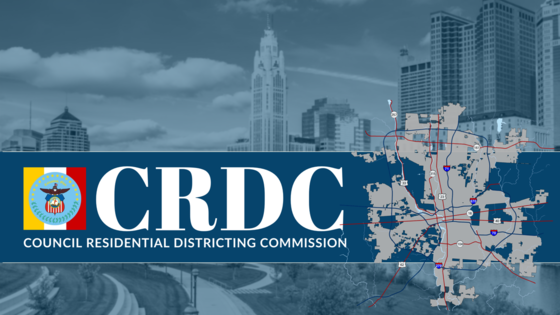
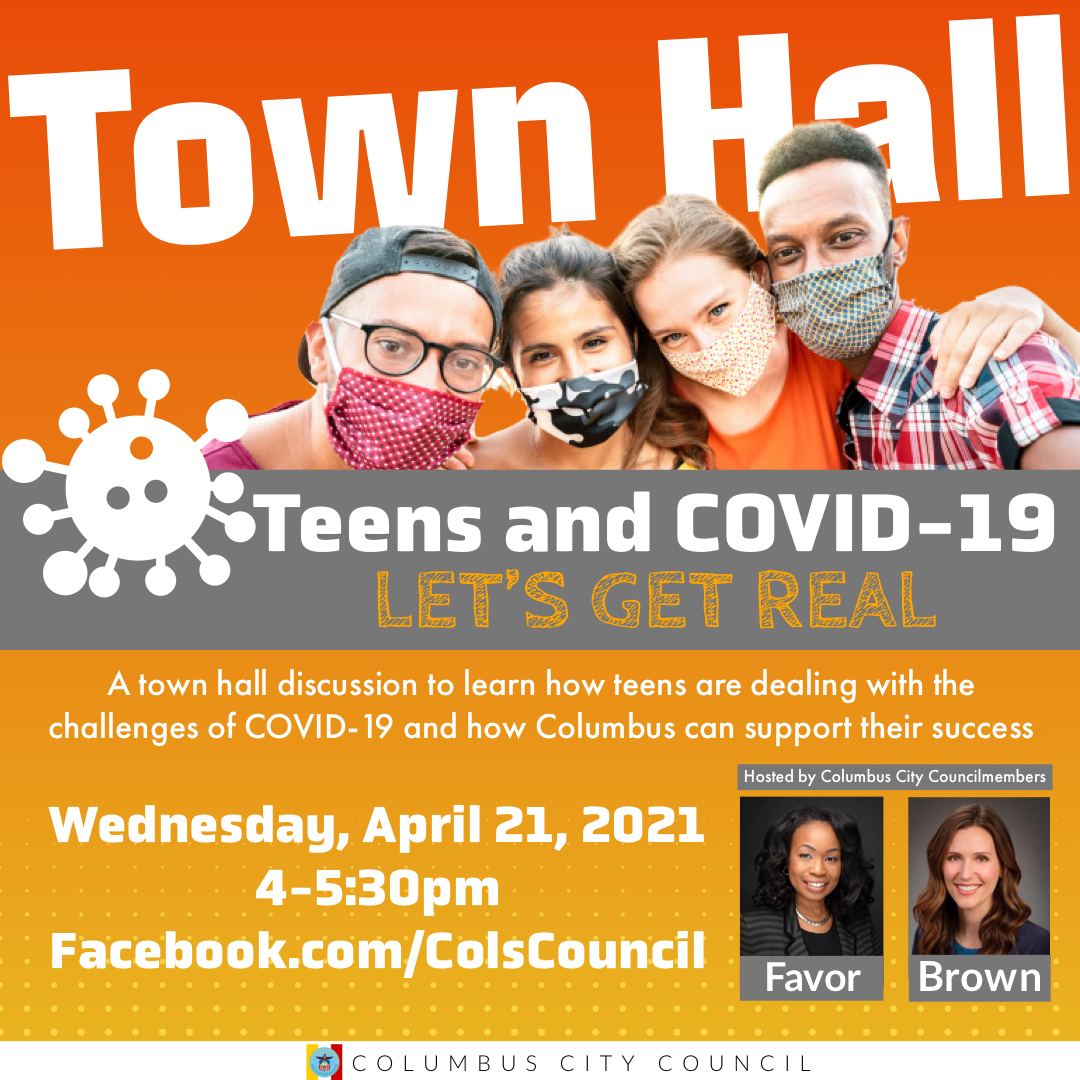
Council will host a Columbus Residential Districting Commission (CRDC) a town hall on Thursday, April 22, 2021, at 5:30pm. Residents will learn the historical importance of the CRDC, the mapping process and how the residency requirement will enhance neighborhood advocacy and amplify community voices inside City Hall.
All residents are invited to attend and actively participate. Send questions to CRDC@columbus.gov by noon on Wednesday, April 21, 2021. There are also limited opportunities to ask questions during the event through Facebook Live.
The hearing will be live-streamed on YouTube.com/CityofColumbus and Facebook/ColsCouncil.

$1.5 Million Allocation from Reimagining Safety Fund Seeks to Prevent Violence
and Rebuild Police-Community Trust

After more than 22 hours of public hearings, multiple town halls and focus groups, more than 4,000 survey responses and robust debates, Columbus City Council tonight passed seven ordinances, adding up to a $1.5 million investment toward reimagining safety. The investments will support victims of domestic violence, support Police Officer aid training as part of the implementation of Andre’s Law, support youth soccer on the Hilltop, provide workforce training and job placement for justice-involved residents and more. Read More
|

Council President Shannon G. Hardin sponsored a resolution 0048X-2021 to express support for Amtrak's potential expansion of passenger rail services in Ohio, including the extension of new passenger rail services via Columbus.
The resolution also encourages Congressional action to authorize and appropriate funds for the expansion. Columbus is the nation's most populous city without any fixed rail service and the second most populous city without Amtrak service. Offering safe, fast, modern, convenient passenger rail service, time savings, and productivity benefits would make Ohio a more attractive place to live, work and visit for business or pleasure.
|
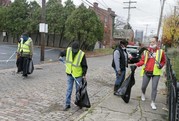
Councilmember Emmanuel V. Remy sponsored ordinance 0788-2021 that allocated $550,000 to continue the Cleaner Columbus Employment Program. It offers residents in five neighborhoods the opportunity to have temporary employment for two to three weeks by performing litter pickups and neighborhood beautification.
Initially launched in November 2020, Columbus residents employed through the Cleaner Columbus Employment program collected 5,789 bags of litter and debris, 53% of the total weight of litter collected in all of 2019, while earning $15 an hour.
|

Council President Pro Tem Elizabeth Brown sponsored ordinance 0632-2021 to provide support services in developing a sustainable, diverse, equitable, inclusive, and anti-racist workplace culture. The City of Columbus is committed to fostering a culture of inclusion and equity. This work will support more meaningful and strategic community engagement, dialogue, and outreach to improve the Department’s interactions both internally and with Columbus’s diverse residents.
|
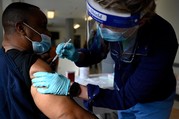
The COVID-19 pandemic has exposed historical inequities within our communities that have led to disproportionate infection rates and death in communities of color. Councilmember Rob Dorans sponsored ordinance 0799-2021 to enter into a contract to perform outreach, develop strategies to increase trust, reduce vaccine hesitancy, and register residents the vaccine and improve vaccination rates among Columbus' vulnerable populations.
|
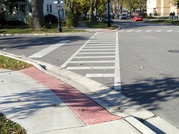
Councilmember Shayla Favor sponsored ordinance 0733-2021 for the Toronto Street Sidewalks project, including the installation of sidewalks, ADA curb ramps, 80 feet of retaining wall, storm upgrades, and the replacement of drive aprons. The work will occur on the south side of Toronto Street from Trevitt Street to North Champion Avenue.
Trevitt Elementary, a neighborhood school where nearly the entire student body lives within two miles of the building, has a high percentage of students who walk. The infrastructure improvement will encourage children in grades K-8 to walk or ride their bikes to school.
|
 A SPECIAL MESSAGE FROM OHIO OPIOID EDUCATION ALLIANCE
As Ohio’s minority population continues to increase, the need to adapt services and outreach methods to better meet the needs of a diverse constituency has become more important than ever. Understanding the social determinants of health and key challenges associated with opioid misuse are important to effectively engage diverse communities in prevention and recovery efforts. In the same vein, ignoring cultural context can lead to misunderstandings that breed feelings of disrespect, a lack of hope, and ultimately an unwillingness to engage in treatment.
A holistic approach to treatment and prevention must be implemented in diverse communities. There are several evidenced-based strategies that SAMHSA recommends for addressing opioid misuse in Black and brown communities. Read More
These strategies include:
- Forming diverse community partnerships with key leaders and organizations.
- Engaging churches and other faith-based organizations to provide prevention and recovery support.
- Utilizing individuals in recovery to spread harm-reduction education rather than first responders, such as police officers.
- Building trust and relationships with the community through the use of community health workers, particularly those who are bilingual when engaging new American communities.
|