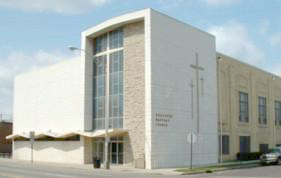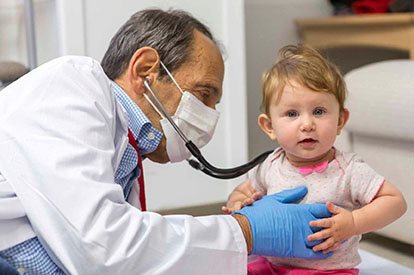
Andelyn Biosciences, a new for-profit subsidiary of Nationwide Children's Hospital, Inc., is committed to saving the lives of children with untreatable genetic diseases through cutting-edge gene therapy developed right here in Columbus.
On Monday, February 24, 2020, Council passed ordinance 0436-2020, an Enterprise Zone Agreement with Andelyn Biosciences to bring 170 net new full-time permanent positions and $74 million in new private investment to the City.
"We have focused our work on helping residents build pathways out of poverty," said Councilmember Emmanuel V. Remy. "In this case, 90 of the new jobs created require an associate's degree or less."
The average salary starts at $69,000 and extends to $279,000 per year.
|
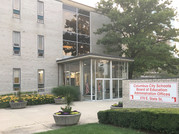
Columbus City Schools Negotiates Millions in Funding and Services during Abatement Period
During the term of the tax abatement, both the City of Columbus and Columbus City Schools are scheduled to receive more than $2.5 million in net new income tax revenues.
Columbus City Schools also negotiated with Nationwide Children's Hospital to provide a minimum of five additional clinicians to work during regular school hours in the fields of primary care or behavioral health valued at $330,000 annually. This is in addition to the $3.2 million in support services the hospital currently provides to the district, including primary care and mobile care units, school-based health centers and asthma programs.
|

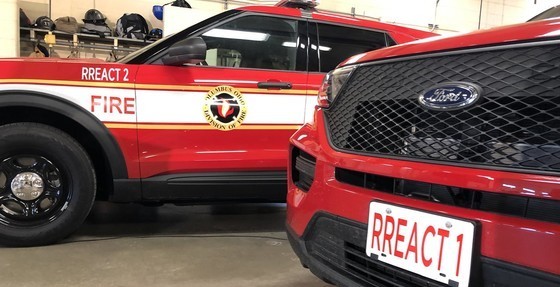
The Department of Public Safety continues to explore methods to get treatment to residents suffering from addiction. In 2019, the Rapid Response Emergency Addiction Crisis Team (RREACT) hit the streets. After a successful pilot, Council has committed to expanding the program.
The effort is a collaboration between the Division of Fire EMS personnel, CPD officers, social workers and treatment facilities. The goal is to combat the ongoing opiate crisis.
"The RREACT program is an innovative response to the complex opiate problem, said Councilmember Mitchell J. Brown. "We are working to provide holistic care that starts the healing and recovery process."
The program was developed in partnership with the Department of Public Safety, the ADAMH Board of Franklin County, Southeast Health, Central Ohio Area Agency on Aging, the Central Ohio Hospital Association and City Council. It is part of a $3.9 million federal initiative to address the opioid crises in Franklin, Cuyahoga and Hamilton counties.
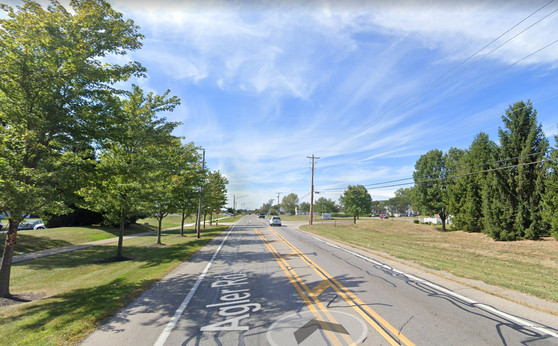
The City of Columbus wants to make walking along Agler Road an easier and safer experience for families. Council is investing an additional $63,000 to acquire right-of-way for sidewalk installation.
"Our City's sidewalks are some of the most important assets we have," said Councilmember Shayla Favor. "It's our job to make sure they're safe and up-to-date with community needs."
The scope of work includes the installation of sidewalks on the north side of Agler Road from Cassady Avenue to Citygate Drive and on Gatewood Road from Agler Road to the existing sidewalk approximately 80 feet north of Agler Road. The project will install approximately 2,200 linear feet of sidewalk.
Work is scheduled to begin this June at a total estimated cost of $306,000.

When legislation is proposed and ultimately voted on by council, laws are created or amended that will define how the City operates. This process begins as an idea that addresses a community need is researched, evaluated, and discussed with area residents. After evaluation, the legislation is drafted and presented to Councilmembers. Once passed, it becomes law and placed in City Code.
Legislation is one of the primary tools Columbus City Council uses to cultivate strong neighborhoods, build pathways out of poverty and create good paying jobs.
Below are a few pieces of legislation passed by Council in 2020:

Building Support for Young Men of Color
Council President Shannon G. Hardin sponsored ordinance 0246-2020 to accept a $100,000 grant from the Franklin County Department of Job and Family Services in to help coordinate efforts for the My Brother’s Keeper program, including the annual conference and listening tour. Passed 2/3/20.
|
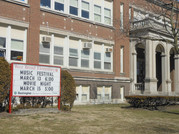
Asking for Help - Families Need Safer Routes to School
Councilmember Shayla Favor, chair of the Public Service and Transportation committee sponsored ordinance 0413-2020 authorizing the Department of Public Service to submit a Safe Routes to School Application to the Ohio Department of Transportation. If awarded, the $400,000 grant will help fund the construction of new sidewalks and filling existing sidewalk gaps on Grace Street, from Orel Avenue to Eureka Avenue. Students walking to school and bus stops near West Broad Elementary will benefit from the project. Passed 2/24/20.
|
Citywide Training Expanding Opportunities for Community and Staff
Councilmember Emmanuel V. Remy, chair of the Administration committee sponsored ordinance 0068-2020 permitting the Department of Human Resources to enhance the training supplies, equipment and course offerings at the Citywide Training and Development Center. The training sessions are primarily utilized by City staff but are open to public access. Passed 2/10/20.
|
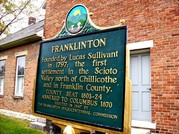
Millions Allocated to Address Flooding in West Franklinton
Councilmember Rob Dorans, chair of the Public Utilities committee sponsored ordinance 0141-2020 for the West Franklinton Sewer Improvement and Central Avenue Underpass Stormwater Improvement projects. These $1,784,836.34 set of projects will upgrade the collection system in the West Franklinton Blueprint area to reduce sewer backups into resident basements and eliminate flooding issues along South Central Avenue, north of West Mound Street. Passed 2/10/20.
|

Addressing the Health and Wellness of the City
Councilmember Priscilla Tyson, chair of the Health and Human Services committee sponsored ordinance 0368-2020 to provide primary health care, home visiting and dental services at community-based health centers. Community Health Centers (CHC) are successful, low-cost options for primary care access. Medical costs for CHC patients are 41 percent lower compared to patients seen elsewhere such as a hospital emergency room. As a result CHC’s save the healthcare system between $9.9 billion and $17.6 billion a year nationally. The program is administered by PrimaryOne Health. Passed 2/24/20.
|
|