Photo of coyote pup courtesy of Matt Zeitler
In this issue:
Usually when we discus “young of year” wildlife in the Almanac, we refer to fish. This week’s youngsters however are eagles and coyotes. News from the upper river, above tide, is always welcome, and this week there was a visit from an uncommon duck as well as wildflowers from Adirondack bogs.
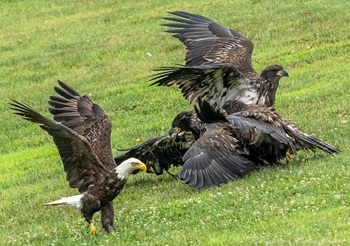
7/5 – Town of Poughkeepsie: I came upon pure mayhem today! The adult male from bald eagle nest NY62 brought a fish in from the river. It was unclear if Dad intentionally or accidently dropped the fish into an open grassy field not far from the nest tree. Regardless, the three new fledglings from NY62 set upon the single fish and a melee ensued. It was all wings, beaks, and talons as the three, each as large as their parents, combined to create a raucous mass of 110-day-old fledglings eagles.
- Bob Rightmyer
Photo of bald eagles courtesy of Bob Rightmyer
7/4 – Waterford, HRM 158: We are putting down July 2 as the fledge date for the nestlings (possibly three) from bald eagle nest NY485.
- Howard Stoner
[Bald eagle nest NY485 was now in its ninth season at Peebles Island State Park at the junction of the Mohawk and Hudson rivers, a perfect spot for hunting. The adults have changed their nest location at least once, however, from Goat Island to its present location. Tom Lake]
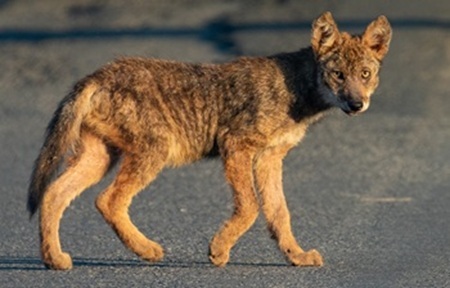
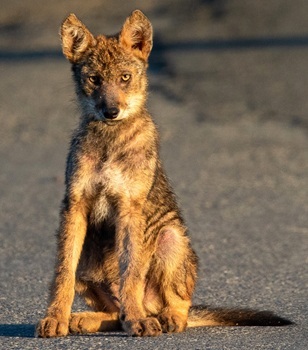
7/4 – Ulster County: I was on my way to the Shawangunk Grasslands National Wildlife Refuge when I came upon a very accommodating coyote pup (Canis latrans). I had never seen never seen a young coyote before, so it was special. The pup was aware of my presence but demonstrated an element of trust and did not get spooked and allowed me a few photos before it slowly made its way off the road and back toward the forest.
- Matt Zeitler
[I recently had a similar experience at Little Stony Point Preserve (river mile 88), an experience aided by patience and a measure of good luck. I was sitting on a deadfall waiting for the tide when a ways up the beach a tawny brown coyote — this one appeared to be an adult — stepped out of the tree line. I was downwind and by remaining stock-still, no eye contact, I was almost invisible. In short mincing steps, the coyote slowly reached the tideline, leaned down, and took a long drink. I held my breadth. It lingered for a few minutes, never looking my way. That did not fool me into thinking I was invisible; I was simply not of immediate consequence. Looking at river flotsam, I checked the tide. When I looked back, the coyote was gone. Tom Lake]
[The eastern coyote (Саnis lаtrаns vаr.) is a wild North American canine hybrid with both coyote and wolf parentage. Their taxonomy is complex with both genetic variance and various interpretations. The hybridization likely first occurred in the Great Lakes region, as western coyotes moved east. It was first noticed during the early 1930s to the late 1940s and likely originated in the aftermath of the extirpation of the gray wolf and eastern wolf in southeastern Ontario, Labrador and Quebec; this allowed coyotes to colonize the former wolf ranges, and mix with the remnant wolf populations (Way, Rutledge, Wheeldon, White 2010).]
Coyote is also the Trickster, a fascinating mythological character common to many North American Native cultures. They are usually male and may have coyote-like physical features such as fur, pointed ears, yellow eyes, a tail and blunt claws. The myths and legends which include Coyote vary widely from culture to culture. In all, however, the Trickster embodies dualities of creation and destruction, wisdom and folly, often playing a crucial role in storytelling, and holds deep cultural significance in reflecting values and beliefs.
One of the best examples is coyote as the tutelary [teaching] spirit of "Coyote-way," one of the Navajo [Diné] curing ceremonies. The ceremony is intended to restore the patient's harmonious relationship with Coyote and the world, and to bring about a return to good health.
If you find coyotes anywhere on the scale from interesting to love, please lose yourself in Hope Rydan’s God’s Dog, the North American Coyote (1975), or Paul Radin’s The Trickster (1971). And check out the NYSDEC website on Eastern coyotes.
- Tom Lake
Photo of coyote pup courtesy of Matt Zeitler
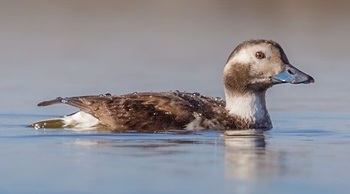
7/6 – Hamilton County: A rather rare summer visitor to the Adirondacks, a long-tailed duck (Clangula hyemalis), made an appearance on Lake Abanakee this evening. This Almanac entry is on behalf of a long-time Hudson-Mohawk Bird Club member, Tim Colborn.
- Scott Stoner
The long-tailed duck was formally described to science by the Swedish naturalist Carl Linnaeus in 1758. It is primarily native to the northern reaches across North America. The duck’s former name, Old Squaw, still found in old birding field guides, was officially dropped from common usage in favor of long-tailed duck by The Auk (American Ornithological Society) in July 2000. This was done for several reasons, among which was the negative connotation of the English word and its offensive reference to indigenous, or Native Americans. Another colloquial name for the duck is Old Wife, perhaps only marginally better.
- Stan DeOrsey, Ralph Waterman Birders
Photo of long-tailed duck courtesy of Tom Auer
7/6 – Manhattan, HRM 1-2: Our Hudson River Park's River Project staff checked our research gear (pots and traps) that we deploy from floating docks on the south-side of Piers 26 and 40 in Hudson River Park for our ongoing Park's Fish Ecology Survey.
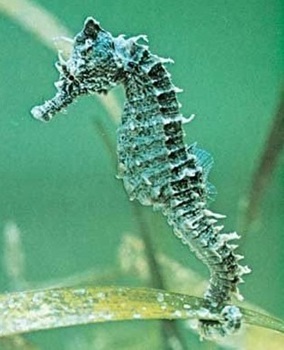
Today’s fish catch included blackfish-tautog (175-250 mm), oyster toadfish (25-240 mm), northern pipefish (170-205 mm), a summer flounder (275 mm), and an incredible lined seahorse (100 mm) moving in the water like a delicate ballet dancer. Invertebrates included a blue crab (35 mm), mud crabs, hermit crabs, amphipods, grass shrimp, and mud dog whelks.
- Rashel Coraballo, Luna Horsley
[Crab measurements (size) are calculated in millimeters (mm) point-to-point across their carapace; 1-inch equals 25.4 millimeters (mm). Tom Lake]
Photo of lined seahorse courtesy of Jonathan Irons
7/7 – Yonkers, HRM 18: Included in our Sarah Lawrence Center for the Urban River at Beczak research and education team’s seine catch this week were many small young-of-year (33-36 mm) fishes that resisted immediate on-site identification.
After dismissing the unlikeliest, the obvious choices included white perch and striped bass, and at that size, field marks become less definitive. We needed either a strong hand lens or, better yet, a microscope to measure ray counts and other meristics, etc. In lieu of those we resorted to a good field guide key (J.D. Hardy 1978). It ought to be noted that this was not the optimum procedure for identifying a fish, especially an immature. Our conclusion, sans lab, lens or scope, was young-of-year striped bass (Morone saxatilis).
- Jason Muller, Tom Lake
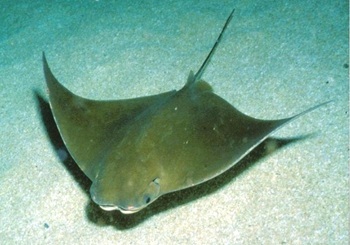
7/8 – Hudson River Watershed: Fish-of-the-Week for Week 374 is the cownose ray (Rhinoptera bonasus) Mitchell 1815, number 11 (of 240), on our Hudson River Watershed List of Fishes. If you would like a copy of our list, e-mail: trlake7@aol.com
The cownose ray is a cartilaginous marine fish species and the only member of its family (Rhinopteridae) in the watershed. They are native to the northwestern Atlantic and are found along the coast preferring to live in shallow waters and estuaries from southern New England to northern Florida.
They have a broad head with wide-set eyes, and a pair of distinctive lobes at the front of their head resembling a cow’s nose. Cownose rays have strong, specially adapted, teeth designed to crush hard-shelled prey such as crustaceans and mollusks (clams, oysters, and scallops). They get to three-feet-across their elliptical, nearly round, body. Cownose ray has a dorsal spine with a toxin, a weak venom, that causes symptoms like that of a bee sting.
Our story of the cownose ray began when C. Lavett Smith, Curator of Fishes at the American Museum of Natural History, included the barndoor skate in his Inland Fishes of New York of New York State (1986). Dr. Smith wrote that the skate was caught by an angler in the Hudson River at North Albany in 1932 and donated to the New York State Museum. However, no one could locate the fish in the museum’s collection.
In February 2018, Bob Schmidt and Bryan Weatherwax found a large skate specimen in a tank full of sturgeon which they carefully identified as a barndoor skate. The data associated with this specimen was consistent with the record in Smith’s book, so they thought they had found the missing skate. Then, in August 2020, they looked at a photo that accompanied a 1932 article in the Albany Times-Union telling the tale of a large skate or ray that had been caught in the Hudson River, on a minnow, by three anglers on August 4, 1932. Bob Schmidt, Bryan Weatherwax, and Jeremy Wright noticed that the fish in the 88-year-old photo did not appear to be a barndoor skate, but rather a cownose ray. The 1932 article also claimed that the head (of the cownose ray) was donated to the NYSM. Yet there was no trace of it and no mention of a cownose ray in the NYSM fish collection.
Photo of cownose ray courtesy of Dean Grubbs
In the past we have accepted bonafide/verifiable photographs of fish as evidence for inclusion in our Hudson River Watershed species list. However, given the photographic evidence of a cownose ray from the Hudson River in 1932, we felt comfortable adding the species. The cownose ray was added to our Hudson River Watershed List of Fishes on August 29, 2020, As for the supposed barndoor skate, the collection data is clearly wrong, but where then did it come from? This is still a mystery.
- Tom Lake
[At the end of this story, we were left wondering how such a fully marine species made its way to the freshwater reach of the Hudson River. The literature cites conflicting reports on the abundance of the cownose ray in Chesapeake Bay, an estuarine complex that is often referenced as a tidewater system analogous to the Hudson River. Hildebrand and Schroeder (1928) considered the cownose ray "very rare"; Murdy, Birdsong, and Musick, in a contradictory assessment (1977) called them "abundant," extending as far up the bay to Tilghman Island in brackish water [about 100 river miles].” However, neither of them mention occurrences or even inclinations to be in freshwater. As a result, the record of the cownose ray in full freshwater at the head of tide, 155 miles from the open sea, remains as either a mystery, or an occasion where a fish traveled well beyond its literature. Tom Lake]
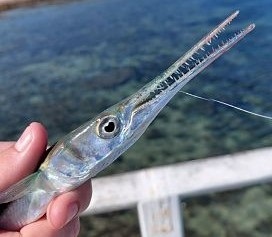
7/8 – Little Stony Point Preserve, HRM 55: Our catch was heavy with gorgeous, yellow-tailed, young-of-year Atlantic menhaden (53-76 mm), and young-of-year striped bass (18-51 mm). The star of the catch was a young-of-year Atlantic Needlefish (58 mm). The river was 79 Fahrenheit with a salinity of 2.0 parts-per-thousand.
In a moment of pure science, fisheries intern Tommy Jackson performed some mildly invasive surgery to help identify some young-of-year herring we had captured. In this instance, their peritoneum was black indicating Atlantic menhaden.
- Seth Dinitz, Tommy Jackson, Tom Lake
Photo of Atlantic needlefish courtesy of Tom Lake
7/8 – Manhattan, HRM 1-2: Our Hudson River Park's River Project staff checked our research gear (pots and traps) that we deploy from floating docks on the south-side of Piers 26 and 40 in Hudson River Park for our ongoing fish ecology survey. Today’s traps held three fish species: blackfish-tautog (180-360 mm), a white perch (205 mm), and oyster toadfish (230- 300 mm). Invertebrates included mud crabs, grass shrimp, mud dog whelks, blue mussels, hermit crabs, and sea squirts.
- Hudy Weiss, Maren Piersol, Mirei Ueyuma
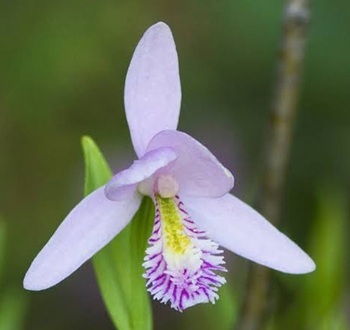
Rose Pagonia courtesy of Mike Corey
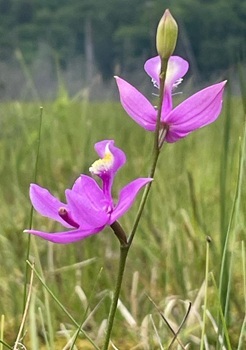
7/9 – Essex County, HRM 284: One of the most rewarding treks you can make this time of the year to find gorgeous wildflowers, is to make a trek or canoe through Adirondack Mountain bogs. On a recent excursion I came upon two orchids, rose pogonia, also known as “snake mouth” (Pogonia ophioglossoides), and grass pink (Calopogon pulchellus). The latter is a genus of a terrestrial orchids family (Orchidaceae).
- Mike Corey
Photo of grass pink courtesy of Mike Corey
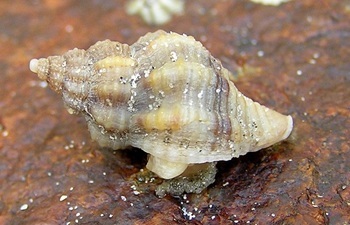
7/10 – Manhattan, HRM 1-2: Our Hudson River Park's River Project staff checked our research gear (pots and traps) that we deploy from floating docks on the south-side of Piers 26 and 40 in Hudson River Park for our ongoing fish ecology survey. Today our gear yielded two species of fish: three oyster toadfish (55-210 mm) and five blackfish-tautog (205-305 mm). Invertebrates present at the trap sites included mud crabs, hermit crabs, mud dog whelks, sea squirts, grass shrimp, sand shrimp, and oyster drills (Urosalpinx cinerea).
- James Laske, Maren Piersol, Paul West
Photo of oyster drill courtesy of NOAA
Science Saturday at Norrie Point Environmental Center
Join us for our monthly Science Saturday programs and explore Norrie Point. Check out our series by visiting the Hudson River website. Events are free and open to the public. Registration is not required. All programs meet at the Norrie Point Environmental Center, 256 Norrie Point Way, Staatsburg NY, 12580. Dress for the weather and being outside! Otherwise, no special equipment is needed.
Snapshot NY
The NYSDEC, in collaboration with the New York Cooperative Fish and Wildlife Research Unit at Cornell University, has launched Snapshot NY, a citizen science program that allows the public to participate in wildlife monitoring through the deployment of trail cameras. The project will help improve the way DEC monitors and manages more than a dozen wildlife species. For more information on Snapshot NY and how to participate, visit the Snapshot NY website.
Hudson River Lesson Plans
Explore our collection of Hudson River lesson plans, videos and online activities to support hands on investigations of the Hudson River in your classroom.
Hudson River: Striped Bass Cooperative Angler Program
You can share your fishing trip information and help biologists understand and manage our Hudson River striped bass fishery.
Here’s how it works: Fill out a logbook provided by us whenever you fish on the Hudson River (by boat or from shore). You can also use our survey123 app and record your trips using a smart phone or computer.
Record general location, time, gear used, what you caught (or if you didn’t catch anything) and return the logbook when you are done fishing for the season. You’ll receive an annual newsletter summarizing the information in addition to the latest news regarding regulations and the river. Whether you catch-and-release or take home a keeper, you can be part of the Cooperative Angler Program. Online logbook instructions (PDF).
Join today by contacting: hudsonangler@dec.ny.gov
- Jessica Best
Hudson River Miles
The Hudson is measured north from Hudson River Mile 0 at the Battery at the southern tip of Manhattan. The George Washington Bridge is at HRM 12, the Tappan Zee 28, Bear Mountain 47, Beacon-Newburgh 62, Mid-Hudson 75, Kingston-Rhinecliff 95, Rip Van Winkle 114, and the Federal Dam at Troy, the head of tidewater, at 153. The tidal section of the Hudson constitutes a bit less than half the total distance—315 miles—from Lake Tear of the Clouds to the Battery. Entries from points east and west in the watershed reference the corresponding river mile on the mainstem.
To Contribute Your Observations
The Hudson River Almanac is compiled and edited by Tom Lake and emailed weekly by DEC's Hudson River Estuary Program. Share your observations by e-mailing them to trlake7@aol.com.
Was this Newsletter Forwarded to You?
Subscribe today to DEC Delivers Hudson River Almanac topic for weekly natural history journal that covers the Hudson from the High Peaks of the Adirondacks to New York Harbor.
Helpful Resources
National Oceanic and Atmospheric Administration online tide and tidal current predictions are invaluable when planning Hudson River field trips. For real-time information on Hudson River tides, weather, and water conditions from sixteen monitoring stations, visit the Hudson River Environmental Conditions Observing System website.
DEC's Smartphone app for iPhone and Android is now available at New York Fishing, Hunting, and Wildlife App.
|