|
Seagrass Management Initiatives: Monitoring, Conservation, and Public Stewardship
Beneath the surface, underwater meadows of eelgrass, the dominant seagrass species in the northeastern United States, provide critical habitat and food for countless marine organisms, including many fish and shellfish species. These meadows also improve water quality, stabilize sediment, reduce erosion and storm impacts, produce oxygen, and store carbon, making them an important natural tool in strengthening coastal resilience and addressing climate change.
Seagrass ecosystems across Long Island’s waters have been in decline for decades due to nutrient pollution, poor water quality, dredging, coastal development, and reckless recreational boating practices. The growing urgency surrounding seagrass conservation has prompted increased collaboration among scientists, policymakers, conservation groups, and community members working to monitor, protect, and restore these critical habitats.
To better understand the challenges facing seagrass ecosystems and the efforts underway to protect them, we spoke with Della Campbell, Restoration, Planning, and Policy Manager at the New York State Department of Environmental Conservation’s (DEC) Division of Marine Resources, about ongoing monitoring initiatives, restoration planning, public engagement, and the future of seagrass conservation across Long Island.
Seagrass ecosystems in New York have experienced long-term decline. While current concerns largely focus on nutrient pollution and climate change, the origins of this loss date back nearly a century.
“One of the most significant events contributing to the dramatic decline of seagrass occurred in the 1930s, when a wasting disease devastated the eelgrass population along the Atlantic coast,” Della explains. “It caused almost a 90 percent decline. Although some recovery occurred, the system remains far from its historical baseline because of various stressors acting on this habitat simultaneously.”
Among these stressors, water quality impairments remain the most significant. Nutrient pollution from wastewater, fertilizers, and stormwater runoff can fuel harmful algal blooms that block sunlight, effectively starving seagrass of the light it needs to grow.
At the same time, physical disturbances from boating, dredging, and coastal development continue to degrade seagrass, while climate change introduces additional stress through warming waters and shifting environmental conditions.
These overlapping pressures continue to threaten the health and stability of seagrass meadows, underscoring the need for long-term conservation efforts to protect and restore these critical coastal habitats.
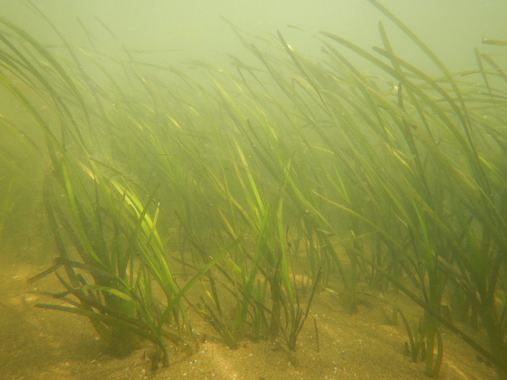
Eelgrass at Hecksher State Park. Photo Credit: Chelsea Miller, DEC staff.
Tracking Change: Monitoring Seagrass
Understanding how seagrass meadows are changing over time is essential for guiding restoration and management efforts. One key tool is SeagrassNet, a worldwide monitoring program that investigates and documents the status of seagrass resources and the threats to this important marine ecosystem. Through structured sampling, monitoring teams collect data on seagrass density, canopy height, and biomass to better understand trends in seagrass health and ecosystem conditions over time.
“SeagrassNet has a standardized protocol that has become the rule of thumb for seagrass monitoring. It's recognized globally and there are institutions all over the world who are using it. It's a fantastic way to standardize our monitoring and makes monitoring efforts comparable across different regions,” explained Della.
SeagrassNet monitoring sites are hosted by a variety of organizations and partners, including the Peconic Estuary Partnership, Stony Brook University, Fishers Island Seagrass Management Coalition, and the Long Island Sound Partnership. Across New York, monitoring sites are located at Fire Island, Fishers Island, and Moriches Bay with an additional six sites being launched within the Peconic Estuary including locations in Sag Harbor and Orient Point.
From Monitoring to Management
Protecting seagrass requires more than monitoring. It requires coordinated management strategies that address the many environmental pressures impacting seagrass. Ongoing water quality initiatives have already provided benefits to these ecosystems, but long-term success depends on addressing multiple stressors simultaneously.
“What’s really important is reducing the number of cumulative stressors affecting seagrass in order to improve its resiliency to changing environmental conditions, like warming waters,” Della emphasized. “This includes efforts to reduce physical damage to seagrass from boating activities through educational campaigns promoting ‘seagrass-safe’ boating practices.”
Della also explained that DEC has internal policies and best management practices aimed at minimizing impacts to seagrass from projects located near sensitive habitats. “These policies include seasonal construction restrictions and other permitting conditions designed to minimize impacts on seagrass areas.”
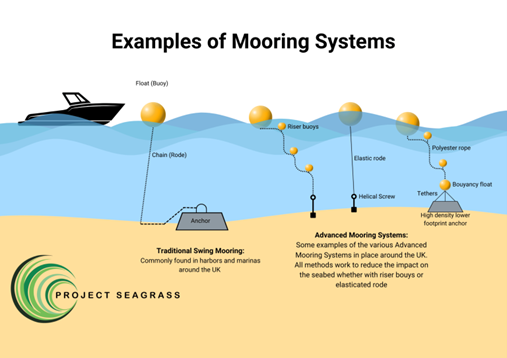
As part of a long-term initiative, DEC is collaborating with experts, municipalities, and stakeholders to establish Seagrass Management Areas. These areas would use tailored, site-specific strategies to address the unique environmental stressors affecting each location, with the goal of eventually creating a broader network of protected and managed seagrass habitats. Management approaches would vary depending on local conditions and uses and could include measures such as the use of “conservation moorings” instead of traditional boat moorings, along with other collaborative solutions. The overall goal is to balance environmental protection with recreation and community uses in order to safeguard seagrass resources for the future.
Examples of Conservation Mooring Systems. Photo credit: Project Seagrass Examples of Mooring Systems Diagram.
The Seagrass Flowering Study
In parallel with management, research is advancing to better understand seagrass reproduction and restoration potential.
The Seagrass Flowering Study is a regional effort that began in 2024 and it's intended to improve our understanding of eelgrass reproductive dynamics. “The primary questions we're looking to address are when flowering occurs and what the reproductive capacity is of the field sites that we're monitoring. This information is important because it helps us prioritize what areas are ecologically and reproductively important so we can better tailor our management strategies,” explained Della.
This year the study has expanded to include studying environmental conditions and habitat health. “We've been using the SeagrassNet protocol as a reference in order to be a bit more robust and to look beyond the reproductive dynamics of eelgrass alone and look at what's also contributing to some other environmental changes within the area,” added Della.
The expanded research will provide a more comprehensive understanding of the environmental factors influencing seagrass health and resilience across Long Island’s waters.
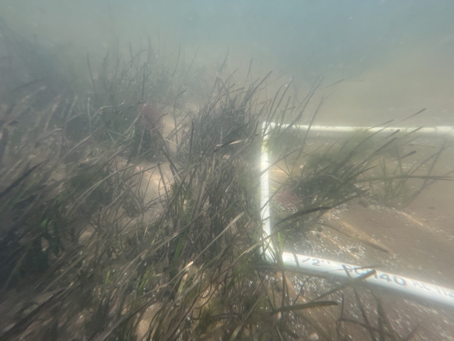
Quadrant used for the Seagrass Flowering Study on the edge of an eelgrass patch. Photo Credit: Chelsea Miller, DEC staff.
Expanding Reach Through Community Action
DEC has recently relaunched the “Got Seagrass?” initiative to engage the public and increase stewardship of coastal ecosystems that benefit Long Island communities. The program allows citizens to contribute to seagrass conservation by submitting sightings of seagrass in local waters through DEC’s digital survey.
“It’s meant to be as accessible as possible. Any person who’s out on the water or walking on the beach can submit a report,” Della says.
Observations can be as simple as identifying the location of seagrass, though additional details such as meadow size, density, and photographs are encouraged. Photos can be submitted either from above the water looking down at the seagrass area or underwater. All reports are added to a public map showing where observations have been recorded. By leveraging citizen observations, the program aims to identify smaller or previously undocumented seagrass patches while expanding geographic monitoring coverage across Long Island waters.
To learn more visit: Got Seagrass?
Take Action Today!
In addition to participating in community science initiatives, Long Island residents can also help protect seagrass habitats through everyday actions that reduce environmental stress on local bays and estuaries. From fertilizer use to boating practices, individual choices can have a meaningful impact on the long-term health of these ecosystems.
“Reducing nutrient pollution is key. Choosing safer alternatives to fertilizers and maintaining and updating septic systems can help safeguard seagrass,” Della emphasizes.
Boaters can also help reduce physical damage to seagrass habitats by avoiding anchoring in seagrass beds and navigating carefully in shallow waters. “Do not anchor directly within seagrass meadows, trim up your propeller in shallow water, and if you run aground, manually push your boat out instead of using the motor because it could cause physical damage to the seagrass,” Della advises.
For waterfront property owners, incorporating sustainable shoreline practices, such as living shorelines, can further support coastal resilience while helping protect sensitive marine habitats.
The future of seagrass on Long Island will depend on sustained collaboration across agencies, researchers, communities, and residents. “There are so many groups that are engaged and passionate about seagrass conservation. When we combine our efforts, we can deliver solutions,” said Della.
Seagrass meadows continue to quietly support life, protect coastlines, and sustain Long Island’s environmental and economic future. The challenge now is ensuring they remain part of that future for generations to come.
Looking to learn more about seagrass? Check out the additional resources below:
Connect with Us!
|