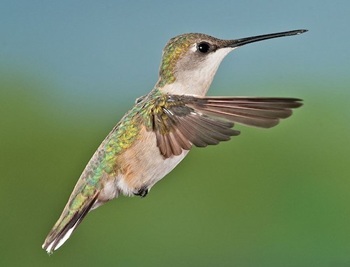
Photo of ruby-throated hummingbird courtesy of Tom McDowell
In this issue:
Our “glass eels in from the sea” season has about run its course. The appearance of a “big cat” always deserves mention, as uncommon as they are. Spring flowers and hummingbirds continue to punctuate the colors of spring.
5/12 – Orange County, HRM 41: I joined Linda Scrima at the 62-acre Edgar A. Mearns 6½ Station Road Marshlands Sanctuary in Goshen this evening. We were going there to try for the snowy egret that had been reported earlier.
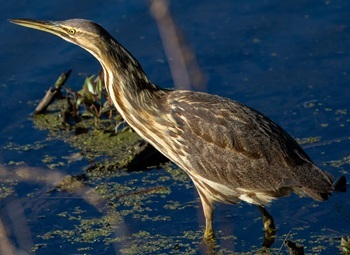
We were sorting through shorebirds, and I had just located a single dunlin. I figured it would be the best bird of the day until moments later Linda got my attention and had me look down at the near shore. To my surprise, it was an American bittern out in the open, right below us. We watched and photographed as the bird caught two crawfish just yards away. This amazing behavior of being in the open was very atypical. The bird took a short flight and landed partially obscured in vegetation, a much more familiar way of seeing an American bittern.
- Matt Zeitler
Photo of American bittern courtesy of Matt Zeitler
5/9 – Little Stony Point, HRM 55: Sixteen of us gathered for our NYS Park Day program on the beach at Little Stony Point Preserve (Hudson Highlands State Park), Attendance was curtailed by a driving rain.
We hauled our 30-foot seine with limited expectations; the weather had been quirky, and the river was still cool. The crowd pleaser was yearling striped bass (89-91 millimeters) biding their time in the security of the estuary until reaching a size where they could semi-safely emigrate to the sea.
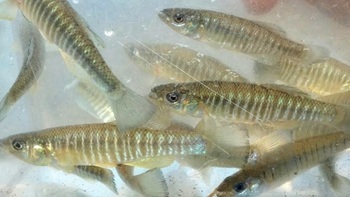
We also caught banded killifish (Fundulus diaphanus), a resident freshwater species, both males and females that showed sexual dimorphism, males in bright breeding colors, females very drab by comparison — nature’s cloaking device for many species.
For some of us, the highlight was young-of-year (27 millimeters) bay anchovy (Anchoa mitchilli), heading upriver from the brackish waters of the Tappan Zee. The river was 58 degrees Fahrenheit with no measured salinity.
- Tom Lake, Seth Dinitz, Andra Sramek, Phyllis Lake, Ellie Dinitz
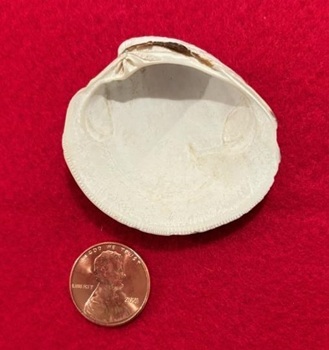
[A surprise find in the bag of the net was some shells of Rangia cuneata (21-31 mm), a marine bivalve mollusk also known as the Atlantic rangia or Gulf wedge clam. Rangia cuneata is native to the Gulf of Mexico.
During school seining programs in the 1990s, we began to find these mollusks along the tideline and in the shallows of the lower estuary. Having identified the clam, we discovered that the Chesapeake is a center of abundance for them. So how did it get to the Hudson River? Commercial crabbers knew. Rangia cuneata had transported as stowaways in blue crab baskets headed to the New York Market from Chesapeake Bay. Once there, they fell out and found their way into the estuary. Tom Lake]
[Note: One-inch equals 25.4 millimeters (mm). Tom Lake]
Photo of Rangia cuneata courtesy of Tom Lake
5/9 – Yonkers, HRM 18: Our research and education team at the Sarah Lawrence Center for the Urban River at Beczak hosted two student groups this week (5/6, 5/8), Pace University Environmental Studies and the VIVE/Pathways Program Adult Education in Yonkers. Collectively, we made eleven seine hauls that featured 17 yearling striped bass, two Atlantic silverside, and three blue crabs.
The water temperature averaged 59 degrees Fahrenheit, salinity averaged 5.7 parts-per-thousand, and the dissolved oxygen (DO) averaged a healthy 12.6 parts-per-million.
- Christina Tobitsch, Katie Lamboy Roman, Jason Muller
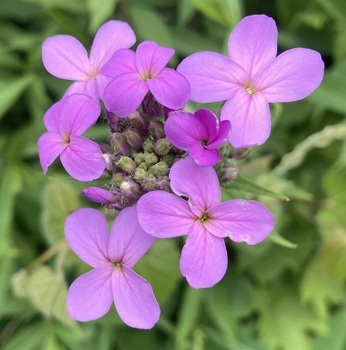
5/9 – Hudson River Watershed: One of the signs of late spring is the appearance of Dame’s Rocket (Hesperis matronalis) along upland roadsides. This wildflower is native to Eurasia and was brought to North America in the 17th century. After more than 300 years, Dame’s Rocket has become a naturalized species, much like the dandelion and the common carp. Also known as Maid-of-the-Evening, it comes in white, pink, violet, and purple. Its wonderfully sweet fragrance, carried by spring breezes, fills the air from mid-May through early June.
- Tom Lake, Tommy Jackson, Benjamin Jackson
Photo of Dame's Rocket courtesy of Tom Lake
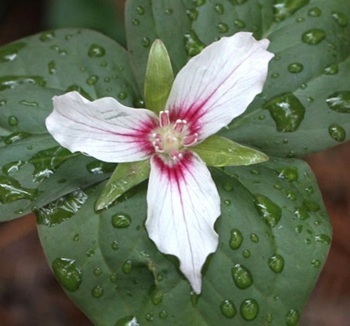
5/10 – Essex County, HRM 284: I took a census today of our recent late spring happenings in Minerva. With songbirds, all heard in the trees, first arrivals included hermit thrush, house wren, ovenbird, black-throated-green warbler, and three new warblers, yellow, chestnut-sided, and American redstart.
Our shad bush began blooming four days ago, a full three weeks later than those at lower elevations. Among ephemerals, we now have sharp-lobed hepatica, dog-toothed violet, barren strawberry, red trillium, painted trillium, and Dutchman's breeches. Spring can be a cascading kaleidoscope of colors, scents, and sounds.
- Mike Corey
Photo of painted trillium courtesy of Mike Corey
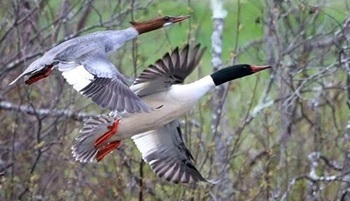
5/10 – Greene County: I had an opportunity today to watch two pairs of common mergansers (Mergus merganser) at close range: The females have cinnamon brown tufted heads and grey backs with brilliant red legs; the males have brilliant white bodies with black accents, red legs, dark green heads, and a slender, serrated bright red bill. The merganser is a diving, fish and mollusk-eating, duck that can even nest in tree cavities.
At times each pair glided on the still water with beautiful reflections. As I watched, the females had brief “turf wars,” flashing swirls of water as they interacted. When both pairs took to the air with running strides across the water they were a truly magnificent sight.
- Mario Meier
Photo of common mergansers courtesy of Mario Meier
5/10 – Yonkers, HRM 18: Our research and education team at the Sarah Lawrence Center for the Urban River at Beczak, assisted by Yonkers High School students, tended to our fyke net twice this week (5/5, 5/8) that we set overnight in the Beczak tidemarsh. Our collective catch amounted to 29 glass eels, and one each fiddler crab and an immature river herring, likely an alewife (33 mm).
The water temperature averaged 59 degrees Fahrenheit, salinity averaged 5.3 parts-per-thousand, and the dissolved oxygen (DO) averaged 11.5 parts-per-million.
Jason Muller, Hilary Vidalakis, Sophie Carman
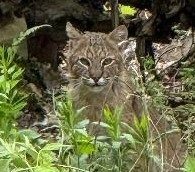
5/11 – Rensselaer County, HRM 166: I was I my driveway this afternoon in Schaghticoke when a bobcat ran across in front of me. It stopped and stood there looking back at me, staring me down. I did not approach but held a motionless and quiet watch. The bobcat finally got up, hopped over a deadfall into some brush, turned for one more look, and moved on. It was an incredible experience. I grew up on a farm, and I am super familiar with wildlife, but this is the first time I’ve experienced a bobcat sighting.
- Lisa Parry
[The amiable and elusive bobcat (Lynx rufus) is one of a handful of iconic species in our watershed whose presence authenticates remnants of wildness. Along with loons, eagles, ravens, moose, coyotes, and black bears, the bobcat rekindles remembrances of kinder, quieter times, long ago.]
Bobcat are found throughout North America from southern Canada to southern Mexico. They are crepuscular, meaning that they are most active at dawn and dusk. Bobcats are solitary hunters by nature, stealthy “ambushers,” and, on average, consume 1-2 lbs. of food a day to sustain their energy needs. That equates to at least two gray squirrels, or one eastern cottontail, or eight eastern meadow voles a day to survive. Their tendency is to be more ephemeral, ghostly shadows darting across a road at dawn or dusk or appearing in headlights in the dark of night.
Their common name refers to their “bobbed” tail, no more than six-inches long. They are seen so uncommonly that when sighted, observers unfamiliar with bobcats often believe they are seeing a mountain lion. I have come across large bobcat paw prints in mud and snow that would pass for a small puma.
- Tom Lake
Photo of bobcat courtesy of Lisa Parry
[New York State has had three “big cats” in historic times: Bobcat, Canada lynx, and the largest of the three, the mountain lion. The Canada lynx had a long residency until becoming extirpated due to ecological changes. A reintroduction program in the Adirondacks, its native terrain, in the early 1990s failed to reestablish lynx.]
The mountain lion, cougar, puma, panther, or catamount (Puma concolor) was here before the first of us arrived 13,000 years ago, But in historic times, they have suffered from habitat loss and human intolerance until finally being extirpated in the watershed in the early twentieth century.
Numerous sightings have been reported in the Hudson Valley in recent times. However, there has been no empirical evidence of wild mountain lions in New York State for over 100 years. Although there have been examples of escapes from captivity, or wanderers from Canada or northern New England. But as far as we know, no home-grown pumas.
The most famous wanderer showed up in 2011 when a 140-pound male mountain lion was hit and killed by a car in Milford, Connecticut. Using DNA and physical evidence, state environmental officials determined that the animal had trekked more than 1,500 miles from South Dakota, a journey that was partially captured by trail cameras.
A few years ago, there was an ever-widening rumor of a big black cat, specifically a black panther (Panthera pardus), or a color morph of any one of the big cats, in Rockland County. It was only seen at night, black as pitch, with a long sinewy tail. Pets and small children were kept indoors. It lasted more than a week until a clever observer made the connection that it was the exaggerated and convincing shadow of a large domestic cat projected on walls and doorways. Shades of UFO’s.
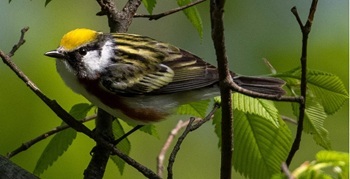
5/11 – Orange County, HRM 44: A beautiful chestnut-sided warbler deigned to give me a quick look through the new leaves near Middletown this morning.
- Matt Zeitler
Photo of chestnut-sided warbler courtesy of Matt Zeitler
5/11 – Hudson River Watershed: Fish-of-the-Week for Week 366 the eastern banded killifish (Fundulus diaphanus diaphanus) Lesueur, 1817, number 119 (of 240) on our watershed list of fishes. If you would like a copy of our list, e-mail - trlake7@aol.com.
The banded killifish is one of four members of the killifish family (Fundulidae), all native species, documented for the watershed. The others are mummichog (F. heteroclitus , spotfin killifish (F. luciae), and the striped killifish (F. majalis).
Fundulus diaphanus diaphanus is a recognized subspecies of the banded killifish, found in waterways along the Atlantic Slope as part of a huge range across eastern North America from Newfoundland and Quebec, to the Carolinas, and the Great Lakes through the Mississippi River watershed.
The banded killifish is not large, most are index-finger-size (100 mm), and are marvels of adaptation to their environment. There may not be a prettier fish in the watershed than a courting male banded killifish with its iridescent, blue, lavender and silver highlights. Iconic Hudson River riverman Everett Nack coined them “blue-banded mudminnows,” owing to the breeding male’s resplendently beautiful breeding colors. The females, a drab brownish-green, is a good example of sexual dimorphism.
Banded killifish can be found in moderate salinity levels in the lower Hudson River estuary to the full freshwater reach of the river above tidewater. Traveling in large schools, they appear to be a favorite of many predatory fishes from pickerel to pike, to striped bass and bluefish. Their Type site is from the heart of our watershed, Saratoga Lake, where French naturalist Charles Alexandre Lesueur first described the banded killifish to science in 1817.
The diet of killifish includes aquatic and terrestrial insects, planktonic Crustacea, small mollusks, plant seeds, and fine algae material (Page & Burr 2011). It is this predilection toward insect larvae that has made killifish important as a bio-control, a predator of the aquatic stages of mosquitoes in temporary bodies of fresh water. This was particularly true with the West Nile virus (Matias 2010).
- Tom Lake
[Note: One-inch equals 25.4 millimeters (mm). Tom Lake]
Photo of banded killifish courtesy of Tom Lake
5/11 – Manhattan, HRM 1-2: Our Hudson River Park's River Project staff and interns from New York Harbor School checked our research gear (pots and traps) that we deploy from floating docks on the south-side of Piers 26 and 40 in Hudson River Park for our ongoing Park's Fish Ecology Survey.
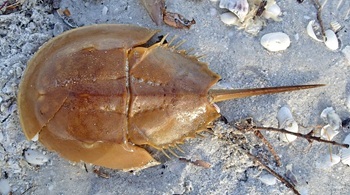
Today’s catch included a white perch (170 mm), a tautog-blackfish (285 mm), an oyster toadfish (195 mm), a juvenile striped bass (230 mm), and one horseshoe crab (310 mm length).
- Toland Kister, Harbor School Interns
[Horseshoe crabs are arthropods of the family Limulidae and the only surviving Xiphosurans (sword-like telson). Despite their name, they are not true crabs or even crustaceans; they are chelicerates, more closely related to arachnids like spiders, ticks, and scorpions. Horseshoe crabs have been described as "living fossils", having changed little since they first appeared in the Triassic Period, 250 million years ago (Bicknell & Pates 2019).]
[Crab measurements (size) are calculated in millimeters (mm) point-to-point across their carapace. Tom Lake]
Photo of horseshoe crab courtesy of NMFS
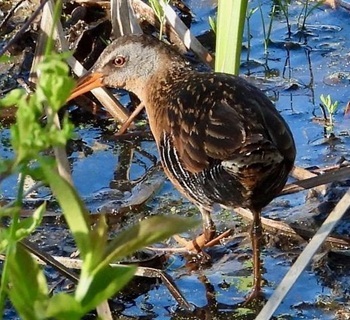
5/12 – Saratoga County, HRM 157: I managed to get a photo of one of the most difficult rails (Rallidae) to find in an open setting, a Virginal rail (Rallus limicola). These aquatic birds are a virtual magnet to thick gnarly vegetation that frequently takes over a camera’s image.
- Katrina Van Tassel
Photo of Virginia rail courtesy of Katrina Van Tassel
5/12 – Dutchess County, HRM 98.5: I did my weekly visit to the mouth of the Saw Kill (Bard College Campus), a Hudson River tidewater tributary, looking for migratory fishes. There were more alewives (Also pseudoharengus) in the stream this time than last week. There were several instances of visible raucous spawning bouts between males and females. Spawning smallmouth bass were present showing a slight uptick in abundance, but I did not see any spawning white suckers on this trip. I interacted with a small northern water snake (Nerodia sipedon) that persisted in getting where I needed to step.
- Bob Schmidt
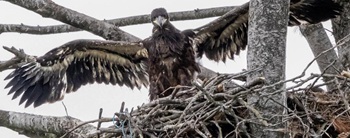
5/12 – Town of Poughkeepsie: There is one (of many) very special days each spring in bald eagle nests when the nestlings discover their wings. It is stirring, even comical, to see them hopping around and flapping wings the size of ironing boards. And then comes the surprise the nestlings must feel when their flapping lifts them a foot above the nest. Their first, albeit a mini, flight.
Today was the moment for the three NY62 nestlings in their Day 55. In the days to come, like children with a new toy, they will jump, hop, and branch upward to other limbs in their nest tree, observing new horizons and boundaries of their world.
- Tom Lake
Photo of bald eagle courtesy of Bob Rightmyer
5/13 – Piermont Pier, HRM 25: An immature bald eagle perched atop a telephone pole greeted 3rd grade students from Strawtown Elementary School in Clarkstown as they arrived at the river. The students were eager to get into the water and quickly geared up into waders to go seining. Cheers were heard all around as the students saw a variety of aquatic life in the seine as it was hauled up on the beach.
Across three hauls, the students caught 12 mummichogs (7 female, 5 male), 14 Atlantic silverside, a yearling striped bass, 26 blue crabs (16 female, 10 male), and two grass shrimp. A flock of mallards joined by a male greater scaup was a fun sight as the students departed. The river was 57 degrees Fahrenheit, and the salinity was 3.0 parts-per-thousand.
- Marisa Annunziato, Margie Turrin
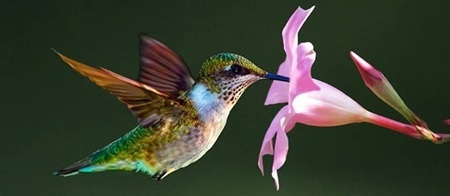
5/14 – Beacon, HRM 61: I was at Scenic Hudson’s Long Dock Park to check the tide but ended up watching two ruby-throated hummingbirds (Archilochus colubris) dip down to the water’s edge and then zip back into the tree line. The second time they came back to the water I noticed one was a female, the first I had seen this season. Females lag behind the males in their spring return. Last week we conferred the wrong species name to the ruby-throated, corrected here.
- Tom Lake
Photo of ruby-throated humingbird courtesy of Cornell Lab of Orinthology
5/15 – Town of Wappinger, HRM 67.5: On this day in 2018, high winds from a storm destroyed bald eagle nest NY459, in its first season along the south side of the tidal Wappinger Creek, and a pair of 42-day-old nestlings fell 75 feet to the ground. Thanks to a quick response by Gary and Mauricette Char Potthast, Meghan Oberkircher, and Annie Mardiney, wildlife rehabilitators responded almost immediately and rescued the nestlings — they survived.
Undeterred by the drama and violence, forty days later the adult pair of eagles from NY459 began the rebuilding process. We often speak of how resilient bald eagles seem to be, and this was a prime example. Their genes of resiliency must be passed on; in nine breeding seasons, the adult pair have had fifteen nestlings.
- Tom Lake
[A microburst is a localized column of sinking air (downdraft) within a thunderstorm and is usually less than to 2.5 miles in diameter. Wind speeds in microbursts can exceed 100 mph, equivalent to an EF-1 tornado. National Weather Service]
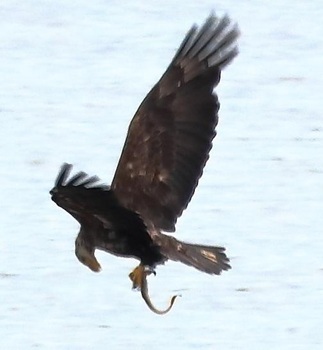
5/15 – Tappan Zee, HRM 33: We watched an adult bald eagle stalk from the air something invisible to our eyes, an American eel. It finally swooped down and talon-grabbed the fish, lifted, and flew away with the eel trailing.
- Larry Weiss
Photo of bald eagle courtesy of Larry Weiss
5/15 – Yonkers, HRM 18: Our research and education team at the Sarah Lawrence Center for the Urban River at Beczak, assisted by Yonkers High School students, tended to our fyke twice this week (5/12, 5/15) that we set overnight in the Beczak tidemarsh. Our collective catch amounted to just nine glass eels. The season is windings down.
- Jason Muller, Hilary Vidalakis
Also, this week, our research and education team at the Sarah Lawrence Center for the Urban River at Beczak hosted two student groups (5/12, 5/13), BOCES Walden Learning Center, and Yonkers High School students for seining. Collectively we made 15 seine hauls that featured 17 yearling striped bass (75-110 mm), Atlantic herring (Clupea harengus), white perch, and mummichog. Among invertebrates we collected blue crab (7) and grass shrimp (Palaemon sp.).
The water temperature averaged 61 degrees Fahrenheit, salinity averaged 5.7 parts-per-thousand, and the dissolved oxygen (DO) averaged 10.8 parts-per-million.
- Christina Tobitsch, Katie Lamboy Roman, Jason Muller
Are you a natural resource professional or ecologist looking for recommendations of native plants and trees to plant on a restoration site? DEC and the New York Natural Heritage Program recently released a Species Selection Tool that provides a list of recommended native tree, shrub, and herbaceous plant species to improve habitats, increase biodiversity, and benefit wildlife across New York State. There are three steps to using this tool:
-
Enter your planting site location: Enter the address or click on the map to automatically generate expected site conditions of the property including soil and geology.
-
Review the site conditions: Review the site conditions generated by the tool. To change site conditions (such as the geology, elevation, soil drainage, or soil depth) click the drop-down arrows and choose the correct site feature.
-
Choose the type of natural community you want to plant: Below the map, select the button of the type (category) of natural community you would like to plant (forest, forested wetland, shrubland, grassland, emergent wetland, dunes, or barrens). Note that the option you can select based on your site conditions will be green buttons; the whited-out buttons are communities that are not suitable for planting at your site. On the new page, select the natural communities you are interested in including in the list.
The tool narrows down the species list, and provides information on each species, including height, lifespan, shade tolerance, and climate adaptability.
The new Species Selection Tool can assist natural resource professionals with finding native plants and trees suitable for their restoration site.
Come fishing for free! All events are family friendly. Each spring the Hudson River is alive with migratory fish species that are drawn into the protective waters of the estuary as part of their spawning cycle.
2026 will be our 10th annual event!! Celebrate with us Saturday May 30! Please note a few of our partners will be hosting events on different dates so you will want to check carefully for your location date and time! More information on the Columbia University website.
Science Saturday at Norrie Point Environmental Center
Join us for our monthly Science Saturday programs and explore Norrie Point. Check out our series by visiting the Hudson River website. Events are free and open to the public. Registration is not required. All programs meet at the Norrie Point Environmental Center, 256 Norrie Point Way, Staatsburg NY, 12580. Dress for the weather and being outside! Otherwise, no special equipment is needed.
Saturday May 30 and June 27, both 10:00am to 12:00 noon. Put on some waders and jump in the Hudson! Join us as we pull a seine net and discover what fish live in the Hudson. Equipment is provided. We will meet at Mills Mansion Staatsburg State Historic Site. Park at the carriage barn (signs will be posted) and DEC Staff will walk with attendees to the powerhouse. (seining location). Please note that this program will require walking on rocky steps and uneven terrain. The powerhouse is a 10-minute/.25 mile walk from the parking area. Check out our website for more information.
Snapshot NY
The NYSDEC, in collaboration with the New York Cooperative Fish and Wildlife Research Unit at Cornell University, has launched Snapshot NY, a citizen science program that allows the public to participate in wildlife monitoring through the deployment of trail cameras. The project will help improve the way DEC monitors and manages more than a dozen wildlife species. For more information on Snapshot NY and how to participate, visit the Snapshot NY website.
Hudson River Lesson Plans
Explore our collection of Hudson River lesson plans, videos and online activities to support hands on investigations of the Hudson River in your classroom.
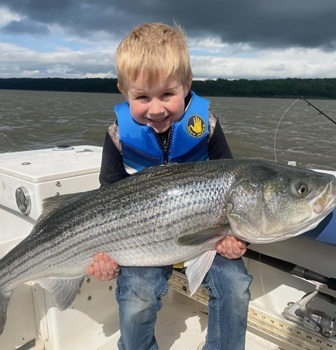
Hudson River: Striped Bass Cooperative Angler Program
You can share your fishing trip information and help biologists understand and manage our Hudson River striped bass fishery.
Here’s how it works: Fill out a logbook provided by us whenever you fish on the Hudson River (by boat or from shore). You can also use our survey123 app and record your trips using a smart phone or computer.
Record general location, time, gear used, what you caught (or if you didn’t catch anything) and return the logbook when you are done fishing for the season. You’ll receive an annual newsletter summarizing the information in addition to the latest news regarding regulations and the river. Whether you catch-and-release or take home a keeper, you can be part of the Cooperative Angler Program. Online logbook instructions (PDF).
Join today by contacting: hudsonangler@dec.ny.gov
- Jessica Best
Photo of DEC Angler Program courtesy of Jess Best
Hudson River Miles
The Hudson is measured north from Hudson River Mile 0 at the Battery at the southern tip of Manhattan. The George Washington Bridge is at HRM 12, the Tappan Zee 28, Bear Mountain 47, Beacon-Newburgh 62, Mid-Hudson 75, Kingston-Rhinecliff 95, Rip Van Winkle 114, and the Federal Dam at Troy, the head of tidewater, at 153. The tidal section of the Hudson constitutes a bit less than half the total distance—315 miles—from Lake Tear of the Clouds to the Battery. Entries from points east and west in the watershed reference the corresponding river mile on the mainstem.
To Contribute Your Observations
The Hudson River Almanac is compiled and edited by Tom Lake and emailed weekly by DEC's Hudson River Estuary Program. Share your observations by e-mailing them to trlake7@aol.com.
Was this Newsletter Forwarded to You?
Subscribe today to DEC Delivers Hudson River Almanac topic for weekly natural history journal that covers the Hudson from the High Peaks of the Adirondacks to New York Harbor.
Helpful Resources
National Oceanic and Atmospheric Administration online tide and tidal current predictions are invaluable when planning Hudson River field trips. For real-time information on Hudson River tides, weather, and water conditions from sixteen monitoring stations, visit the Hudson River Environmental Conditions Observing System website.
DEC's Smartphone app for iPhone and Android is now available at New York Fishing, Hunting, and Wildlife App.
|