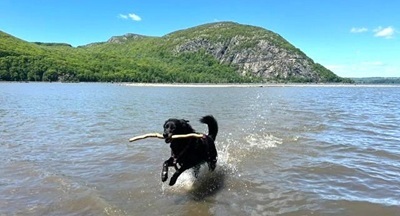
Photo of Storm King and the Hudson Highlands courtesy of Seth Dinitz
In this issue:
Male ruby throated hummingbirds were back adding color to our feeders (the females were not far behind). By visible accounts in clearwater tributaries, the spring spawning surge of river herring (bluebacks and alewives) was reaching its peak. We must assume that the coeval spring spawning run of American shad in from the sea is likewise in full vigor, but since they are fully protected by state and federal regulations, they remain invisible.
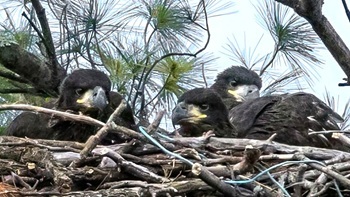
5/8 – Town of Poughkeepsie: Bald eagle nest NY62 has been a delight to watch this spring, across 51 days, from the first moment that a fuzzy little gray head popped up to the realization the adults had three healthy nestlings. Given the weeks of never-ending discovery of their new world and the non-stop waiting for the next food delivery, it was a wonderfully serene sight to see all three taking an afternoon nap.
- Bob Rightmyer
[Three bald eagle nestlings are not nearly as common as one or two. NY62 has had 3, three times in 25 years, including the last two years 2025 and 2026. They also had three in 2023, but one was lost before fledging. Tom Lake]
Photo of bald eagles courtesy of Bob Rightmyer
[Correction: For last week’s Highlight-of-the-Week (shortnose sturgeon recaptures), sturgeon #1, originally tagged in 2013, was recaptured in 2026 after being free for 12 years and 7 months. Tom Lake]
4/28 – Manhattan, HRM 1-2: Our Hudson River Park's River Project staff and interns from the New York Harbor School checked our research gear (pots and traps) that we deploy from floating docks on the south-side of Piers 26 and 40 in Hudson River Park for our ongoing Park's Fish Ecology Survey.
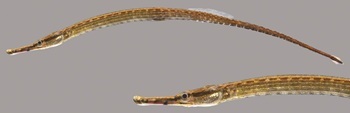
Today’s fish catch consisted of one northern pipefish (225 mm), one blackfish, or tautog (250 mm), and one American eel (300 mm). Invertebrates collected included grass shrimp, mud crabs, mud dog whelks, oyster drills, marine leeches, and one golf-ball sized lions mane jellyfish (Cyanea capillata).
- Toland Kister
[Note: One-inch equals 25.4 millimeters (mm). Tom Lake]
Photo of Lion's Mane courtesy of James Scott
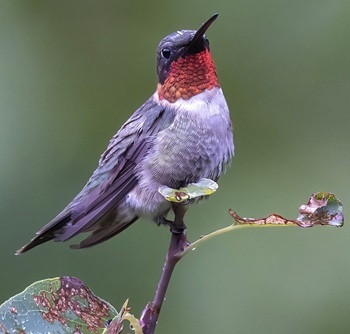
4/29 – Hudson River Watershed: Even though there has been a gradual shift northward of the ruby-throated hummingbird’s (Danaus plexippus) range, most individual birds still spend the winter in Central America. While many follow a migratory coastal route when returning to their breeding grounds — some migrations entail a 500-600 mile, nonstop, 20-hour flight across the Gulf of Mexico. As of now, hummingbirds have reached northern New England, a trip of over 2,000 miles.
The timing of the nectar-drinking hummingbirds’ arrival is not correlated with any plant species. Rather, it may depend on the earlier arrival of yellow-bellied sapsuckers whose drilling assures the hummingbirds of a source of sap (and insects) should nectar not be available yet. It appears that climate change may be advancing the spring arrival dates of both hummingbirds and sapsuckers.
- Mary Holland
Photo of ruby-throated hummingbird courtesy of Mary Holland
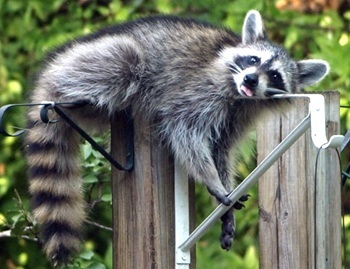
[My best recollections of hummingbird feeders over the years comes with a side order of raccoon. It has not been rare for raccoons to visit our feeders, tilt the base and devour the sugar water. I’ve never seen any damage — they seem quite fastidious — and on each occasion I simply had to refill the feeder. I remember one that hung on the feeder pole for a while afterward and acted quite inebriated. Tom Lake]
Photo of raccoon courtesy of Tom Lake
4/30 – Manhattan, HRM 1-2: Our Hudson River Park's River Project staff and interns, this time from CUNY (City College of New York), were back on the river checking our research gear (pots and traps) that we deploy from floating docks on the south-side of Piers 26 and 40 in Hudson River Park for our ongoing Park's Fish Ecology Survey.
Today’s fish catch was limited to a single northern pipefish (150 mm) along with an invertebrate catch including sand shrimp, mud dog whelks, mud crabs, grass shrimp, and leeches.
- Toland Kister, Renee Mariner
Photo of northern pipefish courtesy of Rick O'Connor
5/1 – Hook Mountain, HRM 31: Among the 44 north-migrating raptors today at the Hook Mountain Hawkwatch, broad-winged hawk was high count with 19. Sharp-shinned hawk was next with nine.
Among non-raptor migrants, turkey vulture was high count with 13. As for songbirds, there were many-hundreds of chimney swifts in occasional bouts of low feeding-frenzies at the summit-level. Also, high numbers of swallows initially very low in feeding frenzies also near the summit. They included cliff swallow, as well as some northern rough-winged, barn swallows, and many tree swallows. Later, most of the swifts and swallows were higher and moving on rapidly, all trending north.
- Tom Fiore
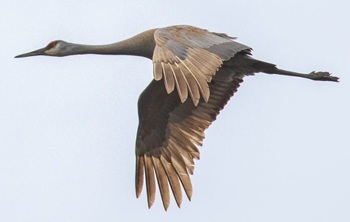
5/2 – Orange County, HRM 41: As I was taking the Liberty Loop trail this morning around the Black Dirt’s Wallkill River National Wildlife Refuge, an adult sandhill crane (Antigone canadensis) flew gracefully over and on past.
- Matt Zeitler
Photo of sandhill crane courtesy of Matt Zeitler
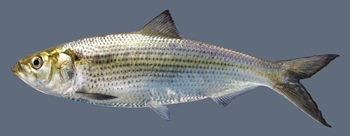
5/3 – Hudson River Watershed: Fish-of-the-Week for Week 365 is the hickory shad (Alosa mediocris) number 25 (of 240) on our watershed list of fishes. If you would like a copy of our list, e-mail trlake7@aol.com.
Hickory shad is one of five Shads (Alosidae) documented for the watershed. Other Alosids include American shad (A. sapidissima), blueback herring (A. aestivalis), and alewife (A. pseudoharengus). The Atlantic menhaden (Brevoortia tyrannus) is in the family, but unlike the four Alosids that are anadromous — marine to freshwater to spawn — the Atlantic menhaden is a seasonally resident marine species favoring marine and brackish water.
Hickory shad range along the Atlantic Coast from the Bay of Funday (Canadian waters) to the Saint John's River in Florida. However, Bigelow and Schroeder in their Fishes of the Gulf of Maine (1953) admit that they rarely see hickory shad in their region of the North Atlantic. Like most other migratory marine fishes, their population fluctuates, and their range expands and contracts due to a myriad of ecological factors. Most often, their center of abundance is along the coastal Carolinas. Wherever they are found, they are a superior gamefish.
The type site for the hickory shad is a generic “New York,” a large area that could mean anywhere from the East River to the New York Bight. Regardless, Samuel L. Mitchill described the hickey shad from a specimen from this area to science in 1814.
Like many herring, hickory shad are silvery with a contrasting dark greenish back. They are thin, fusiform in shape, built to escape-and-evade predators rather than blend in or hide. With fish in hand, it is easy to see how their lower jaw extends upward and beyond their upper jaw when closed. They always appear to me, with their jutting jaw, as a “fish with an attitude,” just begging anyone to argue. Hickory shad also tend to have a flatter dorsal profile than the American shad.
Briggs and Waldman (2002) refer to hickory shad as “common” in the New York Bight, but our experience in the estuary is much less generous. They are so closely a look-alike with American shad, that the difference might seem to fall in the range-of-variation, and missed as a different species.
The hickory shad’s trivial (species) name mediocris, comes from Latin meaning “middling or ordinary.” This refers to the opinion of Samuel Mitchill (1814), the ichthyologist who named the hickory shad, and speaks to their supposed poor culinary quality. Most connoisseurs of fish will tell you that matched against American shad, they come in a very poor second. I have smoked hickory shad and would rate them well below American shad for taste, but considerably above Atlantic menhaden, a fish that is revered only by humpback whales.
Until the American shad fishery was closed in 2010, the “Hudson River Shad Bake” was a centuries-long spring tradition along the tidewater river. There has also been a similar long-time shad bake tradition in the Carolinas for hickory shad. Sometimes traditions transcend good taste. Unlike American shad, which have both state and federal protection, hickory shad have no catch restrictions.
The presence of hickory shad in the Hudson River is very sporadic or possibly unnoticed (Smith and Lake 1990). Our first encounter with hickory shad occurred while commercial American shad fishing in the 1980s. Hickory shad very closely resemble the American shad and with a net full of the former, it is easy to overlook the latter. But after a while, we did recognize some subtle difference and took a couple of them to C. Lavett Smith, Curator of Fishes at the American Museum of Natural History in Manhattan. He confirmed our guess that these were adult hickory shad that had been migrating up the river in small numbers, mixed in with American shad.
In the 1980s and 1990s, in addition to the weak spring run of adult hickory shad, it was a common autumn occurrence to find juveniles mixed in with young-of-year bluefish and striped bass from the Tappan Zee 40 miles upriver to Diamond Reef at New Hamburg. This fishery seems to have petered out over time due to population fluctuations.
- Tom Lake
Photo of hickory shad courtesy of Tom Lake
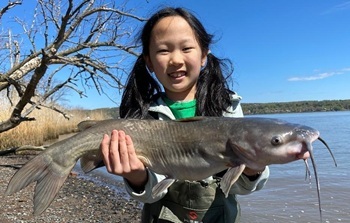
5/4 – Beacon, Long Dock, HRM 61: I caught and released two handsome 15½-inch channel catfish (Ictalurus punctatus) in a three hour session bait-fishing on the down tide. While this was, admittedly, a modest achievement, it was especially gratifying since my session a month ago was fishless. Not even a bite, hit, or a nibble.
- Bill Greene
Photo of channel catfish courtesy of Tom Lake
5/4 – Manhattan, HRM 1-2: Our Hudson River Park's River Project staff and Harbor School Interns checked our research gear (pots and traps) that we deploy from floating docks on the south-side of Piers 26 and 40 in Hudson River Park for our ongoing Park's Fish Ecology Survey.
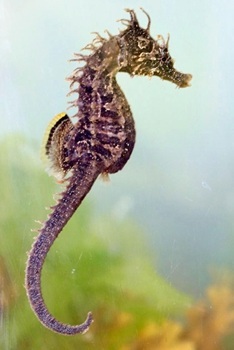
Today’s catch included an American eel (350 mm), two blackfish-tautog (205-260 mm), and our first (55 mm) lined seahorse (Hippocampus erectus) for 2026. Invertebrates included mud dog whelks, mud crabs, grass shrimp, and Pacific shore crabs.
- Toland Kister
Photo of lined seahorse courtesy of Chris Bowser
5/5 – Piermont Pier, HRM 25: Despite winds and waves, our Lamont Doherty education team hosted 4th graders from Columbia Grammar & Preparatory School. The students enthusiastically jumped into the river shallows to go seining at Piermont Pier.
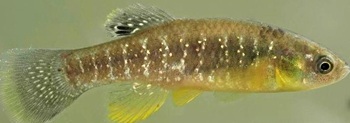
Cheers echoed through the group as four hauls of our seine captured ten juvenile striped bass and two mummichogs (killifish), a male and a female. The students were amazed by the bright yellow abdominal breeding colors of the male mummichog. They were likewise excited to catch two fish species that are commonly found in the brackish waters of Piermont (salinity 3.5 parts-per-thousand).
- Marisa Annunziato, Margie Turrin
Photo of mummichog courtesy of Jason Muller
5/6 – Dutchess County, HRM 98.5: I did my weekly visit to the mouth of the Saw Kill (Bard College Campus) looking for migratory fishes. It was dark and drizzling so visibility was not optimum. I did not see any white suckers (in from the river) or alewives (in from the sea) this trip. Smallmouth bass were still present, but the numbers seemed much lower at this time than in recent years. Other warm-water fishes had begun to wake up. I caught some bluegill sunfish and largemouth bass, both of which I thought were a bit early this year.
- Bob Schmidt
5/6 – Manhattan, HRM 1-2: Our Hudson River Park's River Project staff checked our research gear (pots and traps) that we deploy from floating docks on the south-side of Piers 26 and 40 in Hudson River Park for our ongoing Park's Fish Ecology Survey.
Blackfish-tautog (215 mm) continued to be common, but there was a bit of a surprise, a (230 mm) summer flounder (Paralichthys dentatus). Invertebrates present at the trap sites included grass shrimp, sand shrimp, mud crabs, amphipods, mud dog whelks, and Pacific shore crabs.
- Toland Kister, Renee Mariner
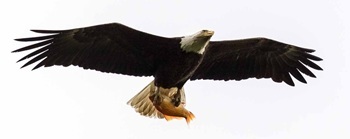
5/7 – Town of Poughkeepsie: The male from bald eagle nest NY62, came in from the river today, in classic form, with a fat goldfish in its talons. The three nestlings are growing rapidly in response to their incredibly rich menu.
- Bob Rightmyer
[As we inspected the photo, Bob Schmidt and I mulled over the possibility that the fish the eagle was carrying in the photo was a carp-goldfish hybrid. These hybrids are either quite uncommon, or we miss them in our haste to clear our nets.
We have come across them at least twice in the last 30+ years. Originally in the 1980s at Danskammer Point (river mile 67) with C. Lavett Smith (AMNH) and then in March 1996, when Christopher Lake came upon two in his net at Coxsackie (river mile 124) as he was collecting live American shad to transport to the Susquehanna River (Hudson River Almanac, Vol III.]
[Common carp-goldfish hybrids are a cross between two non-native, introduced minnows (Cyprinidae). Not only are the offspring of different species, but also of different genera.
How can you tell if you have a hybrid carp-goldfish? A carp (Cyprinus carpio) has four barbels on its upper jaw, two on each side. A goldfish (Carassius auratus) has no barbels at all. A hybrid will have some combination of 1, 2, or 3 barbels, most often 2 on one side, none on the other. Patience and a hand lens are musts. Tom Lake]
Photo of bald eagle with goldfish courtesy of Bob Rightmyer
5/7 – Little Stony Point, HRM 55: The sometimes gale force southwest winds of recent days coupled with the rising tide pushed flotsam onto Hudson Highlands beaches. Today we came upon two adult alewives on the sand victims of the vagaries of tidewater.
River herring, in-from-the-sea to spawn, often find the journey a challenge. In addition to the salinity change for which they must slowly adapt as they head inland, there are eagles and osprey about looking to find food for their nestlings. Schools of river herring nose upriver along the shoreline seeking natal tributaries that they left four years earlier, and a strong tide, a buffeting wind, and a ship’s wake could toss them stranded above the reach of tide.
- Seth Dinitz
5/8 – Hudson River Watershed: There is an assumption by many that it would be too difficult for a bird to clasp an egg in its beak without injuring it, much less fly with it to a new location and deposit the egg in a new nesting site. While it is a rare occurrence, it does happen, and as luck would have it, Sydney Bagwell had camera in hand when a pileated woodpecker flew by her with its egg in its beak.
Egg relocation usually results from a nest tree being damaged in a storm or predation (snakes, raccoons, fishers and birds are likely predators). A nesting bird will abandons its nest if the tree it is nesting in is destroyed or if a predator approaches, but occasionally, especially with ground-nesting species, an attempt is made to find another nesting site and bring the eggs to it. The American oystercatcher, which nests on beaches and sandbars and is thus subject to damaging tides and erosion, is also known to exhibit this behavior.
- Mary Holland
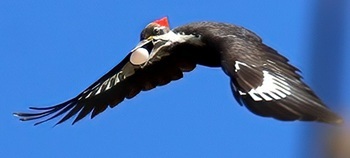 |
Photo of pileated woodpecker courtesy of Mary Holland
Are you a natural resource professional or ecologist looking for recommendations of native plants and trees to plant on a restoration site? DEC and the New York Natural Heritage Program recently released a Species Selection Tool that provides a list of recommended native tree, shrub, and herbaceous plant species to improve habitats, increase biodiversity, and benefit wildlife across New York State. There are three steps to using this tool:
-
Enter your planting site location: Enter the address or click on the map to automatically generate expected site conditions of the property including soil and geology.
-
Review the site conditions: Review the site conditions generated by the tool. To change site conditions (such as the geology, elevation, soil drainage, or soil depth) click the drop-down arrows and choose the correct site feature.
-
Choose the type of natural community you want to plant: Below the map, select the button of the type (category) of natural community you would like to plant (forest, forested wetland, shrubland, grassland, emergent wetland, dunes, or barrens). Note that the option you can select based on your site conditions will be green buttons; the whited-out buttons are communities that are not suitable for planting at your site. On the new page, select the natural communities you are interested in including in the list.
The tool narrows down the species list, and provides information on each species, including height, lifespan, shade tolerance, and climate adaptability.
The new Species Selection Tool can assist natural resource professionals with finding native plants and trees suitable for their restoration site.
Come fishing for free! All events are family friendly. Each spring the Hudson River is alive with migratory fish species that are drawn into the protective waters of the estuary as part of their spawning cycle.
2026 will be our 10th annual event!! Celebrate with us Saturday May 30! Please note a few of our partners will be hosting events on different dates so you will want to check carefully for your location date and time! More information on the Columbia University website.
Science Saturday at Norrie Point Environmental Center
Join us for our monthly Science Saturday programs and explore Norrie Point. Check out our series by visiting the Hudson River website. Events are free and open to the public. Registration is not required. All programs meet at the Norrie Point Environmental Center, 256 Norrie Point Way, Staatsburg NY, 12580. Dress for the weather and being outside! Otherwise, no special equipment is needed.
Snapshot NY
The NYSDEC, in collaboration with the New York Cooperative Fish and Wildlife Research Unit at Cornell University, has launched Snapshot NY, a citizen science program that allows the public to participate in wildlife monitoring through the deployment of trail cameras. The project will help improve the way DEC monitors and manages more than a dozen wildlife species. For more information on Snapshot NY and how to participate, visit the Snapshot NY website.
Hudson River Lesson Plans
Explore our collection of Hudson River lesson plans, videos and online activities to support hands on investigations of the Hudson River in your classroom.
Hudson River: Striped Bass Cooperative Angler Program
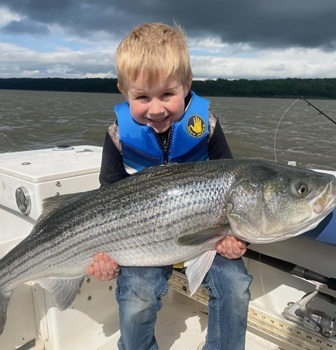
You can share your fishing trip information and help biologists understand and manage our Hudson River striped bass fishery.
Here’s how it works: Fill out a logbook provided by us whenever you fish on the Hudson River (by boat or from shore). You can also use our survey123 app and record your trips using a smart phone or computer.
Record general location, time, gear used, what you caught (or if you didn’t catch anything) and return the logbook when you are done fishing for the season. You’ll receive an annual newsletter summarizing the information in addition to the latest news regarding regulations and the river. Whether you catch-and-release or take home a keeper, you can be part of the Cooperative Angler Program. Online logbook instructions (PDF).
Join today by contacting: hudsonangler@dec.ny.gov
- Jessica Best
Photo of DEC Angler Program courtesy of Jess Best
Hudson River Miles
The Hudson is measured north from Hudson River Mile 0 at the Battery at the southern tip of Manhattan. The George Washington Bridge is at HRM 12, the Tappan Zee 28, Bear Mountain 47, Beacon-Newburgh 62, Mid-Hudson 75, Kingston-Rhinecliff 95, Rip Van Winkle 114, and the Federal Dam at Troy, the head of tidewater, at 153. The tidal section of the Hudson constitutes a bit less than half the total distance—315 miles—from Lake Tear of the Clouds to the Battery. Entries from points east and west in the watershed reference the corresponding river mile on the mainstem.
To Contribute Your Observations
The Hudson River Almanac is compiled and edited by Tom Lake and emailed weekly by DEC's Hudson River Estuary Program. Share your observations by e-mailing them to trlake7@aol.com.
Was this Newsletter Forwarded to You?
Subscribe today to DEC Delivers Hudson River Almanac topic for weekly natural history journal that covers the Hudson from the High Peaks of the Adirondacks to New York Harbor.
Helpful Resources
National Oceanic and Atmospheric Administration online tide and tidal current predictions are invaluable when planning Hudson River field trips. For real-time information on Hudson River tides, weather, and water conditions from sixteen monitoring stations, visit the Hudson River Environmental Conditions Observing System website.
DEC's Smartphone app for iPhone and Android is now available at New York Fishing, Hunting, and Wildlife App.
|