Photo of River Otter courtesy of Stan Tekeila
In this issue:
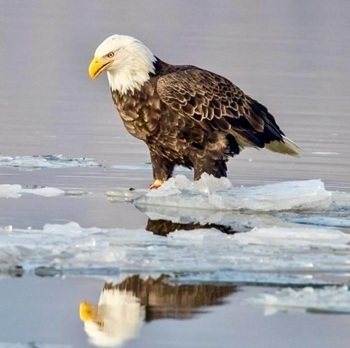
The bank-to-bank iced- over estuary of February had begun to loosen its grip on the river providing floating feeding stations for eagles. Signs of spring were not uncommon including our first glass eels of the season, in from the sea, after a long winter’s journey from the mid-Atlantic.
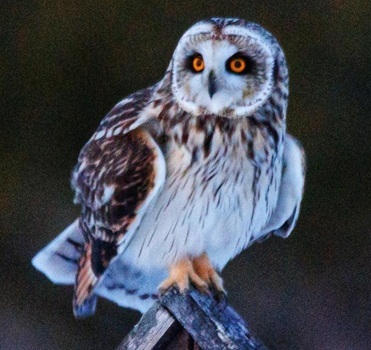
2/28 - Fort Edward, HRM 202: I was at the Washington County Grasslands today and came upon a short-eared owl out hunting the fields and meadows. The short-eared owl is often seen, seasonally, as emblematic of the grasslands.
- Andrew Walters
Photo of short-eared owl courtesy of Andrew Walters
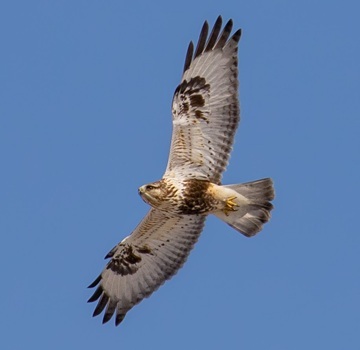
2/28 – Orange County, HRM 41-44: I visited Orange County’s Back Dirt region this morning, specifically the Wallkill River National Wildlife Refuge’s Liberty Loop. It was well worth the trip. I had at least six (6) rough-legged hawks (Buteo lagopus), known less kindly as the rough-legged buzzard in the UK, hunting the hummocks. It’s been a while since we’ve seen those types of numbers rough-legged in our area.
- Matt Zeitler
Photo of rough-legged hawk courtesy of Matt Zeitler
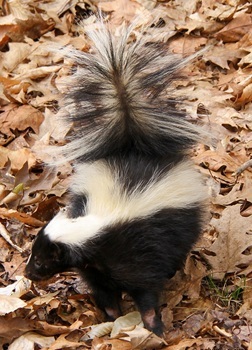
2/28 – Brooklyn, New York City: Floyd Bennett Field, Brooklyn — I almost passed it by, but the lump of longish black fur on the main runway of New York City's first municipal airport was compelling to both me and a large raven that was picking at it when I arrived. A car passing the opposite direction scared off the raven, but when I pulled over to take a closer look, it was obviously a roadkill. A messy "gore" covered the jet black fur and almost completely obscured a white stripe which began at the animal's forehead, terminating at a large shaggy tail. A close look at one of the animal's paws sealed the identity. This was no feral cat, but only the third skunk I've ever seen on the south shore of Brooklyn. Growing numbers of skunks can be seen in the Bronx, and I've seen them deceased along the Staten Island expressway as well.
- Dave Taft
Photo of striped skunk courtesy of Mary Holland
3/1 – Fort Edward, HRM 202: An undeniable sign of spring: While driving today, I saw a first-of-season turkey vulture soaring at low altitude. This was my earliest sighting of a turkey vulture in upstate New York.
- Scott Varney
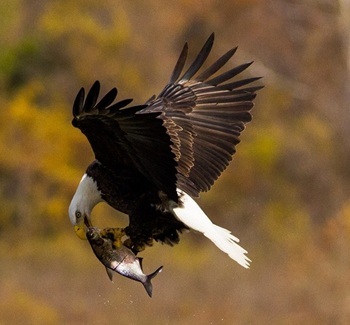
3/1–Tappan Zee, HRM 31: - Activity on the shrinking ice floes continued with many eagles, mixed immatures and adults, in the late winter area feeding and socializing. Chief on the menu today was floating belly-up, winter-killed, gizzard shad.
- Larry Weiss
Photo of bald eagle with gizzard shad courtesy of Debbie LePhew
2/24 – Dutchess County, HRM 90: Just a few days after a first-time visit from a gray fox (see February 20), I had the good fortunate of watching a red fox hunting my field. This hunt was more methodical than that of the gray fox and turned out to be more successful as well. The red fox moved behind a tree, so I didn’t get a good look at the prey other than to see that it was taken from under the snow (field mouse, vole?).
This red fox was a beautiful specimen on the larger size and looked very healthy with a nice bushy tail. Its presence was good to see given what has been a challenging winter for wildlife.
- Fran Margiotta
3/1– Manhattan, HRM1-2: Hudson River Park’s River Project staff checked our research gear (pots and traps) today that we deploy from floating docks on the south-side of Piers 26 and 40 in Hudson River Park. Our gear was completely empty: No fish, no invertebrates.
- Toland Kister
[There is a tenets in science that states, “No data is still data.” Was there a message today in the River Project’s empty gear? Perhaps even data? This has been a brutally cold and icy winter for the Hudson River. Today’s water temperature was 30.2 degrees Fahrenheit (-1.0 C). This value, combined with a salinity of 24.5 parts-per-thousand (ppt), made the river highly (73%) brackish. The salt in this mix allows the water to become colder (below 32 degrees F), without freezing. The net of this is an inhospitable environment for most marine life. Cause and effect—perhaps not so surprisingly that the River Project’s gear was empty. Tom Lake]
2/26 – Hudson River Watershed: The song of the tufted titmouse (Baeolophus bicolor) is a loud, clear, two-note phrase, repeated up to eleven times in succession: “Peter-Peter-Peter.” The song can be heard now even though snow and cold temperatures are still with us. While titmice may pair up any time of the year, the singing of the males is a vital part of establishing territory and courtship. Females occasionally sing but not as loud or as often as males.
The tufted titmouse’s song is familiar while its calls are more numerous and varied. Twelve different tufted titmouse calls have been identified. They range from the ‘chick-a-dee’ and ‘seet’ calls made in response to predators, to the hissing done by a female titmouse in a cavity, defending her nest.
- Mary Holland
[To hear both songs and calls of the Tufted Titmouse, go to https://www.allaboutbirds.org/guide/Tufted_Titmouse/sounds]
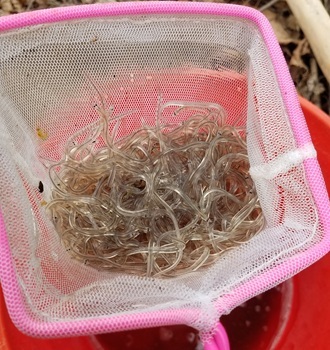
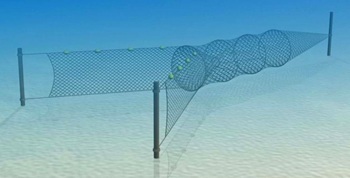
3/2 – Yonkers, HRM 18: Following the setting of our fyke net overnight in the Beczak Tidemarsh, our research and education team at the Sarah Lawrence Center for the Urban River at Beczak found our first “glass eel” of the season. The water was a chilly 34 degrees Fahrenheit(F), but it didn’t stop this one immature American eel from heading upriver from the sea. As March turns into April, we will likely begin to see some robust numbers of glass eels surging upriver.
- Jason Muller
[The American eel (Anguilla rostrata) is a fish whose life history is shrouded in mystery. They are well known to the Hudson Valley Mohican people as Ma'am. In prehistory, they were a major part of their sustenance from the river
Although they are considered freshwater fish, they began life at sea. Native to the Northeast, they have been around for many millions of years. Across that time, they have developed many adaptations for survival, including the skills necessary to ascend watersheds via streams and brooks to reach headwaters.
Not long after arriving as glass eels from the greater Sargasso Sea in the North Atlantic, a six-month to year-long journey, there is a general separation by sex. Those destined to be female (they do not develop their sexual apparatus until near the time to return to the Sargasso Sea) begin to ascend the watershed. Males, in general, remain in tidewater or low gradient areas. This speculative separation by sex until it is time to spawn is not uncommon with fish (sharks in particular).
Photo of glass eels courtesy of Tom Lake
Eels make their way upstream using a variety of physical attributes. Playing the tide and phases of the moon, they wriggle up shallow rifts, gravel beds, and through rapids with both low water flow and dissolved oxygen. One extraordinary accomplishment is getting up and over dams. We have seen them wriggle (again) up the face of dams if there is even a trickle of drip to keep the surface wet. They use surface tension to gain purchase and their very flexible body to make their way.
Like most fish they use their gills to acquire dissolved oxygen from the water. However, if they need to traverse areas of very low dissolved oxygen, they can, for short periods, absorb atmospheric oxygen through their skin. It is likely that many of these adaptations for survival, especially obtaining oxygen, can be traced to times of regional or global cataclysm when the very existence of life on Earth was challenged.
While they enter the estuary as tiny, three-inch transparent glass eels, within a few weeks they become translucent as they develop darker pigment. Glass eels bide their time growing to adult size—about 10-12 years for males, 20 or more years for females—until their DNA rings a bell that it is time to descend the watershed to tidewater and swim seaward where they will begin a long journey to complete the cycle back to where they were born. Tom Lake]
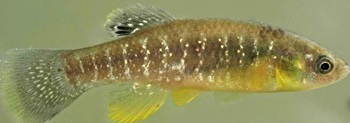
3/2 – Hudson River Watershed: Fish-of-the-Week for Week 356 is the mummichog (Fundulus heteroclitus Linnaeus, 1766), number 120 (of 239) on our watershed list of fishes. If you would like a copy of our list, e-mail trlake7@aol.com.
Mummichogs are one of five killifishes (Cyprinodontidae) documented for our watershed. They are a small fish, rarely exceeding 100 millimeters in length, and are found in coastal waters and estuaries from the Gulf of Saint Lawrence to Florida. Their Type Site is Charleston, SC, from where the type specimen was first described to science by Carl Linnaeus in 1766.
Together with its close relative, the banded killifish (F. diaphanus), they are common in the lower Hudson River estuary. Part of their diet consists of insect larvae, especially mosquitos, and they have been used as a biological control in urban areas with high mosquito density.
The name mummichog has a Native American origin and is generally interpreted, at least with Algonquian speakers, as "going in crowds." This describes the schooling predilection of most killifishes to travel in large numbers, particularly as young-of-year. Native Americans did not have a written language, or at least of the type recognized by Europeans. Theirs was an oral tradition, featuring stories, storytellers, and elders who were the keepers of the stories. Therefore, mummichog is a phonetic representation of the native spoken word.
- Tom Lake
[Note: One-inch equals 25.4 millimeters (mm). Tom Lake]
Photo of mummichog courtesy of Robert Muller
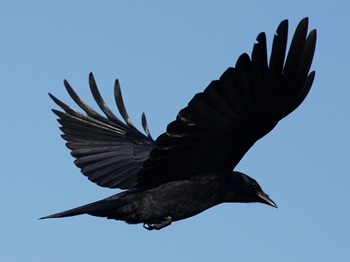
3/3 – Hudson River Watershed: Among indigenous peoples, full moons have long been labeled with fanciful names that are rooted in oral traditions, indigenous memories, and ethnographic accounts. Among Mohican people, whose ancestral homeland lies wholly within the Hudson River watershed, the March full moon is known as the Crow Moon (Kã'Kã'koowe keesok). Tribal translations of full moons pre-date colonization and generally reflect the seasonality of the lunar phase. Moon phases, in fact, were used by indigenous people as measurements of time.
- Larry Madden
Among the Haudenosaunee (Iroquoian speakers), much of whose ancestral homeland lies within the Mohawk River Valley on the northern and western periphery of the Hudson River watershed, the March full moon is known as the Wáhta Wenhnì:tare, or the Sugar Maple Moon.
- Tom Lake
[Since 1818, The Farmer’s Almanac has been giving names to various Moon phenomena. Tonight’s full Moon is called The Worm Moon. In our Hudson River Almanac, we like to follow the names given to the events by our Native watershed observers of the Heavens. They have been looking up for millennia. Tom Lake]
Photo of American crow courtesy of John Avies
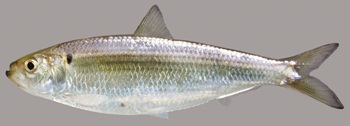
3/3 – Hudson River Estuary: James Boyle of the Atlantic States Marine Fisheries Commission (ASMFC) issued their first weekly report of the season for East Coast River Herring (blueback herring and alewives). These are river herring, primarily adults, returning, heading up the coast from their wintering waters.
The first report (48 blueback herring) comes from the St. Stephen fish lift in the Santee River at St. Stephen, South Carolina. As they move north, some will pare off into the Chesapeake Bay, Delaware River, the Hudson River, and then on north into New England and coastal Canada.
- Tom Lake
Photo of blueback herring courtesy of Zachery Randall
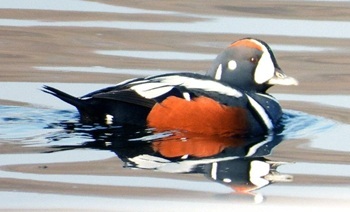
3/4 – Fort Edward, HRM 202: A harlequin duck had been hanging around the Hudson River in the Fort Edward area for a while now. My first view and photos were obscured by a passing snow squall. For my second trip the weather was good. After an hour of watching a variety of ducks, I still had not seen the harlequin duck. Then a common goldeneye with the harlequin duck in tow came into view. They had been feeding out of sight. The harlequin duck foraged for two hours providing great observations, even one throw back of his head coupled with a call.
- Jacquie Tinker
Photo of harlequin duck courtesy of Jacquie Tinker
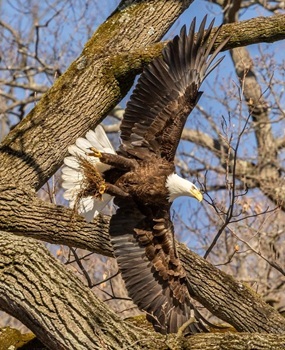
3/4 – Town of Poughkeepsie: This was Day 12 for the adults incubating eggs in bald eagle nest NY62. As I watched, the male took off relinquishing his shift as the female arrived to begin hers carrying a clutch of grass for the bottom of the nest. Our best guess for a hatch is still March 21-24.
- Bob Rightmyer
Photo of bald eagle courtesy of Bob Rightmyer
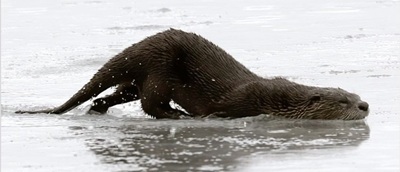
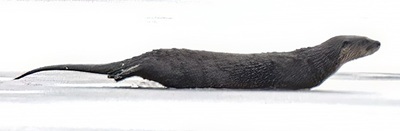
3/5 – Hudson River Watershed: Those of us who spend time near wetlands in the winter occasionally come across six-inch-wide troughs in the snow made by North American river otters as they slide from one spot to another. How do they manage to slide without their feet getting in the way? Across level ponds and fields as well as down river banks these members of the weasel family flatten their body as they throw themselves on their bellies, tuck in their front paws against their chest and push off with their hind legs which are then lifted into the air as they glide 20 feet or more on ice or snow, occasionally reaching 18 miles-per-hour. They alternately run or lope and then slide, conserving energy as they cover ground and having a good time while doing so, judging from the number of slides you can find in one spot.
- Mary Holland
Photo of river otter courtesy of Mary Holland
3/5 – Port Ewen, HRM 91: Since February 17, the rescued bald eagle banded W73 (currently in recovery) has been in the news. W73 had been banded by DEC’s Pete Nye as a nestling at Stony Point, Rockland County, on May 21, 2008, along with his sister nestling W72.
Frequent Almanac contributor, and Class A birder, Jim Yates alerted us to the presence of W73's sister, W72, that has been nesting in the Kingston area for quite a few years. “I see W72 almost daily in spring and winter. However, I am not sure where her nest is located, near here or Port Even.”
- Jim Yates
3/6 – Town of Fishkill, HRM 63: Longer days and a higher angle of the sun had the bank-to-bank river ice of a few weeks ago loosening and breaking up into floes. The river off Brockway was strewn with floes from huge to tiny going seaward for six hours, then reversing course. Bald eagles were perched on a few floes innately sensing that the time to leave their wintering haunt was near.
- Tom Lake
Photo of bald eagle courtesy of John Badura
3/6 – Yonkers, HRM 18: Following our first glass eel of the season on March 2, we continued to set our fyke net overnight in the Beczak Tidemarsh for the next four days. Totals for the week included four glass eels, 35 amphipods, as well as our first killifish of the year, a mummichog (Fundulus heteroclitus).
Water quality measurements, on average, included 13.3 parts-per-thousand salinity; 13.6 parts-per-million dissolved oxygen (DO), and 35.3 degrees Fahrenheit water temperature.
- Jason Muller Vivian Marko, Christina Tobitsch, Hamima Hossain, Daniel Basso, and the EELS Team of Yonkers High School students
Photo of fyke net courtesy of Edinburgh Net
Science Saturday at Norrie Pint Environmental Center
Join us for our monthly Science Saturday programs and explore Norrie Point. Check out our series by visiting our website. Events are free and open to the public. Registration is not required. All programs meet at the Norrie Point Environmental Center, 256 Norrie Point Way, Staatsburg NY 12580. Dress for the weather and being outside! Otherwise, no special equipment is needed.
The upcoming Science Saturday programs are:
- Rebecca Houser, Education and Outreach Specialist, HREP and NEIWPCC
Amphibian Migrations & Road Crossings Program – 2026 Volunteer Trainings
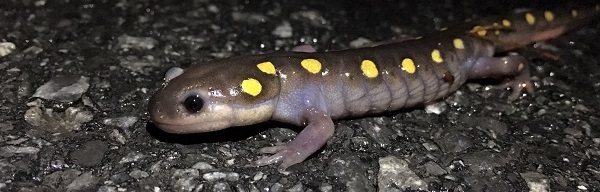
Join the DEC’s Hudson River Estuary Program and Cornell University to learn how to volunteer with the Amphibian Migrations & Road Crossings Project. Volunteers find locations where migrating salamanders and frogs cross roads on their way to vernal pools for breeding in late winter and early spring. They document weather, traffic, and species, and assist amphibians across the road safely. Trainings will be offered on the following dates:
In-person trainings are filling up, but interested volunteers can attend a program offered by an AM&RC Project Partner. Full details are available: 2026 Volunteer Trainings for the Amphibian Migrations & Road Crossings Project | Conservation Planning in the Hudson River Estuary Watershed.
Snapshot NY
The NYSDEC, in collaboration with the New York Cooperative Fish and Wildlife Research Unit at Cornell University, has launched Snapshot NY, a citizen science program that allows the public to participate in wildlife monitoring through the deployment of trail cameras. The project will help improve the way DEC monitors and manages more than a dozen wildlife species. For more information on Snapshot NY and how to participate, visit the Snapshot NY website.
Hudson River Lesson Plans
Explore our collection of Hudson River lesson plans, videos and online activities to support hand on investigations of the Hudson River in your classroom.
Hudson River Miles
The Hudson is measured north from Hudson River Mile 0 at the Battery at the southern tip of Manhattan. The George Washington Bridge is at HRM 12, the Tappan Zee 28, Bear Mountain 47, Beacon-Newburgh 62, Mid-Hudson 75, Kingston-Rhinecliff 95, Rip Van Winkle 114, and the Federal Dam at Troy, the head of tidewater, at 153. The tidal section of the Hudson constitutes a bit less than half the total distance—315 miles—from Lake Tear of the Clouds to the Battery. Entries from points east and west in the watershed reference the corresponding river mile on the mainstem.
To Contribute Your Observations
The Hudson River Almanac is compiled and edited by Tom Lake and emailed weekly by DEC's Hudson River Estuary Program. Share your observations by e-mailing them to trlake7@aol.com.
Was this Newsletter Forwarded to You?
Subscribe today to DEC Delivers Hudson River Almanac topic for weekly natural history journal that covers the Hudson from the High Peaks of the Adirondacks to New York Harbor.
Helpful Resources
National Oceanic and Atmospheric Administration online tide and tidal current predictions are invaluable when planning Hudson River field trips. For real-time information on Hudson River tides, weather, and water conditions from sixteen monitoring stations, visit the Hudson River Environmental Conditions Observing System website.
DEC's Smartphone app for iPhone and Android is now available at New York Fishing, Hunting, and Wildlife App.
|