In this issue:
-
6 NYCRR Part 242: Regional Greenhouse Gas Initiative Update: The proposed amendments to 6 NYCRR Part 242 CO2 Budget Trading Program would reduce the annual budget of CO2 allowances through 2037, add a second tier of Cost Containment allowances, remove the emissions containment reserve, remove offset projects, remove eligible biomass provisions, increase the minimum reserve price, and make other improvements and clarifications to the program. The Department is also proposing attendant amendments to listings of related reference material in 6 NYCRR Part 200 General Provisions. Additionally, New York State Energy Research and Development Authority is proposing to amend 21 NYCRR Part 507, CO2 Allowance Auction Program to align with the proposed amendments to 6 NYCRR Part 242.
-
There will be two public hearing sessions held via Webex on February 9, 2026, at 2:00 pm and 6:00 pm. Registration information can be found using the links above. The public comment deadline is February 17, 2026, by 5:00 pm.
-
Effective December 25, 2025: 6 NYCRR Part 253: Mandatory Greenhouse Gas Reporting Program: As part of the State’s ongoing efforts to gather information regarding sources of air pollutant emissions and to support the reduction of emissions under the Climate Leadership and Community Protection Act, Chapter 106 of the Laws of 2019, the Department established a mandatory greenhouse gas (GHG) reporting program that requires certain GHG emission sources to report emissions to the Department. The Department also includes attendant revisions to 6 NYCRR Part 200 to capture all incorporation by reference documents from Part 253.
-
Green Jobs for Youth Grant: There is $4 million in Environmental Justice Green Jobs for Youth Grants now available to help youth in environmental justice communities to develop skills training and promote job placement in various green industries. The DEC’s Office of Environmental Justice is launching this second round of Green Jobs for Youth funding with a focus on skills training. Applications are due on January 28, 2026, at 3:00 pm.
-
Ongoing Public Engagement: Statewide Community Air Monitoring Initiative Meetings – DEC undertook a statewide community-based air quality monitoring effort, focused on ten disadvantaged communities with high air pollution burdens around the State. Check the 2022-23 Statewide Community Air Monitoring Initiative webpage for the latest developments on the project.
-
Environmental Notice Bulletin (ENB): Check out the various projects in NYS on the Environmental Notice Bulletin (ENB).
Air Mail! is the publication to announce public and stakeholder information about air quality topics. All NYS residents are environmental stakeholders – we welcome anyone to join the information sessions and other opportunities posted here.
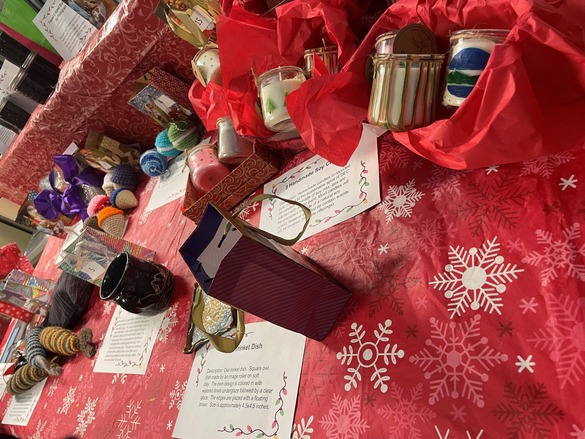
The Division of Air Resources continued its yearly tradition of holding an in-house holiday raffle to support a non-profit in NYS. This year’s efforts raised $785 for the Regional Food Bank. This organization provides food and hunger relief throughout 23 counties in northeastern NYS, feeding 350,000 people each month. Since the first holiday raffle in 2005, DAR has raised over $41,000 to support individuals and non-profits across NYS.
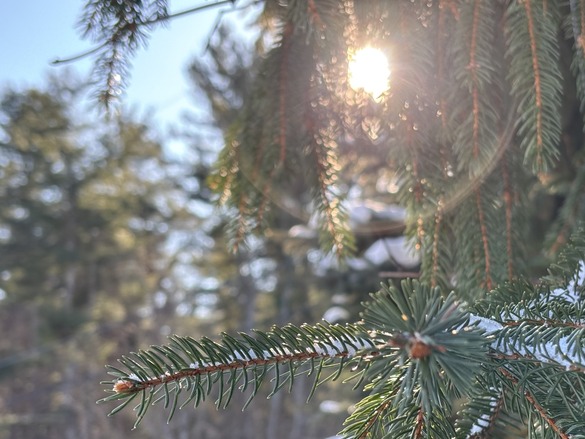
Winter is here, bringing less daylight, cold temperatures, and snow. Winter also means unique outdoor opportunities such as sledding, skiing, snowboarding, snowshoeing, and hiking. Those who have spent time outside on a quiet day can relate to the experience spoken of from Robert Frost’s famous poem 'Stopping by Woods on a Snowy Evening', “…The only other sound’s the sweep / Of easy wind and downy flake.” The peaceful quiet that comes when it snows is a unique quality of winter.
It can be very quiet during snowfall or even when snow has built up, leading to quieter environments. Snowflakes, unlike raindrops, have unique hexagonal shapes. When snow accumulates, it creates many tiny pockets of air that catch sound and dampen noise. The hexagonal structure of snow and the spaces between each snowflake contributes to the signature crunch it makes underfoot.
When it comes to air quality and winter, there are pros and cons. Snow can act as a sponge, absorbing pollutants such as Particulate Matter (PM) in the air, depositing them from the sky onto the ground. Generally, this leads to improved AQI (Air Quality Index) readings. However, when snow melts, these pollutants can be released into the groundwater, affecting soil and water quality. During winter, less ground-level ozone forms due to reduced daylight hours and colder temperatures. However, the use of fireplaces and the exhaust from oil or natural gas combustion for indoor heating contribute to PM air pollution during the colder months of the year. In winter, temperature inversions (warm air aloft with cold air at ground level) can act to trap pollutants resulting in somewhat higher levels of AQI.
New Yorkers can help lower these wintertime emissions by taking green actions to help keep our chilly air clean.
 |
-
DECinfo Locator – An interactive map that lets you access DEC documents and public data about the environmental quality of specific sites in NYS as well as outdoor recreation information.
-
DEC Delivers – Stay in-the-know by subscribing to the environmental topics that interest you. We will send you information, updates, and e-newsletters on the topics of your choosing. As an Air Mail! subscriber, you may be interested in subscribing to the Air Quality Alert topic so you know when air quality levels are a concern in your area.
-
DEC Does What?! – Check out our new podcast, which highlights what DEC does to protect our environment.
-
AQI Forecasts – Check the daily ozone and particulate matter pollution forecast for your area of NYS.
-
NYSDEC YouTube – Keep up with what's going on with DEC staff by subscribing to our YouTube channel. Watch video clips of DEC public protection in action, learn about the Hudson River, or watch the latest episode of "On the Front Lines," DEC's video series.
-
Conservationist – NYS’ premiere outdoor magazine--bringing nature to your door! Published six times a year, Conservationist is a NYS-focused magazine that is packed with informative and entertaining articles, first-rate photography, and stunning artwork. Articles cover a broad range of environmental and natural history related topics. Subscribe today to get a piece of the outdoors in your mailbox.
-
Now through May 13: DEC's annual Saratoga Tree Nursery native tree and shrub seedling sale – Dozens of native tree and shrub species are available for purchase at low cost. Browse this year's selection on our website. For the most up-to-date species availability information or to place your order, call (518) 587-1120, Monday through Friday, 8:00 am to 4:00 pm.
-
February: Black History Month – We honor and celebrate the accomplishments of African Americans throughout history. DEC serves NYS residents by addressing environmental justice concerns in communities of color and low-income communities throughout NYS to ensure healthy air for all, regardless of race, color, national origin, or income. Check DEC's website in February for a special Black History Month tribute.
-
February 14: Valentine’s Day – Air pollution can literally be a heartbreaker as breathing it increases the risk of developing heart conditions and makes existing heart problems worse.
-
February 17: Presidents' Day – Presidents Richard Nixon (Clean Air Act 1970), Jimmy Carter (CAA Amendments 1977), George H.W. Bush (CAA Amendments 1990), and others have signed environmental legislation or promulgated rules that continue to protect our air and environment today.
-
March 16 to May 14: Annual Spring Burn Ban – Temporarily outlaws open burning of residential brush and yard debris.
NYS' ozone season runs from April through September. DEC publishes ground level ozone forecasts during ozone season and particulate matter pollution forecasts year-round, using a scale called the Air Quality Index (AQI). DEC sends out an air quality alert when there is a high AQI value, which indicates polluted air. Individuals with pre-existing respiratory or cardiovascular conditions and people who exercise outdoors should take caution during an air quality alert.
The AQI can be accessed in four ways:
Did you enjoy reading this issue? Perhaps your friends and family would too. Share Air Mail! by using the “Share” button below. If you would like to receive Air Mail! in your own email box, sign up now!
We would also like to know what you think. Send your Air Mail! questions and comments to the team at DAR.web@dec.ny.gov.
|