This bulletin provides only the most recent notices. Check the Adirondack Backcountry webpages for more detailed information on access, outdoor recreation infrastructure, and conditions. Whenever you are planning your next outdoor adventure, plan on arriving at your destination early and have several back-up plans in place in case parking at your desired location is full.
Emergency Situations: If you get lost or injured; keep calm and stay put. If you have cell service, call 911 or the DEC Forest Ranger Emergency Dispatch, 833-NYS-RANGERS.
Welcome to the Adirondacks. The Welcome to the Adirondacks webpage provides information about the Forest Preserve, conservation easement lands, outdoor recreation, and Leave No Trace™.
Love Our New York Lands: All New Yorkers and visitors should be able to access, enjoy, and feel welcome on state lands. While enjoying these shared spaces, be respectful of other visitors. Share trails, treat people with kindness, and leave things as you found them for others to enjoy. All of us have a responsibility to protect state lands for future generations. Learn more about how you can Love Our New York Lands.
In this issue:
The following are only the most recent notices pertaining to public lands in the Adirondacks. Please check the Adirondack Backcountry webpages for a full list of notices, including seasonal road statuses, specific trail conditions, and other pertinent information.
NEW THIS WEEK
If you notice any damage or hazardous areas not listed below, please report to info.r5@dec.ny.gov.
-
Weekly Snow Report: As of Wednesday, 12/10, snow depths were recorded to be 25” (64 cm) at the stake at the Lake Colden Interior Cabin (~2,750 feet elevation).
High Peaks
-
Boreas Ponds Tract: Gulf Brook Road is now closed and gated for the season.
Northern
-
Adirondack Rail Trail: The Adirondack Rail Trail is open for snowmobile season from Lake Placid to Tupper Lake.
-
Santa Clara Conservation Easement Tract: All public access roads on this easement are closed for the winter.
-
Saranac Lakes Wild Forest: Little Green/Little Clear and Saint Germain Pond roads are closed through winter until the end of mud season. Winter parking for Little Green area and Adirondack Rail Trail is located at the end of Station Road, off of Fish Hatchery Road.
Western
-
William C. Whitney Wilderness & Round Lake Wilderness: Lake Lila Road is closed for the winter.
West Central
-
Blue Mountain Wild Forest: Township 19 Conservation Easement - O’Neil Flow Road is closed to vehicle traffic and open for snowmobiles.
-
Moose River Plains Complex: All gates in the Moose River Plains Wild Forest are open for the snowmobile season.
East Central
-
Jessup River Wild Forest: Old Military Road and Jessup River Road are closed to motor vehicles for the season due to snowmobile routes reopening. Mason Lake and Pillsbury Mountain Trailhead are no longer accessible via motor vehicle.
-
Jessup River Wild Forest: The Crotched Pond tract interior parking area is open but not maintained during the winter months.
-
Perkins Clearing/Speculator Tree Farm Conservation Easement Tracts: All roads within Speculator Tree Farm and Perkins Clearing are closed due to snow levels or for snowmobile season.
Southern
-
Lake Desolation Conservation Easement: The road to Archer Vly is closed for snowmobile season. Trails remain open and parking is available across Lake Desolation Road, 0.1 miles from the trailhead.
-
Dennie Road Conservation Easement: Winter-use trails are open for the season. Occasional grooming may occur. Please use skis or snowshoes.
-
Ferris Lake Wild Forest: Powley Road, which provides access to Ferris Lake Wild Forest, is closed for the season.
-
Hans Creek Conservation Easement: The snowmobile trail through the Hans Creek Tract will open for the season as snow levels permit. This new trail connects the Saratoga Snowmobile Association trails with the Great Sacandaga Lake area. Access is limited to snowmobiling only. State police and NYS Rangers will be called for trespass violations.
-
Silver Lake Wilderness Area: West River Road, which provides access to the Whitehouse Trailhead of the Northville-Placid Trail, is closed for the season.
LAST WEEK
-
Weekly Snow Report: As of Wednesday, 12/3, snow depths were recorded to be 16” (41cm) at the stake at the Lake Colden Interior Cabin (~2,750 feet elevation).
High Peaks
-
High Peaks Wilderness: Meadows Lane is now barricaded for the winter. Please do not block the gap in the barricades, for emergency access.
Fire Danger: Check the fire rating map for daily updates.
Drought Warnings: Check the drought conditions map to stay updated on which counties are currently under a drought watch or warning.
Avalanche Risk: Investigate carefully before venturing into avalanche terrain, and ensure you have proper avalanche rescue equipment. You should always have an avalanche transceiver, shovel, and probe. You should practice frequently to be proficient in using your beacon. However, you should not take extra risk just because you have rescue equipment. Always carry a day pack with enough equipment to spend the night. For more information on avalanche safety, visit the Avalanche Safety webpage.
Sunrise/Sunset: Sunrise = 7:22 a.m.; Sunset = 4:16 p.m. Pack at least one headlamp (two headlamps recommended) even if you expect to finish your activity before sunset. Phone batteries drain quickly and are discouraged.
Water Crossings: Water levels are below average for this time of year throughout the Adirondack region. Expect water levels to rise with rainfall. Check the USGS Current Water Data for New York for stream flow of selected waters. (Personal Flotation Devices - PFDs aka lifejackets - are required from November through May.)
Temperatures: These are forecast temperatures (Fahrenheit) for base elevations throughout the region.
Weekend temperatures in the region at BASE elevations are expected to produce highs in the upper-20s and lows in the low-single digits.
Check the National Weather Service’s Mountain Point Forecast for more accurate forecasts at elevation on or near your intended route.
Reminder: These forecasts are for low elevations. Anticipate losing 5 degrees Fahrenheit for every 1,000 feet of elevation gain.
Even with sunny skies, inclement weather is always a possibility and can change very quickly. Remember – hypothermia is always a risk in wet conditions, even when it feels warm outside. Be prepared with extra dry layers and keep an eye on the weather.
Conditions:
- Frigid temperatures will continue through the weekend, especially at high elevations and windy summits. Summit wind speeds across the High Peaks may reach 52 mph on Saturday.
- Exposed skin can become frostbitten extremely quickly at these temperatures. Layer properly with the three types of layers to prevent frostbite and hypothermia: moisture-wicking inner layers (avoid cotton!), insulating mid-layers of wool or fleece, and wind/waterproof shell layers. Bring dry layers to replace wet ones immediately.
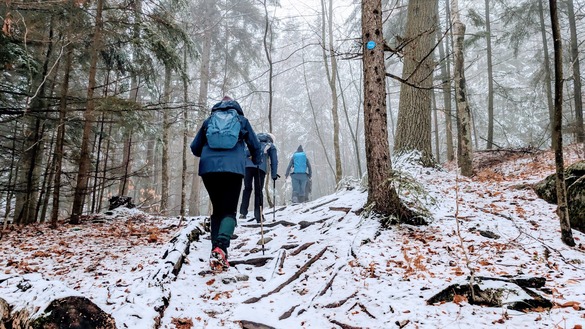
- No matter where you’re hiking, bringing traction is a must. Be prepared to switch from spikes to snowshoes as conditions dictate. (Snowshoes or skis are required in the High Peaks Wilderness when snowpack exceeds 8 inches.)
- Note: The Avalanche Pass trail is still closed due to the July 2025 slide.
- For weekly updates on specific trail conditions or closures, visit Backcountry Information For The Adirondack Park.
Check the Weather: Check the forecast for your destination and pack and plan accordingly. Check the National Weather Service Northern Adirondacks and Southern Adirondacks Mountain Point Forecasts for select summit forecasts. Check both daytime and nighttime temperatures and remember that temperatures will drop as you gain elevation.
Check the Air Quality Index (AQI) Forecast: If the AQI is forecast to exceed 100, DEC and the New York State Department of Health (DOH) will issue an Air Quality Health Advisory with precautionary recommendations for affected areas. View DEC’s current AQI forecasts and real-time air pollution data from DEC’s monitoring network.
Visit the main Adirondack Backcountry page for more trip-planning resources.
Bear Canisters, Required Dates: NYSDEC requires the use of bear-resistant canisters by overnight users in the Eastern High Peaks Wilderness between April 1 and November 30. NYSDEC encourages campers to use bear-resistant canisters throughout the Adirondack backcountry. Bear canisters should be used to store all food, food garbage, toiletries, and other items with a scent. Canisters should be stored a minimum of 100ft from tents, lean-tos and cooking sites and kept closed whenever they are not being accessed. Learn more about bear canisters and avoiding human-bear conflicts.
Adirondack Rail Trail: The Adirondack Rail Trail is a multi-use trail allowing for various types of recreational activities. To ensure safety for all while sharing the trail, all users should travel on the right side of the trail unless passing others. Groups should move in single file on the right when other users are passing. Cyclists should pass on the left and inform others prior to and while passing. Snowmobilers should pass slowly on the left and travel in single file, paying extra attention to those nearby at turns, intersections, and popular/congested areas. Lastly, pet owners must ensure that all waste is picked up and dogs are kept on leashes. For more information, visit the Adirondack Rail Trail webpage.
Mount Colden Trapdike: The trapdike is considered a technical climb and not a hike. Climbers should be prepared with helmets, ropes, and climbing gear to ascend this route. Hikers looking to summit Mount Colden should do so via the hiking routes. Attempting to climb the trapdike unprepared can result in a rescue operation, serious injury, or death.
No Overnight Camping at Trailheads: Overnight camping is not permitted at trailheads or other roadside locations where a camping disc is not present. This includes individuals sleeping in cars, vans, and campers. Campers should seek out designated roadside campsites marked with a "Camp Here" disc or open campgrounds. When camping, always carry out what you carry in and dispose of trash properly. Use designated bathroom facilities, pack out human and pet waste, or dig a cat hole.
In the winter, staying fueled and hydrated is a must. In extreme winter conditions like we’re currently experiencing in the Adirondacks, small mistakes or discomforts may very quickly snowball into life threatening situations. It’s crucial to avoid small errors like letting yourself get too chilly, thirsty, or hungry. Here is a favorite, high calorie recipe that can help you manage all three of these issues.
Backcountry Curry Recipe
Nutritious dehydrated meal for one
Ingredients:
- 1/2 cup cooked and dehydrated rice
- 1/4 cup of chicken or tofu, dehydrated
- 1/3 cup of dehydrated veggies (onions, peppers, and carrots)
- 1/4 dried curry paste
- 1/4 cup coconut milk powder
- 2 cups water
Directions:
- Combine everything in your cookpot and soak with no heat for 5 minutes.
- Add heat and boil.
- Turn off heat and passively cook/soak for 15 minutes using a spare wool hat to insulate pot.
Tip - you can keep on low heat for a minute or two to quicken the process, but add a bit more water!
What I love about this meal
It’s healthy, with ample veggies which are hard to get enough of on longer trips. The meal is composed of the carbohydrates, nutrients, protein, and fat that will fill you up and keep you warm. I also love this cooking technique because it uses very little fuel due to the passive cooking.
Stay safe, hydrated, and fueled out there!
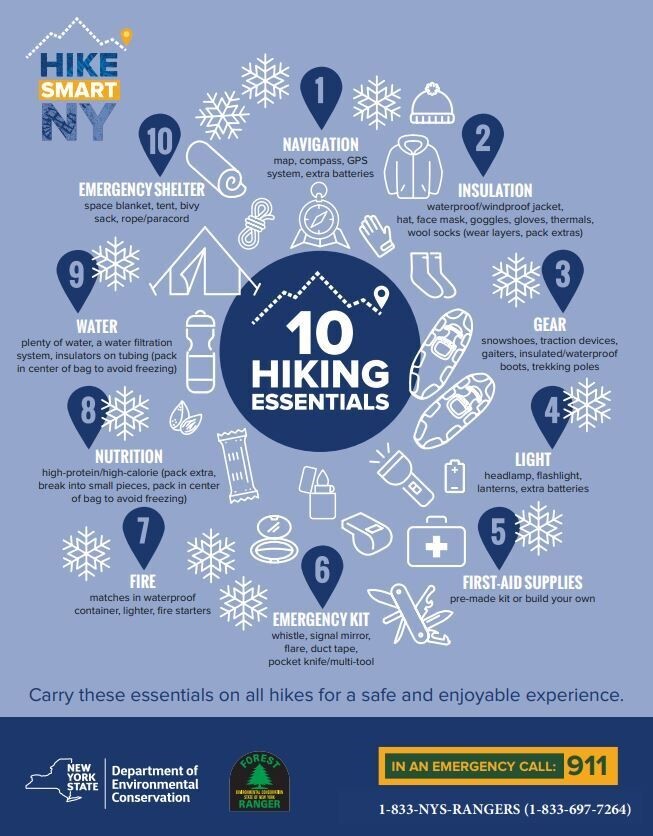
No matter what form of outdoor recreation you're partaking in, Hike Smart NY can help you prepare with a list of 10 essentials, guidance on what to wear, and tips for planning your trip with safety and sustainability in mind.
If you’re still making your holiday wish list, or you’re shopping for an outdoor enthusiast, consider giving a gift that will help you or your favorite adventurers Leave No Trace. With gift ideas for each of the Seven Principles of Leave No Trace, you can bring holiday cheer to you, your family and your friends while also encouraging safety and sustainability.
-
Plan Ahead and Prepare: Guidebooks and maps make great gifts and are essential to properly planning and outdoor adventure. Choose trusted resources and look for the most recent editions to ensure the most accurate information. There are lots of gift-worthy items on Hike Smart NY’s 10 essentials list, too, including a compass, headlamp, first aid kit, and more.
-
Travel and Camp on Durable Surfaces: Help the outdoorspeople on your list stay above the snow with a new pair of snowshoes, keep them sure-footed with a new pair of traction devices, or keep their feet warm and dry with a gear waterproofing kit.
-
Dispose of Waste Properly: Give the gift of a sustainable “go.” Trowels, portable toilets, and reusable wipes are all good gifts for backcountry adventurers who don’t always have a bathroom nearby.
-
Leave What You Find: Help preserve memories without taking memorabilia. Cameras, adventure logs, and sketch books are all gifts that will help adventurers remember their travels while leaving no trace.
-
Minimize Campfire Impacts: Many people have campfires for light or ambiance. Provide an alternative by gifting a solar or battery-operated lantern or even cute campsite lights.
-
Respect Wildlife: Keep everyone safe, including wildlife, by gifting a bear canister or other food storage device. Proper food storage prevents unwanted human-animal interactions, and it stops critters from stealing potentially harmful treats.
-
Be Considerate of Others: Give a gift that helps everyone on the trail. Headphones are great for those who enjoy recreating to their favorite soundtrack, and hands-free leashes are perfect for those who bring their furry pals along for the hike. If there is a do-gooder on your list, a clean-up kit will help them help the earth.
As always: Follow the Seven Principles of Leave No TraceTM to maintain minimal impact on the environment and the natural resources of the Adirondacks.
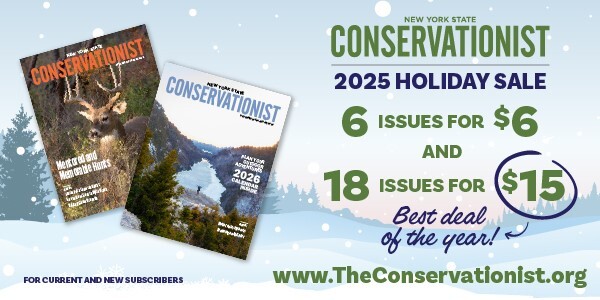
Looking for the perfect present for all the nature lovers and outdoor enthusiasts in your life? Give the gift of Conservationist magazine! A subscription includes 6 issues published throughout the year, making it the gift that keeps on giving!
Through Christmas Eve, you can get 6 issues of Conservationist for only $6.00! For an even better deal, why not sign up for 3 years (18 issues) for only $15.00 – less than $1 per issue!
Subscriptions ordered through Christmas Eve will start with the December 2025/January 2026 issue, which includes our popular annual calendar, featuring winners of our photo contest.
If you are a current subscriber or gift giver, the existing subscription(s) will be extended. If you are logged into your account, you can get the deal by using promo codes hol256 or hol2515 at checkout. Click "Add Promo Code" and enter the promo code of your choice in the box that opens. Please send us an email with any questions.
Subscription rates will be going up in April, so now is the perfect time to extend your subscription or gift(s) or start a new subscription!
Looking forward to a fresh start in 2026? Why not plan for something fun on New Year's Day!
The Department of Environmental Conservation, The New York State Office of Parks, Recreation and Historic Preservation (State Parks), and the Canal Corporation invite New Yorkers to kick off 2026 by participating in one of the many hikes being held on state lands across the Empire State!
The 15th annual event includes a variety of staff, partner and volunteer led hikes, ranging from mountain climbs, cross-country skis, leisurely strolls along birding trails, and so much more! Some locations offer multiple hike options, allowing people the time and space to enjoy nature’s winter wonders. There is truly something for everyone!
For a list of hikes in the Adirondacks, visit the First Day Hikes webpage.
Cat Mountain, January 1, 2025
|