This bulletin provides only the most recent notices. Check the Adirondack Backcountry webpages for more detailed information on access, outdoor recreation infrastructure, and conditions. Whenever you are planning your next outdoor adventure, plan on arriving at your destination early and have several back-up plans in place in case parking at your desired location is full.
Emergency Situations: If you get lost or injured; keep calm and stay put. If you have cell service, call 911 or the DEC Forest Ranger Emergency Dispatch, 833-NYS-RANGERS.
Welcome to the Adirondacks. The Welcome to the Adirondacks webpage provides information about the Forest Preserve, conservation easement lands, outdoor recreation, and Leave No Trace™.
Love Our New York Lands: All New Yorkers and visitors should be able to access, enjoy, and feel welcome on state lands. While enjoying these shared spaces, be respectful of other visitors. Share trails, treat people with kindness, and leave things as you found them for others to enjoy. All of us have a responsibility to protect state lands for future generations. Learn more about how you can Love Our New York Lands.
In this issue:
The following are only the most recent notices pertaining to public lands in the Adirondacks. Please check the Adirondack Backcountry webpages for a full list of notices, including seasonal road statuses, specific trail conditions, and other pertinent information.
NEW THIS WEEK
If you notice any damage or hazardous areas not listed below, please report to info.r5@dec.ny.gov.
-
Weekly Snow Report: As of Wednesday, 12/3, snow depths were recorded to be 16” (41cm) at the stake at the Lake Colden Interior Cabin (~2,750 feet elevation).
High Peaks
-
High Peaks Wilderness: Meadows Lane is now barricaded for the winter. Please do not block the gap in the barricades, for emergency access.
LAST WEEK
-
Weekly Snow Report: As of Wednesday, 11/26, snow depths were recorded to be 10in (25cm) at the stake at the Lake Colden Interior Cabin (~2,750 feet elevation).
West Central
-
Moose River Plains Complex: The gates to Moose River Plains Camping Area will be closed on December 8. They will re-open for snowmobile season when there is appropriate snow cover.
-
Moose River Plains Recreation Area: Roads are extremely icy; tire chains suggested.
East Central
-
Camp Santanoni Historic Area: Newcomb Lake Road to Camp Santanoni is now over-the-snow travel only (skis or snowshoes required). Conditions may be variable. Be prepared to adapt or have a backup plan.
Fire Danger: Check the fire rating map for daily updates.
Drought Warnings: Check the drought conditions map to stay updated on which counties are currently under a drought watch or warning.
Avalanche Risk:
OVERALL: CONSIDERABLE
High elevations (4,000’ to 5,344’) – MODERATE
Middle elevations (3,000’-4,000’) – CONSIDERABLE
Low elevations (less than 3,000’) - LOW
Investigate carefully before venturing into avalanche terrain, and ensure you have proper avalanche rescue equipment. You should always have an avalanche transceiver, shovel, and probe. You should practice frequently to be proficient in using your beacon. However, you should not take extra risk just because you have rescue equipment. Always carry a day pack with enough equipment to spend the night. For more information on avalanche safety, visit the Avalanche Safety webpage.
Sunrise/Sunset: Sunrise = 7:15 a.m.; Sunset = 4:16 p.m. Pack at least one headlamp (two headlamps recommended) even if you expect to finish your activity before sunset. Phone batteries drain quickly and are discouraged.
Water Crossings: Water levels are average to below average for this time of year throughout the Adirondack region. Expect water levels to rise with rainfall. Check the USGS Current Water Data for New York for stream flow of selected waters. (Personal Flotation Devices - PFDs aka lifejackets - are required from November through May.)
Temperatures: These are forecast temperatures (Fahrenheit) for base elevations throughout the region.
Weekend temperatures in the region at BASE elevations are expected to produce highs in the low-30s and lows in the low-single digits.
Check the National Weather Service’s Mountain Point Forecast for more accurate forecasts at elevation on or near your intended route.
Reminder: These forecasts are for low elevations. Anticipate losing 5 degrees Fahrenheit for every 1,000 feet of elevation gain.
Even with sunny skies, inclement weather is always a possibility and can change very quickly. Remember – hypothermia is always a risk in wet conditions, even when it feels warm outside. Be prepared with extra dry layers and keep an eye on the weather.
Visit the main Adirondack Backcountry page for more trip-planning resources.
Bear Canisters, Required Dates: NYSDEC requires the use of bear-resistant canisters by overnight users in the Eastern High Peaks Wilderness between April 1 and November 30. NYSDEC encourages campers to use bear-resistant canisters throughout the Adirondack backcountry. Bear canisters should be used to store all food, food garbage, toiletries, and other items with a scent. Canisters should be stored a minimum of 100ft from tents, lean-tos and cooking sites and kept closed whenever they are not being accessed. Learn more about bear canisters and avoiding human-bear conflicts.
Adirondack Rail Trail: The Adirondack Rail Trail is a multi-use trail allowing for various types of recreational activities. To ensure safety for all while sharing the trail, all users should travel on the right side of the trail unless passing others. Groups should move in single file on the right when other users are passing. Cyclists should pass on the left and inform others prior to and while passing. Snowmobilers should pass slowly on the left and travel in single file, paying extra attention to those nearby at turns, intersections, and popular/congested areas. Lastly, pet owners must ensure that all waste is picked up and dogs are kept on leashes. For more information, visit the Adirondack Rail Trail webpage.
Mount Colden Trapdike: The trapdike is considered a technical climb and not a hike. Climbers should be prepared with helmets, ropes, and climbing gear to ascend this route. Hikers looking to summit Mount Colden should do so via the hiking routes. Attempting to climb the trapdike unprepared can result in a rescue operation, serious injury, or death.
No Overnight Camping at Trailheads: Overnight camping is not permitted at trailheads or other roadside locations where a camping disc is not present. This includes individuals sleeping in cars, vans, and campers. Campers should seek out designated roadside campsites marked with a "Camp Here" disc or open campgrounds. When camping, always carry out what you carry in and dispose of trash properly. Use designated bathroom facilities, pack out human and pet waste, or dig a cat hole.
Conditions:
- Skiiers, and hikers alike- take heed! Avalanche risk is CONSIDERABLE today, due to snow and high winds. Be extra cautious in middle elevation zones and on East facing or leeward slopes. The main danger today will be in locations where wind has recently loaded snow on top of Tuesday’s low density (approx. 6% SWE) accumulations. Identifying wind slabs before you are on them is the key to avoiding this danger. Be on the lookout for pillowed or rippled areas, as well as changes in surface color and hardness.
- The National Weather Service has issued a Hazardous Weather Outlook. An arctic front will pass through the region Thursday morning with snow showers and squalls, and gusty winds throughout the day. Frigid temperatures will follow into Saturday.
- Wind chill will make summits feel as cold as -36°F (-37.78°C)!
- Exposed skin can become frostbitten extremely quickly at these temperatures. Layer properly with the three types of layers: moisture-wicking inner layers (avoid cotton!), insulating mid-layers of wool or fleece, and wind/waterproof shell layers. Bring dry layers to replace wet ones immediately.
- No matter where you’re hiking, bringing traction is a must. Bring microspikes or crampons for any elevation hike and snowshoes for higher elevation hikes, like those that reach 4000 feet. Be prepared to switch from spikes to snowshoes as conditions dictate. (Snowshoes or skis are required in the High Peaks Wilderness when snowpack exceeds 8 inches.)
- Note: The Avalanche Pass trail is still closed due to the recent slide.
- For weekly updates on specific trail conditions or closures, visit Backcountry Information For The Adirondack Park.
Check the Weather: Check the forecast for your destination and pack and plan accordingly. Check the National Weather Service Northern Adirondacks and Southern Adirondacks Mountain Point Forecasts for select summit forecasts. Check both daytime and nighttime temperatures and remember that temperatures will drop as you gain elevation.
Check the Air Quality Index (AQI) Forecast: If the AQI is forecast to exceed 100, DEC and the New York State Department of Health (DOH) will issue an Air Quality Health Advisory with precautionary recommendations for affected areas. View DEC’s current AQI forecasts and real-time air pollution data from DEC’s monitoring network.
We’ve talked about hypothermia but what about frostbite?
Frostbite and hypothermia are both life-threatening conditions that come from exposure to extreme cold. But frostbite is especially dangerous because it sneaks up with less warning signs. That’s why prevention is so important!
The main ways to prevent frostbite for all are by:
- layering properly;
- wearing hats, gloves, and high boots with pants tucked in or gaiters; and
- immediately replacing wet or damp clothing with dry layers.
- To prevent clothes from getting wet from the rain or snow, bring outer (“shell”) layers that are waterproof, like a large rain jacket and snow pants.
- Your sweat can also soak your clothes, so wearing moisture-wicking innermost layers of wool or nylon – NOT cotton – is important.
The first symptoms of frostbite are:
- redness and a stinging/burning feeling followed by numbness.
If you experience symptoms, try to gradually bring feeling back into the body. Although you may think to, don’t rub frostbitten skin or apply hot water. Instead, use WARM water or a warm washcloth. (You can bring warm water in an insulated bottle both to sip on to stay warm and to use in case of this scenario.)
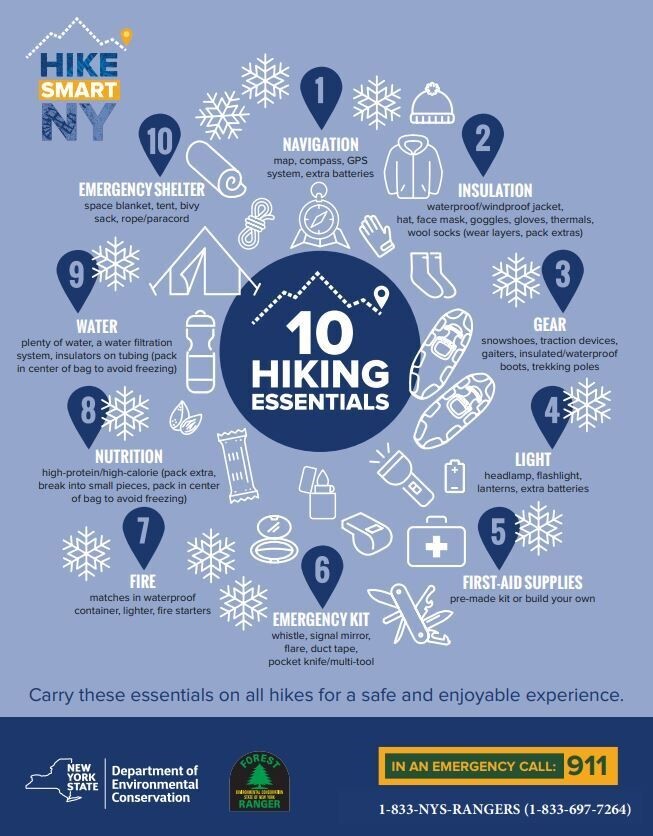
No matter what form of outdoor recreation you're partaking in, Hike Smart NY can help you prepare with a list of 10 essentials, guidance on what to wear, and tips for planning your trip with safety and sustainability in mind.
Even if it’s too cold to venture into the backcountry, the Adirondacks is such a treasure trove of flora and fauna and beautiful mountain views that you can still experience it all over- maybe even right in your backyard. The white snow coating the Adirondacks provides a great backdrop to easily spot certain winter animals, like Red Fox or Blue Jays.
Not only is seeing wildlife one of the fun perks of living in or visiting the Adirondacks, but your wildlife sightings can also be used to provide valuable data for DEC studies that refine our knowledge of the factors affecting species distribution and numbers in NYS and help develop management plans that take these factors into account.
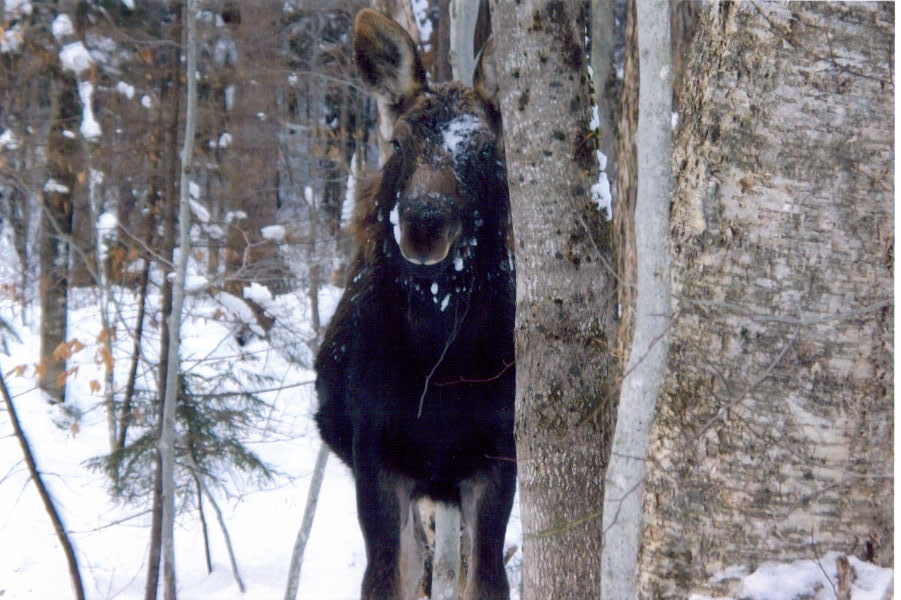
For example, if you’re lucky enough to fulfill every Adirondacker’s dream and spot a wild moose, please submit a moose sighting report.
Slightly less elusive, furbearers like snowshoe hares are also helpful to report sightings of, so that DEC biologists can better understand furbearer behavior and what types of habitats they are using. To report a furbearer sighting, visit Furbearer Sighting Survey.
Just remember to follow the 6th Principle of Leave No Trace: “Respect Wildlife,” by observing wildlife from a distance and not approaching, chasing, or feeding wild animals!
As always: Follow the Seven Principles of Leave No TraceTM to maintain minimal impact on the environment and the natural resources of the Adirondacks.
Photo by Eric Boek. Hamilton County.
Looking forward to a fresh start in 2026? Why not plan for something fun on New Year's Day!
The Department of Environmental Conservation, The New York State Office of Parks, Recreation and Historic Preservation (State Parks), and the Canal Corporation invite New Yorkers to kick off 2026 by participating in one of the many hikes being held on state lands across the Empire State!
The 15th annual event includes a variety of staff, partner and volunteer led hikes, ranging from mountain climbs, cross-country skis, leisurely strolls along birding trails, and so much more! Some locations offer multiple hike options, allowing people the time and space to enjoy nature’s winter wonders. There is truly something for everyone!
For a list of hikes in the Adirondacks, visit the First Day Hikes webpage.
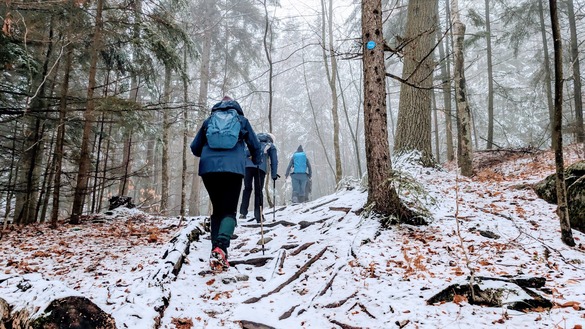
Cat Mountain, January 1, 2025
|