In this issue:
This bulletin provides only the most recent notices. Check the Catskill Backcountry Information webpage for more detailed information on access, outdoor recreation infrastructure, and conditions.
Emergency Situations: If you get lost or injured; keep calm and stay put. If you have cell service, call 911 or the DEC Dispatch, 833-NYS-Rangers (1-833-697-7264).
Hike Smart by packing the proper gear. See our recommended packing list (PDF).
Welcome to the Catskills
The Welcome to the Catskills webpage is the place to go if you are interested in learning more about the Catskills. It provides information about the Forest Preserve and conservation easement lands, outdoor recreation opportunities, and Leave No TraceTM. Check out the links to additional information and tips for recreating safely and minimizing your impacts on natural resources, recreational infrastructure, and other backcountry users in the Catskill Mountains.
The Catskills Visitor Center is open Monday-Sunday, 9:30AM-4:00PM through November 30.
Starting December 1, the winter hours are Friday-Monday 9:30AM-4:00PM
Be sure to stop by for a visit before your next adventure to have your questions answered, get trip planning advice, or to pick up maps and local information.
Contact the Catskills Visitor Center for more information: 845-688-3369 or info@catskillcenter.org.
For the local trail conditions, visit the Catskills Visitor Center Trail Conditions webpage.
Check the Weather: Check the National Weather Service for current conditions and forecasts for the locations where you plan to recreate. Check both daytime and nighttime temperatures. Expect conditions to be colder and more exposed on mountain summits.
Mountain Summits: Check the National Weather Service to prepare for the current summit weather conditions in the Catskills.
Catskill Region Daytime: Mid 40's
Catskill Region Nighttime: Mid 20's
Prevent Hypothermia: Dress properly, stay dry, and add or remove layers to regulate your body temperature. Carry plenty of food and water. Eat, drink and rest often. Being tired, hungry or dehydrated makes you more susceptible to hypothermia. Pack extra non-cotton, warm and wind protectant layers including hat and gloves for summits.
Essentials for Early Winter Hikes
- Waterproof hiking boots with wool socks;
- Traction devices as there may be snow and ice on mountain summits;
- Warm layers to prevent hypothermia including hat and gloves;
- Wind protectant layer for open overlooks and summits;
- Gloves and hat;
- Headlamp with extra batteries - even if you plan to be down in the daylight;
- Plenty of food and water;
- A thermos of hot cocoa, coffee, tea, or soup to warm up or in case of emergencies;
- First aid kit;
- Emergency essentials you should always have in your pack:
- Space blanket.
- Matches and fire starters.
- Pocket knife.
- Paracord or rope.
- Iodine tablets or water filtration system.
- Extra batteries.
Visit DEC's website for more information on Winter Hiking Safety.
Manage your time wisely: Keep in mind, it gets dark early. Be mindful of sunrise and sunset times, and plan accordingly. Start long hikes early to maximize sunlight hours and always bring a headlamp with extra batteries in case you are out longer than expected.
Approximate Time of Sunrise: 7:01AM
Approximate Time of Sunset: 4:28PM
Check the Air Quality Index (AQI) Forecast: If the AQI is forecast to exceed 100, DEC and the New York State Department of Health (DOH) will issue an Air Quality Health Advisory with precautionary recommendations for affected areas. View DEC’s current AQI forecasts and real-time air pollution data from DEC’s monitoring network.
Delaware Wild Forest: Snowmobile trails in Delaware Wild Forest will be open for use once trails are covered in snow. The snowmobile bridge on the Campbell Mountain Trail between Route 206 and the Campbell Mountain lean-to has been closed pending replacement.
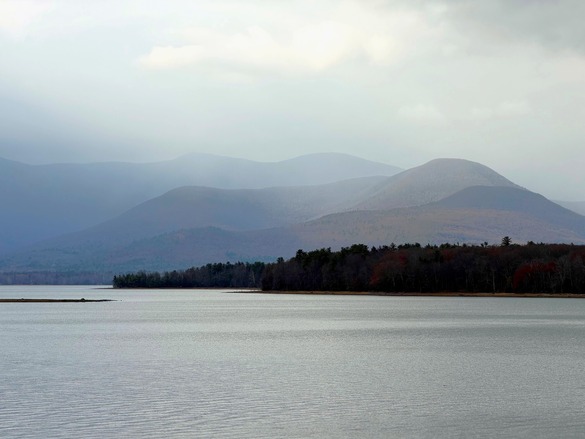
Bluestone Wild Forest: The gate at Onteora Lake that provides access to the lower parking area will be closed when the road is covered with ice and snow. The upper parking area will still available for public use.
Bluestone Wild Forest contains six designated campsites that can be accessed from the Onteora Lake trailhead. *Please be advised, the designated primitive campsite closest to the Onteora Lake Parking Lot on the Onteora Lake Loop Trail has been closed indefinitely due to public safety concerns.
Kaaterskill Wild Forest: Expect the trails in the Kaaterskill Falls area to be very icy. Hikers should use extreme caution, especially on icy stone staircases and other rock surfaces. Be prepared with traction devices such as microspikes or crampons. For your safety, avoid hiking near cliff edges and avoid the midpool area if you do not have traction devices.
Seasonal Roads:
The following are seasonal roads and are not maintained during winter months please be aware of snowy conditions:
- Platte Clove Road – Indian Head Wilderness (Town of Hunter) - the eastern 2.5 miles of Platte Clove Road is closed each year from approximately mid-November to mid-April. Actual re-opening date may be postponed if winter conditions persist or if road maintenance is necessary. Updates can be found on the Town of Hunter's website.
- Roaring Kill Road – Indian Head Wilderness (Town of Hunter)
- Russell Brook Road – Delaware Wild Forest (Town of Colchester)
- Mary Smith Road – Delaware Wild Forest (Town of Colchester)
- Ploutz Road – Dry Brook Wild Forest (Town of Middletown)
The State's most popular big game hunting season began on Saturday, Nov. 15 and continues through Sunday, Dec. 7.
Most hunting-related injuries occur when hunters are climbing in and out of a tree stand
Hunters should Strap Up Before You Go Up to stay connected from the time they leave the ground to the time they get back down.
Be sure to always:
- read the manufacturer's instructions and warnings before using a tree stand;
- check all stands (including straps and chains) before every season; and
- replace any worn or missing parts. Never climb in or out of a tree stand with a loaded firearm.
Daily hunting hours for deer and bear include the full daylight period, beginning 30 minutes before sunrise and continuing until 30 minutes after sunset. Hunters should check the sunrise and sunset times before hunting each day.
Hunters must wear fluorescent orange or fluorescent pink clothing (either a hat, vest, or jacket which are visible in all directions) when pursuing deer or bear with a firearm, and should always follow the basic rules of firearm safety:
- Point your gun in a safe direction.
- Treat every gun as if it were loaded.
- Be sure of your target and beyond.
- Keep your finger off the trigger until ready to shoot.
Reminders for the 2025-26 Southern Zone Regular Hunting Season:
-
Choose non-lead ammunition for reduced risk of lead exposure to you and non-target wildlife
- Back tags no longer need to be worn by hunters anywhere in the state.
- For hunters using paper carcass tags (PDF), it is the hunter’s responsibility to protect their license and tags. The tags must still be filled out, dated, signed, and attached to the animal as required by regulation.
- DEC suggests storing licenses and tags in a waterproof bag or container while hunting and placing the completed carcass tag in a zip-top bag or other reusable waterproof protector and securely fastening it to the deer, bear, or turkey to ensure the tag remains protected and legible.
- For specific descriptions of regulations and open hunting areas, hunters should refer to the 2025-2026 Hunting and Trapping Regulations Guide (PDF). Hunters are urged to review all regulations and safety tips contained in the guide before going afield.
For more information about the big game hunting season, visit DEC's website.
With nearly 3 million New Yorkers potentially losing their federal Supplemental Nutrition Assistance Program (SNAP) assistance in November, DEC is encouraging hunters to help fight hunger in our communities at this critical time.
Each year, DEC partners with Feeding New York State to facilitate the donation of 50-70,000 pounds of venison from deer harvested by hunters to those in need.
To help join the fight against hunger by donating your deer harvest:
- Drop off any legally harvested, tagged, and reported deer at one of Feeding New York State’s participating deer processors.
- Call the processor ahead of time to ensure they can accept your deer.
- Complete the processor’s log sheet indicating your desire to donate the deer.
DEC and Feeding New York State will cover the processing costs for donated deer so that the venison can be distributed to food pantries and food banks throughout the state; however, funding is limited. If you don’t have a deer to donate but still want to help, consider making a financial donation to the venison donation program through Feeding New York State, by clicking the “Donations” link at the top of the DEC Automated Licensing System page, or when you purchase your next hunting license.
The Catskills Fire Tower Challenge encourages experienced hikers to visit the region’s remaining DEC-managed fire towers located on Balsam Lake Mountain (Hardenburgh), Hunter Mountain (Hunter), Overlook Mountain (Woodstock), Red Hill Mountain (Denning), and Tremper Mountain (Shandaken), and the newest tower, the Upper Esopus Fire Tower at the Catskills Visitor Center.
The rules to participate are simple:
- Visit all six Catskill Fire Towers between January 1, 2025 and December 31, 2025.
- Fill out the log of completed hikes along with one favorite photo via SurveyMonkey or by downloading and emailing the 2025 Catskills Fire Tower Challenge Survey (PDF) to catskillschallenge@dec.ny.gov. This can also be submitted via mail to New York State Department of Environmental Conservation, Outdoor Recreation, 625 Broadway, Albany, NY 12233-1020. Entries must be postmarked by January 5, 2026.
- All finishers will receive a commemorative patch and be entered into the grand prize drawing*. The first 1,000 finishers will also receive a one-year subscription to DEC’s Conservationist magazine AND a gift subscription for a second person of their choice. Finishers who have completed the challenge in multiple years will receive an additional commemorative Catskills Fire Tower Challenge prize!
- To receive a bonus prize entry, submit a photo showing yourself practicing Leave No Trace™ while participating in the Catskills Fire Tower Challenge (e.g., picking up litter, carrying out, planning and preparing for their hikes, staying on trail).
For more information on the 2025 Catskills Fire Tower Challenge, visit DEC's website.
Bears will readily utilize human-created food sources and repeat access can make bears bolder. This can lead to an increase in human-bear conflicts around homes and residential areas, especially when natural food sources are scarce. Feeding bears intentionally is illegal.
DEC has partnered with BearWise, a national program of the Association of Fish and Wildlife Agencies, to provide reliable information and useful resources that help people live responsibly with black bears. The BearWise educational campaign was developed by bear biologists and is supported by state wildlife agencies to promote the delivery of standardized messaging to the public. Learn how to live responsibly with black bears by practicing the BearWise basics at home and BearWise safety tips when recreating outdoors.
Take Special Precautions
Hiking, walking, camping, cycling, and fishing in bear country takes special precautions. While bear attacks are very uncommon and black bears rarely become aggressive when encountered, it’s best to avoid bears by following simple steps and knowing what to do if an encounter happens.
For more information about hiking and camping in bear country, visit DEC's website.
|