|
In the Drinking Water Source Protection Program (DWSP2), partnerships are an important factor in the program’s success. Collaboration between local municipalities and organizations is vital to DWSP2 and has been a pillar of the program from initial conception to present day. For the first time in the history of DWSP2, an innovative and symbiotic relationship has been established between the Town of Holland, a DWSP2 community, and local high school students. In what is known as the DWSP2 Legacy Project, this collaboration provides the opportunity for a working relationship between municipal and educational disciplines and has the potential to serve as a model for community engagement and environmental education for other DWSP2 communities.
In this partnership, students participate in fieldwork and public outreach and provide fresh perspectives, actively contributing to DWSP2’s mission of protecting public health, the environment, and other natural resources. Overall, the DWSP2 Legacy Project builds off the Town of Holland’s plan to transform source water protection goals into civic action while creating a sustainable and mutually beneficial alliance.
In October of 2022, the Town of Holland completed plan development on their DWSP2 plan. As part of the implementation phase of their DWSP2 plan, a gap analysis was conducted to review regulatory controls within Holland’s local laws and identify gaps within the code where additional controls could better support protection of the drinking water aquifer from known pollutants (i.e., priority source contaminants). In an effort to keep advancing DWSP2 implementation and promote awareness of the source water protection actions that benefit the town, Holland established a working relationship with Holland High School students and their teacher Pamela Patterson.
Ms. Patterson is a high school teacher and offers courses such as Living Environment and Environmental Science. Marty Regan is the Town’s Planning Board Chairman and the Erie County Water Quality Coordinating Committee Vice Chairman. Over the past handful of years, Ms. Patterson and Mr. Regan have developed a working relationship, with Ms. Patterson’s Environmental Science class getting exposed to several elements of DWSP2 plan development and assisting with implementation of the plan.
In October 2023, Ms. Patterson reached out to Marty Regan about the program. Prior to the creation of the DWSP2 Legacy Project, they had several conversations about how her students might benefit the Town of Holland’s work on DWSP2. After these conversations, Ms. Patterson and Mr. Regan formed a professional relationship that has lasted for years. In the years spent working on DWSP2 implementation, the unique connection between Holland and Holland High School has only become stronger.
Ms. Patterson’s effort to introduce younger generations to the importance of clean water through her DWSP2 Legacy Project helps achieve Holland’s DWSP2 goals and has become an entrenched part of her 11th and 12th grade Environmental Science class. Students can receive Erie Community College credit through this course.
Growing up fishing on Lake Erie, Ms. Patterson is no stranger to the importance of water quality. With personal passions such as mountain biking, hiking, and searching for crayfish in her local creeks, she has had no shortage of personal connections with nature.
Ms. Patterson began her professional journey as a cancer research scientist. Trained as a genetic engineer, her professors and peers initially encouraged her to pursue a PhD program. Like any good research scientist, she tested that hypothesis and found that the research career pathway was not for her. As a result, Ms. Patterson followed her passion and began teaching.
With a Master of Science in Molecular Biology and Science Teaching, Ms. Patterson’s teaching career began with less of a focus on the environment. As she gained teaching experience in Wisconsin and Pennsylvania, she was exposed to the environmental science discipline. When she was offered a job at Holland High School teaching Environmental Science, she jumped at the opportunity and has not looked back.
Upon learning of Holland’s DWSP2 efforts, Ms. Patterson utilized her personal and professional experience to create the DWSP2 Legacy Project to introduce younger generations to the importance of planning for and implementing clean water actions.
Ms. Patterson first heard of DWSP2 through a newsletter published by the Reinstein Woods Nature Preserve. She wasted no time in contacting the Town’s DWSP2 Program Management Team (PMT*) lead Marty Regan to discuss the program and learn more about Holland’s commitment to source water protection.
Ms. Patterson received a copy of the town’s plan and browsed the DWSP2 webpage in search of learning all there was to know about the program. After expanding her knowledge on DWSP2, she went to work crafting a legacy project that would be passed down from class to class the with the goal of involving her students in supporting the town’s DWSP2 plan.
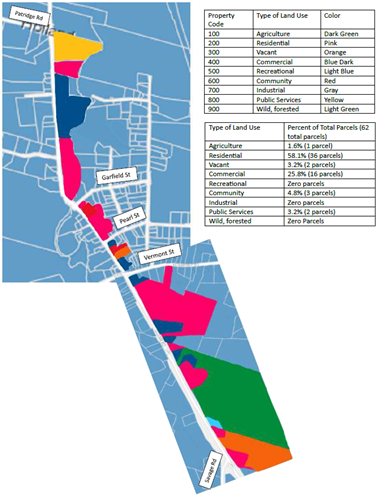
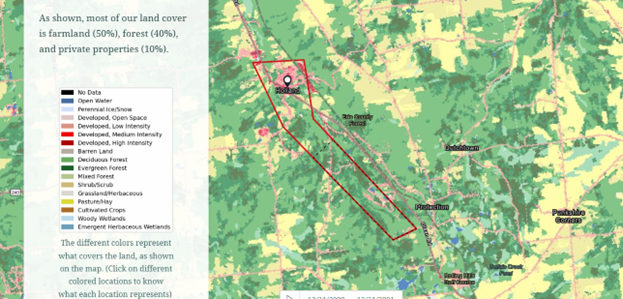
Mr. Regan met with Ms. Patterson and the inaugural DWSP2 Legacy Project class to provide them with a summary of what was done up to this point and inform them of future plans. At this juncture in implementation, the town needed to gather water quality data. As a result, Year 1 of the DWSP2 Legacy Project focused on gathering, compiling, and analyzing water quality data in the area most critical for source water protection (i.e., critical area), creating source water and tax parcel maps (using Google Maps) of the watershed, and presenting those findings to the Town Board as part of their final exam. The Year 1 final exam evaluated the students’ ability to present their analytical water quality findings to Holland’s DWSP2 plan while assisting the PMT with conducting public outreach promoting the plan.
*A PMT is the group of individuals derived from the initial stakeholder group on a DWSP2 plan. The PMT is comprised of members with relevant expertise and interest in protecting water quality. Members are tasked with continuing to implement source water protection actions to improve and protect water quality once the free technical assistance concludes.
Figure 1. Tax parcel summary map showing land cover created by students in Year 1 of the DWSP2 Legacy Project.
In Year 2 of the Legacy Project, students built on the work done the previous year by updating the maps using ArcGIS software. Students developed and conducted an in-person presentation to the town board highlighting the improved data, with members of New York State Department of Health (NYSDOH) in attendance. Students also collaborated with Mr. Regan and other PMT members at the local Tulip Festival, where select members of Ms. Patterson’s class presented alongside Holland’s PMT to promote the DWSP2 plan and speak with attendees about the ways in which Holland is protecting their source water.
In Year 3 of the Legacy Project, students made story maps consisting of relevant water quality data and GIS maps developed by the previous two classes. The story maps assist the Holland PMT by providing easier-to-read sources for the data the students collected in previous years. See an example student-created story map below.
Figure 2. ArcGIS story map image of land cover showing progression of students' mapping ability.
Overall, Ms. Patterson’s Legacy Project has allowed for a positive feedback loop between the Town of Holland PMT and each respective class. Students worked alongside PMT members to engage the public and promote source water protection through their data findings. In turn, the Holland PMT works with students as a way to keep implementation current. They collaborate with each class and identify additional opportunities for source water protection to achieve goals outlined in their DWSP2 plan, which are:
- Protect public health
- Become environmental stewards
- Evaluate current land use and plan for future land use
The relationship between Ms. Patterson and Mr. Regan has proven to have exceptional results from both a scholastic and municipal perspective. First, partnering with students at Holland High School offers another resource to the Holland PMT to continue progress on DWSP2 plan implementation. For many communities – especially for those that have been in the program for as long as Holland – maintaining momentum on implementation can prove difficult due to staff turnover and competing municipal priorities. Developing a working relationship with Ms. Patterson and her students has allowed the PMT to collaborate with a new, interested group while getting assistance with data storage, analysis, and outreach and education.
“After years of collaboration with Ms. Patterson, working with the students has proven to be a win-win situation. The town benefits from continued outreach and data collection, while the students benefit through civic engagement and working on water quality issues using a hands-on approach.” – Marty Regan
Second, the Legacy Project ushers in a new crop of water quality stewards. In talking to Ms. Patterson, she informed the program that at least eight of her former students have since graduated high school and gone on to pursue environmental internships or careers. Some of the students’ post-high school pursuits include degrees in Environmental Science, Civil Engineering with a focus on combined sewer overflows, and Public Relations with a minor in Environmental Science as well as internships in the Adirondacks doing invasive species removal and installing culverts. Throughout the years, a consistent number of students have returned home from their studies to assist with microplastic sampling on the Buffalo River.
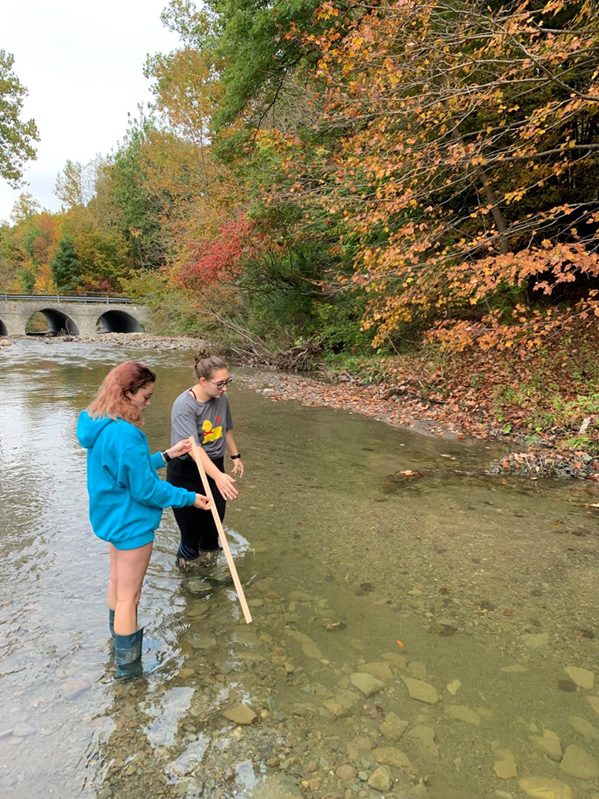
Figure 3. Students in Ms. Patterson's class testing water quality and gathering data as part of the
DWSP2 Legacy Project.
A scientist at heart, Ms. Patterson strives to enhance her DWSP2 Legacy Project, adjusting as needed after each subsequent year.
A direction for Year 5 has already been established. In Holland’s DWSP2 plan, there were three main goals outlined. The first two (aforementioned at the end of the ‘DWSP2 Legacy Project’ section) are actively being achieved. The third goal, which aims to evaluate current land use and plan for future land use, is where Mr. Regan and Ms. Patterson want to focus next.
Ms. Patterson is looking forward to continuing the relationship with Marty and the Holland PMT to make Year 5 fruitful for both the students and the town.
“The Town of Holland has continued to advance the DWSP2 plan by looking for opportunities to include some of the recommendations of the plan in our land use codes as well as look into a possible overlay zone for the more vulnerable portions of our source water areas. With the help of Ms. Patterson's class we hope to better define which areas of the town are in need of updates to their land use. This may include GIS work, review of land use maps, and personal surveys that otherwise would need to be done by hiring a planning or engineering firm. This will aide us in updates to the Comprehensive Plan completed in 2018 as well as the town codes. The cooperative effort between the Town and Ms. Patterson's class over the last five years has proven to be very beneficial in helping to create environmental stewards both within the students involved as well as the fellow members of the community who interact with them during the process” – Marty Regan.
Hosting an event, webinar, or conference in 2025? Reach out to us at source.water@dec.ny.gov to schedule a presentation or tabling event. If you would like to learn more about DWSP2 and how it could help your municipality, fill out our Interest Form and a member of the DWSP2 team will contact you to discuss further.
Was this newsletter forwarded to you? Sign up so you don't miss an edition.
Missed the previous edition? Visit the DWSP2 Newsletter Archive to stay up to date.
Have you begun the DWSP2 process? Or do you have a program or are you aware of a program relevant to source water? Send in any helpful hints or information at source.water@dec.ny.gov and we may highlight them!
|