In this issue:
-
Ongoing Public Engagement: Statewide Community Air Monitoring Initiative Meetings – DEC undertook a statewide community-based air quality monitoring effort, focused on ten disadvantaged communities with high air pollution burdens around the State. Check the 2022-23 Statewide Community Air Monitoring Initiative webpage for the latest developments on the project.
-
Environmental Notice Bulletin (ENB): Check out the various projects in NYS on the Environmental Notice Bulletin (ENB).
Air Mail! is the publication to announce public and stakeholder information about air quality topics. All NYS residents are environmental stakeholders – we welcome anyone to join the information sessions and other opportunities posted here.
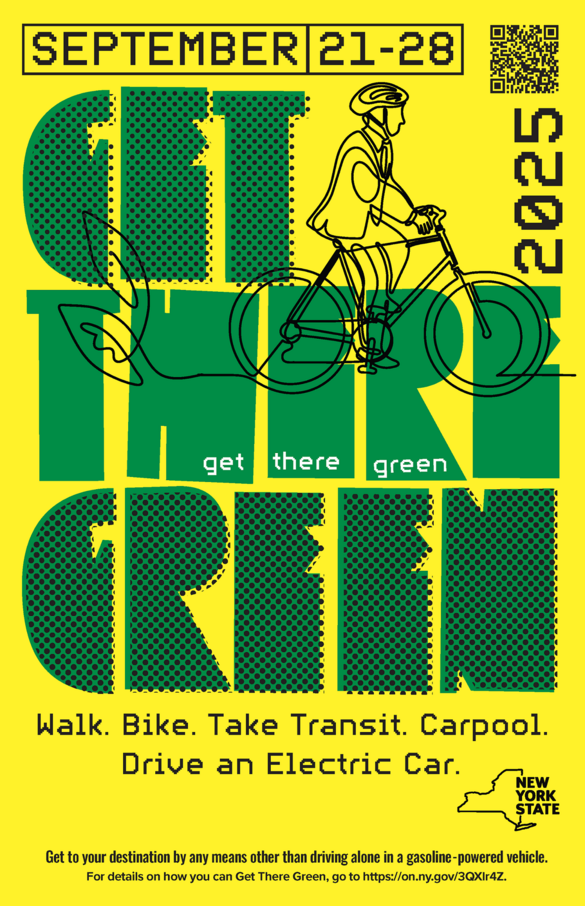
From September 21 through September 28, NYS will be celebrating its yearly Get There Green! campaign. This event promotes and celebrates sustainable transportation in and around our communities. Using more sustainable modes of travel will help reduce air pollution levels and greenhouse gas emissions within our atmosphere.
Participation is simple. Between September 21 and September 28, we encourage you to take at least one sustainable trip by walking, biking, using public transit, carpooling, or driving an electric vehicle. The transportation sector is the largest contributor to greenhouse gases. So, by skipping a trip in a car, driving an EV, or using one of the sustainable modes of transport listed above, you will be reducing your carbon footprint—and maybe even have some fun doing it! Make this the year to travel more responsibly and sustainably.
While on your trip, share your experience on social media by using #GTG25. To learn more about how you can reduce both your personal and our collective air emissions, check out the impacts of climate change in NYS.
The weather is cooling down, and the natural views are beginning to include various shades of orange, yellow, and red. Autumn is finally here. From leaf peeping to visiting pumpkin patches and apple orchards, there are plenty of ways you can enjoy the season. Autumn also brings with it another calling card: fallen leaves.
As the season continues, you may find yourself wondering how to keep your yard looking tidy. One option you should not consider is burning fallen leaves, as it is illegal year-round in NYS. Burning leaves releases pollutants into the air and increases the risk of wildfires. Consider these safe and sustainable options to handle your fallen leaves:
-
Scarecrow: Gather your yard leaves and stuff them in some old clothes to create a scarecrow.
-
Compost: Collect and store your leaves so you have a consistent source of carbon throughout the upcoming year for your home composting pile.
-
Mulch: Protect your garden soil and provide nutrients by using fallen leaves as mulch. As the leaves decompose, they enrich the soil.
-
Leave the Leaves: If your leaf coverage is sparse, leave them to naturally decompose on your lawn, returning nutrients to the soil. If you have heavy leaf coverage, mow over them to reduce the size and kickstart the decomposition process.
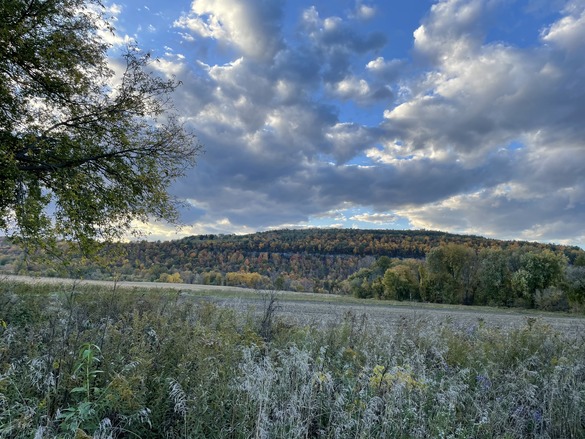
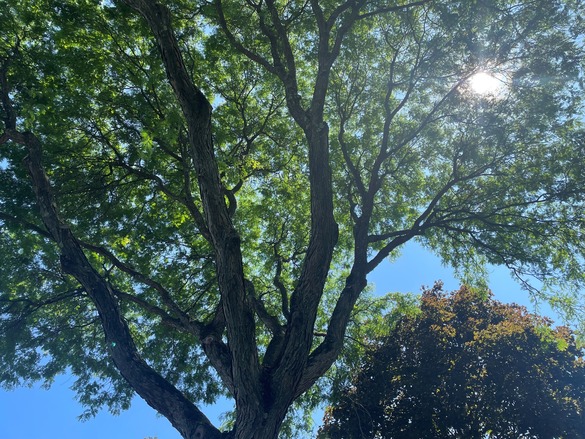
NYS is known for its beautiful foliage. Whether the green summer expanses in the Catskills or the orange autumn views in the Adirondacks, trees contribute to our State’s scenic views and clean air. Spend time this autumn learning about trees, such as how to plant and protect them, and admire them throughout our State.
 |
Carbon dioxide (CO2) is all around us in the air we breathe. Currently, CO2 represents about 0.045% of the Earth’s atmosphere. CO2 is also a greenhouse gas (GHG). GHGs trap heat in the lower atmosphere, causing Earth’s temperature to warm. This natural process is called the Greenhouse Effect. Without the Greenhouse Effect, Earth would not be able to support life, as it would be far too cold. Due to both natural and human-made emissions, the amount of CO2 in our air is rapidly increasing. Adding CO2 can enhance the GHG effect by warming the planet too much, and influencing the effects of and impacts climate change. Climate change can cause increased temperatures or heat events, heavier rainfall or droughts, and stronger wind patterns, harming existing ecosystems.
Most of the nation’s GHG emissions are from CO2. Transportation is the largest sector of CO2 emissions across the country, representing 28.4% of annual emissions. Electric power plants are the second largest sector, accounting for approximately 25% of annual emissions. In 2022, U.S. GHG emissions reached 6,343 million metric tons of carbon dioxide equivalent. Despite this very large number, GHG emissions in the U.S. have decreased by 3.0% between 1990 and 2022.
NYS is developing additional regulations to address GHG emissions across the state. The proposed Mandatory Greenhouse Gas Reporting rule will collect data on GHG emissions from sources such as large factories and power plants. The emissions data collected (PDF) will support the development of strategies to reduce GHG emissions and direct clean energy investments where they are needed most. These proposed regulatory efforts will decrease GHG emissions, reducing the effects of climate change.
While DEC has implemented regulations for lowering GHG emissions statewide, as individuals, we can also do our part. Taking public transit, carpooling, and using more energy-efficient vehicles will lower your personal emissions. We can also conserve energy at home by turning off our lights when not needed and lowering the temperature of our heating systems. By doing our part, we can help the state reduce emissions of CO2 and other air pollutants, keeping our air clean and healthy.
 |
-
DECinfo Locator – An interactive map that lets you access DEC documents and public data about the environmental quality of specific sites in NYS as well as outdoor recreation information.
-
DEC Delivers – Stay in-the-know by subscribing to the environmental topics that interest you. We will send you information, updates, and e-newsletters on the topics of your choosing. As an Air Mail! subscriber, you may be interested in subscribing to the Air Quality Alert topic so you know when air quality levels are a concern in your area.
-
DEC Does What?! – Check out our new podcast, which highlights what DEC does to protect our environment.
-
AQI Forecasts – Check the daily ozone and particulate matter pollution forecast for your area of NYS.
-
NYSDEC YouTube – Keep up with what's going on with DEC staff by subscribing to our YouTube channel. Watch video clips of DEC public protection in action, learn about the Hudson River, or watch the latest episode of "On the Front Lines," DEC's video series.
-
Conservationist – NYS’ premiere outdoor magazine--bringing nature to your door! Published six times a year, Conservationist is a NYS-focused magazine that is packed with informative and entertaining articles, first-rate photography, and stunning artwork. Articles cover a broad range of environmental and natural history related topics. Subscribe today to get a piece of the outdoors in your mailbox.
-
September - October: Fall Foliage Report – Before you head out on your leaf-peeping adventure, check out the fall color report from “I Love New York”. The Adirondack and Catskill mountains are breathtaking this time of year. Remember to be safe and respectful when hitting the trails.
-
September 22: World Car-Free Day – Transportation contributes to greenhouse gas emissions. You can lower the number of emissions released by choosing to walk, bike, or even take the bus.
-
September 21-28: Get There Green! – DEC’s annual campaign encourages New Yorkers to use sustainable transportation for one week to battle greenhouse gas emissions and show what living a greener life can look like. More sustainable forms of transportation include walking, biking, using public transport, carpooling, or driving an electric vehicle.
-
September 21-28: Climate Week NYC – Hosted in conjunction with the United Nations, Climate Week NYC will explore how to fulfill the commitments made by businesses, governments, and organizations in the pursuit of a net-zero future.
-
October 4: World Animal Day – Clean air is important for all Earth’s creatures.
-
October 16: World Food Day – Take advantage of the fall harvest. Purchasing locally grown food reduces fossil fuel emissions from cross-country transportation, improving air quality for everyone.
-
October 18: Federal Clean Water Act enacted this day in 1972 – By conserving electricity, you can help reduce the effects of acid rain on our waterways.
-
October 31: Halloween – Consider keeping your trick-or-treating local by walking house to house or to outdoor fall celebrations. It will help keep our air clean.
NYS' ozone season runs from April through September. DEC publishes ground level ozone forecasts during ozone season and particulate matter pollution forecasts year-round, using a scale called the Air Quality Index (AQI). DEC sends out an air quality alert when there is a high AQI value, which indicates polluted air. Individuals with pre-existing respiratory or cardiovascular conditions and people who exercise outdoors should take caution during an air quality alert.
The AQI can be accessed in four ways:
Did you enjoy reading this issue? Perhaps your friends and family would too. Share Air Mail! by using the “Share” button below. If you would like to receive Air Mail! in your own email box, sign up now!
We would also like to know what you think. Send your Air Mail! questions and comments to the team at DAR.web@dec.ny.gov.
|