Freshwater Fishing, Fisheries Management, and Fishing Access News
In this issue:
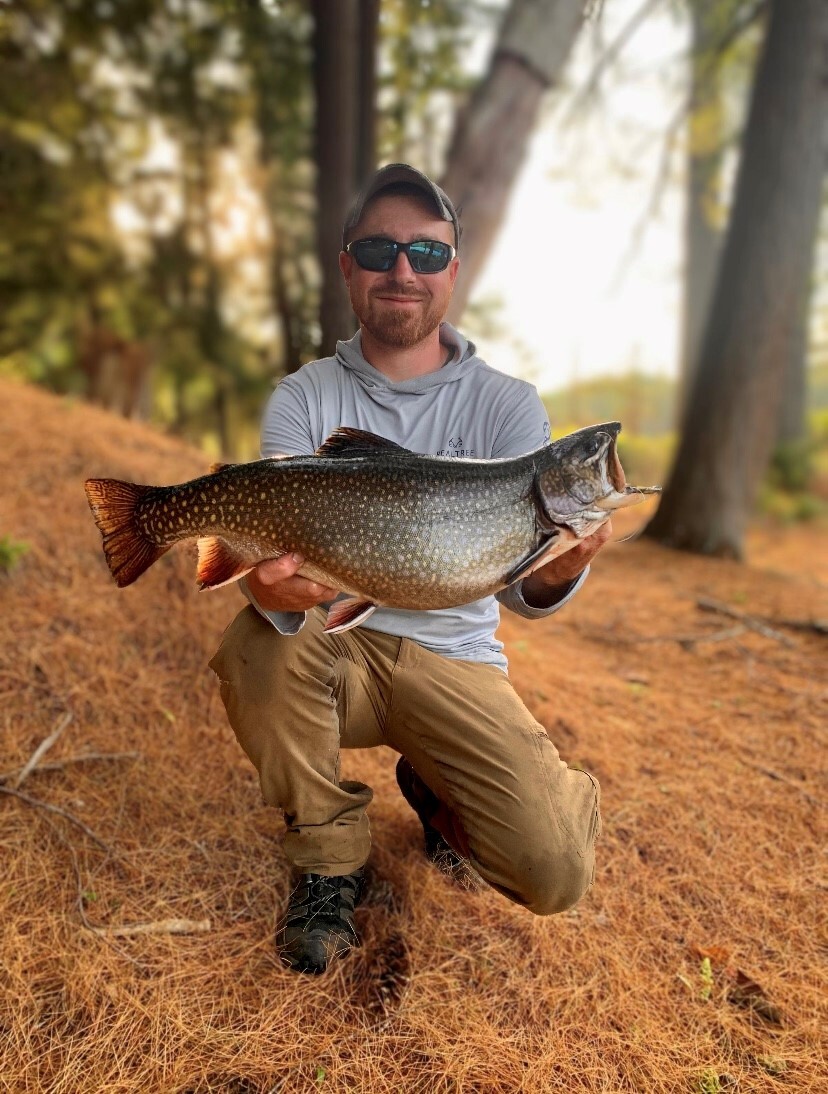
Benjamin Ferguson reeled in a 22 inch, 6 lb. 3 oz. brook trout on July 5 while trolling a Lake Clear Wabbler and worm on a backcountry pond in the St. Regis Canoe Area. His catch edged out the 2013 record by 3 ounces. Congratulations Benjamin!
Brook trout are commonly found in small streams and headwaters of larger waters in the Adirondacks, Catskills, and other areas of the state. In Adirondack lakes and ponds, they can grow to five pounds or more. Brook trout are relatively easy to catch on worms or synthetic baits, as well as spinners, small spoons, and flies. Check out our Guide to Brook Trout Fishing in Adirondack Ponds.
Visit the Anger Achievement Awards Program webpage for a list of current state record freshwater fish and to learn more about entering large fish you catch!
Just a friendly reminder that DEC should be your go-to resource for the most current fishing rules and regulations across the state. With the use of AI (artificial intelligence) for internet search results on the rise, it’s important to stress that information generated is not always reliable and accurate, especially when it comes to special fishing regulations. Spoiler alert: AI is generating incorrect information on NYS Freshwater Fishing Regulations and NYS fisheries management information.
For your convenience, fishing regulations are available through a variety of sources:
Still have freshwater fishing questions? Email us at fwfish@dec.ny.gov.
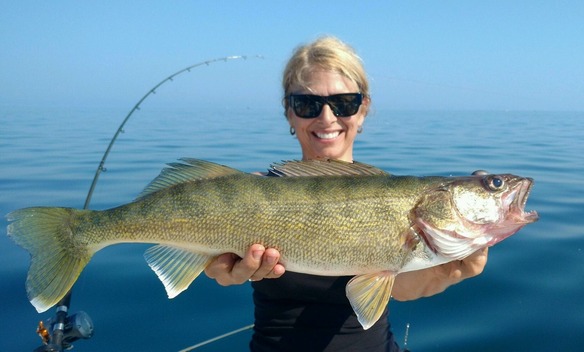
Walleye were a popular target for Lake Erie anglers in June, and for good reason. Anglers caught 6 per boat trip- a top five catch rate in the last 20 years! Bass and yellow perch catch rates were stellar as well, also ranking top five in the last 20 years. Phenomenal fishing, especially for walleye, is expected to continue through July, so get out and enjoy this amazing fishery!
Scientific Name: Esox lucius x Esox masquinongy
Nicknames: Tiger, Tiger muskie
Current State Record: 35 lb. 8 oz., 50 inches long, Tioughnioga River, Broome Co. 5/25/1990
Identification: Tiger muskellunge are a sterile, fast-growing cross between northern pike and muskellunge. They have long, cylindrical-shaped bodies like their parental species, and can reach similar sizes. They have a unique color pattern that includes dark “tiger-like” vertical stripes on a light background.
Where to Fish: In the warmer months tiger muskellunge can typically be found in the shallow water areas of lakes, ponds and rivers along weed edges or other structure. They tend to move to deeper water in the winter.
How to Fish: Tiger muskellunge are ambush predators and tend to wait near cover until prey approaches. Casting and trolling along weed edges and woody or rocky structure can be effective. They are not picky eaters, and can be caught on a wide variety of baits including spinnerbaits, jerk baits, crank baits, top water baits and soft plastics. Tiger muskellunge can grow to enormous sizes and have big, sharp teeth. Medium-heavy to heavy action rods, durable line and solid wire leaders give you the best chance of successfully landing and releasing a tiger muskellunge.
Safe Handling: Tiger muskellunge are susceptible to post release mortality if not handled properly. Fight and land tiger muskellunge as quickly as possible – do not fight it to exhaustion. Use a large coated net to land the fish and long-nose pliers for hook removal. Limit a tiger muskellunge’s time out of water to less than 30 seconds. To hold a tiger muskellunge for a picture, slide four fingers of one hand under the fish's gill flap (be sure to avoid the gills), with the thumb on the outside where the two gill covers meet, and hold very firmly while cradling the fish under its belly with the other hand. Never hold the fish vertically. For a successful release, hold the fish in the water until it swims away under its own power.
|