In this issue:
Spring turkey season opens May 1, in all counties except for New York City and Nassau County. Hunters must have a turkey hunting permit in addition to their hunting license. If you still need to take your Hunter education course, classes are currently being offered statewide. In-person classes are free—find a class in your area!
Other Important Details for the Spring Turkey Season, May 1-31:
- Hunting is permitted in most areas of the state, except for New York City and Nassau County;
- Hunters must have a turkey hunting permit in addition to their hunting license;
- Shooting hours are from one-half hour before sunrise to noon each day;
- Hunters may take two bearded turkeys during the spring season, but only one bird per day and no more than one bird per season in Wildlife Management Unit 1C (Suffolk County);
- Hunters may not use rifles or handguns firing a bullet. Hunters may hunt with a shotgun or handgun loaded with shot sizes no larger than Number 2 or smaller than Number 9, or with a bow or crossbow (except crossbows may not be used in Westchester or Suffolk counties);
- Successful hunters must fill out the tag that comes with their turkey permit and immediately attach it to any turkey harvested;
Hunt Safe, Hunt Smart!
DEC also encourages all hunters to wear blaze orange or blaze pink when moving between hunting spots to make themselves more visible to other hunters. A blaze orange or blaze pink vest or other material can be hung in a nearby tree when you are set up and calling birds so other hunters are alerted to your presence.
- Point your firearm in a safe direction;
- Treat every firearm as if it were loaded;
- Be sure of your target and beyond;
- Keep your finger off the trigger until ready to shoot; and
- Stalking stinks! Set up with your back against a tree or other object wider than your shoulders and call birds to you.
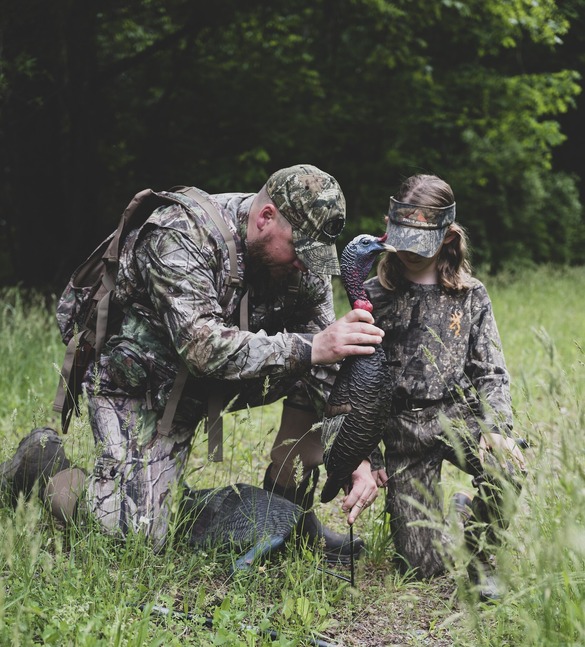
Two hunters setting up a turkey decoy
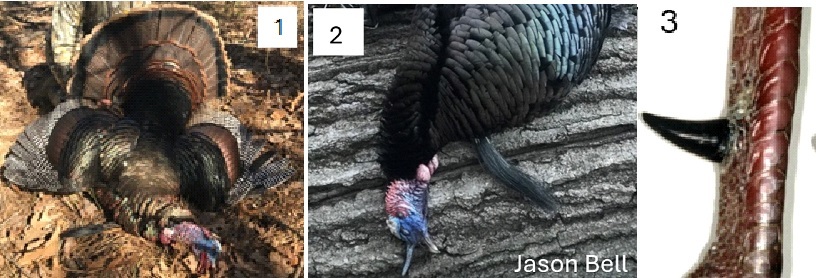
DEC wants your help to better understand the turkey population age structure. Successful turkey hunters will be asked to submit photographs of the wing, spur, beard, and tail of harvested turkeys this spring. After reporting your harvest, you will be prompted to follow a link where you can submit photographs. Three clear images displaying each of the turkey’s body parts – photographs of the legs, wing feathers (spread out) and tail fan (spread out), and chest will help DEC staff determine age and sex of each turkey.
- Lay the bird on its chest and spread out one or both wings and spread out the tail fan. Ensure the primary wing feathers are fully visible.
- For the turkey chest photograph, ensure the coloration of the chest feathers is apparent and the beard is visible (if present).
- For the leg photograph, placing the leg(s) and feet over a plain, consistent background is ideal.
This information, in combination with fall turkey leg collection data, will be used to help determine the statewide age and sex structure of the turkey population.
Three photos displaying the turkey tail fanned out, the turkey chest and beard, and turkey leg and spur
Turkey hunters in pursuit of an evasive gobbler can help DEC monitor ruffed grouse populations in New York. During the spring breeding season, male grouse can be heard “drumming,” beating their wings in the hope of attracting a mate. Turkey hunters can record the number of ruffed grouse they hear drumming while afield to help monitor this majestic game bird. To get a survey form, go to DEC's website or call (518) 402-8883.
After hibernating through a long winter, black bears across New York State are beginning to venture out of their dens, stretch their legs, and look for their first meals of spring. Adult male bears are usually the first to emerge and may have lost up to 30 percent of their body weight, while females with nursing cubs emerge later and may have lost up to 40 percent of their body weight. Bears are especially hungry in the spring due to depleted fat reserves and will search extensively for easily obtainable, calorie dense foods.
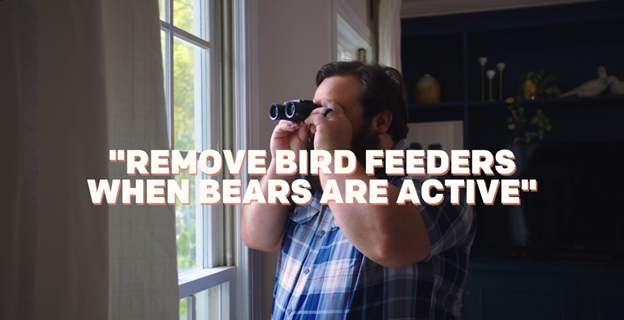
While bears have access to plenty of natural foods in the spring, they will readily utilize human food sources such as bird feeders, unsecured garbage, chicken coops, apiaries, or messy grills and pet food left outdoors. Continued access to human food sources can make bears bolder, which can lead to an escalation in human-bear conflicts around homes and residential areas. If you choose to feed birds in areas with bears, Don’t be a Bob. Begin emptying and cleaning up spilt seed from feeders in mid-March, and let nature feed the birds from spring through fall. It’s also a good time to make sure garbage cans are secured and stored in a sturdy building. Clean or remove all residual grease and food from grills and store all pet food inside. Consider installing an electric fence around chicken coops or apiaries to protect your flock and hives.
By taking some time to remove and/or secure food sources that might attract bears you’re helping keep bears away from people, homes and neighborhoods, and that helps keep bears healthy, wild, and safe. Do your part and encourage your neighbors to do the same.
For more information on how to live responsibly with black bears, please visit DEC's Be BearWise webpage and BearWise.org.
A screenshot from the BearWise video on 'Don't be a Bob' regarding removing your bird feeders when bears are active
Are you an avid hunter and fisherman? If you fish in New York, you might already know that DEC manages sportfish species, but did you know that they also work to conserve the biodiversity of native fish communities? For the first time since 1999, New York’s List of Endangered, Threatened and Special Concern Species has been updated. Thanks to data collected by staff and partners, the status of all native fish species in New York has been assessed.
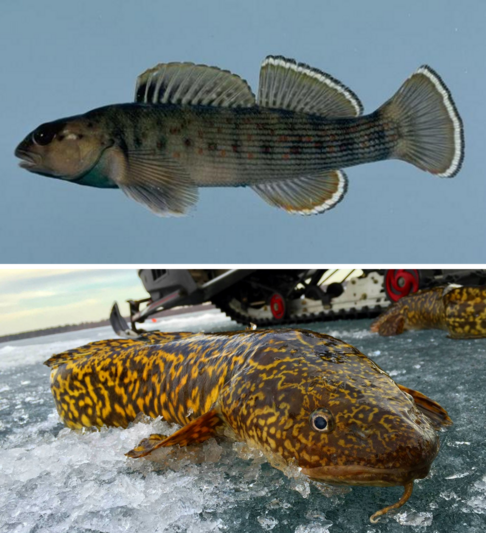
The list highlights promising news for some species like round whitefish, where active restoration efforts in Adirondack waters have boosted their numbers. Recovering species such as bluebreast darter and Eastern sand darter can be attributed to water quality improvements across the state. However, populations of some species such as burbot, lake whitefish, several minnow species, and longnose sucker are declining due to the introduction of invasive species and habitat loss. Management strategies for those that are imperiled in some way are being developed.
View the full list of changes to the List of Endangered, Threatened and Special Concern Fish and Wildlife Species of New York State.
How You Can Help:
Bluebreast darter, Etheostoma camurum by Noel Burkhead (top image) and Burbot, Lota lota (bottom image)
|