Freshwater Fishing, Fisheries Management, and Fishing Access News
In this issue:
- Water temperatures can be cold in the spring due to snowmelt and cold rains. If water temperatures are low (35-40°F) look for trout holding in deeper, slower moving water. Slow drifts and getting your lure (try heavy nymphs) down near the bottom to these less active fish can improve your chances of getting bites. Drifting worms or salted minnows through deep holes is also a great option for these cold, less active fish.
- If you’re unsure where trout are feeding in the water column, trying rigging two flies, one large dry fly, with a sinking nymph tied as a dropper off the bend of the hook of the dry fly. This way trout have their choice of whether to feed on the surface or under water.
- Don’t be afraid to walk. NYS has plentiful access along trout streams whether it be public fishing rights, state lands, or parks. The anglers that are willing to walk further from the parking lot and away from where most of the other anglers are fishing will often be rewarded for putting in the extra effort. DECinfo Locator and the Tackle Box feature in the HuntFishNY app are free map-based interfaces for finding these trout stream access spots throughout the state.
- Many of the major insect hatches of mayflies, caddisflies, and stoneflies occur in the spring and trout, whether they’re stocked fish or wild fish, will gorge themselves on these easy meals. You can search for hatch charts online or call a local fly shop to find out what hatches are likely occurring in your area, as well as what flies you should use to imitate them. However, spin fishing anglers can learn from insect hatches as well. Anglers that prefer spin fishing should have success throwing tiny lures like gulp grubs, and trout magnets. They may not necessarily imitate anything, but they roughly have the same size and profile as the insects that trout are accustomed to eating. If you do find yourself using baitfish imitations still think small. For example, small spoons and spinners will often outperform larger lures you might use for bass and other species.
- Once the water warms (50°F), spinners are a great option to cover a lot of water to find active fish. Make sure to have a high-quality snap swivel to prevent line from twisting up on your reel. Cast the spinner at a 45° angle downstream and let it slowly work across the stream on a tight line. Take a couple casts in a location and move on. This is a great way to cover a lot of water in a short amount of time.
- Large spring storms can “blow out” trout streams by increasing the flows and turbidity (the amount of sediment in the stream), so it’s good to get into the habit of checking US Geological Survey’s (USGS) flow graphs before you head out. Doing so can drastically increase your success in trout fishing. Learning what flows a trout stream fishes best at, as well as when it’s too high to fish/too dangerous to wade, can really make or break your fishing trip.
Online Trout Fishing Resources:
I FISH NY Guide to Trout Fishing in Streams (PDF)
I FISH NY Guide to Trout Fishing with Synthetic Bait (PDF)
I FISH NY Guide to Brook Trout Fishing in Adirondack Ponds (PDF)
Fly Fishing the Catskills (PDF)
If you fish in New York, you might already know that DEC manages sportfish species, but did you know that they also work to conserve the biodiversity of native fish communities? For the first time since 1999, New York’s List of Endangered, Threatened and Special Concern has been updated. Thanks to data collected by staff and partners, the status of all native fish species in New York has been assessed.
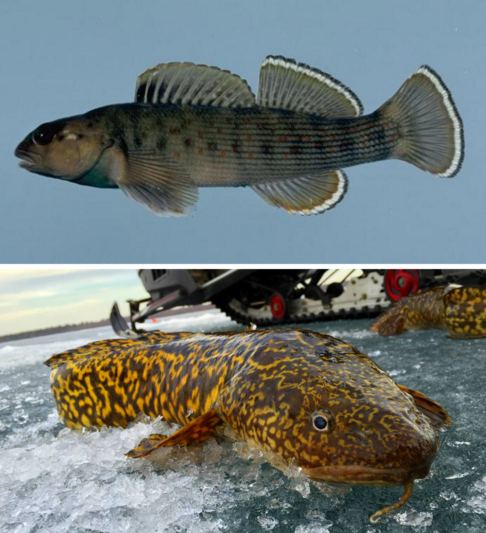
The list highlights promising news for some species like round whitefish, where active restoration efforts in Adirondack waters have boosted their numbers. Recovering species such as bluebreast darter and Eastern sand darter can be attributed to water quality improvements across the state. However, populations of some species such as burbot, lake whitefish, several minnow species, and longnose sucker are declining due to the introduction of invasive species and habitat loss. Management strategies for those that are imperiled in some way are being developed.
View the full list of changes to the List of Endangered, Threatened and Special Concern Fish and Wildlife Species of New York State.
How You Can Help:
Bluebreast darter, Etheostoma camurum by Noel Burkhead (top image) and Burbot, Lota lota (bottom image)
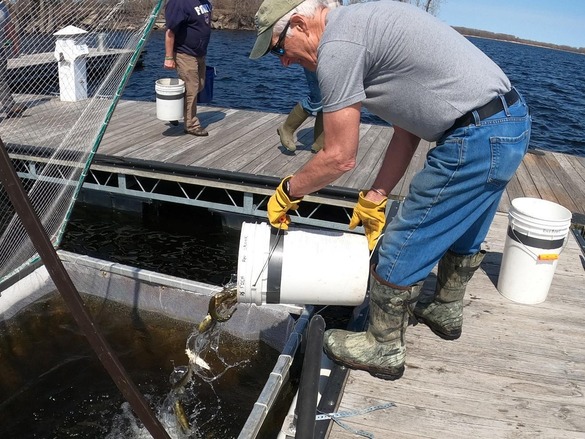
DEC, in partnership with the U.S. Fish and Wildlife Service, the Lake Champlain Chapter of Trout Unlimited, State University of New York (SUNY) Plattsburgh, and the Plattsburgh Boat Basin and Oasis Marina, are kicking off the fifth and final year of the Atlantic salmon net pen-rearing program which was created to improve post-stocking survival of this species.
From April 4 – May 1, Atlantic salmon smolts are being held in six net pens at the Plattsburgh Boat Basin docks in an effort to improve survival and increase the likelihood of imprinting - returning back to the stocked water for spawning.
The project will compare two lots of approximately 26,000 salmon smolts to evaluate the effectiveness of net pen rearing as a stocking method. One lot of Atlantic salmon will be stocked into net pens in the Saranac River Estuary, pre-smolt, and held for approximately three weeks prior to release as smolts. (A smolt is the juvenile stage of the salmon life cycle where it begins a period of significant physiological changes to adapt.) A second lot will be directly stocked into the Saranac River Estuary at the same time as the net pen smolts are released, serving as a control. A comparison of returns between the two stocking methods will determine if pen rearing results in greater survival and homing than conventional, direct stocking.
Part of the experimental pen-rearing project involves using Parental Based Tagging (genetics) to determine a fish’s origin and ultimately, the contribution of pen-stocked fish to the river fishery. Any fry captured in annual surveys will have a sample collected where it can be determined whether it came from a stocked fish or wild fish. If the fry is from a stocked fish, then it will be known which stocking treatment they were from.
Learn More:
2024 Report: Experimental Pen-rearing of Atlantic Salmon in Lake Champlain 2021-2025 (PDF)
Landlocked Salmon Fishing in Lake Champlain’s Tributaries
 |
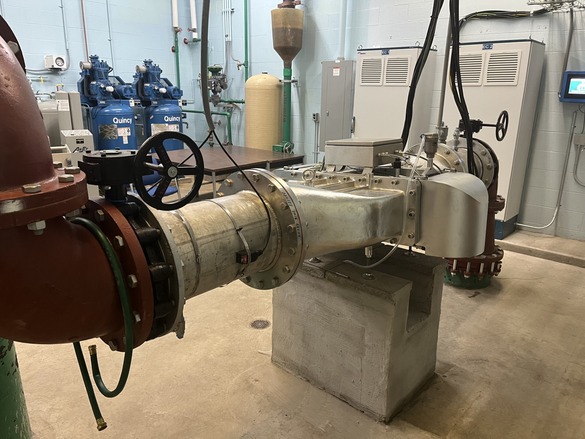
DEC staff recently completed the installation and commissioning of a new UV water treatment system at the Oneida Fish Hatchery, in time for this year’s hatchery season. This project took nearly two years to complete, with its fair share of ups and downs. The new system utilizes updated technology including medium pressure high-intensity Hydro-Optic (HOD) UV lamps which enable fewer UV lamps per system. DEC’s team designed the necessary mechanical and electrical sub-systems to ensure the UV system functions effectively despite needing to retrofit to the existing mechanical infrastructure. The system can sanitize up to 1,800 gallons per minute of creek water to support hatchery operations while using less energy than a traditional UV system. In addition to using fewer lamps, the intensity is modulated to maintain a set intensity as water conditions change, using less energy overall while also providing greater protection during flood events. Staff are optimistic this will reduce the pathogen and parasite pressure on our walleye and tiger musky, resulting in more healthy fish for stocking across NYS!
 |
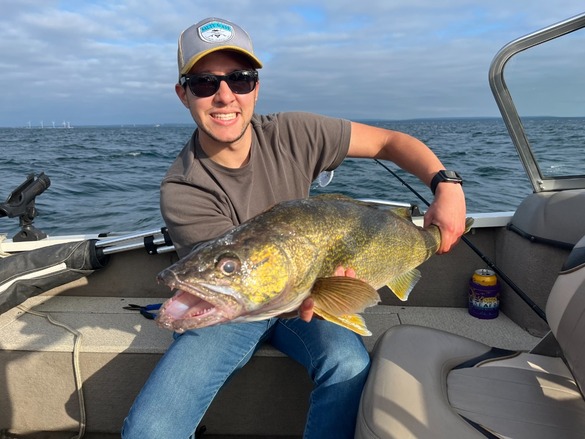
DEC Fisheries staff will be holding a public meeting to share updates on the Lake Erie and Upper Niagara River fisheries on Thursday, April 24 from 6:00pm-9:30pm at the Lodge at Woodlawn Beach State Park in Blasdell, Erie County. The meeting will feature presentations on Lake Erie and Niagara River fisheries management, including updates on assessment activities and research for prominent recreational and restoration species such as walleye, smallmouth bass, yellow perch, steelhead, lake whitefish, lake trout, cisco, and prey fish. All are welcome to attend this free event and registration is not required. Light refreshments will be provided.
 |
As waters warm, one of New York’s most beloved saltwater fish – the striped bass – will soon return to our waters. As New York’s state saltwater fish, stripers are a favorite among New York anglers for their large size and impressive strength. You can have success striper fishing whether you’re in a boat or on the banks. Before hitting the water, you should keep the following rules, regulations, and safe handling practices in mind:
Striped Bass Regulations:
Hudson River (North of the GW bridge)
- Possession Limit:1 Fish
- Slot size: 23”-28” inches
- Fishing for striped bass outside of the open season is prohibited on the Hudson River, this includes catch and release fishing.
Marine Waters (South of GW Bridge and Delaware river)
- Possession Limit: 1 Fish
- Slot size: 28”-31” inches
- Open Season: April 15th – Dec 15th
- Catch and release fishing for striped bass is permitted outside of the open season in marine waters.
All New York Waters
- When bait fishing for striped bass inline circle hooks must be used
- Gaffs cannot be used to land striped bass. Instead try a large, rubberized net
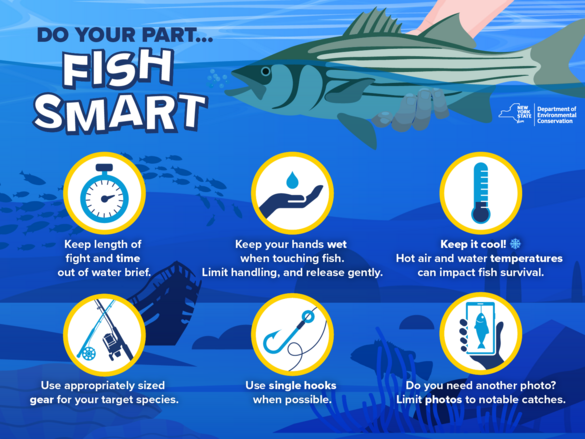
Release mortality is a major source of loss in the striped bass fishery throughout the Atlantic coast. A variety of factors can increase the chance of a fish to experience release mortality, including but not limited to, time of fight, water temperature, and gear types. Check out the graphic below for helpful tips on improving your fish handling practices and conserving our striped bass population!
DEC’s Great Lakes Program invites you to the upcoming GLAA Sub-Basin Work Group Meetings this spring. These sessions will provide updates on Great Lakes initiatives, networking opportunities, and work planning discussions.
Attend in-person or virtually! To join the conversation, register below!
Meeting Dates and Locations
All meetings: 1:00 PM – 4:00 PM
April 29 – Southwest Lake Ontario (Newfane Community Center)
May 1 – Lake Erie (Lackawanna Public Library)
May 5 – Northeast Lake Ontario-St. Lawrence River (CCE of Lewis County)
May 6 – Southeast Lake Ontario (Sodus Point Village Hall)
Questions? Contact greatlakes@dec.ny.gov.
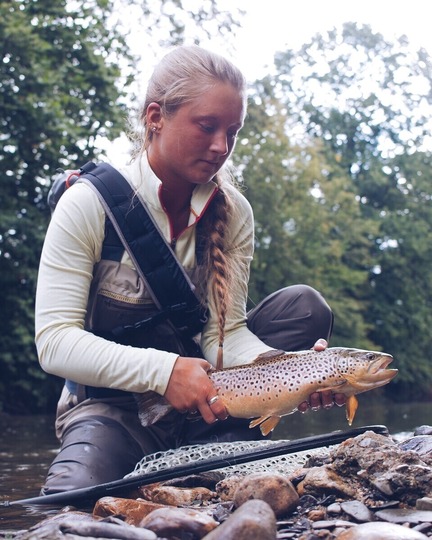
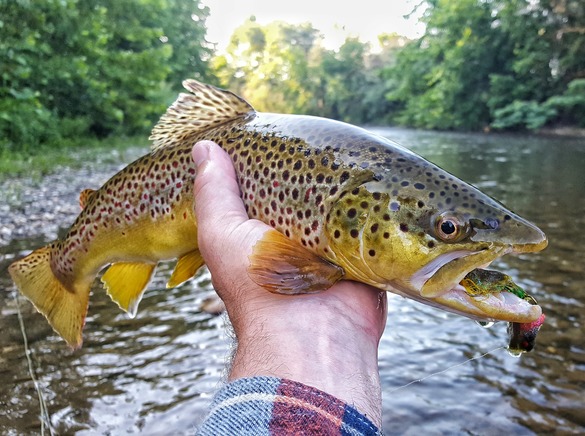
Scientific Name: Salmo trutta
Nicknames: Browns
Current State Record: 33 lbs. 2 oz., 38 inches, Lake Ontario, Oswego County, 6/10/97
Identification: Brownish color with many reddish spots on sides, dorsal fin and adipose fin. Few, if any, spots on caudal (tail) fin. Average in size from 8-12 inches in streams and 16-30 inches in large rivers and lakes.
How to Fish: Artificial lures (spinners, spoons, jigs) and dry flies are effective alternatives to live bait, especially in situations where live bait is not permitted. (Check the freshwater fishing regulations guide.) In early spring when trout may be a little more sluggish consider fishing slow and deep. Once insects become more active later in the season, many anglers will choose flies that mimic various insect hatches.
Safe Handling: With their small scales, trout can be tough to handle. They’re also a bit more delicate than bass and perch, so it’s a good idea to practice good handling care. To prevent removing the protective slime coating from their bodies, always wet your hands first. If possible, unhook trout in the water and consider using a rubber coated landing net to maximize survival.
Fish Fact: Brown trout are recent immigrants to New York State. Eggs first imported from Germany in 1883 were hatched at the Caledonia Fish Hatchery to establish populations of this species.
|