In this issue:
Striped Bass: Marine Waters and Delaware River (South of GW Bridge)
Slot Size: 28"-31"
Possession Limit: 1 Fish
Open Season: April 15 - Dec 15
All New York Waters
- When bait fishing for striped bass inline circle hooks must be used.
- Gaffs cannot be used to land striped bass. Instead try a large, rubberized net.
Release mortality is a major source of death in the striped bass fishery throughout the Atlantic coast. A variety of factors can increase the chance of a fish experiencing release mortality, including but not limited to, time of fight, water temperature, and gear types.
Tips on improving your fish handling practices and conserving our striped bass population:
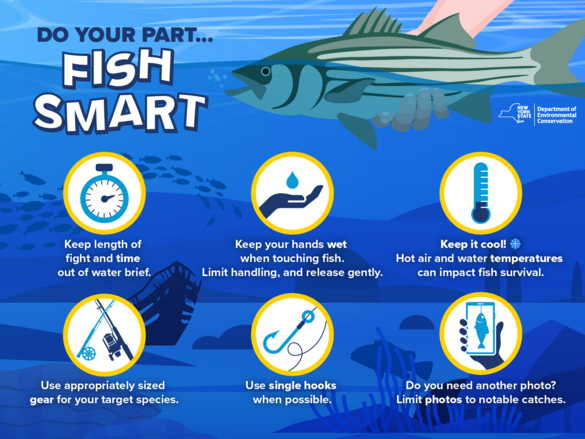
- Keep length of fight and time out of water brief.
- Keep your hands wet when touching fish. Limit handling, and release gently.
- Keep it cool! Hot air and water temperatures can impact fish survival.
- Use appropriately sized gear for your target species.
- Use single hooks when possible.
- Do you need another photo? Limit photos to notable catches
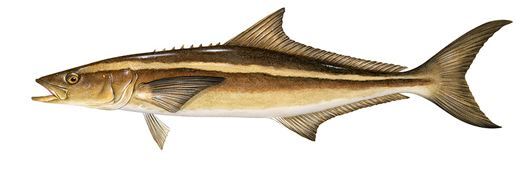
This emergency regulation went into effect April 8, 2025 and increases the minimum size limit for Cobia from 37 to 43 inches and the vessel possession limit from one to two fish.
DEC is adopting these changes to maintain compliance with the Atlantic States Marine Fisheries Commission (ASMFC) Fishery Management Plan for Cobia.
Please visit Marine Regulations webpage for more information.
Scientific Illustration Courtesy of ASMFC
From deep, offshore ocean waters to surfcasting on sandy beaches, New York's marine waters offer exciting world-class saltwater fishing opportunities. The DEC Marine Recreational Angler Records Program recognizes exceptional saltwater fish and blue crab caught in New York, including long-standing state records for the heaviest fish and annual awards for the longest fish of a qualifying species.
Think you caught record-breaking crab or fish? Review the rules of entry, current records, and qualifying lengths: New York Marine Recreational Angler Records Rules (PDF).
Be sure to check DEC's Recreational Saltwater Fishing Regulations for the current limits in effect. For helpful tips and best practices for handling saltwater fish, visit DEC’s website.
Anglers must enroll in the annual no-fee Recreational Marine Fishing Registry before fishing New York's Marine and Coastal District waters or when fishing in the Hudson River and its tributaries for "migratory fish of the sea." Anglers can enroll for the registry online, by phone (1-866-933-2257, option 2), or by visiting a license-issuing agent location.
To submit your catch information to DEC, fill out the online entry form below!
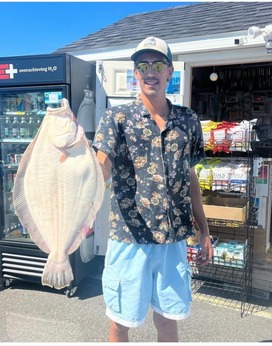
2023 Longest Fluke Winner Ethan Roda
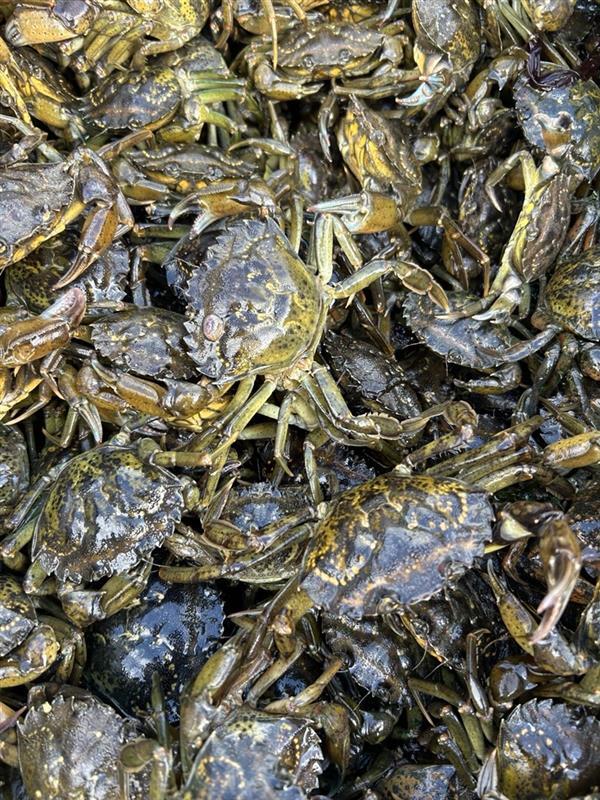
With recreational Tog season underway, DEC encourages anglers to review the Recreational Bait Crab Limits before harvesting or purchasing crabs for use as bait. Anglers are permitted to use Green Crabs, which are a regulated invasive species, however these crabs must be dead before being used as bait. Possession of Asian Shore Crabs is not permitted.
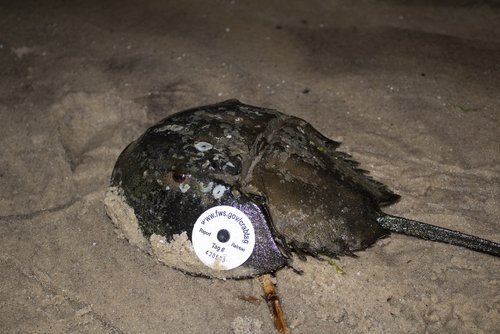
The New York Horseshoe Crab Monitoring Network will be kicking off the 2025 Horseshoe Crab Spawning Survey on May 10, 2025. This survey takes place around the nighttime high tides during the full and new moons in May and June. Thirty sites are monitored throughout the marine district. During each survey night, participants help count and tag horseshoe crabs and can observe horseshoe crabs spawning on our beaches. If you are interested in participating, visit the Horseshoe Crab Monitoring Network website to find out how to get involved!
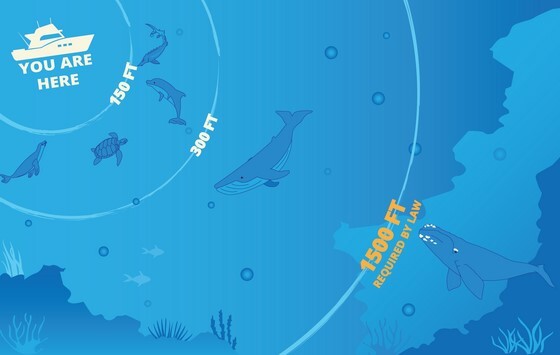
As the weather warms up in the Mid-Atlantic the potential for exhilarating marine wildlife viewing experiences, especially as whales, seals and other marine animals follow bait fish and may be close to shore. Whether on the beach or on the water, if you see protected animals like whales, dolphins, seals, sea turtles, or Atlantic sturgeon, follow the tips below to keep the animals and your passengers safe.
Give Space
-
North Atlantic right whales: 1500 feet or 5 football field lengths (required by law)
-
Other whales: 300 feet/100 yards (at least) - 600 feet (is preferred)
-
Seals, dolphins and sea turtles: 150 feet
-
Leaping sturgeon also require extra space to avoid injury to you and the fish
Don’t Chase!
- If a whale approaches within 100 feet of your vessel, put your engine in neutral. Do not re-engage your engine until the whale is observed on the surface, outside of the 100-foot or 1500-foot (if it’s a right whale) zone.
- Don’t follow or chase marine animals.
- Don’t cut through their path - you could separate moms and calves.
Graphic Courtesy of NOAA
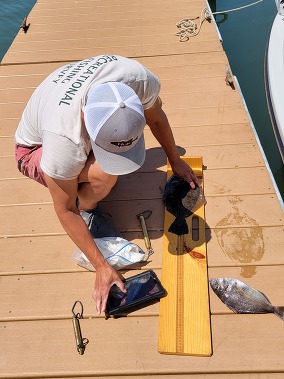
As part of the Access Point Angler Intercept Survey, DEC is launching a project to obtain better data on the size and survival of fish released by recreational saltwater anglers. Since data is already collected from for-hire boats, private anglers throughout New York's marine district will receive a pencil, measuring tape, and waterproof “catch card” to log the species, number, and size of released fish, along with a QR code for more info. After your trip, return the pre-paid postage card or email a photo to RecDiscards@dec.ny.gov. Your input helps improve fishery management and ensures better fishing for everyone.
 |
Cornell Cooperative Extension of Suffolk County (CCE) has been funded by National Fish and Wildlife Foundation (NFWF) to provide education and outreach to New York’s for-hire fishing fleet as they transition to mandatory electronic reporting as of January 2025. CCE’s eVTR project will include education/outreach activities, technology transfer in the form of free iPads, and training sessions that will help New York modernize fisheries dependent data collection while simultaneously reducing the reporting burden set upon fishermen by simplifying the mandatory reporting process.
CCE is assisting for-hire fishermen in making the switch from paper VTR reporting to electronic reporting using the eTRIPS/mobile Application (“App”) for both Apple and Android devices. eTRIPS/mobile is the smart phone and tablet-based version of ACCSP's eTRIPS application that allows captains to capture their catch and effort data while at sea. CCE will host numerous training sessions at ports across Long Island. These trainings sessions are also open to for-hire fishermen who already report electronically but may have questions or want a refresher course. Training sessions are starting now to help the fleet be ready by 2025. Schedule is below:
Training Dates:
- April 17 – 2 to 4 PM – Cornell Cooperative Extension Office, 423 Griffing Ave. Riverhead, NY 11901
- April 23 – 12 to 4 PM – Montauk Library, 871 Montauk Hwy. Montauk, NY 11954
- April 24 – 2 to 4 PM – Cornell Cooperative Extension Office, 423 Griffing Ave. Riverhead, NY 11901
- April 29 – 12:30 to 4 PM – Floyd Memorial Library, 539 1st St. Greenport, NY 11944
Please note that these training sessions are open from the specified times. An individual training typically takes less than 1 hour. Additional trainings may be available by appointment only.
The Atlantic Large Whale Take Reduction Team is seeking to fill a vacancy for the fixed-gear gillnet fishery. The Team was established in 1996 to help develop plans to mitigate the risk of entanglement to large whale species. It’s composed of fishermen, scientists, conservationists, and state and federal officials from Maine to Florida.
The vacant seat represents the New York gillnet fishing community during Team meetings and deliberations and is an essential voice in the take reduction process. The expected time commitment for 2025 is as follows: a summer webinar series that members may attend live or watch at a later time, and a November meeting (likely virtual) to discuss management measures including the potential for dynamic management and a review of current closures.
Membership on the Team is an ongoing commitment; however, if a team member is no longer able to fulfill their duties, they may forfeit their seat and someone else will be appointed.
If you would like to recommend yourself or someone you know for the New York fixed-gear gillnet seat, please send an email to MarineProtectedResources@dec.ny.gov. Becoming a member of a federal Take Reduction Team is a recommendation process, therefore the National Marine Fisheries Service (NMFS) must approve any nominations and formally submit a recommendation package. Please visit the website or reach out to DEC at the email above if you have any questions.
Recommendations will be accepted through April 18.
Striped bass season opened on April 1, and those fish caught in the Hudson River and tributaries north of the George Washington Bridge during the season may only be kept if they are between 23 inches and 28 inches long. When fishing with bait for striped bass, anglers must use a non-offset circle hook. On March 21, ECO Tompkins observed an angler near Crawbuckie Park in the town of Ossining, Westchester County, catch and keep at least four striped bass in less than 10 minutes, a week and a half before the April 1 season opener. Officer Tompkins quickly moved in after witnessing the illegal activity from a distance and discovered a large black garbage bag filled with 23 out-of-season striped bass. The ECO worked quickly to release fish likely to survive back into the water and issued six tickets to the angler, including one for 23 counts of possessing fish during the closed season, targeting fish during the closed season, failure to use non-offset circle hooks for striped bass, fishing without a license, failure to carry a marine registry, and the illegal take/possession of fish. The fish that did not survive were donated.
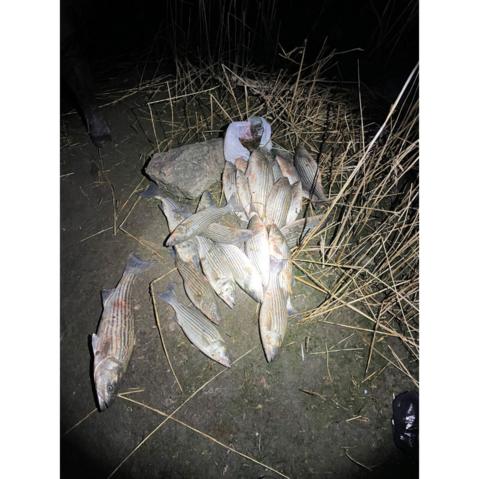 |
Striped bass caught unlawfully in Westchester County
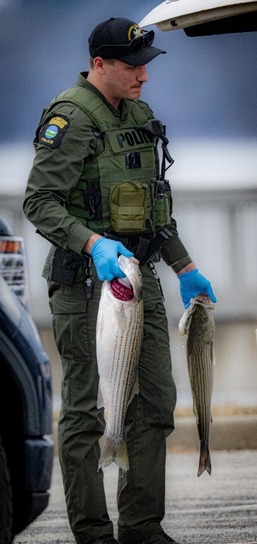
On March 29, ECOs Falkengren and Steffen received a tip from a concerned resident in the town of Haverstraw, Rockland County, regarding an individual stashing fish in a vehicle near the Hudson River. Officer Falkengren responded to the location and identified a vehicle and anglers matching the complainant’s description. A brief investigation and interviews led the ECO to confiscate two illegally caught striped bass and issue tickets to an angler for the illegal take of striped bass out of season, unlawful possession of fish out of season, unlawful intentional angling for fish species during the closed season, taking of fish contrary to DEC regulations, and failure to use a non-offset circle hook for striped bass.
ECO Falkengren with illegally caught striped bass in Rockland County
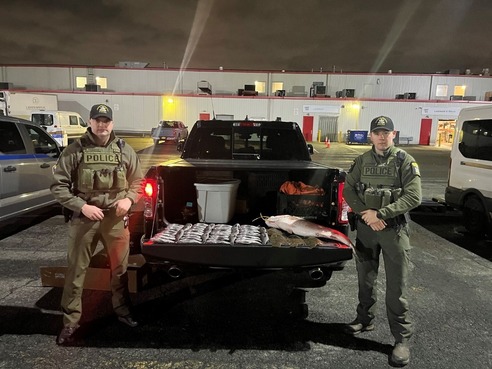
On March 21, ECOs Farner and Pansini, members of the DEC Division of Law Enforcement Marine Enforcement Unit, partnered with members of the National Oceanic and Atmospheric Administration (NOAA) Office of Law Enforcement to conduct joint inspections of vendors at the Fulton Fish Market in the Bronx, one of the oldest and largest seafood wholesalers in the nation. The operation resulted in the discovery of multiple violations of New York’s Environmental Conservation Law. Officers confiscated 48 undersized black sea bass (legal commercial size 11 inches), four undersized fluke (legal commercial size 14 inches), and one oversized striped bass (legal commercial size 26-38 inches) during the patrol. They issued tickets for the various commercial marine violations, returnable to Bronx County Criminal Court.
ECOs Farner (left) and Pansini (right) with undersized fish confiscated during fish market patrol in Bronx County
New England Fishery Management Council
Date: April 14 - April 17, 2025
Northeast Trawl Advisory Panel Workgroup Meeting
Date: April 24, 2025, 9:00 AM - 10:00 AM
Mackerel, Squid, Butterfish Advisory Panel Meeting (4/23, 1-4pm)
Date: April 23, 2025, 1:00 PM - 4:00 PM
On-Demand Fishing Gear Conflict Working Group Meeting
Date: April 29, 2025
|