|
On January 15, 2025, DEC hosted a webinar with record-breaking attendance of 2,200 participants. Krista Spohr, the Freshwater Wetlands Outreach Coordinator for DEC’s Division of Fish and Wildlife, provided a comprehensive overview of the new regulatory process to protect freshwater wetlands, which took effect on January 1, 2025. Joining her were the Freshwater Wetlands Program Director and Wetlands Program Manager, who addressed pre-submitted questions.
Key topics covered:
- Expanded jurisdictional protections - continued protections for previously mapped wetlands and DEC’s expanded authority to include additional qualifying wetlands.
- Remote assessments - how jurisdictional determinations and classifications will be conducted remotely, based on wetland acreage and characteristics.
- Transition to informational maps - the shift from regulatory to informational maps and its implications for planning and development.
- Implementation details - an overview of additional provisions, DEC’s implementation plans, and guidance on navigating the updated jurisdictional determination process.
A recording of the webinar is available to view.
Looking ahead, the NY Estuary Program will host a webinar on February 6, from 12 PM to 1:30 PM, focusing on Wetlands of Unusual Importance and NY’s New Freshwater Wetlands Regulations. This session will cover the diversity and importance of wetlands, details of the new regulations, the jurisdictional determination process, and how to utilize the new informational wetland maps. Register to attend.
Additionally, the NY Planning Federation will offer another webinar on February 27, from 12 PM to 1 PM, providing further learning opportunities for stakeholders, including municipalities. To register, please email the NY Estuary Program. Spohr states there will be more chances for stakeholders to gain further education on these regulation changes to come.
Last, but not least, February 2nd is World Wetlands Day!
People around the world will be celebrating the value of wetlands on February 2, 2025. This year’s theme is “protecting wetlands for our common future.” World Wetlands Day is the anniversary of the international treaty to conserve wetlands, the Ramsar Convention, adopted in 1971. Everyone can raise awareness about wetlands by using World Wetlands Day materials, which include a poster, a coloring page, social media content, and slides available through the World Wetlands Day website.
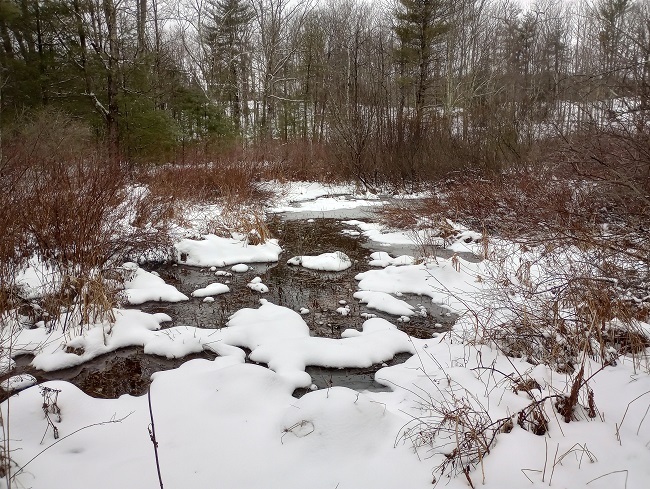
Photo of a wetland in winter.
It may be tempting to feed deer to “help” them through the winter. However, feeding deer during the winter or other times of the year is unnecessary, prohibited in New York, and can have negative consequences for deer, your neighbors, and surrounding wildlife habitat.
During the winter, deer primarily rely on woody and evergreen vegetation (collectively known as woody browse) for their daily nutritional and metabolic needs. The digestive enzymes in a deer’s stomach change in the winter to better digest this browse. If deer are provided with unnatural food sources such as corn or hay after this change in diet has occurred, it can result in grain overload disease or Clostridium overgrowth because they can’t digest the food properly. Both diseases can result in the rapid illness and death of deer in winter.
Gathering of deer around artificial feeding sites can increase the risk of spreading chronic wasting disease (CWD). An infected deer will shed CWD prions in its saliva directly on the food, which can infect any other deer that feed from the same site. Deer gathered at these sites can also increase the risk for deer-vehicle collisions and deer-related damage to landscape plantings, orchards, and tree farms.
Habitat improvement, especially the creation and promotion of early successional habitat, is the best way to ensure that deer and other species of wildlife have plenty to eat all year and avoids the negative consequences of feeding deer.
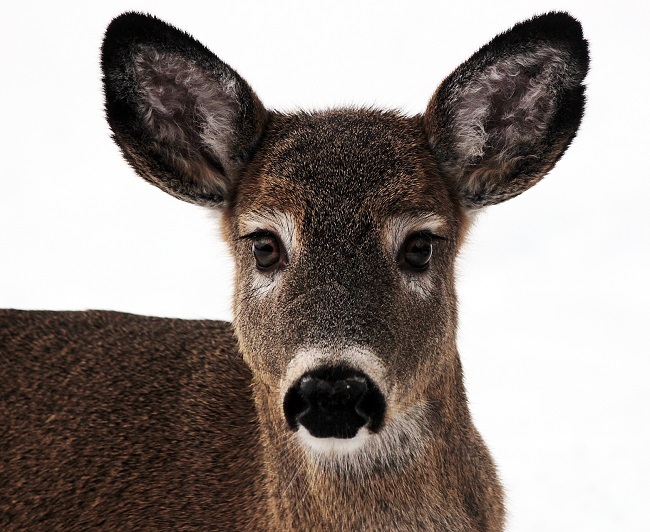
Photo of white-tailed deer by Tom Starr.
|