Freshwater Fishing, Fisheries Management, and Fishing Access News
In this issue:
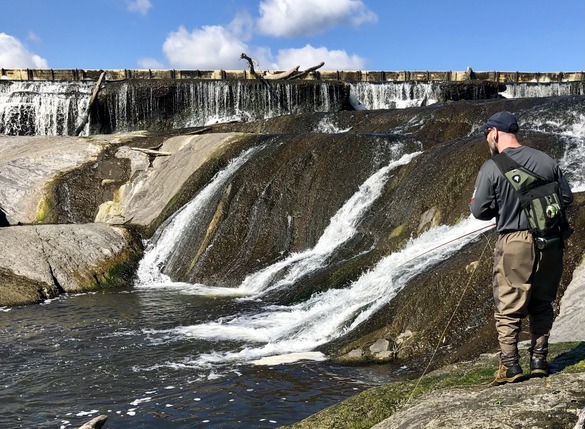
The Bureau of Fisheries completed an angler (creel) survey on the Mohawk River extending from Rome to Waterford (PDF) from May-October, 2024. Staff conducted just over 2,000 interviews from more than 3,500 anglers at 42 fishing access sites. The most targeted sportfish was smallmouth bass. Walleye, carp, northern pike, channel catfish and freshwater drum were also popular targets.
Data from the survey are currently being analyzed, and a summary report of the survey should be finalized and available by summer 2025.
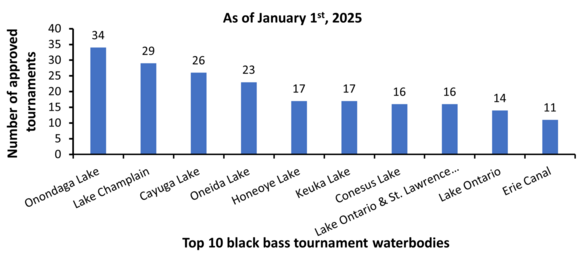
DEC Bureau of Fisheries recently implemented a new Black Bass Fishing Tournament Permit that’s required if conducting a black bass (largemouth bass and smallmouth bass) fishing tournament with 10 or more participants. As of January 1st, 413 permits have been issued. Most of these (83%) are for tournaments open to motorized boats, with the remainder for kayak (11%) and multiple types of watercraft events (6%). The waterbodies with the most tournaments scheduled in 2025 include Onondaga Lake, Lake Champlain, and Cayuga Lake. The figure below represents the top 10 waterbodies with black bass tournaments currently permitted for 2025.
Apply for a Black Bass Fishing Tournament Permit
Upcoming Bass Fishing Tournaments
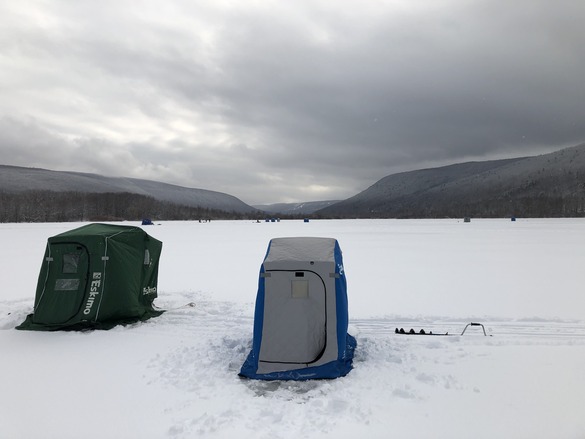
When it comes to recreating on ice, safety should always come first. Keep these tips in mind when planning your next ice fishing trip.
- Four inches of clear, black ice is generally safe for if you’re venturing out on foot, however ice thickness can vary on every waterbody.
- Be particularly cautious of areas with moving water and around boat docks and houses where bubblers may be installed to reduce ice buildup.
- The presence of snowmobile tracks or footprints on the ice should not be taken as evidence of safe ice conditions.
- Bait and tackle shops can be a great resource for information on current ice conditions. However, avoid situations that appear to present even a remote risk.
- Test the thickness of ice with an auger or ice spud at various spots as you move around.
- Carry ice safety picks (two handles with spike points) to help you get out of the water should you break through the ice.
Ice Fishing in New York State
Learn How to Ice Fish
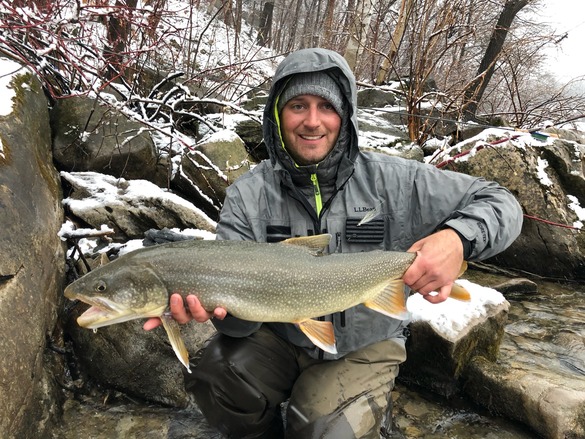
Scientific Name: Salvelinus namaycush
Nicknames: Laker, lake char
Current State Record: 41 lbs. 8 oz., 42.75 inches, Lake Erie, Chautauqua County, 8/9/03
Identification: Grayish brown body with light spots on back and sides. Forked tail.
Habitat/Where to Fish: Deep, cold, clean, well oxygenated lakes. One hundred feet of water is a good place to start in deep lakes such as the Finger Lakes. If fishing in a lake less than 100 feet deep, find the deepest parts. However, what depth they’re hanging in will depend on the day or season, so try deeper or shallower until you find them. Lake trout mostly hang out towards the bottom, so make sure to keep your bait at or near the bottom.
How to Fish: Trolling is likely the most popular way to target lakers, but vertical jigging can be fun as well. Trolling baits include spoons, cowbells, crank/stick baits, and flasher fly. Downriggers are a good way to get your bait towards the bottom, but heavy sinkers can be used too. If vertical jigging, heavy spoons, tubes or swimbaits work well. A depth finder can be useful in locating/marking fish. If jigging, it’s often possible to mark both your bait and a fish coming for the bait.
Hot tip- lake trout will often bite a bait moving away from them, and a slow retrieve as the fish is coming towards the bait will often entice a bite.
Safe Handling: With their small scales, trout can be tough to handle. They’re also a bit more delicate than bass and perch, so it’s a good idea to practice good handling care. To prevent removing the protective slime coating from their bodies, always wet your hands first. If possible, unhook trout in the water and consider using a rubber coated landing net to maximize survival.
Fish Fact: Lake trout are New York State’s largest native trout and have the longest life span.
|