This bulletin provides only the most recent notices. Check the Adirondack Backcountry webpages for more detailed information on access, outdoor recreation infrastructure, and conditions.
Emergency Situations: If you get lost or injured; keep calm and stay put. If you have cell service, call 911 or the DEC Forest Ranger Emergency Dispatch, 833-NYS-RANGERS.
Welcome to the Adirondacks. The Welcome to the Adirondacks webpage provides information about the Forest Preserve, conservation easement lands, outdoor recreation, and Leave No Trace™.
Love Our New York Lands: All New Yorkers and visitors should be able to access, enjoy, and feel welcome on state lands. While enjoying these shared spaces, be respectful of other visitors. Share trails, treat people with kindness, and leave things as you found them for others to enjoy. All of us have a responsibility to protect state lands for future generations. Learn more about how you can Love Our New York Lands.
In this issue:
The following are only the most recent notices pertaining to public lands in the Adirondacks. Please check the Adirondack Backcountry webpages for a full list of notices, including seasonal road statuses, rock climbing closures, specific trail conditions, and other pertinent information.
NEW THIS WEEK
-
Snow Report (1/31): The following report describes conditions as of Wednesday, 1/31. Changing weather may affect conditions. There is 67cm (26in) of snow at the Colden Caretaker Cabin. Snow levels vary at higher elevations. Conditions now require snowshoes to be worn from Marcy Dam. The ski trail and passes remain in good condition. They now have a crust layer.
LAST WEEK
-
Snow Report (1/24): The following report describes conditions as of Wednesday, 1/24. Changing weather may affect conditions. There is 80cm (31in) of snow at the Colden Caretaker Cabin. Snow levels vary at higher elevations. Conditions now require snowshoes to be worn. The lakes are in, but the ice is thin near the bridge and outlets/inlets. The ski trail is in very good condition.
Know Before You Go (as of 2/1):
Fire Danger: Due to current and expected weather patterns, the fire rating map forecast has concluded for the season. Unless conditions change, forecasting will resume in spring 2024.
Temperatures: These are forecast temperatures for base elevations throughout the region.
Weekend temperatures in the region are expected to produce highs in the mid-30s and lows in the mid-teens. Weather will be about the same Friday-Sunday, but with the highest chance of snow on Friday (50%).
Check the National Weather Service’s Mountain Point Forecast for more accurate forecasts at elevation on or near your intended route.
Reminder: These forecasts are for low elevations. Anticipate losing 5 degrees Fahrenheit for every 1,000 feet of elevation gain. Snow and ice have accumulated throughout the High Peaks, and will likely remain throughout the weekend.
Even with sunny skies, inclement weather is always a possibility and can change very quickly. Remember – hypothermia is always a risk in wet conditions, even when it feels warm outside. Be prepared with extra dry layers and keep an eye on the weather.
Conditions: With one of the most moderate weeks in terms of weather that the Adirondacks has seen in these past couple months, conditions are nothing out-of-the-ordinary for this time of year. Snow and ice are present throughout the High Peaks Wilderness and surrounding areas, which can make steep slopes unstable and slippery. Hikers should bring microspikes or crampons when heading into the backcountry or above tree line.
Sunrise/Sunset: Sunrise = 7:11 a.m.; Sunset = 5:07 p.m. With shorter days this time of year, it’s crucial to pick a timeline and stick to it. Pack at least one headlamp (two headlamps recommended) even if you expect to finish your activity before sunset. Phone batteries drain quickly and are discouraged.
Mount Colden Trapdike: The trapdike is considered a technical climb and not a hike. Climbers should be prepared with helmets, ropes, and climbing gear to ascend this route. Hikers looking to summit Mount Colden should do so via the hiking routes. Attempting to climb the trapdike unprepared can result in a rescue operation, serious injury, or death.
Backcountry Food Storage: NYSDEC requires the use of bear-resistant canisters by overnight users in the Eastern High Peaks Wilderness between April 1 and November 30. Even though canisters are not required right now, Adirondack wildlife is active year-round. Therefore, appropriate storage and management of food is always encouraged by NYSDEC for your safety in the Adirondack backcountry. Bear canisters are used to store all food, food garbage, toiletries, and other items with a scent and can help protect your food from all wildlife. Canisters should be stored a minimum of 100ft from tents, lean-tos and cooking sites and kept closed whenever they are not being accessed. Learn more about bear canisters and avoiding human-bear conflicts.
Visit the main Adirondack Backcountry page for more trip-planning resources.
Check the Weather: Check the forecast for your destination and pack and plan accordingly. Check the National Weather Service Northern Adirondacks and Southern Adirondacks Mountain Point Forecasts for select summit forecasts. Check both daytime and nighttime temperatures and remember that temperatures will drop as you gain elevation.
Watch for Moose: Motorist should be aware that moose are rutting at this time of year. Moose will be wandering around looking for mates and walking into roads without paying attention to vehicles. Take precautions to avoid colliding with moose.
No Overnight Camping at Trailheads: Overnight camping is not permitted at trailheads or other roadside locations where a camping disc is not present. This includes individuals sleeping in cars, vans, and campers. Campers should seek out designated roadside campsites marked with a "Camp Here" disc or open campgrounds. When camping, always carry out what you carry in and dispose of trash properly. Use designated bathroom facilities, pack out human and pet waste, or dig a cat hole.
Travel: Plan on arriving at your destination early and have several back-up plans in place in case parking at your desired location is full. Check recent notices for road closure announcements.
Water Crossings: Water levels are a little above average for this time of year in the Adirondack region. Expect water levels to rise with new rainfall. Check the USGS Current Water Data for New York for stream flow of selected waters. Personal Flotation Devices (PFDs aka lifejackets) are strongly recommended.
Snowmobiles: As of 1/18, most snowmobile trails are now open; but visitors are advised to plan ahead and check local club, county, and state webpages and resources, including the NYSSA Snowmobile web map, for up-to-date snowmobile trail information. As always, snowmobile access is dependent on conditions and can change quickly.
Trailhead Parking: Remember, many Adirondack trailhead parking areas are not maintained or plowed in winter. Please be prepared to encounter unplowed, snowy and icy conditions at parking areas, and anticipate possible snow accumulation around your vehicle.
Would you like to work in New York State's beautiful High Peaks Region of the Adirondack Forest Preserve this summer?
Environmental Educators Needed!
Join our Region 5 Outreach Team and become an integral part of the High Peaks Information Station Program this summer. Educators will spend the summer educating on safe and sustainable recreation in the High Peaks. Your role as an educator is vital in protecting the Adirondack’s natural resources while enhancing the safety, experience, and wellbeing of our communities and visitors. Positions are based out of the Region 5 headquarters in Ray Brook, NY but educators will spend much of their time at their designated information station. The application period will open in April but you can send your resume anytime to info.R5@dec.ny.gov.
With the time of sunset finally exceeding 5 p.m. this week (woohoo!), you may be tempted to celebrate with a longer-than-usual hike. But please remember to keep being vigilant.
As always:
- Pick a timeline and stick to it.
- Pack a headlamp (or even better, 2).
- Don’t rely on your phone as a flashlight, because its batteries can drain quickly especially out in the extra-cold night temperatures.
Even with a headlamp, trails can be frightening for hikers in the dark. Lots of wildlife become more active, and every stick or stone has the potential to seemingly come out of nowhere and cause an unexpected injury.
One of the main nocturnal animals you could bump into this time of year is the skunk! Although they’re not likely to injure you, they may give you an unpleasant greeting. Skunks have a very short dormancy period in the winter compared to other critters, and they typically awaken with the first major thaw of February. So always be prepared for the unfortunate possibility of getting stuck out in the backcountry past sunset, along with all the potential spooks, surprises, and scents you may encounter!
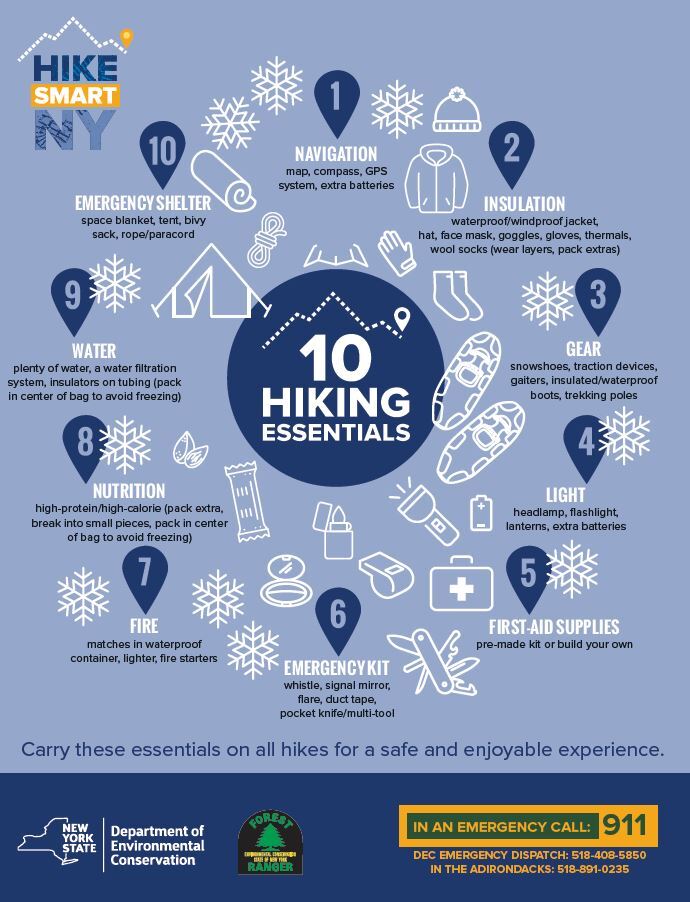
Whether you’re going for a snowshoe, ski, or out on the ice, Hike Smart NY can help you prepare with a list of 10 essentials, guidance on what to wear, and tips for planning your trip with safety and sustainability in mind.
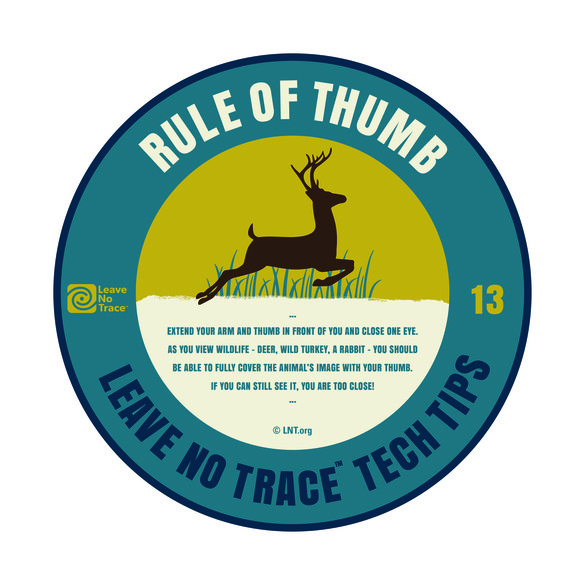
If you do happen to spot a cute-yet-powerful skunk, your instincts are probably smart to get out of its line of sight before risking being sprayed. But with other animals that you may WANT to stop and observe for a while – like deer, turkey, or rabbits – just remember the following rule of thumb. It’s as simple as this:
-
Extend your arm out in front of you.
- Give the animal a thumbs up.
- Close one eye.
If you can fully cover the sight of the animal with your thumb, you are at an appropriate distance. If you can still see the animal around your thumb, you are too close!
Maintaining a respectful distance when viewing wildlife is crucial to their well-being. Getting too close can cause them stress and make them flee, interrupting their natural behavior as they go about their day, or even provoke them to attack depending on the species.
Admiring the unique wildlife is one of the best parts of spending time in the Adirondacks; just admire from a distance.
Follow the Seven Principles of Leave No TraceTM to maintain minimal impact on the environment and the natural resources of the Adirondacks.
|