|
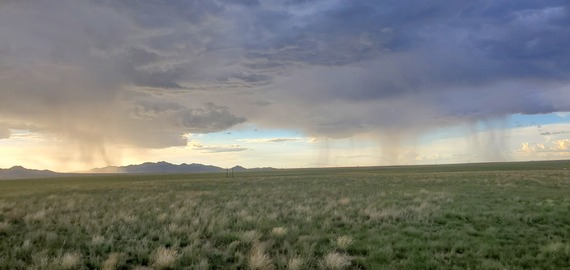
Light evening monsoon, southern Santa Fe County. Photo courtesy of Kyle Russell
Respect the Storm: Ready. Set. Monsoon.
Santa Fe County Emergency Management joins the National Weather Service in Albuquerque and weather partners across the Southwest in recognizing Monsoon Awareness Week, June 7–13. This annual campaign promotes preparedness and safety as New Mexico enters the summer monsoon season.
While monsoon rains provide much-needed moisture to our landscapes, they can also create dangerous conditions including flash flooding, lightning, strong winds, debris flows, and hazardous road conditions and in some instances, funnel clouds and tornados. Residents are encouraged to prepare now and remain weather aware throughout the season.
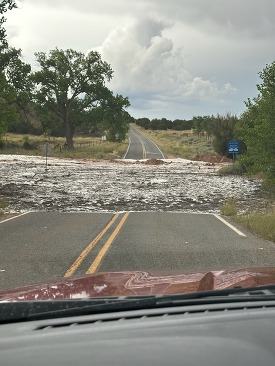
Flooded low water crossing on CR-42 in Galisteo. Photo courtesy of Heather Morrow.
Flash floods can develop rapidly with little warning. Even areas that have not received rainfall can flood as water flows downstream from distant storms. The National Weather Service reports that most flash flood fatalities occur in vehicles, making roadway safety a critical concern.
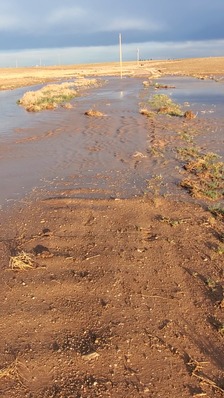
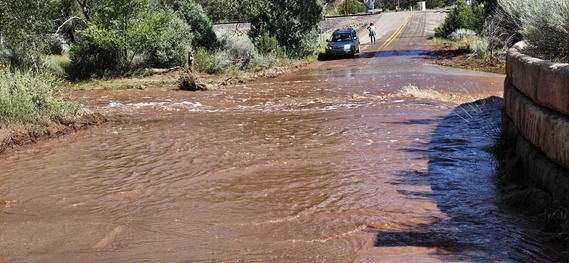 CR-51 flowing and flooded low water crossing between Canoncito and Lamy. Photo courtesy of Kyle Russell.
Notice the lack of rainfall and abundant sunshine.
Remember: Turn Around, Don't Drown®
- Never drive through flooded roadways.
- Never drive around barricades or road closure signs.
- Water may be deeper than it appears, and roads can be washed out beneath the surface.
- Just 12 to 24 inches of moving water can carry away most vehicles, including SUVs and trucks.
- Be especially cautious at night when flood hazards are difficult to see.
Funnel cloud about to touch down, between State Road 41 and Hwy 285 in Santa Fe County. Photo courtesy of Kyle Russell.
Washed out private road, Santa Fe County. Photo courtesy of Kyle Russell.
Residents who live on private roads are encouraged to take proactive measures before monsoon season intensifies:
Road Maintenance
- Inspect culverts, drainage ditches, and low-water crossings.
- Remove debris, brush, and sediment that could block water flow.
- Repair erosion damage and washouts promptly.
- Ensure drainage structures are functioning properly before storms arrive.
Travel Safety
- Monitor weather forecasts before traveling.
- Have an alternate route identified if your road becomes impassable.
- Avoid unnecessary travel during heavy rain events.
- Inform family members of your travel plans when severe weather is expected.
Preparedness
- Maintain emergency supplies, including food, water, medications, flashlights, and batteries.
- Keep cell phones charged and have backup power sources available.
- Sign up for local emergency alerts through Alert Santa Fe.
- Stock up on sandbags.
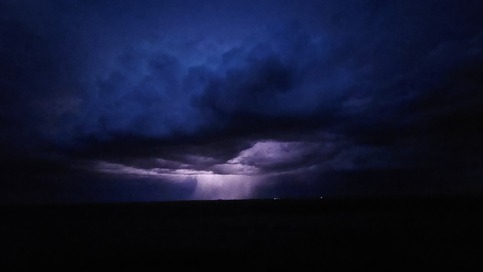
Cloud burst with lightning southeast Santa Fe County. Photo courtesy of Kyle Russell.
Thunderstorms can produce dangerous cloud-to-ground lightning strikes miles away from the storm itself.
When Thunder Roars, Go Indoors
- Move immediately to a substantial building or enclosed vehicle.
- Avoid open fields, ridgelines, trees, and metal objects.
- Stay away from arroyos, drainage channels, and exposed recreation areas during thunderstorms.
Before and during storms:
- Monitor forecasts from the National Weather Service.
- Enable Wireless Emergency Alerts on your mobile device by subscribing to Alert Santa Fe.
- Have multiple ways to receive warnings, especially overnight to include a weather radio.
- Pay close attention to Flash Flood Watches and Flash Flood Warnings.
Know the Difference
Flash Flood Watch
- Conditions are favorable for flash flooding.
- Be prepared to take action and move to higher ground if necessary.
Flash Flood Warning
- Flash flooding is occurring or imminent.
- Move to higher ground immediately and stay away from flood waters.
The monsoon season brings welcome rain to New Mexico, but it also brings rapidly changing and potentially dangerous conditions. Preparation and awareness can save lives.
Stay informed. Stay prepared. Stay safe.
|