 Inagual Wildifre Mitigation & Prepardness Community Education Day
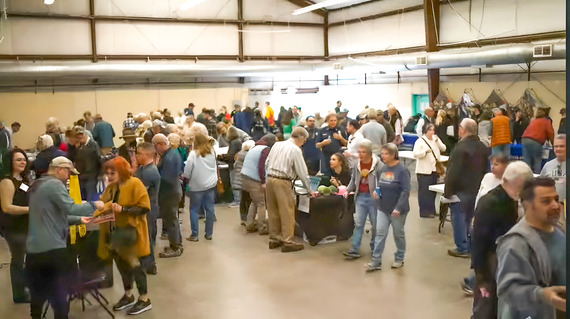
When we say, "knowledge is power," we cannot emphasize enough how important it is for residents to learn how to mitigate the effects of wildfire. Santa Fe County is here to help you do that by hosting events such as our Fire Mitigation Community Education Day, which was held on Saturday, March 29th, 2025.
Community members learned about defensible spaces, evacuation zones, and how to firescape their properties at the event. We are incredibly grateful to our local and state partners who joined us in providing resources to our residents.
Participants at the event included: NM Department of Homeland Security and Emergency Management, PNM, State Fire Marshal, City of Santa Fe, NM Office of the Superintendent of Insurance, Santa Fe Regional Emergency Communications Center, County departments, and elected officials. Through collaboration, we can better assist our residents in preparing and taking steps to safeguard their properties and families.
This quarter, the Office of Emergency Management will focus on wildfire education and mitigation.
With the California fires still fresh in people's minds, along with the Hermit's Peak and Calf Canyon, it's realistic that a tragedy like the Palisades fire could happen here. With the high wind warnings, public safety power shutoffs that PNM has initiated, and climate change, it has become a hot issue (pun intended).
We at OEM take an "all hazards" approach, combining our hazard analysis and risk assessments to devise a plan. What works for fire preparedness, also works for floods, or earthquakes. We will choose the highest risk, highest impact option and work our way down the list to low hazard, low impact.
Number 1 on Santa Fe County's hazard list is, drumroll, please, Wildfires, especially in the WUI (Pron. woo-eee) zones also known as the Wildland Urban Interface.
With the completion of our Wildfire Mitigation Community Education Day, we want to continue that broad mitigation message.
For New Mexico, disasters are mostly unpredictable events that can turn our lives upside down. Unlike Florida, for example, which can see the hurricane coming with ample warning. We here in New Mexico can't always predict a disaster, but we can prepare, plan, and mitigate against it. This makes our community more resilient, making it easier to dust ourselves off and move forward when it does happen.
There are actions YOU can take as a community member to help prepare, mitigate, and plan for disasters. These actions can make you and your family more resilient and help lessen the strain on emergency resources when disaster strikes.
First and foremost, make a plan in the event of an emergency and ensure your entire household and even your neighbors, are aware of it.
We subscribe to the "Ready, Set, Go!" a personal wildfire action plan.
If you want additional details, the full "Ready, Set, Go!" Manual can be found HERE!
Inside, you'll find checklists, and to-do lists for those living in the wildland-urban interface, for ranchers, rural residents, and how to create defensible space. Get ready, be prepared, and act early!
Make your plan, teach it to your family, and finally, practice!
Next, prepare. Simply put, a good place to start is a "bug out bag" or a "72-hour kit", as prescribed by FEMA. Tips, ideas, and items to have in your bag, and other advice can be found at FEMA's ready.gov.
It's not a question of IF, but WHEN the next major disaster will occur.
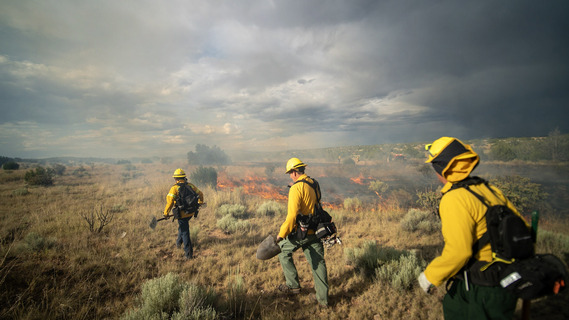
Pre-disaster tips.
Create a family disaster plan that includes evacuations (don't forget animals and pets) meeting locations, and communication plans. After you plan is in place, rehearse it regularly.
Have fire extinguishers on hand and teach your family to use them.
Ensure your household knows where your gas, electric and water main shut-off controls are and how to use them. If you're unsure, contact your local utility company for more information.
Plan and practice several different evacuation routes. If you use the same road to go home every day, try taking different roads to get used to them as practice. Look at a map of your area and surrounding areas—pre-program GPS Devices with those routes.
Designate an emergency meeting location outside of the hazard area.
Assemble an emergency supply kit and keep an extra kit in your vehicle. This can be as small or as big as you want to carry the essentials from food to first aid.
Appoint an out-of-town friend or relative as a point of contact so you can communicate with family members. Update them as the disaster progresses and your location if you lose communications.
Maintain a list of emergency contact numbers. Try to have it in an analog format or even better, memorize important numbers.
These are just a few tips you can use to help you prepare for a disaster.
We highly recommend that you review the American Red Cross disaster kit below and FEMA's 72-hour kit guidelines to assist you in making your kits.
Plan for Disasters | Ready.gov
Build a kit
Make a plan
Survival kit or bug-out bag
|