Welcome to the Winter Quarter
We hope you had a joyous holiday season, and we hope you share in our enthusiasm for the year ahead! We spent the past year laying groundwork to increase our connection, visibility, and impact in Somerset County. In 2025, we will offer more educational opportunities in multiple formats, continue to learn the needs of our diverse stakeholders, and both strengthen and expand our partnerships across the county. We wish you a wonderful year ahead and hope you will feel excited and well-supported by our offerings in 2025.
|
 Two-part Winter Sowing Workshop
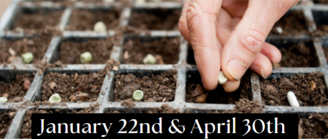
The Rutgers Master Gardeners of Somerset County will present a two-part Native Plant Propagation Workshop. Learn about the importance of native plants and how easy it is to grow plants from seeds and incorporate them in the home landscape.
The first session on January 22nd includes a presentation on native plants and a hands-on seed-sowing activity.
Please note at this time in-person attendance is at capacity, we do encourage you to register and join us virtually.
For more information and to register visit our website here.
|
Featured Plant
Written by Mousumi P., Somerset County Rutgers Master Gardener
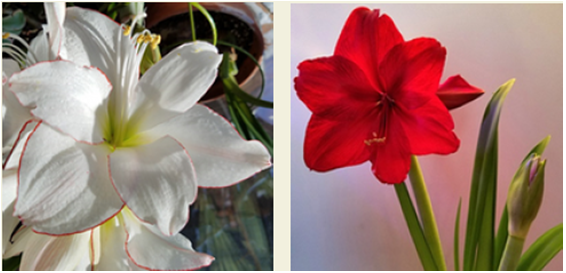
With its vibrant colors of reds, whites, and even pink sand peaches, Amaryllis (Hippeastrum) aptly comes from the Greek word amarysso meaning “to sparkle". Although Amaryllis are usually thought of as a winter or holiday flower, this commercially popular bulb is a hybrid originating in the warmer climates of Central land South America. A healthy Amaryllis can have many blooms over multiple growth cycles.
For tips on saving your Amaryllis bulbs for blooms year after year, click below for the full article on our Lawn and Garden News site.
Lawn and Garden News - Amaryllis

January 25th is National Seed Swap Day
National Seed Swap day serves as a reminder to gardeners that spring is on its way. It is also an ideal time for gardeners to gather and swap seeds in preparation for starting seeds indoors. The seed swap is a fundamental part of human history. Seeds were one of the first commodities valued and traded. Today, modern gardeners collect and exchange seeds for many reasons ranging from cultivating rare, heirloom varieties to basic thrift.
National Day Calendar
|
Winter Weeds
Karen D., Somerset County Rutgers Master Gardener
Just because winter is here, it does not mean you can’t putter around in the yard. While waiting for the warmer days of early spring to arrive, bundle up and head outdoors. Winter is the perfect time to weed! Yes, I said weed, and mitigate those pesky invasive plants and vines. If the ground is not frozen solid, you can make progress.
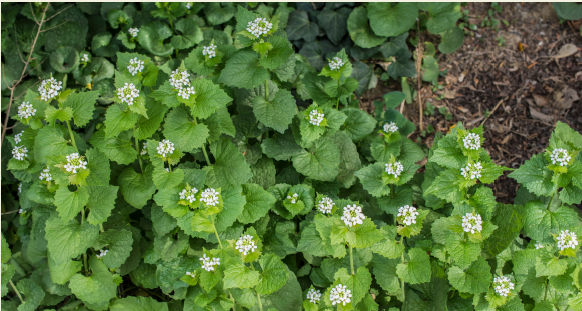
Weeds such as garlic mustard, Allaria petiolata; hairy bittercress, Cardamine sp.; chickweed, Cerastium fontanum; speedwell, Veronica spp. and even henbit, Lamium amplexicaule can remain green all winter long. These weeds are considered winter annuals which means they germinate in autumn or winter, live through the winter, then bloom in late winter or spring. Eradicating them now, before they flower and set seed, means fewer weeds in the lawn and garden beds come springtime. Digging or pulling the weeds is the best method in winter. The time to use a pre-emergent herbicide has passed. Chemical herbicides for established weeds need to be applied in early spring. Don your favorite pair of gloves, choose your tool and spend a little time weeding when the weather permits.
Also, be on the lookout for multiflora rose, Rosa multiflora; Japanese honeysuckle, Lonicera japonica; Japanese and Chinese wisteria, Wisteria japonica and W. chinesis; Oriental bittersweet, Celastrus orbiculatusand English ivy, Hedera helix. These invasive plants should also be removed if you come across them. Without foliage in winter- except for the ivy - it makes their removal easier.
Know Your Natives
Debbie C., Somerset County Rutgers Master Gardener
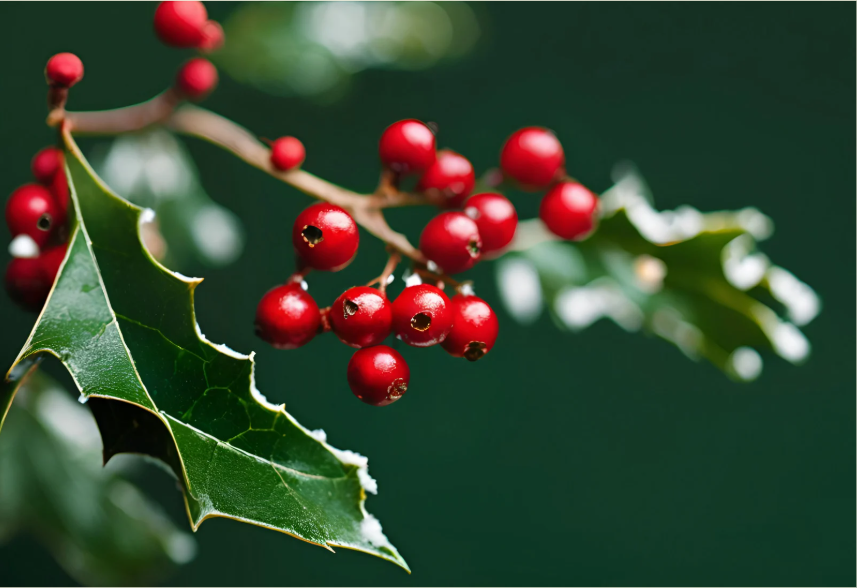
Who doesn’t cheer at the sight of the iconic red berries and evergreen branches of Holly during the December holidays? Over 480 species populate the genus Ilex yet the term “Holly” traditionally references English Holly (Ilex aquifolium), a Christmas decoration brought to the United States with colonists. The Latin Ilex means “evergreen oak” but some are deciduous and lose their leaves. All Ilex produce insignificant flowers and are dioecious. Male and female plants are required to produce drupes or stone fruits, not true berries. The drupes provide an important food source for birds, though they are toxic to humans. All Ilex prefer acidic soil. This versatile group includes four species native to New Jersey and Somerset County.
To read the full article, click here.

Research Update
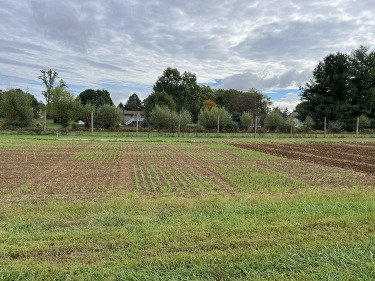
New Jersey has joined the list of six states participating in the 2024-25 Northeast Cover Crops Council joint experiment! The goal is to investigate the relationship between fall planting time and cereal nurse crops (oats or rye) on winter survival and spring nitrogen contribution of legume cover crops (hairy vetch, winter pea, crimson clover, balansa clover) across the region. Locally, the trial is being conducted at the Rutgers Snyder Research and Extension Farm in Pittstown, NJ by Kate Brown, ANR Agent with RCE-Somerset County. Replication of this experiment across states and years will yield greater insight into selection and management of legume cover crops. Stay tuned for more information coming this spring!
|

2025 New Jersey Agricultural Convention and Trade Show
The annual NJ Agricultural Convention and Trade Show, co-sponsored by the Vegetable Growers Association of New Jersey, Rutgers Cooperative Extension, and the New Jersey Department of Agriculture will take place at Harrah's Resort in Atlantic City, NJ from February 3-6, 2025.
A preliminary agenda is posted here for you to review and check out available NJDEP recertification credits. Note that some events need special sign-up so read the program carefully to see which events require pre-registration.
For more information please visit: https://vganj.com/convention-tickets.
|
 Bernards Township Library Pollinator Garden
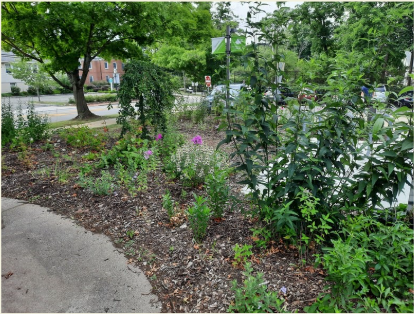
We’re thrilled to announce that Susan Kessel, a recent Rutgers Environmental Stewards Alumnus, completed her certification project this year.
Susan collaborated with the Bernards Township Environmental Commission to transition a poorly maintained area at the Bernards Township Library into a pollinator habitat. With the help of the Department of Public Works, 1,671 ft2 of grass, large shrubs, and debris were cleared, and replaced with new topsoil and mulch. Susan planted 268 native plants and trees in partnership with the Environmental Commission, using donations as well as $2300 in funding from the Friends of the Bernards Township Library and Township Shade Tree Commission.
Susan enlisted two volunteers to help with maintenance. She plans to continue adding plants and signage, and has noticed more birds, insects, and people enjoying the area since the garden’s installation. Pictures and information about the project can be found onthe library’s website.
For more information visit the Native Plant Garden | Bernards Township Library webiste here.
|