Recent Legislation
S349 passed in the Senate on June 29 and the Assembly on July 30. This bill would require developers to offer electric vehicle charging stations as an option in new home construction for developments with 25 or more homes. Prior to sale, a developer would need to disclose that an electric vehicle charging station can be installed in any unit. If the charging station is within a development where the homeowner’s association (HOA) would be responsible for the area where charging stations would be installed, the HOA would be responsible for maintenance costs.
A2152 came out of committee in July and received its second reading. It does not yet have a companion Senate Bill. This Bill would authorize the Department of Community Affairs (DCA), Department of Environmental Protection (DEP), Department of Transportation (DOT) and municipalities to give priority consideration to permit applications for green building projects. “Green building projects” are defined as those that documented incorporation of site, water, energy and resource efficiency measures and demonstrable practices to promote the health and well-being of the building occupants. The project would also need to be registered for at least one certification, such as Leadership in Energy and Environmental Design (LEED).
S232 was substituted for A2212 and passed both houses. This Bill would require DEP to evaluate environmental and public health stressors of certain facilities on overburdened communities when reviewing certain permit applications. It would require DEP to establish list of overburdened communities on its website and notify the municipalities. Permit applications for new facilities, facility expansions, or facility source permits within overburdened communities would need to include an environmental justice impact statement that assesses the potential environmental and public health stressors. DEP would deny a permit if it is found the project would cause/contribute to environmental/public health stressors.
S2542 passed in the Senate and was referred to the Assembly. This Bill would allow municipalities to suspend certain zoning requirements during the COVID- 19 emergency to facilitate the ability of a business to resume operation. Businesses would be able to submit an application to seek certain emergency temporary relief from their prior site plan approvals. Municipalities could issue temporary zoning permits.
S2607 passed in the Senate on Aug. 27. The companion Bill number is A2785. This Bill would require that the land use plan element of a municipal master plan include a climate change-related hazard vulnerability assessment. It would also require DEP to provide technical assistance to municipalities.
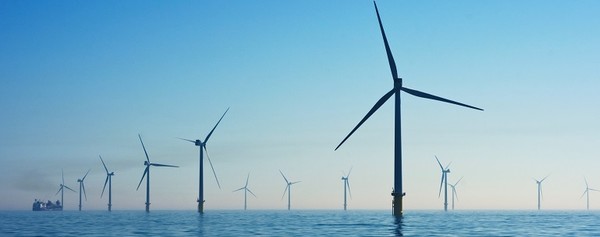 BPU Releases Draft Offshore Wind Strategic Plan
Offshore wind production is part of multiple state initiatives to address climate change and generate renewable energy. Executive Order No. 92 set a goal to generate 7,500 megawatts of offshore wind energy by 2035. The Board of Public Utilities (BPU) was directed to prepare an Offshore Wind Strategic Plan and released the Draft Plan in July. It discusses goals to ensure N.J. is fully equipped to address all aspects of offshore wind production. The Plan also addresses the complex needs of a future offshore wind industry by considering environmental and natural resource protection, commercial and recreational fisheries, supply chain and workforce development, ports and harbors, and wholesale energy markets and transmission. The BPU accepted comments until Aug. 27. Those comments can be seen here.
N.J. Scientific Report on Climate Change
On June 30, 2020 the DEP released the NJ Scientific Report on Climate Change. The Report guidance document with data and anticipated impacts from climate change. It is not intended to offer specific policy or mitigation recommendations, but rather to provide the best available data. The report discusses potential future low, moderate and high greenhouse gas (GHG) emission scenarios. It further provides data on anticipated climate change impacts to: temperature, precipitation, sea level rise, ocean acidification, air quality, water supply and quality, agriculture, forests, wetlands, terrestrial carbon sequestration, terrestrial systems, freshwater systems and marine systems, health and economics. The DEP plans to periodically update the report to ensure it holds the best available science.
The Statewide Climate Change Resilience Strategy & Coastal Resilience Plan is due this autumn. This follow-up report should offer policy and action recommendations. In the spring DEP, held a stakeholder survey after a webinar focused on the Climate Change Report and other climate efforts. View the survey results.
Sustainable Jersey Announces Energy Outreach Campaign Support
Sustainable Jersey Commercial and Residential Energy Efficiency Outreach actions are designed to coordinate New Jersey’s Clean Energy Program incentives for residents through the Home Performance with ENERGY STAR program and for businesses through Direct Install. Sustainable Jersey recently introduced its energy efficiency outreach toolkits that contain ‘plug and play’ outreach material, such as template letters, press releases, social media posts and best practices for successful outreach campaigns. They are offering two toolkits: Residential Energy Efficiency Outreach and Commercial Energy Efficiency Outreach.
About This Newsletter
The purpose of the newsletter is to inform Monmouth County citizens on the health of their environment and list environmental outreach events in their community. The newsletter is produced by the Monmouth County Division of Planning Section of Environmental & Sustainability Planning in coordination with the Monmouth County Environmental Council. The County of Monmouth and the Board of Chosen Freeholders do not necessarily share the viewpoints of any environmental group mentioned in this newsletter.
If you have questions, comments, or wish to have an event listed in the newsletter, please contact: Amber.Mallm@co.monmouth.nj.us
|