The Year in Review: Reflecting on 2024 with the Office of Environmental Justice
As the year comes to a close, the Office of Environmental Justice wants to share some of 2024's highlights.
Environmental Justice Community Engagement Sessions
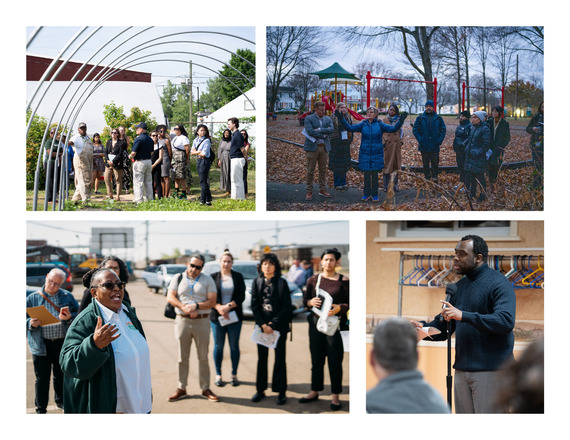 Over the last three years Commissioner LaTourette, staff from across the Department of Environmental Protection and partners at Region 2 of the Environmental Protection Agency have participated in an Environmental Justice tour to meet with overburdened communities in every region of the state. Since returning to in-person meetings in late 2021, we have visited 18 counties and convened more than 1,000 residents.
In each county, local leaders joined us on a tour that highlighted projects, challenges and environmental justice issues in their communities. This was followed by a community engagement session where we listened to concerns, provided resources, and connected with residents, community-based organizations, and local governments.
These engagement sessions have allowed us to learn more deeply about local issues, receive feedback on DEP’s work, and build invaluable relationships.
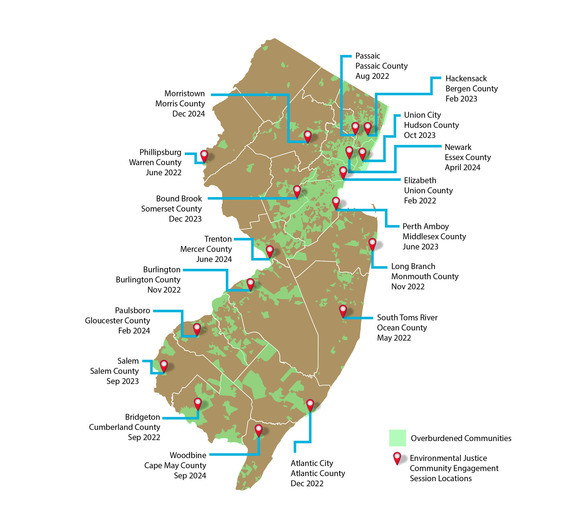
In 2024, we hosted Community Engagement Sessions in 5 counties. Keep reading to learn what we heard!
In February in Paulsboro, Gloucester County, we learned about the local issues of PFAS contamination and residents called for better recycling systems, flood control, and public communication.
During the Essex County Session in Newark in April, we heard public health concerns related to extensive air pollution and lead contamination in drinking water. Advocates stressed the importance of community air monitoring initiatives to measure ambient air quality and supplement state data. They urged DEP to support their efforts to hold bad actors accountable through stricter regulation and increased efficiency in responding to resident reporting and odor complaints.
At the June Mercer County meeting in Trenton, key discussions included the need for improved bike and pedestrian infrastructure in Trenton, the importance of enhancing tree maintenance, and high lead contamination levels in parks.
In September, community members came together in Woodbine, Cape May County. The session focused on Woodbine’s ongoing efforts to identify, remediate, and repurpose brownfields, funding to support water infrastructure upgrades, and the impacts of the state’s proposed coastal flood protections.
In the December Morris County session in Morristown, residents shared concerns about the impact of chronic flooding and outdated stormwater infrastructure in overburdened communities and expressed challenges accessing funding for watershed management and outdoor recreation.
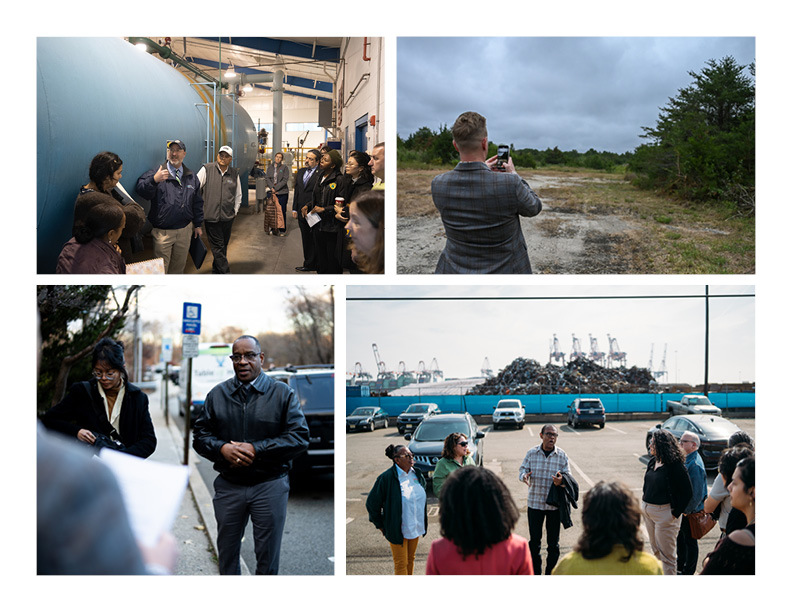
Read summaries of each community engagement session on the OEJ website.
Thank you for joining us in 2024, and we look forward to meeting with residents from across the state in the new year.
"Navigating the DEP System": Environmental Justice Seminar Series
In order to increase understanding of DEP programing and processes, the Office of Environmental Justice worked with the Environmental Education and Communication Working Group within DEP's Environmental Justice Advisory Council (EJAC) to create and launch the Navigating the DEP System Seminar Series. Seminar curriculum was developed by DEP staff from across with agency with the collaboration of members of the EJAC.
The seminar series provided opportunities for advocates to learn about DEP’s tools and rules, connect with like-minded organizers, discover key funding sources and acquire the skills and resources needed to create successful applications, and understand environmental decision-making processes to enhance their ability to make change in their own communities.
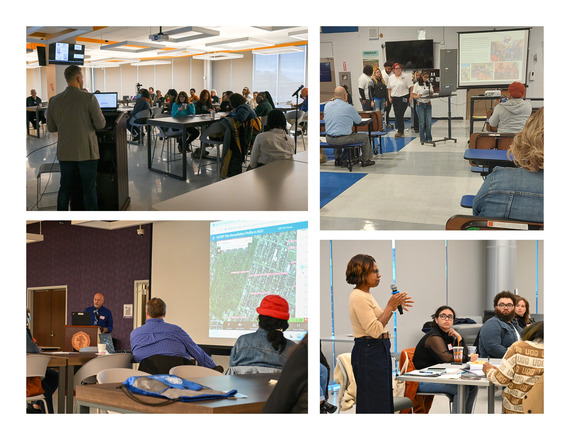
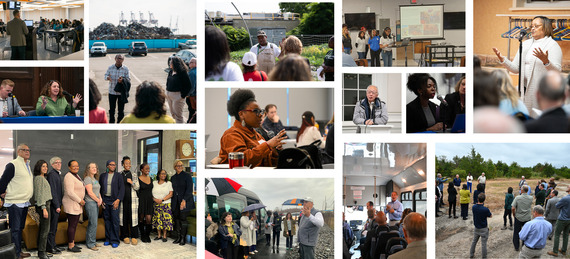
In total, OEJ hosted 6 seminar sessions in 2024:
The Navigating the DEP Seminar Series kicked off in Newark in January, presenting a number of DEP's online tools made to support environmental planning and monitoring. Attendees learned how to access environmental and public health data through the Healthy Community Planning tool, retrieve enforcement reports through Dataminer, and track local sources of air pollution with the ‘What’s in My Community?’ mapping tool.
In March, we convened in Trenton to discuss DEP’s permitting and regulatory processes. Attendees learned about the Environmental Justice Rule and Administrative Order 25. This included an overview of Environmental Justice Impact Statements, meaningful public engagement requirements, and how to use EJMAP.
Later that month, in partnership with the New Jersey Environmental Justice Alliance, we hosted a Seminar entitled Funding Our Futures – Navigating State and Federal Grants for Environmental Justice Communities. funding opportunities for community initiatives and included a panel discussion on key strategies for acquiring and managing grants at the organizational level.
In April, we traveled to Camden and continued conversations about permitting, detailing specific processes related to Drinking Water, Watershed and Land Use, & Air regulation.
Finally, we concluded in October with parts two and three of the online webinar on State Funding. Part two discussed sources of state funding available to New Jersey’s overburdened communities for environmental projects, strategies for successful applications, and technical assistance available for applicants. The third and final session explored more specific funding opportunities for water infrastructure, parks and open spaces, clean air, clean energy, and climate mitigation projects.
In 2025, we plan to continue this series. What topics would you like to see covered? Please share your ideas and feedback in the survey below.
Environmental Justice Advisory Council
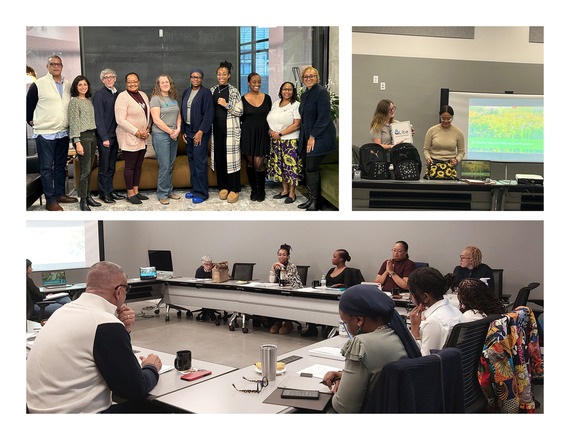
In 2024, the Environmental Justice Advisory Council welcomed three new members: X Braithwaite for the Statewide Environmental Justice or Environmental Advocacy Organization sector, Timi Lindsay for the Local Grassroots sector, and Nicole Brown for the Business and Industry sector.
In 2024, EJAC worked on various projects within its Air, Water, Land, and Environmental Education and Communications Working Groups. At the annual retreat on December 11th, EJAC members convened in Elizabeth to reflect on the past year and finalize the workplan for 2025, which will be available soon. Take a look at the 2024 workplan and read more about what the Council has been up to this year!
Water Working Group
The Water Working Group reviewed three final Long Term Control Plans to evaluate the green infrastructure plan initiatives and the public participation components.
They also reviewed and gave comments to the draft state legislative bill to establish a “Household Water Assistance Program” through the NJ Department of Community Affairs (DCA) to act as a replacement for the Low-Income Household Water Assistance Program (LIHWAP).
Lastly, they worked with the DEP's Water Supply and Geoscience Division to provide feedback on the new Water Supply Plan website.
Air Working Group
The Air Working Group developed a concept to increase community air quality awareness by obtaining funding for New Jersey’s eight transportation management associations (TMAs) to be able to conduct hyper local air monitoring projects.
Land Working Group
The Land WG compiled a list of recommendations in a letter to DEP’s Office of Brownfield & Community Revitalization (OBCR) within the Contaminated Site Remediation and Redevelopment (CSRR) program. These recommendations included various initiatives to facilitate the brownfield revitalization process through the Brownfield Development Area Steering Committee selection process, suggestions for website updates and resources. In return, OBCR provided a response letter with some action items for 2025.
Environmental Education and Communications Working Group
The Environmental Education and Communications Working Group advised closely on outreach and educational projects such as the Navigating the DEP System Environmental Education Seminars, and the Meaningful Public Participation Guidance.
Environmental Justice Directory
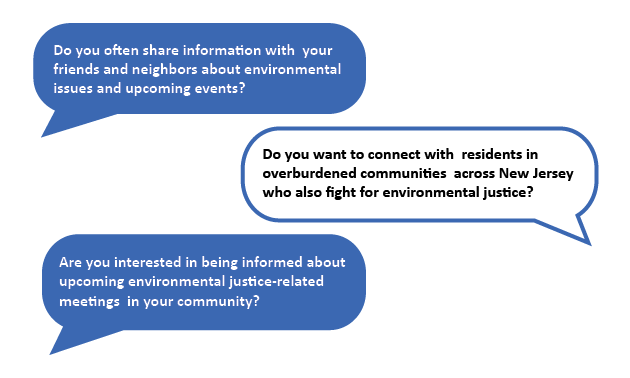 The Environmental Justice Directory (EJ Directory) launched this summer as a new tool designed to amplify voices within overburdened communities (OBCs) in New Jersey. With 70 members and counting, the EJ Directory is connecting advocates, residents, and community organizations with opportunities to make a tangible impact on environmental decisions statewide.
Justice 40 Policy
The Office of Environmental Justice issued a department-wide policy to prioritize federal investments for overburdened communities. The policy complies with (but goes above and beyond) the federal Justice40 initiative (Executive Order 14008) to ensure 40% of specific sources of DEP’s federal monies are allocated to the overlap of federally defined disadvantaged communities (DACs) and state defined adversely impacted overburdened communities (AIOBCs) with an additional 10% of monies being allocated to AIOBCs excluded from the 40% allocation.
Meaningful Public Participation Guidance
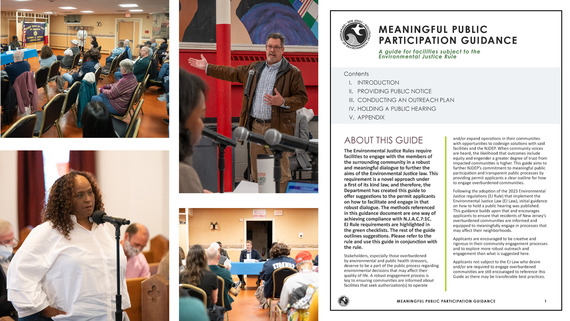
It gives an overview of required steps and recommendations to create robust dialogues with communities, including providing notice of a facility’s project and opportunities for the public to engage, conducting outreach in impacted communities and holding a public meeting for community insights.
While the guidance is primarily intended for permit applicants, it offers planning and outreach methods that can be useful to DEP staff in various public engagement efforts.
-
Strategies to identify relevant stakeholders, like community-based organizations, local anchor institutions, and municipal green teams and environmental commissions
-
Steps to determine the most effective communication channels to reach impacted communities
-
Key accessibility considerations, like language access
OEJ is Now on Instagram!
Follow us at on Instagram to learn more about environmental justice in New Jersey, stay up to date on OEJ events, and learn more about DEP resources and funding opportunities for 2025.
Get Automatic Notifications by County on Environmental Justice Rule Applications!
Did you know that you can sign-up to receive updates on facilities subject to the Environmental Justice Law?
In 2023, EJ Law automatic notifications by county were launched. This allows anyone to sign up to receive an email notification every time there is an update to an EJ Rule or Administrative Order 2021-25 permit application in their counties of choice. This includes a public notice, environmental justice impact statement, meeting recording, or decision being posted.
In 2024, the Office of Environmental Justice began working with a consultant to improve this notification system to allow users to customize their notifications with options like following a specific facility, receiving text updates, and direct links to documents. This upgrade will make information even more accessible.
Stay tuned for an updated process in 2025.
|
All New Jersey residents, regardless of income, race, ethnicity, color, or national origin, have a right to live, work, and recreate in a clean and healthy environment. Historically, New Jersey’s low-income communities and communities of color face a disproportionately high number of environmental and public health stressors and, as a result, suffer from increased adverse health effects. New Jersey seeks to correct these outcomes by furthering the promise of environmental justice.
DEP’s Office of Environmental Justice (OEJ) aims to improve the quality of life in New Jersey’s most vulnerable communities by educating and empowering communities who are often outside of government decision-making processes and guiding DEP’s programs and other state departments and agencies in implementing environmental justice.
|
|