2023 End of Year Summary
As we near the end of 2023, OEJ is excited to share a few of this year’s highlights.
The Environmental Justice Rules that implement NJ’s landmark 2020 EJ Law were adopted on April 17, 2023. The law and rules integrate equity into how polluting facilities are regulated.
Environmental Justice Community Engagement Sessions
DEP, in partnership with EPA, held five Environmental Justice Community Engagement sessions this year where we directly engaged over 300 residents of overburdened communities from Bergen, Middlesex, Salem, Hudson and Somerset Counties. We listened to concerns, provided resources, and developed relationships with residents, community-based organizations and local governments.
In February in Bergen County, we met with a Hackensack community advocate to understand first-hand flooding experiences in her neighborhood. This interaction provided invaluable context to the continued issues surrounding combined sewer systems.
Middlesex County residents came together in June in Perth Amboy to make their voices heard about flooding, housing issues, and a proposed nearby energy center.
In September, we heard from Salem County residents about their interests in learning about involvement in environmental justice advocacy and beach access and PFAS issues.
In October, residents came together in Union City for the Hudson County engagement session. There, we connected with advocates who called for clearer messaging on lead contamination in the water and expressed concerns about lack of complete street infrastructure
During the Somerset County session in Bound Brook, residents spoke about flooding concerns, funding for improving tree canopies, and odors from a nearby fragrance facility.
With the five sessions in 2023, NJDEP has toured and convened overburdened communities in 13 counties since returning to in-person meetings in 2021. DEP plans to convene at least five more sessions in 2024. Stay tuned for announcements on dates and locations.
DEP was selected for EPA's EJ Government to Government Grant Program for $1M to investigate extreme heat and urban heat island effects in NJ OBCs. Through this grant, DEP will be partnering with several community organizations to collect hyper local environmental data and conduct vulnerability assessments leading to recommendations for OBCs.
In the spring, the Environmental Justice Advisory Council welcomed 5 new members. In December, the council held its first annual retreat at the Cohanzik Nature Reserve in Bridgeton, NJ hosted by EJAC member Tyrese Gould Jacinto of the Native American Advancement Corporation. There, members met to finalize their and learn about the local lands of the Nanticoke Lenni-Lenape Tribal Nation.
Lastly, the Office of Environmental Justice is growing! Four new staff members joined the Office of Environmental Justice in 2023 enabling the office to better serve overburdened communities across the state and achieve its EJ goals.
Announcements
Murphy Administration Announces Tools to Protect New Jerseyans from Increasing Flood Risks Brought by Climate Change
To address New Jersey’s increasing flood risks under climate change, Governor Murphy has unveiled new and enhanced tools and technologies designed to provide prospective homebuyers and renters with critical information needed to make better informed decisions on where they choose to live and how best to protect their property from flood damage. The measures include the publication of new and enhanced property disclosure forms notifying prospective buyers and tenants of a property’s known flood history and potential flood risks, as well as the launch of a user-friendly internet look-up tool searchable by mailing address that identifies properties in flood hazard areas. Learn more and read the full press release online.
Murphy Administration Invests Nearly $13 million Toward a Zero Transportation Emissions Future
Governor Murphy's nearly $13 million investment, funded by New Jersey's participation in RGGI, aims to protect residents, the environment, and the economy from climate change. The initiative involves using auction proceeds to increase electric trucks and buses in communities burdened by air pollution. The program, part of the state's efforts to electrify transportation, supports goals to phase out fossil-fueled vehicles and prioritize clean mobility options, highlighted by the release of the second RGGI Strategic Funding Plan.
Biden-Harris Administration Allocates $600M for Environmental Justice Projects Nationwide
The Biden-Harris Administration allocated $600 million to 11 Grantmakers under the EPA's Environmental Justice Thriving Communities Grantmaking program, as part of the Investing in America agenda. This policy aims to simplify access to federal environmental justice funding for small community-based organizations. The grants will support various environmental projects, including local cleanups, disaster resilience programs, and initiatives addressing pollution, benefitting disadvantaged communities across the nation.
Governor's Environmental Excellence Award - Environmental Justice Category Winner
The Governor’s Environmental Excellence Awards are awarded annually to individuals and organizations that demonstrate commitment and leadership on a variety of environmental issues, including environmental justice, climate change, sustainability and education. The winner of the Environmental Justice category is Dr. Nicky Sheats, the Director of the Center for the Urban Environment at Kean University's John S. Watson Institute for Urban Policy and Research. Read more about Dr. Sheats and see the list of other winners of the 2023 Governor's Environmental Excellence Award.
Participation Opportunities
Upcoming Environmental Justice Law Public Hearings
February 5 - Kearny Generating Station, AO25 - Title V Renewal (virtual)
Facilities subject to the Environmental Justice Law must facilitate meaningful opportunities for overburdened communities to engage in permitting decisions for pollution-generating facilities through an enhanced public participation process. Subscribe to EJ Law notices by County
Webinar: Draft Policy for Public Participation
in Agency Decision-Making Processes
EPA announced a draft policy, "Achieving Health and Environmental Protection Through EPA’s Meaningful Involvement," detailing enhanced public engagement across its programs and regions, recognizing that involving individuals with lived experiences strengthens health and environmental protections. The draft policy is available until January 16, 2024.
Two upcoming webinars will provide an overview of the policy and allow the public to ask questions:
Tribes may request policy consultation by January 5, 2024, through EPA's Tribal Consultation Tracking Opportunities System (TCOTS) website.
Open House: Wharton State Forest Visitor Vehicle Use Map
The New Jersey Department of Environmental Protection will host an open house and public comment session on the draft Wharton State Forest Visitor Vehicle Use Map on Wednesday, Jan. 24, from noon to 7 p.m. at the Batsto Visitor Center. The open house will allow stakeholders to view, ask questions and comment on the draft map, along with several other maps that aided in the development of the map. DEP staff will be on hand to answer questions and participants will have the opportunity to leave written comments at each map location. Learn more and submit public comments on the map online.
NJDEP Grants and Loans Needs Survey
Help us help you! Please take the NJDEP's survey to share your environmental needs and challenges as a local government or nonprofit organization. Your responses will help the NJDEP better assist you through grants, loans, and other opportunities.
- If you represent or work for a county or municipality, please take this survey.
- If you work for a nonprofit organization, please take this survey.
Questions can be sent to unitingfinancialresources@dep.nj.gov.
Funding and Technical Assistance Opportunities
In case you missed it, see below for opportunities that provide funding and assistance for projects related to green infrastructure, climate change, healthy communities, and more.
EPA Community Change Grants Program
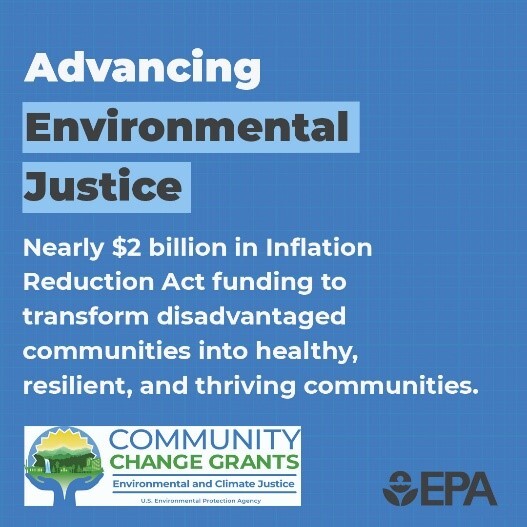
The EPA Environmental and Climate Justice Program (ECJP) Community Change Grants program is NOW OPEN! The program is funding projects to address environmental and climate injustices for communities facing legacy pollution, climate change, and persistent disinvestment. Technical assistance on your application will also be available. In total, $2 Billion will be rewarded with $50 million reserved for U.S. territories.
Who can apply?
- A partnership between at least two community-based organizations.
- A partnership between a community-based organization and one or any of the following: Federally recognized tribes, Local governments, Higher education institutions
Applications are open now and will be accepted on a rolling basis until November 21, 2024.
An informational video is available online.
Small Communities, Big Challenges:
Rural Environmental Public Health Needs Prize Competition
To gain a better understanding of environmental and public health challenges facing rural communities, EPA is launching the “Small Communities, Big Challenges” Competition. The goal of this Competition is for local governments to identify innovative and effective ways to holistically engage rural communities around environmental health issues and to identify any associated barriers to better protecting human health.
EPA will use the solutions from this Competition to learn of unique or innovative strategies for engaging with rural communities and of the environmental public health issues that rural communities are faced with.
Up to 10 selected winners will each receive $25,000. Five individual Challenge winners will be given a 1-year National Environmental Health Association (NEHA) membership. Apply by midnight on January 31.
National Park Service Outdoor Recreation Legacy Partnership Program Grants
NPS announced that it will distribute over $224 million to communities through Round 7 of the Outdoor Recreation Legacy Partnership (ORLP) grant program. ORLP funds the acquisition or development of new parks, or substantial renovation of parks, in economically disadvantaged municipalities of at least 30,000 people.
Applications must be submitted through DEP’s Green Acres Program. To determine eligibility and to advance the most competitive projects, Green Acres requires applicants to submit a project proposal by January 5, 2024.
2024 Green Acres and Urban Parks Funding
Green Acres and Urban Parks 2024 round of grants and loans to local governments and nonprofits is now open. Funds can be used to establish, expand, or revitalize new and existing parks, acquire land, improve waterfront access, develop athletic fields and playgrounds, create open space, and enhance land stewardship. These grants aim to incentivize projects in Overburdened Communities within Urban Aid municipalities.
Upcoming virtual application information sessions will be held on December 13 and January 17. More information about the applications are available online.
2023 Clean School Bus Rebate Program
EPA has announced their 2023 Clean School Bus Rebate Program providing $500 million in funding for electric school buses. EPA is prioritizing applications that will replace buses serving high-need local education agencies, rural areas, Tribal school districts funded by the Bureau of Indian Affairs and public school districts receiving basic support payments for students living on Tribal land.
The EPA has designated 54 New Jersey school districts as priority. An additional 145 school districts are eligible to self-certify as priority. Eligible applicants can apply to receive funding for the purchase of up to 25 zero-emission (ZE) and/or clean school buses, along with ZE charging infrastructure and eligible workforce development costs.
More information is available online. Applications are due on January 31 at 4 PM.
Request Assistance through the Training and Technical Assistance Program for Rural, Small, and Tribal Wastewater Systems
The Clean Water Rural, Small, and Tribal Technical Assistance (RST TA) Grant Program aims to provide technical assistance and training to improve rural, small and tribal wastewater system operations and management practices, making them more sustainable and resilient, and supporting EPA’s mission to protect public health and the environment. The program also aims to provide technical assistance in planning, developing and accessing finance and funding for clean water projects under the Clean Water State Revolving Fund (CWSRF), including Infrastructure Investment and Jobs Act funds.
Communities may request technical assistance support through the EPA’s Water Technical Assistance (WaterTA) Request Form. More information about the RST TA is available online.
Intern with the Office of Environmental Justice!
OEJ is looking to hire two spring interns who will work closely with the team in Trenton. Read more below and apply by January 2!
DEP OEJ Environmental Justice Design Intern
The Office of Environmental Justice (OEJ) is seeking an Environmental Justice Design Intern who will work to 1. Improve DEP’s public engagement tools, and 2. Better inform communities of how the NJDEP operates. The intern will create a series of pamphlets, fact sheets, charts, and timelines to better highlight and educate residents of New Jersey’s overburdened communities on DEP’s various programs, how they can become involved, and how their input is used to inform the agency’s work. Strong graphic design, artistic, research and writing skills required. Apply by January 2.
DEP OEJ Environmental Justice Policy Intern
The Office of Environmental Justice (OEJ) is seeking an Environmental Justice Policy Intern. OEJ has multiple initiatives to integrate environmental justice principles into the DEP’s operations, and the intern will assist in OEJ's integration efforts through projects that include topics such as Trends in Environmental Justice and Civil Rights, and Environmental Justice through Enforcement. Prospective applicants must have strong research and technical writing skills, and collaborate well with others. Apply by January 2.
|
All New Jersey residents, regardless of income, race, ethnicity, color, or national origin, have a right to live, work, and recreate in a clean and healthy environment. Historically, New Jersey’s low-income communities and communities of color face a disproportionately high number of environmental and public health stressors and, as a result, suffer from increased adverse health effects. New Jersey seeks to correct these outcomes by furthering the promise of environmental justice.
DEP’s Office of Environmental Justice (OEJ) aims to improve the quality of life in New Jersey’s most vulnerable communities by educating and empowering communities who are often outside of government decision-making processes and guiding DEP’s programs and other state departments and agencies in implementing environmental justice.
|
|