|
 Volume 104 ∙ Issue 2 ∙ February 13, 2025
The Answer to the Ultimate Questions
Submitted by Monica Struck
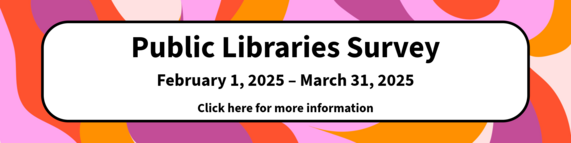
When it comes to big, overarching questions on the Public Libraries Survey, I have heard two:
- Why do we use this particular timing (February 1-March 31)?
- Why do we even have to do this?
The answer to both of these can actually be found in Century Code.
Disclaimer: I am not a lawyer. This is my best faith interpretation based on my understanding of the law as written.
NDCC §54-24.2-06 is part of the section that covers State Aid to Public Libraries, and it does two things. First, it outlines what the money can be used for (anything except land acquisition, construction, or investment). Second, it requires libraries receiving funds to provide the State Library with a report on how these funds have been expended no later than 90 days after the close of the year. The Public Libraries Survey serves to fill this requirement.
The first thing we will note is the timing. Ninety days (or roughly three months) is the length of time libraries have to submit the report. Since we are reporting based on the calendar year, this gives from January to March to complete the report. Because we want to give libraries time to organize their data after the close of the year, it was decided (for better or worse) to open the Public Libraries Survey in February and close in March.
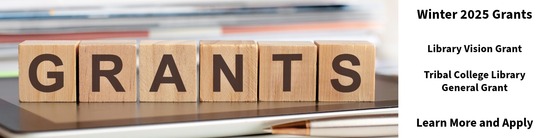
Now for the overall “Why?” It was already noted that the Public Libraries Survey is serving as the required report for State Aid to Public Libraries, but reasons for completing the survey extend beyond Century Code. We also use responses to the survey to see where libraries fall in the Standards for Public Libraries. Public Libraries must attain the Developing Level Standards to be eligible for Library Vision Grants. If libraries do not complete the Public Libraries Survey, we are unable to determine where they fall on the Standards, rendering them ineligible for Library Vision Grants for the entire upcoming fiscal year (July 1-June 30).
Outside of monetary considerations, this data is used at a national, state, and local level to illustrate the benefits of library service. In short, your numbers help libraries. I appreciate all of the work you put in gathering this data. As you continue to plow through the Public Libraries Survey, remember that you are not alone. I am happy to help with any questions that you have.
|
|
Legislative Update
Submitted by Dani Kappel
Here are the updates of the bills that may have an impact on libraries throughout North Dakota as of February 13, 2025.
HB 1013: There have been three hearings regarding this bill. It has not hit the House Chamber floor yet. This bill appropriates funds for the 2025-2027 biennium for the State Library and its sister agencies, including the Department of Public Instruction, the School for the Deaf, North Dakota Vision Services/School for the Blind, and the Center for Distance Education.
HB 1142: This bill has passed on the House floor with 86 yeas and 1 nay after leaving the Political Subdivisions committee with a 13-0-0 Do Pass as originally written. It has now been sent to the Senate for a vote. The bill proposes amendments to the North Dakota Century Code to increase the statutory liability caps for political subdivisions and the state.
HB 1220: The bill has passed the House floor with 73 yeas and 15 nays after leaving the Education committee with a 9-5-0 Do Pass. The bill establishes a North Dakota accelerated degree program aimed at preparing students for high-demand occupations. State higher education institutions can offer these programs as alternatives to traditional degrees.
HB 1254: The bill has passed the House floor with 90 yeas and 0 nays after leaving the Political Subdivisions committee with a 11-1-1 Do Pass as of January 31. This aligns Century Code with current NDSL practices by allowing all North Dakotans to have an NDSL library card.
HB 1353: This bill was defeated on the House floor with 25 yeas and 63 nays. The bill introduces limitations on property tax levies and a cap on increases by taxing districts without voter approval, effective for taxable years beginning after December 31, 2024. Cities and counties cannot override these restrictions through home rule authority.
HB 1420: The bill has left the Finance and Taxation committee with a 12-0-2 Do Pass. It passed on the House chamber floor with 92 yeas and 2 nays. It has been sent to the Senate. The bill amends §54-24.4-05 of the North Dakota Century Code to clarify that the Library Coordinating Council only approves state funded grants except for State Aid for Public Libraries. It aligns Century Code with current practices.
HB 1561: This bill passed the House floor with 91 yeas and 0 nays. The proposed bill seeks to add a new section to Chapter §51-07 of the North Dakota Century Code to establish liability for commercial entities that publish or distribute sexual material harmful to minors online without implementing reasonable age verification methods.
SB 2180: There was a State and Local Government committee hearing for this bill on January 24, 2025. No action was taken during the hearing. The bill amends §44-04-19 of the North Dakota Century Code to require public entities to include an opportunity for individuals attending a meeting to provide public comment.
SB 2219: This bill has passed on the Senate floor with 46 yeas and 0 nays after leaving the State and Local Government committee hearing with a 6-0-0 Do Pass. It has passed on the Senate chamber floor with 46 yeas and 0 nays. It has now been sent to the House. This bill clarifies that libraries must complete the annual Public Libraries Survey to be eligible to receive State Aid for Public Libraries.
SB 2278: This bill has passed on the Senate floor with 44 yeas and 1 nay after leaving the Education committee hearing with a 4-0-2 Do Pass after receiving an amendment to include the fiscal and collection management impact on libraries within this study. It passed on the Senate chamber floor with 44 yeas and 1 nay. It has been sent to the House. The proposed bill mandates a legislative study during the 2025-26 interim to evaluate the feasibility and desirability of requiring state agency libraries, including the State Library and those at state-controlled higher education institutions, to retain copies of original versions of written materials. The study will also assess the impact of artificial intelligence on library material retention, updates, and alterations.
SB 2307: This bill had a committee hearing on February 10th where several individuals gave testimony. There have been amendments made to the original bill. NDSL is trying to keep up with committee work regarding this bill. The bill proposes updates to North Dakota obscenity laws, focusing on public libraries, school districts, and state agencies to protect minors from explicit sexual material. The bill mandates digital or online resources offered to K-12 students to incorporate safety policies and technology protections.
|
|
School Library Chat with Kathy Cline
Tuesday, February 25 (3:15 PM - 3:45 PM)
As the idiom goes, "Two heads are better than one." It can be easier to solve problems or generate ideas in a group setting rather than alone. This half-hour session is an opportunity for school librarians to share ideas, resources, and news (both good and not-so-good), as well as to provide professional support. These chats will not be recorded. Join me once a month to discuss any topics related to the school librarian world.
|
|
 Six Man Football State Championship Trophy, 1939

The 1939 North Dakota six man football state championship trophy awarded to Starkweather High School.
Inscribed on the trophy is 'State Championship. 1939. Six Man Football.' Also included are the names of the team's players and coaches: John Hartman, Jack Hoy, Melvin Hanson, Earl Hofstad, Lyder Svidal, Kenneth Jacobsen, E. Nygaard [Everett Nygaard], H. Thacker [Howard Thacker], J. Elliott [James Elliott], W. Waldorf, L. Forster [Lewis Forster], L. Person [Lyle Person], and W. E. Solberg (coach) [Willard Solberg].
|
|
|
 Job Searchers
Do you have patrons wanting to enter the workforce, but need some guidance? Maybe they were stay-at-home parents who have decided to go back to work after raising their children. Maybe they are just entering into the professional workforce after college.
Guiding their way through today’s job market can be a challenge, but Universal Class can help those job seekers along their path to gainful employment with some great classes on resume writing and interviewing.
Resume Writing is a thirteen-lesson course designed to craft the perfect resume. Not only is writing a physical resume covered in this class, but also how to adapt a resume to the digital age and create a digital friendly resume that can stand out to both the human eye and applicant tracking systems.
Interview Skills and Job Interview Skills and Techniques are two classes that help prepare patrons for the interview process. In Interview Skills, this eleven-course class takes a deep dive into the intricate dynamics of job interviews, covering topics such as deconstructing common interview questions, body language and attitude, how to research the company you are interviewing for, and closing an interview. With Job Interview and Techniques, your patrons will explore how to showcase their unique life episodes that highlight their adaptability, creativity, and leadership prowess. At the end of the fifteen-course class, patrons will take a journey through personal growth and professional fulfillment.
|
|
New Standards-Based Lessons for the Busy Elementary School Librarian. Science
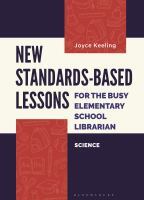
This book provides targeted and invaluable help for the busy elementary school librarian and the science teacher as they work together to design and co-teach library-based lessons guided by the Next Generation Science Standards, English Literacy Common Core Standards, and the new AASL Standards. All standards are cited in easy-to-use reproducible lessons. Energy-packed and interactive lessons are coordinated to common elementary science curricula at the grade level indicated and are also adaptable and usable as template lessons as needed. Necessary handouts and other tools, with current lists of recommended resources, are provided. Elementary school librarians and classroom teachers as well as curriculum coordinators, elementary reading, social studies, and science instructors will find value in this collection of lessons. The highly rated materials recommended in the resource lists are valuable for aiding librarians in collection development to support new and current standards.
|
|
|
Together We Read
"The Queen of Sugar Hill" by ReShonda Tate

OverDrive has announced that "The Queen of Sugar Hill" by ReShonda Tate is the next Together We Read US pick.
"The Queen of Sugar Hill" brings to life the powerful story of one woman who was driven by many passions—ambition, love, sex, family, friendship, and equality. In re-creating Hattie McDaniel’s story, ReShonda Tate delivers an unforgettable novel of resilience, dedication, and determination—about what it takes to achieve your dreams—even when everything—and everyone—is against you.
If your library participates in OverDrive, your readers will have unlimited access to both the e-book and e-audiobook formats between March 13-27. Find and download marketing materials at https://www.togetherweread.com/us/library-partner-materials/.
|
|
|
Training Assessment Needs Surveys
Submitted by Al Peterson
For most of my professional career as a librarian at the North Dakota State Library, I have been involved in training librarians in one way or another. I have traveled the state from east to west, north and south and parts in between conducting in-person trainings at libraries and schools. I have been hosting webinars for over 15 years, starting in 2009.
We want to provide the best training possible, on topics you want to learn about, at the times and days that best fit your busy schedule. These surveys are designed to help us gauge what training opportunities people are interested in and how to deliver that training to meet your professional development needs.
I appreciate your time and your support.
|
|
|
|
James River Valley Library System is holding their first ever Sweetheart Dance on February 14, a night of fun, dancing, and memories that will include a live DJ, refreshments, and a photo booth.
West Fargo Public Library hosted the "Empowered Parents Expo" on Monday, February 10, which offered free resources and expert guidance for parents and caregivers. The event connected attendees with organizations that specialize in "child development, safety, health, and family support."
|
|
Bismarck State College’s Library Love Challenge
Submitted by: Bethany Rants
Bismarck State College is doing an experimental event for students to show love for the library during the month of February. Using Blackboard Ultra, students can participate in themed reading missions such as “read a book written by a librarian,” “post a weird bookmark selfie,” and “read a book with a shirtless person on the cover.” Reference and Instructional Librarian Kelsey Riggs said, “The Library Lovers Challenge is a Blackboard Challenge for BSC students to show their love for their library and to simply celebrate Library Lovers’ Month.”
The program builds on success with the college’s Money Smart Mystic program (which tracks via bookmark and on Blackboard). Students who reach 50 points by the end of February are eligible for prizes.
|
|
|
The Flickertale is a weekly publication of the North Dakota State Library, a
Division of the North Dakota Department of Public Instruction.
Kirsten Baesler, State Superintendent
Mary J. Soucie, State Librarian
ISSN: 1068-5383
This publication is supported in part by the Institute of Museum and Library
Services under the provisions of the Grant to States Program as
administered by the North Dakota State Library.
Any mention of services or products in this newsletter does not constitute
any endorsement or recommendation. The use of any services or
products should be evaluated on an individual basis.
www.library.nd.gov
To submit content ideas/articles for a future issue of the Flickertale,
please contact BreAnne at ndslpa@nd.gov.
Times referenced are Central Time.
|
|
Some of these resources and programs are funded under the provisions of the Library Services and Technology Act from the Institute of Museum and Library Services. |
|
|
|
|